Өөрчлөлтийн үйл явцад хүмүүсийн үзүүлдэг эсэргүүцэл, сөрөг хандлагыг таньж, үр дүнтэй хариу үйлдэл үзүүлэх нь манлайллын чухал ур чадвар юм.
Байгууллагын өөрчлөлтийн санаачилга нь стратеги эсвэл гүйцэтгэлийн алдаанаас бус, харин өөрчлөлтийг аюул гэж үзсэн хүмүүсийн сэтгэл зүйн хариу үйлдлээс болж бүтэлгүйтэх нь элбэг байдаг. Ажилтнууд өөрийн статус, эрх мэдэл, ажлын байрны тогтвортой байдлаа алдахаас эмээх үедээ мэдээлэл нуух, нөөцийг хязгаарлах, улс төржих зэрэг сөрөг зан төлөвийг гаргадаг. Өөрчлөлтийн менежмент дэх эдгээр “саад тотгор” нь ихэвчлэн өөрийгөө хамгаалах, эрх мэдлээ хадгалах, хувийн ашиг сонирхлоо урьтал болгох, сэтгэл хөдлөлийн хямралаас үүдэлтэй байдаг.
Эдгээр сөрөг үйлдлийг нөлөөлөх, хуйвалдах, дарамтлах, хорлон сүйтгэх гэсэн дөрвөн ангилалд хувааж болох бөгөөд өөрчлөлтийн үе шат ахих тусам хүмүүст үзүүлэх үр дагавар тодорхой болохын хэрээр эдгээр зан төлөв илүү түрэмгий шинжтэй болдог. Манлайлагчид эдгээр үйлдлийг зүгээр л ажиглагчийн байр сууринаас харах бус, харин дөрвөн алхамт хариу үйлдлийн аргыг ашиглан саармагжуулах шаардлагатай. Үүнд нөхцөл байдлыг ажиглах, үүдэлтэй сэтгэл хөдлөлийг үнэлэх, тохирох хариу үйлдлийг сонгох, эцэст нь өөрийн байр суурийг тодорхой илэрхийлэх зэрэг орно.
Тухайлбал, мэдээлэл нуух зэрэг сөрөг зан гаргасан тохиолдолд тухайн үйлдэлд шууд нэр өгч, яагаад ийм үйлдэл гаргаж байгааг асуух нь техникийн саад эсвэл хувь хүний айдас аль нь болохыг тодруулахад тусалдаг. Өөрчлөлтийн үед хүн бүр тодорхой хэмжээгээр эсэргүүцэл үзүүлэх нь хэвийн үзэгдэл гэдгийг хүлээн зөвшөөрөх нь чухал юм. Та бусдын үйлдлийг хянаж чадахгүй ч, өөрийн хариу үйлдлийг ухамсартайгаар удирдах замаар байгууллагын үр дүнг хамгаалах боломжтой.
Фил Бакли нь 35 жилийн туршлагатай өөрчлөлтийн стратегич бөгөөд АНУ, Канад, Их Британид 32 томоохон өөрчлөлтийн төслийг удирдаж байсан туршлагатай зөвлөх юм. Тэрээр “Change with Confidence” байгууллагыг үүсгэн байгуулж, өөрчлөлтийн үеийн сэтгэл зүй, улс төр, эрх мэдлийн тоглоомуудын талаар хэд хэдэн ном бичжээ.
Дэлгэрэнгүй эх сурвалжийг харах
Эх сурвалжийг нээх ↓
CHANGE initiatives rarely fail because of flawed strategies or poor execution. They fail because of human behavior: what people do when they feel threatened or at risk of losing status, control, or relevance. A senior leader withholds resources from another team. A project team member hoards information about transition status. Each move undermines the initiative’s success. When combined with others, they can derail it.
These are the wrenches people throw during high-stakes change. They can be hard to spot and address because they are often covert, uncoordinated, and unpredictable. Without quick and effective responses, dysfunction grows and plans unravel. Left unchecked, the self-interested behaviors become cultural norms, and the downward spiral to failure accelerates.
Why People Throw Wrenches During Change
Change initiatives typically start well. The leader’s vision of a better future is clear and widely supported. The kick-off builds momentum, and work begins. Before long, people piece together their relative position in the post-change organization.
Employees view disruptions through the lens of personal gain or loss. What will this mean for my role, status, influence, or security? As the answers become clearer, emotions flare, which drives actions intended to improve their position.
Four forces explain self-interested behavior:
- Self-preservation: People try to protect the status, certainty, freedom, camaraderie, and confidence they have.
- Power: People seek the capacity to influence outcomes. They do so through formal authority or personal influence. Change can threaten existing power sources or create opportunities for new ones.
- Politics: People maneuver to influence those who define the future ways of working. Alliances, favor trading, and even rumors can modify outcomes.
- Emotions: Anxiety, fear, frustration, anger, and contempt can harm colleagues and jeopardize the initiative. When emotions surface, self-protection outweighs concerns for others and their organization.
All four forces can be in play at any point in an initiative, so leaders need to anticipate them. Understanding what people perceive they will lose helps you predict likely self-interested behaviors and decide how to best address them.
The Wrenches We Throw
The most common self-interested behaviors vary in their intensity and the risk they pose to an organization. They fall into four categories, based on strategic intent and level of disruption: Influencing, Conspiring, Bullying, and Sabotaging.
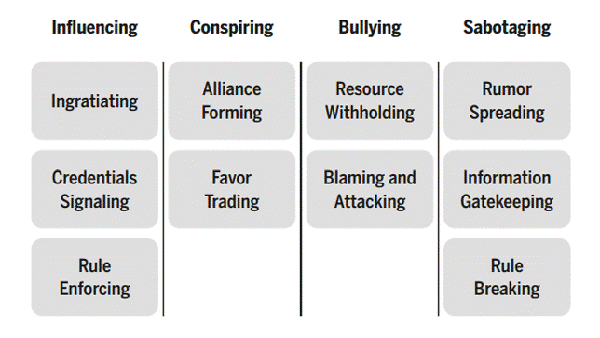
The tactics are more extreme as you move to the right of the continuum. Influencing and conspiring are about angling for position, whereas bullying and sabotaging behaviors are about aggression to seize control.
These behaviors also evolve as the initiative progresses, because each phase of change reveals more about what people stand to gain or lose. During the planning phase, there are few details to analyze. Preparation activities such as testing, training, and day-in-the-life exercises begin to clarify future conditions. The full picture emerges after the launch when people live and feel their new roles. The clearer the personal consequences become, the stronger the emotional response, and the greater the likelihood of more aggressive behavior.
Responding When Wrenches Appear
When a political maneuver or power play catches us off guard, we often become spectators instead of responders. Silence, or a defensive reaction, can strengthen the behavior and increase its damage.
A consistent, stepped process, designed to interpret people’s behavior, helps you neutralize self-interested tactics. The Four-Step Response offers a simple approach to recognizing and responding to political maneuvers and power plays: Observe, Assess, Select, and Deliver.
- Observe: Notice what the person says and does. If someone says, “I’ll support your region if you support mine when resources are allocated,” they are favor trading.
- Assess: Identify the emotion that may be driving the behavior. Anxiety and anger call for different responses. Anxiety signals worry about uncertainty, whereas anger signals hostility over a perceived injustice or error.
- Select: Choose the response best suited to the behavior and the circumstances around it. Consider the person’s role, the emotion they are feeling, and where the behavior surfaced.
- Deliver: Give your response, then pause for a reaction. The behavior may stop. If not, their response will indicate your next move, whether to hold, engage or escalate.
If, for example, a team member repeatedly withholds information, an effective response might be to name the behavior directly: “The testing team needs the data we agreed to share. Without it, testing will be delayed. What is preventing you from providing it?” Their response may reveal a technical obstacle or a fear about losing control. Both guide how to proceed.
Following these steps helps you spot self-interested behavior early, identify the emotion behind it, and respond in ways that protect your credibility, relationships, and results.
We All Throw Wrenches
It’s easy to view people who withhold information, spread rumours, or blame and attack as villains. The reality is that we all throw wrenches when change threatens us. It’s normal, and it’s human. Knowing what you personally stand to gain and lose can help you manage your behavior and respond better to others’ actions.
You can’t control the wrenches thrown or the people who throw them. You can control how you respond. Observe the behavior, assess the emotion driving it, select the best option, and deliver it with purpose to protect the initiative’s progress and results.
* * *
Phil Buckley is a change strategist and leadership advisor with 35 years of experience across 32 large-scale change initiatives in the United States, Canada, and the United Kingdom. He is the founder of Change with Confidence and author of Change on the Run, Change with Confidence, and his latest book, When People Throw Wrenches: Navigating the Emotions, Politics, and Power Plays of High-Stakes Change. Learn more at www.changewithconfidence.com.
* * *
 Follow us on Instagram and X for additional leadership and personal development ideas.
* * *




Өөрчлөлтийн үед хүмүүсийн эсэргүүцэл ихэвчлэн сэтгэл зүйн хариу үйлдлээс үүдэлтэй байдаг гэдэг нь үнэн үү? Та өөрийн байгууллагад иймэрхүү эсэргүүцлийг хэрхэн харж, яаж даван туулах вэ?