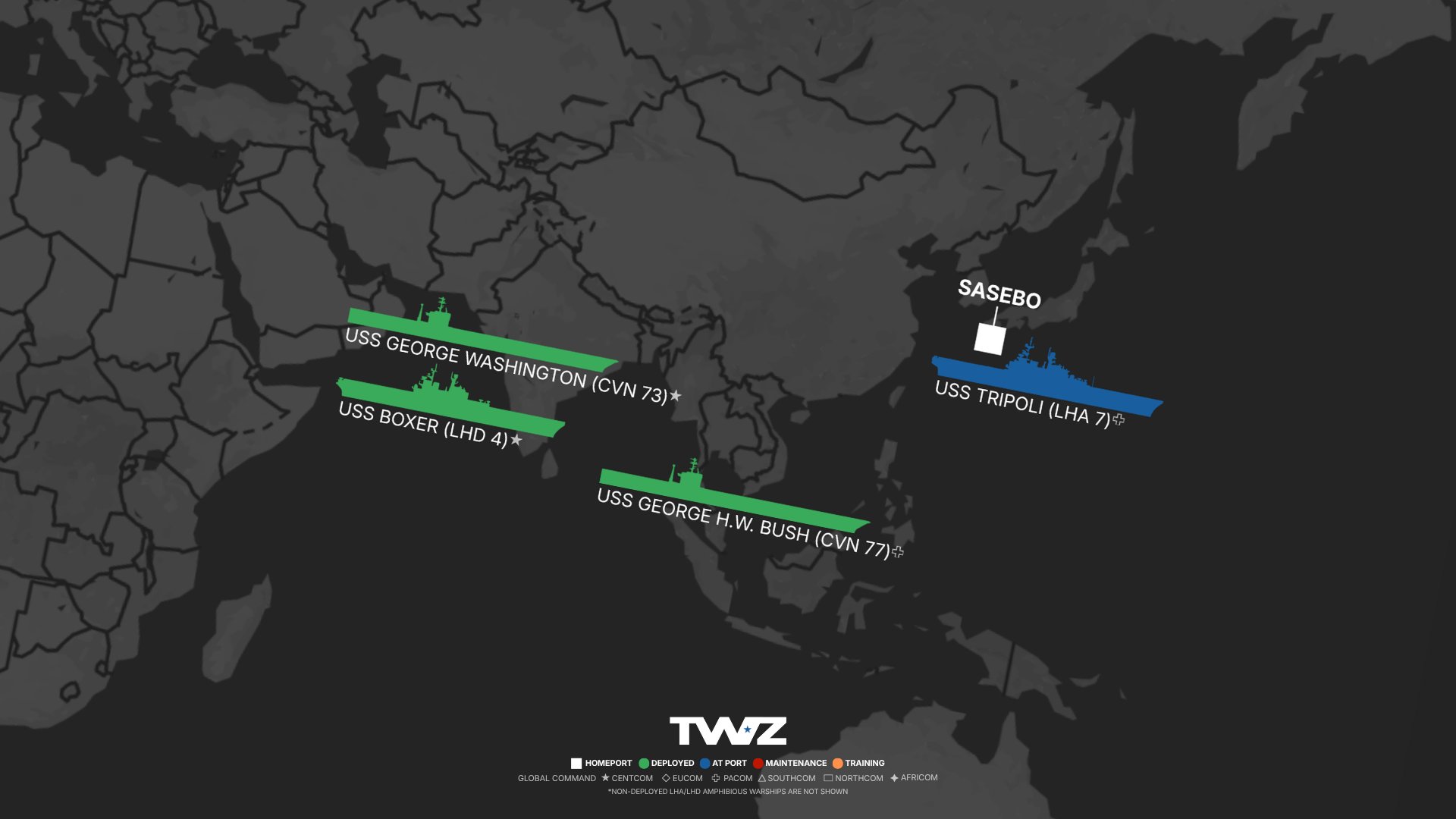
АНУ-ын тэнгисийн цэргийн хүчний нисэх онгоц тээгч хөлөг онгоцнуудын байршил болон шилжилт хөдөлгөөний тоймыг танилцуулж байна.
“USS George H.W. Bush” нисэх онгоц тээгч хөлөг онгоц 188 хоног далайд үүрэг гүйцэтгэсний эцэст ням гарагт Тайландын Пхукет арал дээр хуваарьт боомтын айлчлал хийлээ. Ингэснээр Ойрх Дорнод дахь бүс нутагт “USS George Washington” тэргүүтэй цохилтын бүлэг үлдэж байна. Мөн “USS Abraham Lincoln” хөлөг онгоц Калифорнийн эрэг орчимд байрлаж, нисэх онгоцны жигүүрээ буулгах болон зэвсэг хэрэгслээ буулгах ажлыг хийж байгаа бөгөөд энэ долоо хоногт эх орондоо буцаж ирэх юм.
“USS Ronald Reagan” хөлөг онгоц 17 сарын хугацаатай засвар үйлчилгээ болон шинэчлэлтийн ажлаа дуусгаж, даваа гарагт Сан Диего боомтод ирлээ. Тус хөлөг онгоц нь MQ-25 загварын түлш цэнэглэгч дроныг удирдах төвөөр тоноглогдсон АНУ-ын хоёр дахь нисэх онгоц тээгч болж байна. Үүний зэрэгцээ “USS Dwight D. Eisenhower” хөлөг онгоц EA-18G Growler онгоцтой холбоотой ослын дараа нислэгийн төхөөрөмжүүдээ шалгуулахаар Норфолк боомтод буцаж ирээд байна.
“USS Harry S. Truman” хөлөг онгоц аравдугаар сарын эхээр дунд хугацааны цөмийн түлш цэнэглэх болон их засварын ажил эхлүүлсэн бол “USS John F. Kennedy” хөлөг онгоцны урьдчилсан хүлээн авалтыг тэнгисийн цэргийн хүчин есдүгээр сарын 29-нд баталгаажуулжээ. Одоогоор АНУ-ын дөрвөн нисэх онгоц тээгч хөлөг онгоц үүрэг гүйцэтгэж байгаа бөгөөд гурав нь бэлэн байдлын сургуулилт хийж, гурав нь засвар үйлчилгээнд байна.
Дэлгэрэнгүйг эх сурвалжаас харах
Эх сурвалжийг нээх ↓
Aircraft carrier USS George H.W. Bush arrived in Phuket, Thailand, on Sunday for a scheduled port call after 188 days at sea, leaving just one carrier strike group, led by USS George Washington, in the Middle East for the first time in months. Across the Pacific, USS Abraham Lincoln, which Washington relieved in August, is holding off the west coast of California to disembark her air wing and offload ammunition ahead of a well-deserved homecoming this week. With several outlets now confirming that USS Theodore Roosevelt will deploy to the Middle East, there very well may be three flattops in the region again, but any overlap will be temporary given normal rotation schedules.
Here’s TWZ’s weekly carrier tracker monitoring America’s flattop fleet, including deployed Carrier Strike Groups (CSG) and Amphibious Ready Groups (ARG), using publicly available open-source information. Check out last week’s report here.
George H.W. Bush Drops Anchor Off Phuket For Liberty Port Call
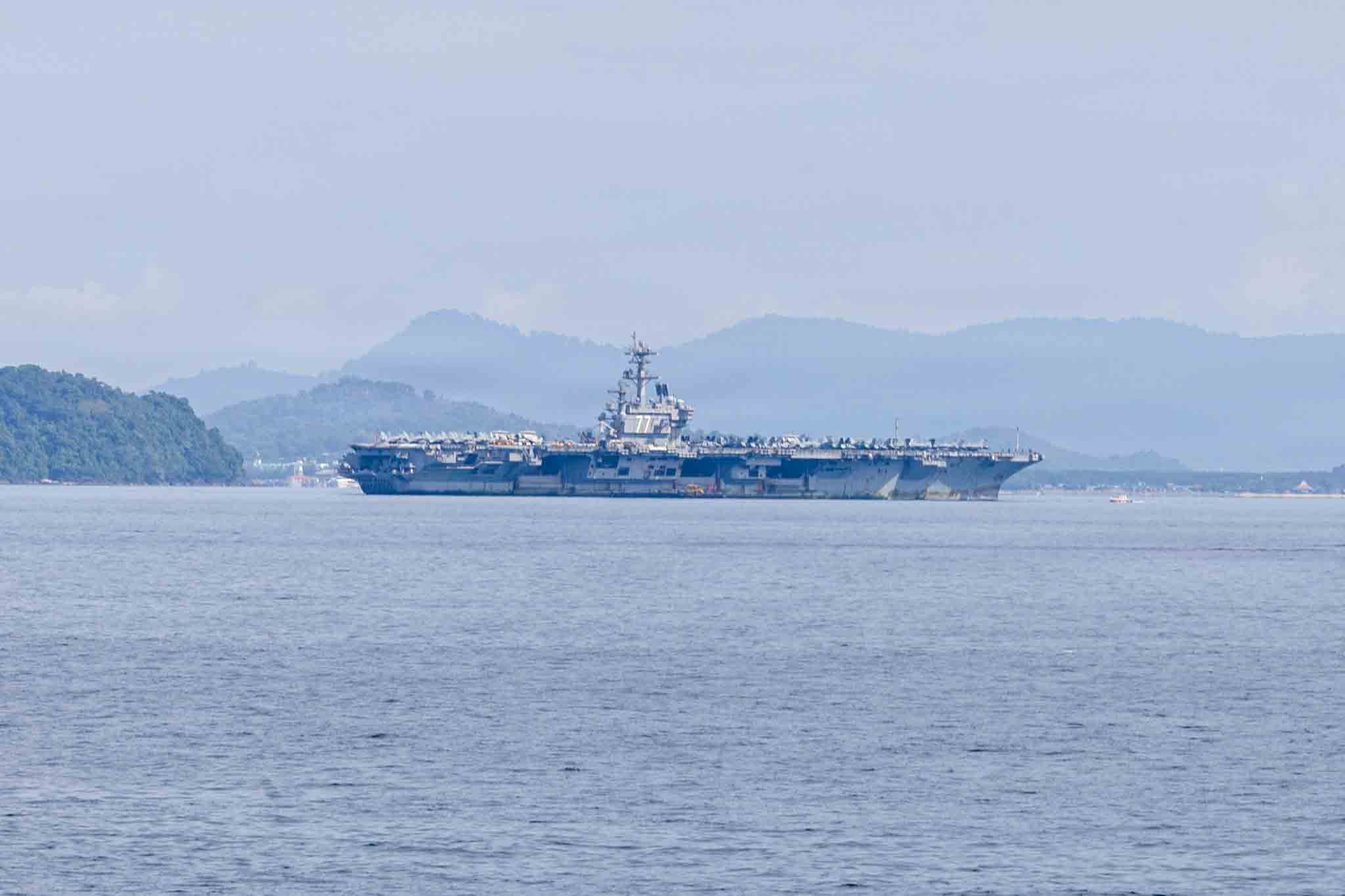
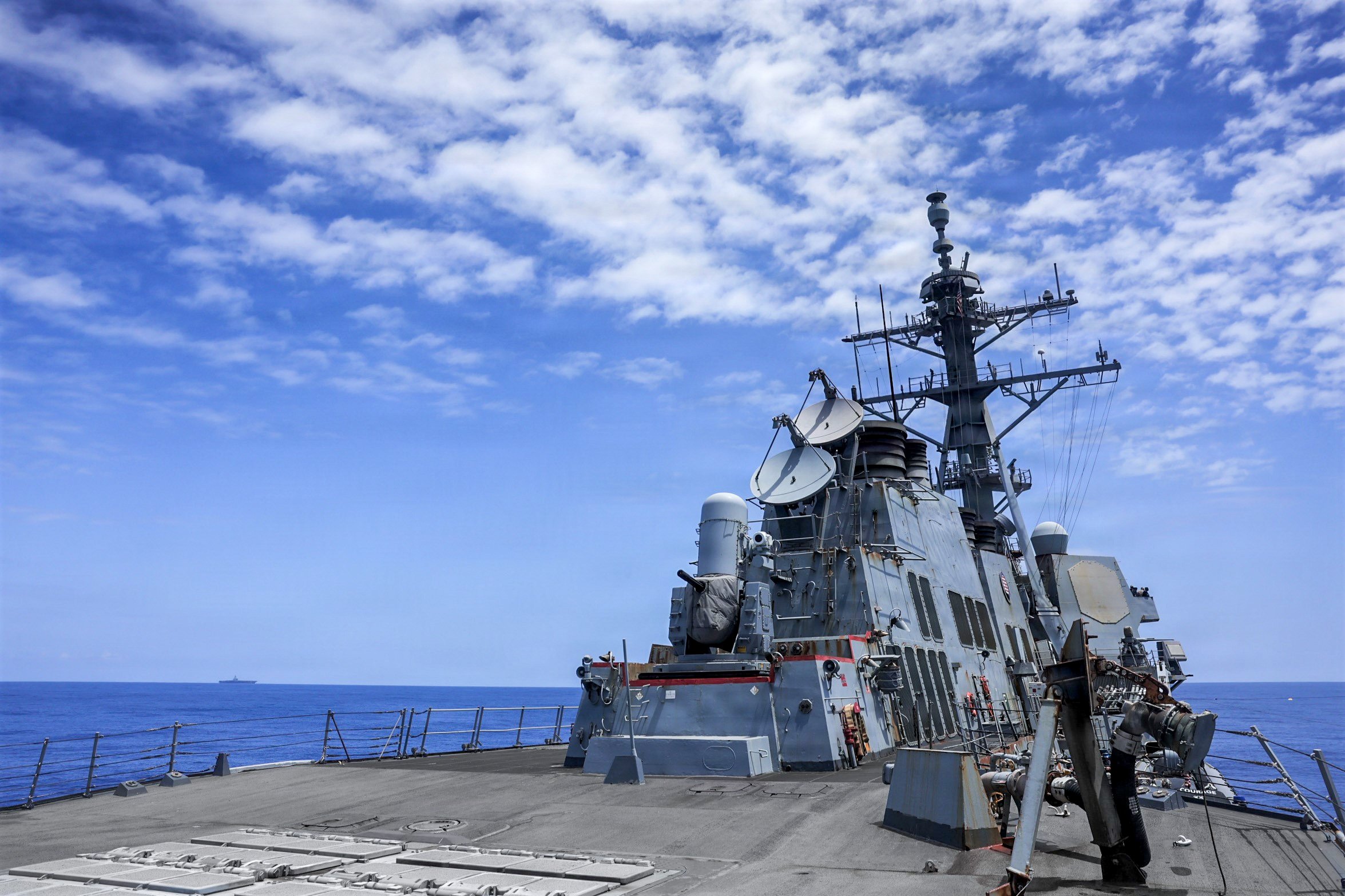
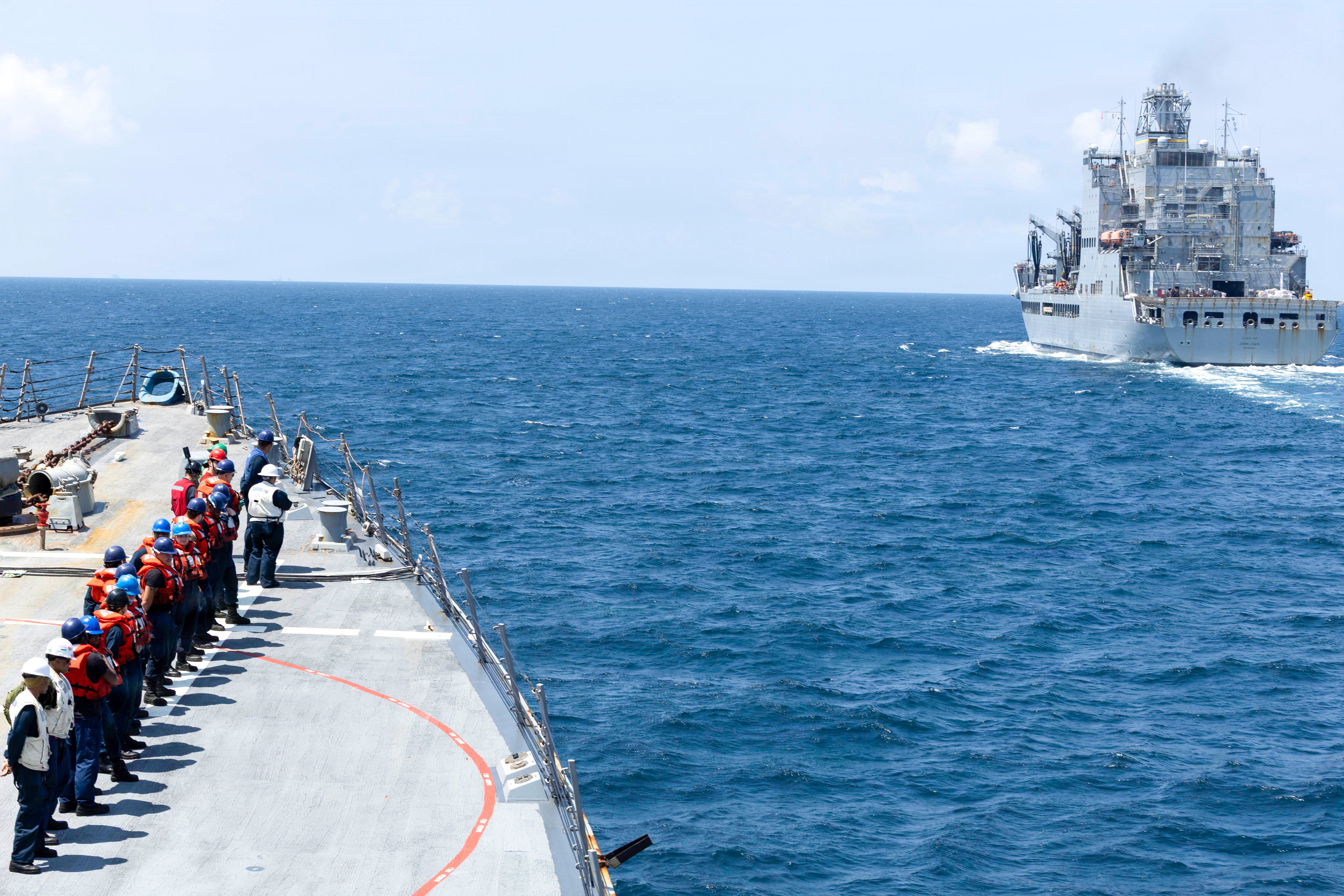
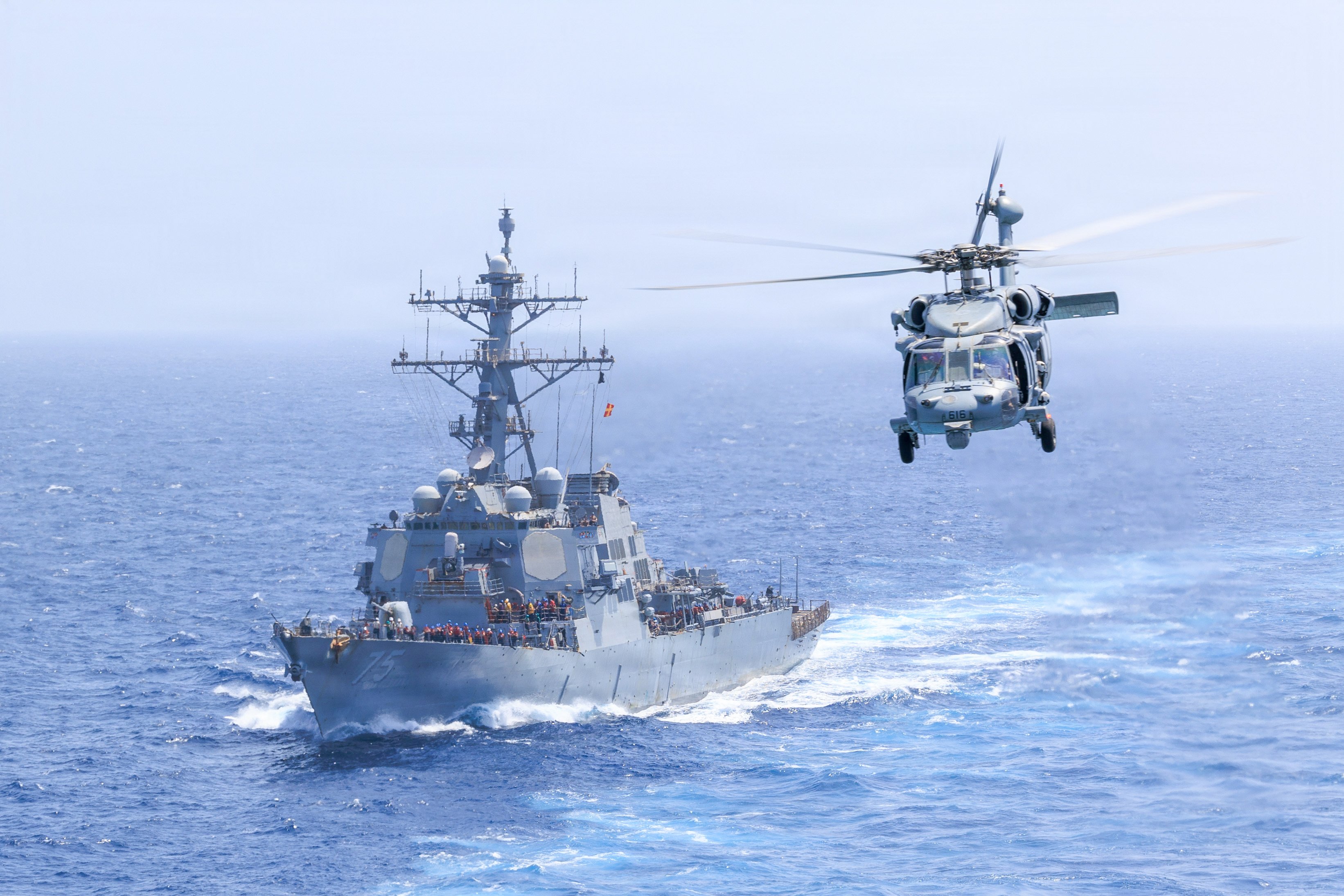
USS George H.W. Bush arrived in Thailand on October 4 for a scheduled port visit, U.S. 7th Fleet announced. Guided-missile destroyer USS Delbert D. Black escorted the flattop from her previous station in the Arabian Sea and joined the call. Bush deployed from the continental U.S. on March 31 and took the long way to the Middle East, rounding the Cape of Good Hope to limit exposure to the treacherous Red Sea and Bab Al Mandeb Strait.
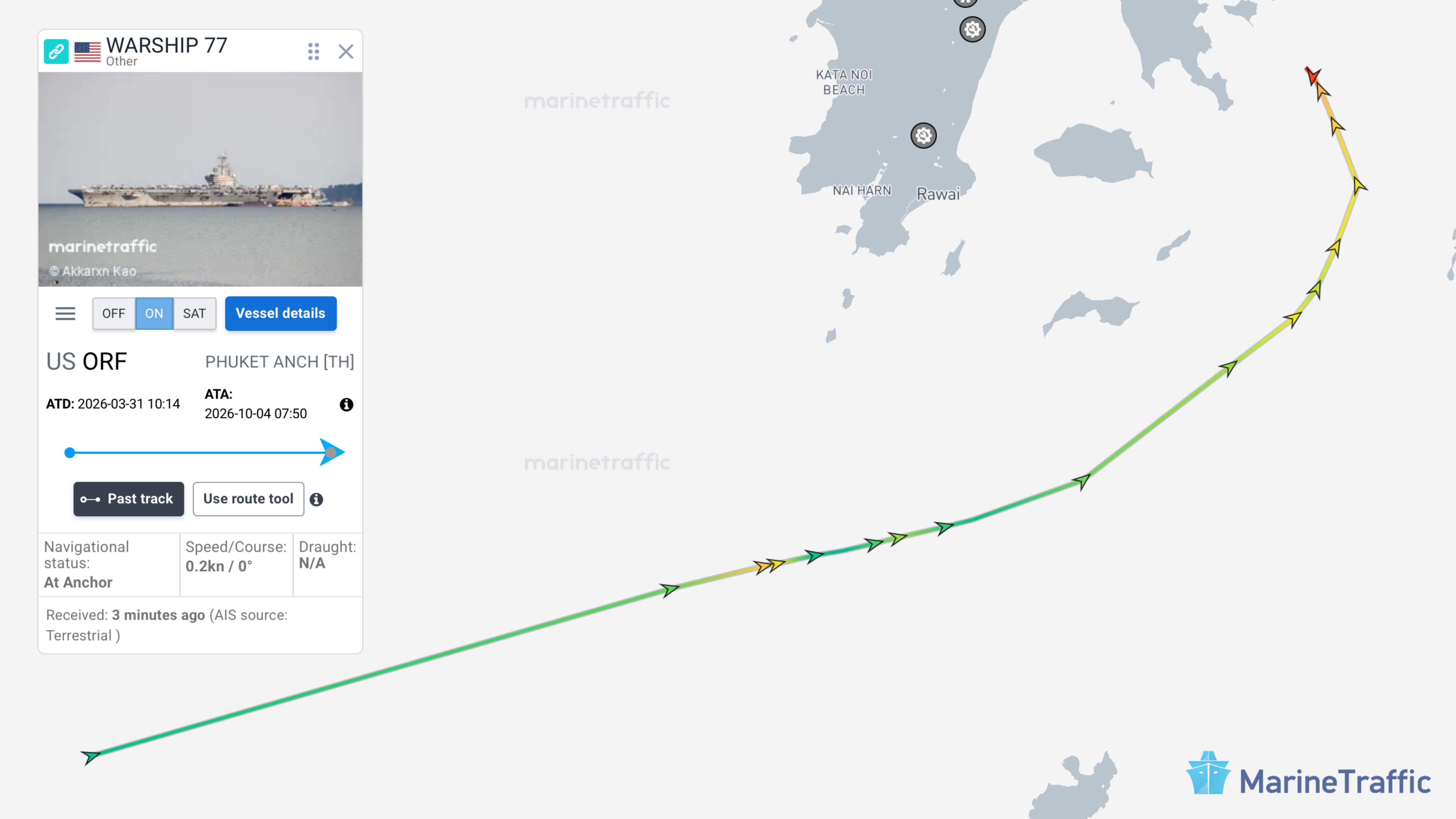
On October 3, Bush switched her Automatic Identification System (AIS) transponder on about 15 nautical miles southwest of Thailand, broadcasting her position publicly for the first time since April, based on data available via MarineTraffic. The carrier dropped anchor approximately two nautical miles off the coast of Phuket the following day.
Bush had been operating in the U.S. Central Command (CENTCOM) area of responsibility (AOR) since April, when the U.S. briefly had three carriers on station, in support of operations against Iran. “For the last six months, the strike group supported Operation Epic Fury and the U.S. naval blockade in the U.S. Central Command area of responsibility to secure maritime security and stability in the Middle East,” according to the 7th Fleet statement. That force posture was short-lived, however, as the USS Gerald R. Ford transited the Suez Canal northbound on May 1 and began her journey home not long after Bush arrived. Bush chopped into the U.S. Pacific Command (PACOM) AOR sometime over the past week while en route to Phuket, leaving a single CSG in CENTCOM.
The current composition of CSG-10 is USS Mason, USS Ross, and USS Donald Cook, but none of the destroyers joined the flagship in Thailand. Why Black escorted the carrier instead is unclear. Black departed Mayport, Florida, on January 3, 2026, for an independent deployment and is long overdue for a liberty call after nine months. Mason transited the Malacca Strait southbound on September 29, according to public AIS data, and is currently in Singapore; the purpose of the stop is unknown. Ross and Cook have not broadcast their positions in months, but were last operating in the Arabian Sea.
The Navy confirmed this was the first port visit for Bush since deploying, marking 188 consecutive days at sea (including the end date), which falls just short of the 200-plus days that USS Abraham Lincoln recently logged.
Abraham Lincoln Homecoming Imminent
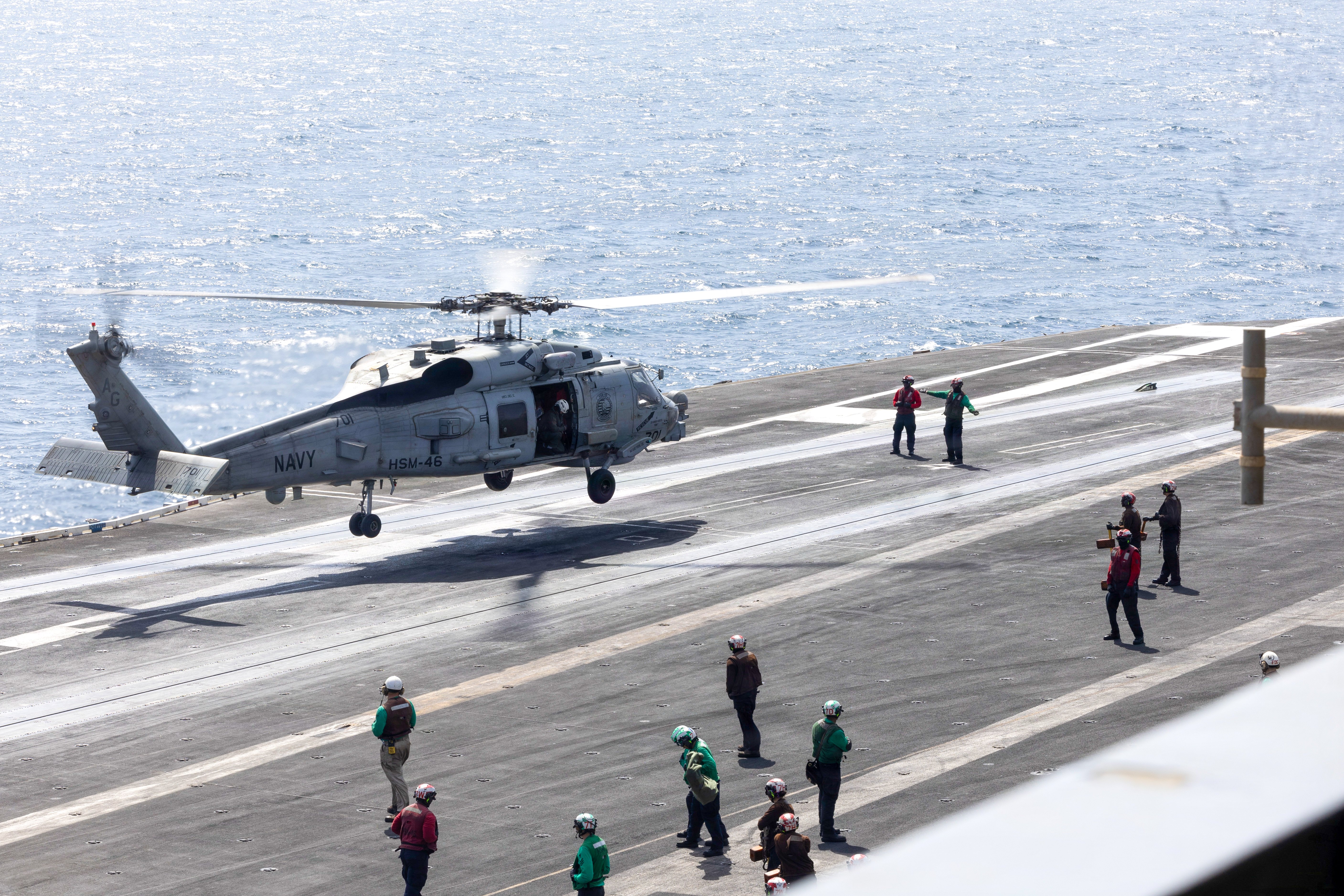
The USS Abraham Lincoln reappeared on AIS on October 3, roughly 200 nautical miles southwest of her homeport at Naval Air Station (NAS) North Island in San Diego, after steaming east across the vast Pacific Ocean. However, instead of returning home, Lincoln is holding off the coast of California, disembarking Carrier Air Wing (CVW) 9 and offloading ammunition alongside Lewis and Clark class dry cargo ship USNS Washington Chambers.
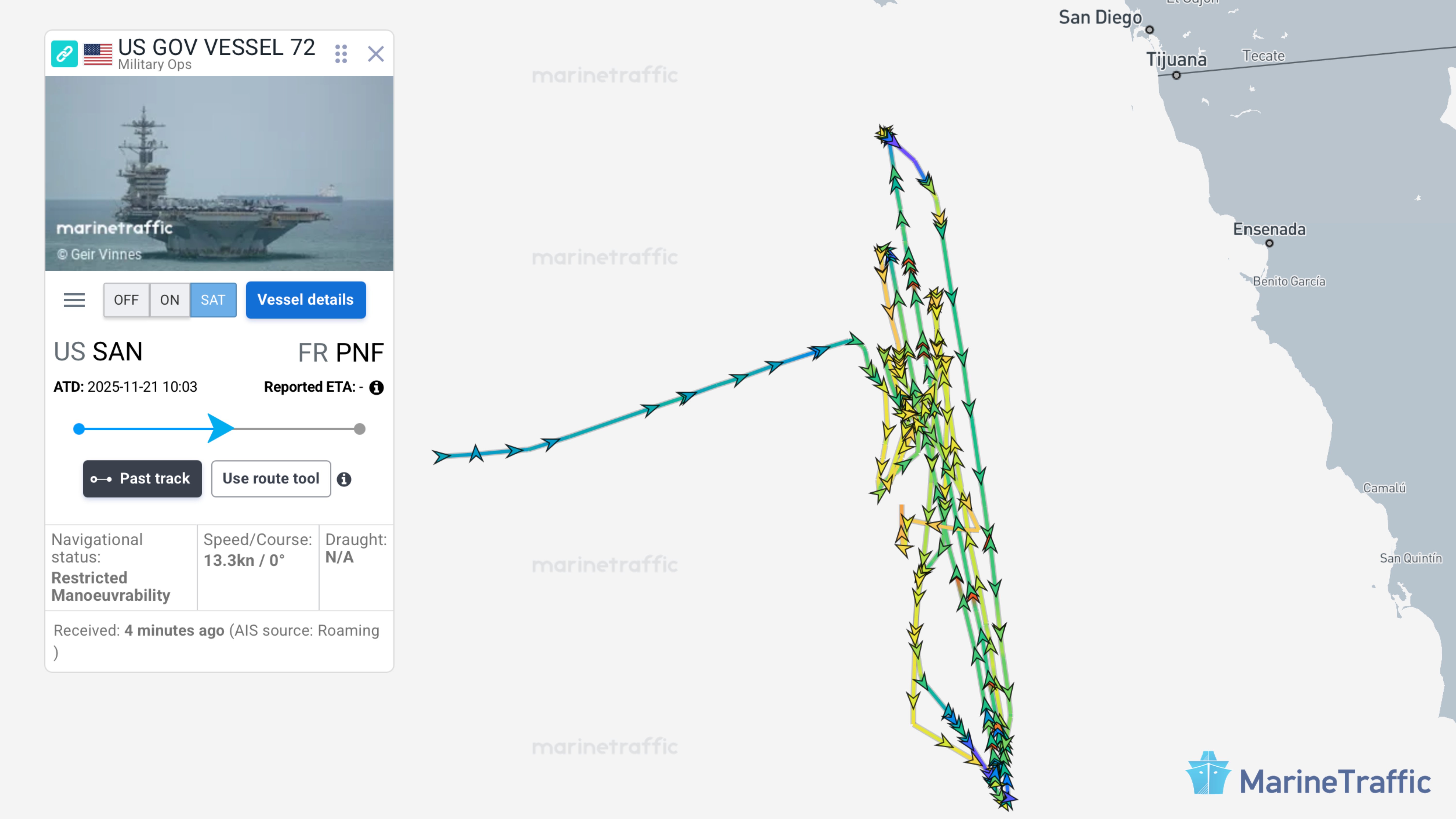
Lincoln is expected to arrive home on Wednesday or Thursday. The carrier departed San Diego on November 21, 2025, and an arrival this week would close out a total deployment of 320 to 321 days. That’s just shy of the 326-day record USS Gerald R. Ford set in May, representing the second longest deployment in the modern carrier era.
The marathon deployment drew scrutiny over the grueling conditions Sailors and Marines experienced aboard. In August, crew families described supply shortages and difficult living arrangements, asTWZreportedat the time. The accounts led to widespread media coverage, which Acting Secretary of the Navy Hung Cao called dishonest while alsoacknowledging that “a small number of mental health cases were treated with no loss of life, meal plans were adjusted when fresh resupply was unavailable, without a single meal being missed, calls home were limited when the operational threat was too high.” At least eight personnel across the strike group attempted suicide during the cruise, Cao wrote in a letter sent to Sen. Kirsten Gillibrand that was obtained by CNN.
Friends and family welcomed members of Helicopter Maritime Strike Squadron (HSM) 71 back to NAS North Island on Friday, according to a release from DVIDS, the military’s content sharing portal. A Growler squadron from CVW 9 also recently returned to NAS Whidbey Island in Washington State.

Ronald Reagan Moves From Washington State to San Diego
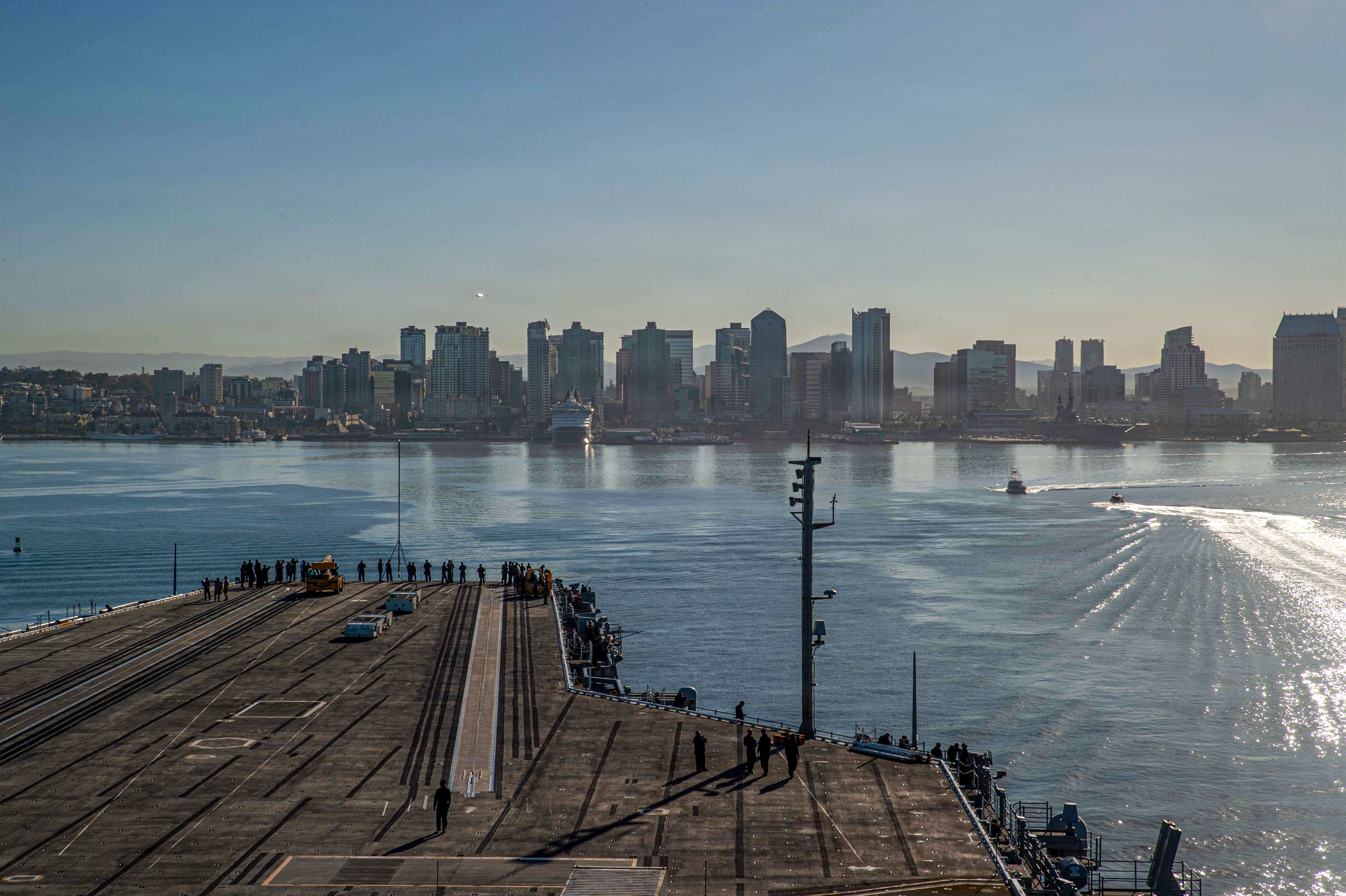
The latest carrier to rejoin the fleet after completing an extended maintenance availability, USS Ronald Reagan, pulled into San Diego on Monday after departing Bremerton, Washington, on September 30, according to public AIS data. Reagan is currently berthed at Kilo Pier on Naval Air Station North Island, a spot now available after USS Theodore Roosevelt vacated it on September 27.
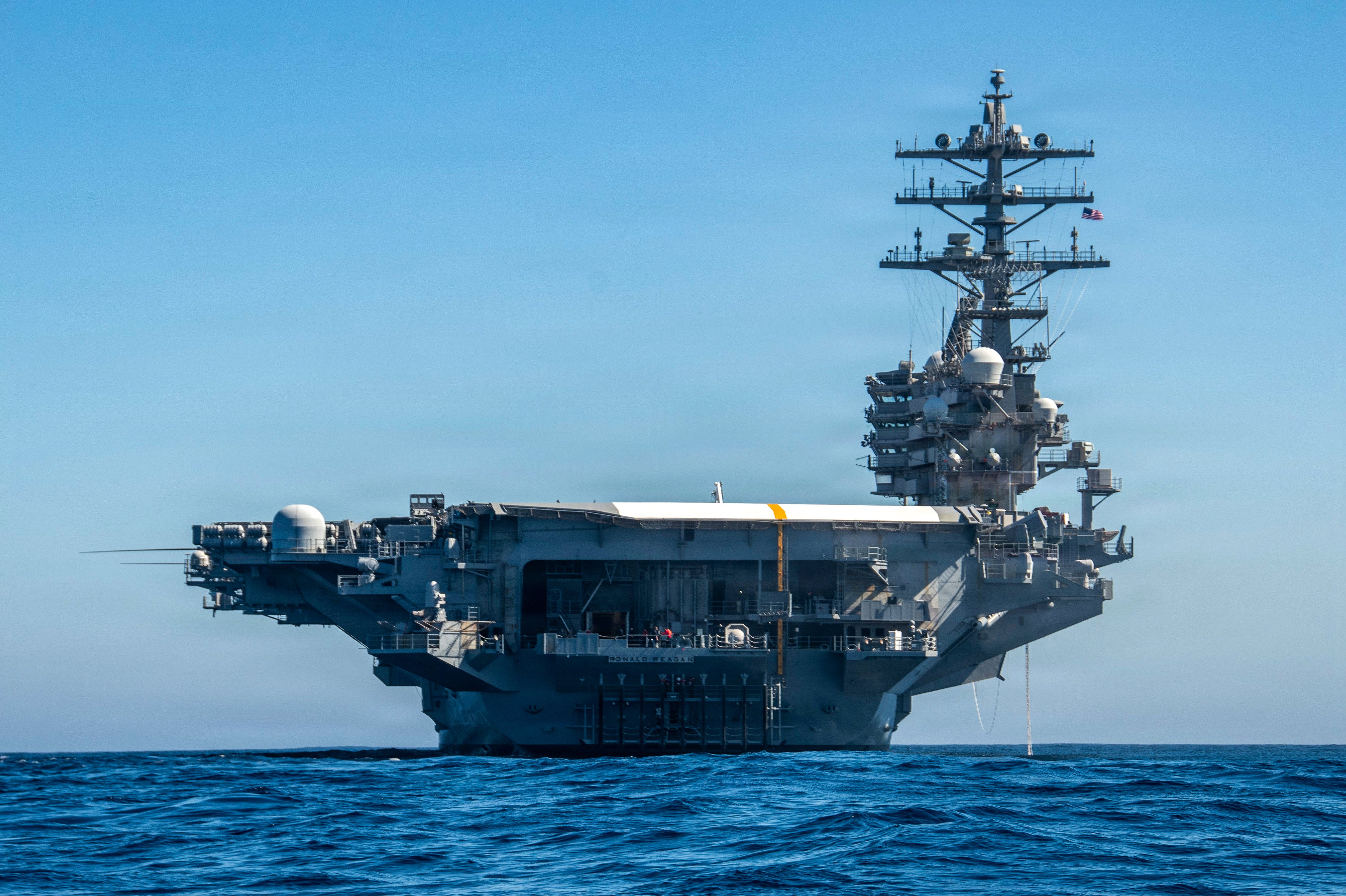
Imagery released by the Navy showed the flattop underway conducting routine operations in the U.S. 3rd Fleet area of operations on Sunday, October 4. Reagan reentered the fleet recently after completing a four-day sea trial and shakedown cruise that capped an extended 17-month Drydocking Planned Incremental Availability.
While docked at Puget Sound Naval Shipyard, she received several upgrades and enhancements, including an Unmanned Air Warfare Center to command and control the MQ-25 tanker drone. The MQ-25 will eventually take on the role of refueling carrier-based aircraft, held today by Super Hornets. That makes her the second carrier to receive such an upgrade, following USS Theodore Roosevelt. The crew aboard Reagan has conducted pierside and at-sea testing of the new command center.
Dwight D. Eisenhower Returns To Homeport After Growler Mishap
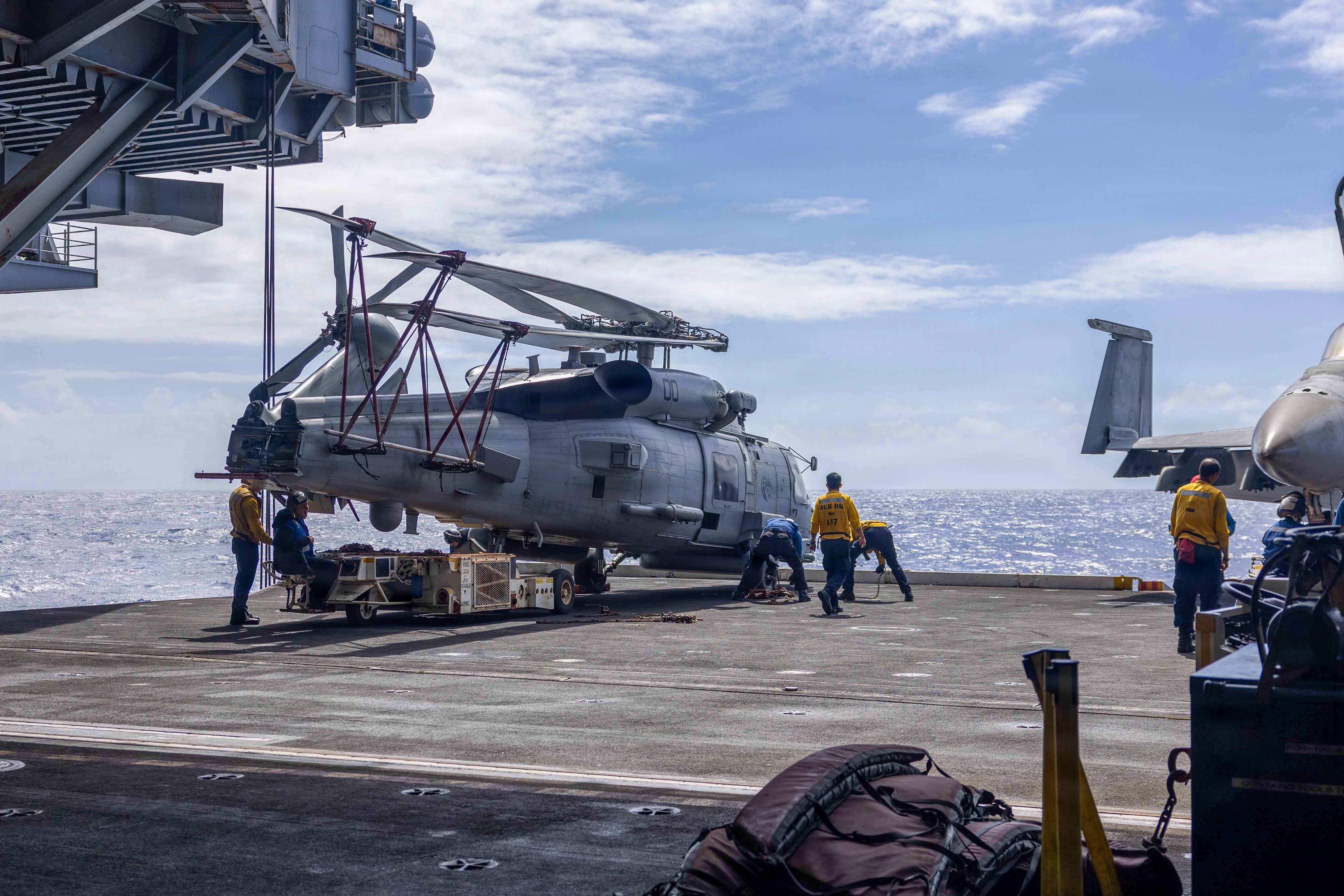
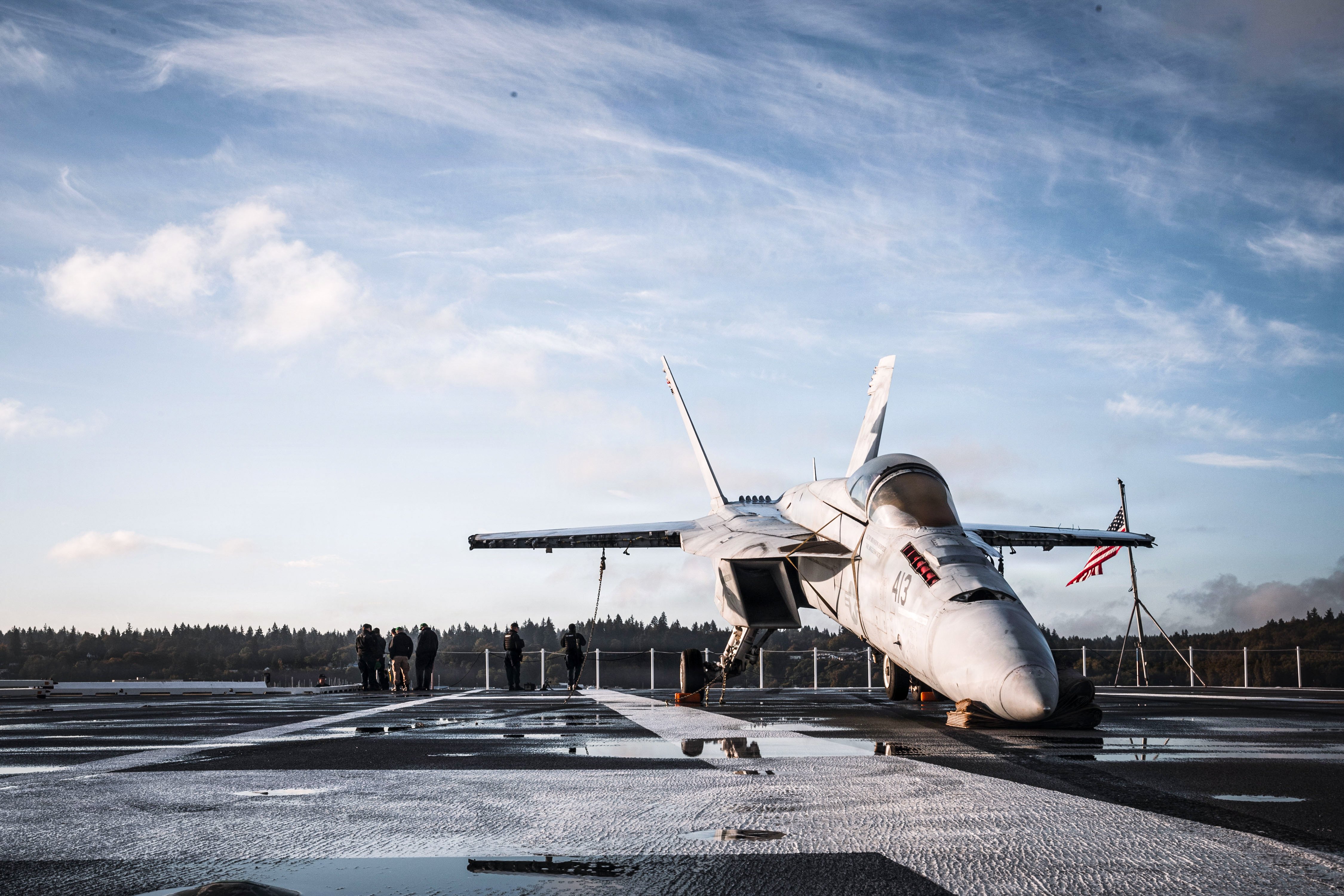
Following an incident off the east coast that resulted in the loss of an EA-18G Growler electronic attack jet, the USS Dwight D. Eisenhower returned to Naval Station Norfolk on October 5 after an eight-day underway.
Prior to her return, the Navy told us the following, published in full: “The Nimitz-class aircraft carrier USS Dwight D. Eisenhower (CVN 69) will return to Naval Station Norfolk to allow for a comprehensive assessment of the ship’s aircraft launch and recovery equipment following the Sept. 28 aviation mishap. The decision reflects the Navy’s deliberate approach to flight safety and readiness. While the cause of the mishap remains under investigation, Navy technical experts will conduct a thorough assessment of the affected systems and complete any necessary maintenance before flight operations resume. USS Dwight D. Eisenhower remains capable of safely navigating and conducting shipboard operations.”

Eight Sailors were ultimately evaluated by medical personnel aboard the ship. The mishap was reportedly due to a failure of the arresting gear, which catches and stops the forward momentum of aircraft on approach, and the Growler was lost overboard. Both crew members safely ejected and were rescued by MH-60 Seahawk helicopters.
Harry S. Truman Moves Dead Stick For Mid-Life Nuclear Refueling Overhaul
USS Harry S. Truman left Naval Station Norfolk on September 30 and moved “dead stick” into Dry Dock 11 at Huntington Ingalls Industries’ (HII) Newport News Shipbuilding (NNS) facility the same day. The carrier will begin the lengthy process of a mid-life Refueling and Complex Overhaul (RCOH).
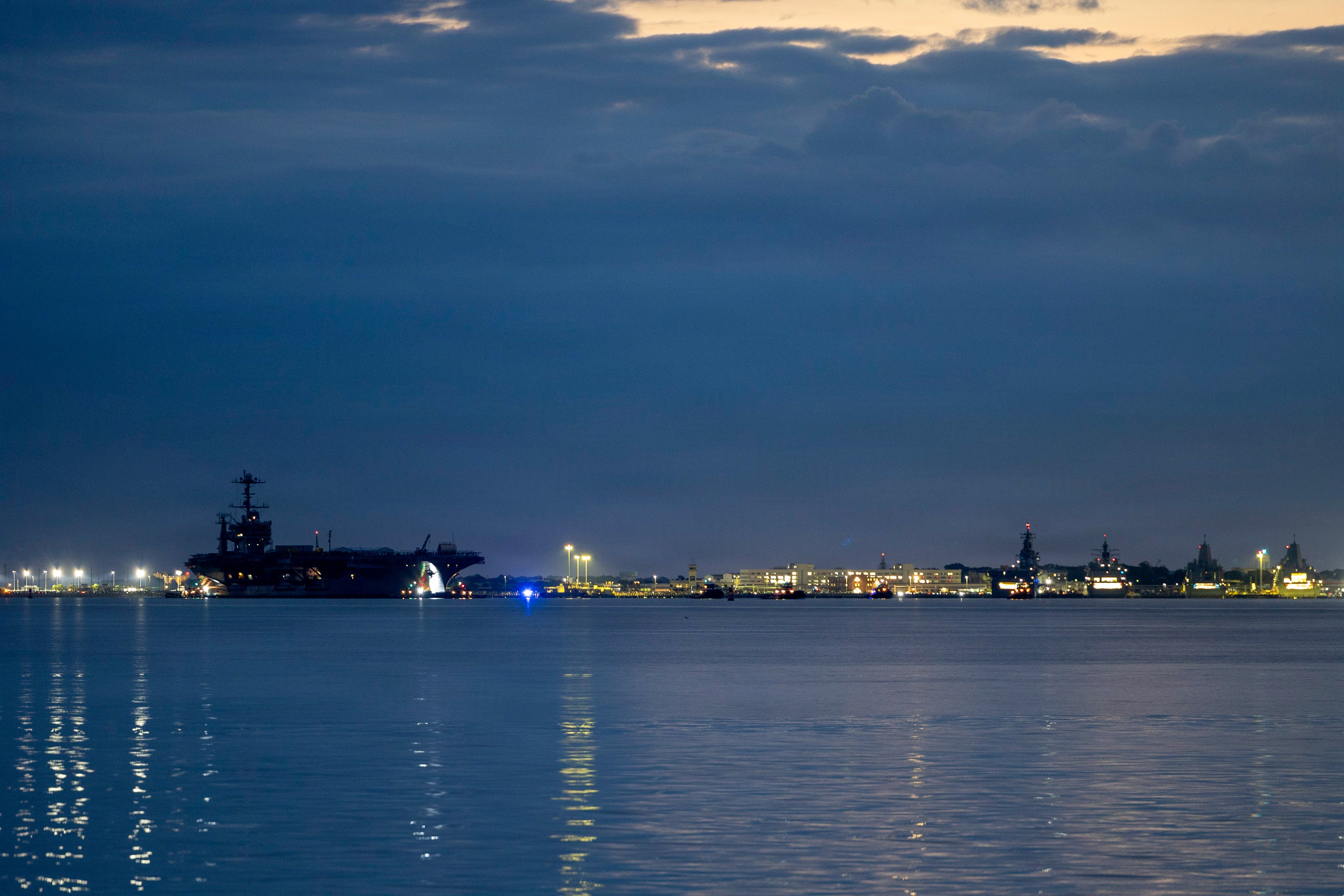
Truman is the eighth Nimitz class carrier to conduct an RCOH at NNS, according to HII, which won a $5.1 billion contract to complete the work. The overhaul accounts for about one-third of the maintenance and modernization work that a carrier will undergo over a 50-year service life and involves defueling and refueling her nuclear reactors, in addition to upgrades made to the ship’s propulsion plant and combat systems.
“Our team has been diligently working to get ahead on this critical engineering and construction project that will prepare USS Harry S. Truman for the second half of her service life,” Bryan Caccavale, the NNS vice president of program management, said in a statement. “When the ship arrives at NNS, we’ll apply that same diligence to working with our suppliers and Navy partners to ensure a successful recapitalization of CVN 75,” he added.
USS John C. Stennis is also currently completing RCOH at NNS, but there has been no announcement of a return to service, as of publication. Stennis began the overhaul in 2021, and budget documents point to an October 2026 redelivery date, but it’s unclear whether that timeline will hold.
Newest Ford Class Carrier, John F. Kennedy, Transits To Norfolk After Preliminary Acceptance
The Navy took “preliminary acceptance” of the future USS John F. Kennedy from NNS on September 29, the Navy announced. The nation’s newest and second Ford class carrier completed acceptance trials in August.
“Achieving preliminary acceptance marks a new phase for the ship and her crew, allowing them to get more water under the keel as they test and train underway,” the Navy’s Program Manager for Gerald R. Ford-Class New Construction, Capt. Mark Johnson, said. “This milestone is a testament to the shared commitment of our sailors and our combined Navy-industry team, who remain laser-focused on completing the final stages of construction and test with precision and efficiency to deliver combat-ready lethality to the fleet.”
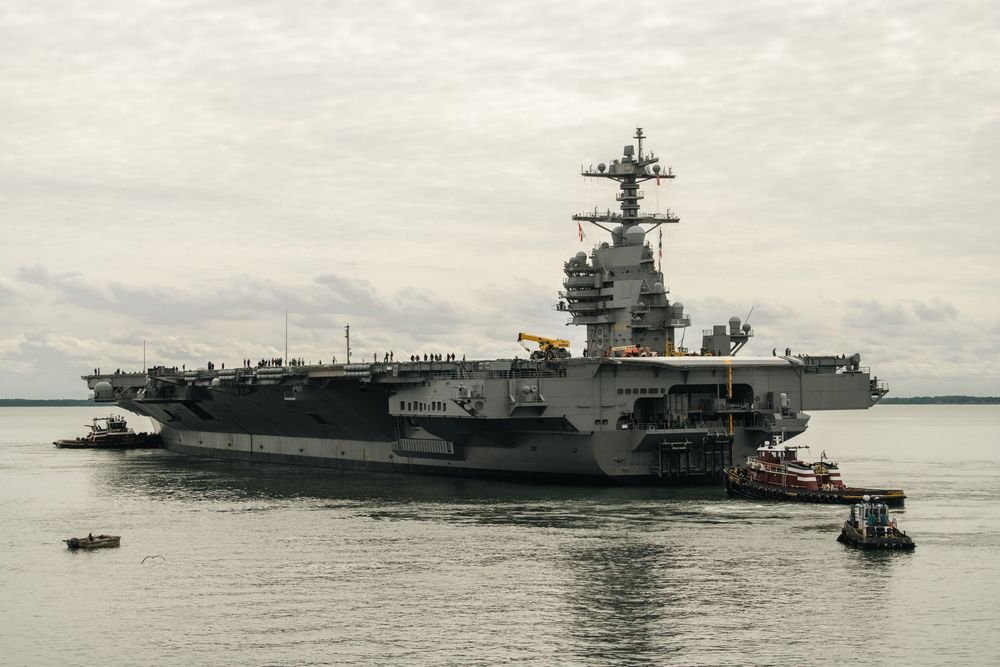
Kennedy is 99% finished, according to the Navy, with formal delivery planned for spring 2027. “All major systems are complete. The shipbuilder is currently completing final ship systems testing, including testing of the remaining four Advanced Weapons Elevators,” the release noted. On the same day as the announcement, the carrier departed the shipyard and arrived at her new homeport of Naval Station Norfolk on October 2.
Big Deck Fleet At A Glance
Overall, four U.S. carriers are deployed (with one returning home this week), three are working up in various states of readiness, three are in maintenance, one is being used primarily for training before deactivation next year, and another will be delivered in 2027. Two amphibious ready groups are deployed, one is forward-deployed, three are working up or in port, and three are in maintenance.
Note: Positions are general approximations.Non-deployed LHA/LHD amphibious warships are not shown.
Contact the author:ian@twz.com or @ianellisjones
The post Where Are The Aircraft Carriers?: October 6, 2026 appeared first on TWZ.

