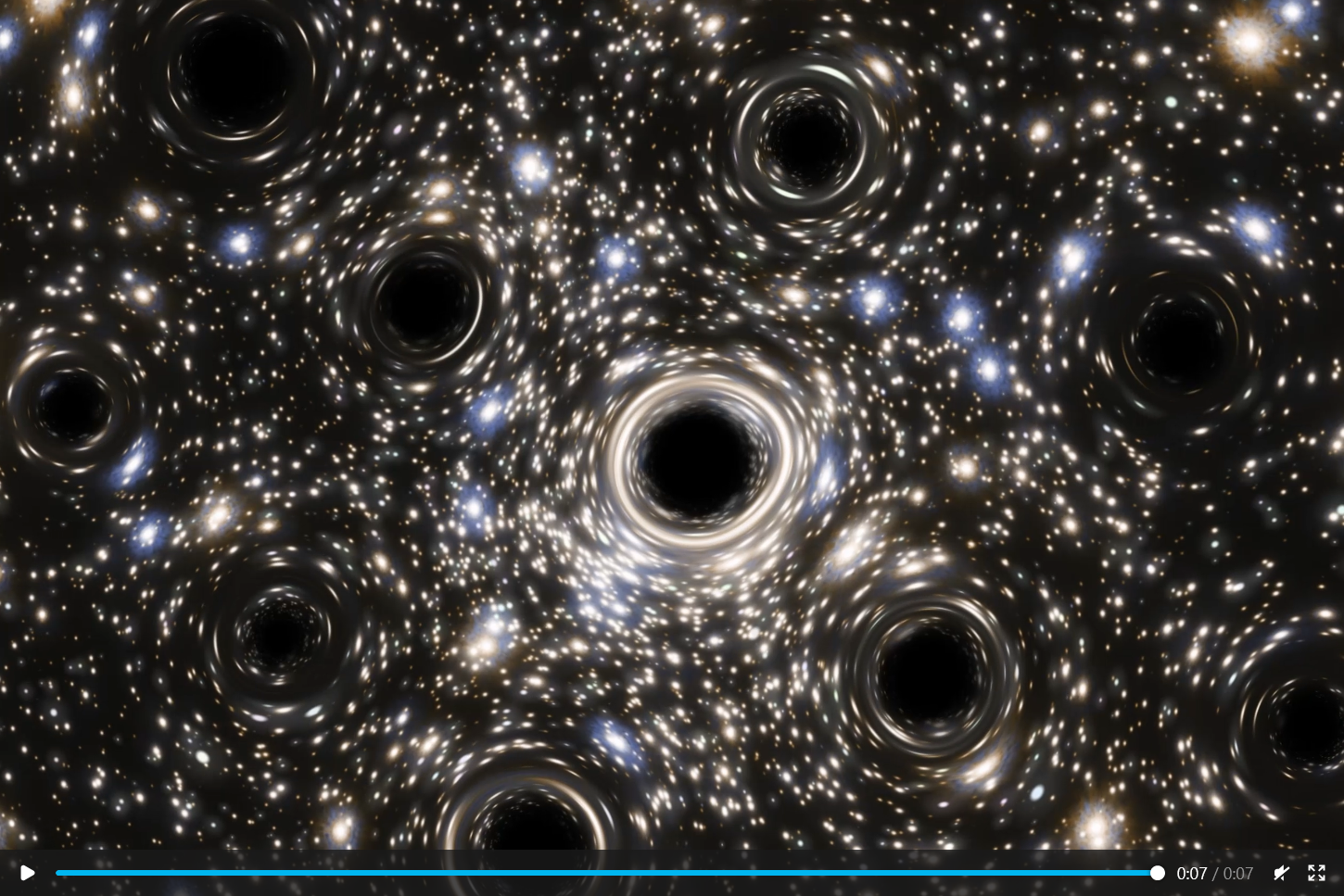
Эрдэмтэд галактикийн төвөөс ангид орших “нүүдэлчин” хар нүхнүүд нь галактикуудын нэгдлийн улмаас шилжсэн супермассив хар нүхнүүд байж болзошгүйг тогтоожээ.
Йелийн их сургууль болон Хойд Техасын их сургуулийн судлаачид ASTRID хэмээх сансар огторгуйн өндөр нарийвчлалтай загварчлалын тусламжтайгаар 12.6 тэрбум жилийн хугацаан дахь галактикуудын хувьслыг судалжээ. Уг судалгаагаар 10 саяас 1 их наяд нарны масстай галактикууд дахь хар нүхнүүдийн динамик хөдөлгөөнийг ажигласан байна. ASTRID загварчлал нь хар нүхийг галактикийн төвд автоматаар байршуулахын оронд таталцлын хүчний нөлөөгөөр тэдгээрийн хөдөлгөөнийг загварчилдаг онцлогтой.
Судалгааны багийн ахлагч Эмма Жэйн Уэллер болон түүний хамтран зүтгэгчид, тухайлбал профессор Приямвада Натаражан нар нүүдэлчин хар нүхнүүд нь галактикийн төвд тогтвортой оршдог хар нүхнүүдээс ялгаатай болохыг тогтоожээ. Ялангуяа таталцлын хүч султай жижиг масстай галактикуудад хар нүхний нүүдэл илүү тод ажиглагддаг байна. Энэхүү үйл явц нь галактикийн нэгдлийн үед төвд байсан супермассив хар нүхнүүд байрлалаа өөрчилснөөс үүдэлтэй байж болох талтай.
Энэхүү олдвор нь хар нүхнүүд зөвхөн төрсөн нөхцөл байдлаа бус, харин өөрийн оршин буй галактикийн түүхийг бүхэлд нь хадгалж үлддэг болохыг харуулж байна. Судлаачдын үзэж буйгаар төвд байрлах болон нүүдэлчин хар нүхнүүдийг ялгаснаар хар нүхний үүсэл, галактикийн хувьслын нууцыг илүү нарийвчлан тайлах боломжтой юм. Цаашид рентген туяа, оптик болон хэт улаан туяаны спектроскопи, радио одон орон зэрэг аргуудыг хослуулан ашиглах нь хар нүхний үүслийн ул мөрийг танихад чухал үүрэг гүйцэтгэнэ.
Дэлгэрэнгүйг эх сурвалжаас харах
Эх сурвалжийг нээх ↓
In the Universe, there is a class of black holes that are not supermassive and aren’t bound to any galaxy and travel through the cosmos for billions of years. In a new study, researchers from Yale and the University of North Texas explore the possibility that these “wanderers” began as supermassive black holes {SMBHs) at the center of galaxies that were displaced by galactic mergers. Their findings could help scientists seeking to learn the origin of black holes.
The study was led by Emma Jane Weller, an Astronomy PhD candidate at Yale University. She was joined by Prof. Priyamvada Natarajan, a professor of physics and the Chair of the astronomy department at Yale, and Colin J. Burke, a Postdoctoral Fellow at Yale and the University of North Texas. Natarajan is also a Principal Investigator with Harvard University’s Black Hole Initiative. Their results were published in The Astrophysical Journal Letters
For the study, the researchers used ASTRID, a high-resolution cosmological simulation suite that models the evolution of the Universe (including stars, dark matter, gas, and black holes) from the earliest periods to the present. The team used this suite to study galaxies populated by stars that ranged in mass from 10 million to 1 trillion Solar masses. They then traced their evolution over about 12.6 billion years.
Gaia-Enceladus in a simulation of a galactic merger with the Milky Way matching Gaia data. Credit: ESA (artist’s impression and composition); Koppelman, Villalobos and Helmi (simulation)
An important feature of the ASTRID simulation is that it does not automatically place black holes at the centers of galaxies. Instead, it models the gravitational forces that move black holes through their surroundings and take them to the centers. This allowed the team to distinguish between stable, galactic-core black holes and wanderers. They also noted that the process leading to wandering black holes was more pronounced in low-mass galaxies where their gravity is less.
“Our results show that considering wandering black holes,” said Weller, “in addition to centered black holes, is essential for understanding the origins and dynamics of massive black holes and the histories of their host galaxies.”
According to prevailing theories, the earliest black holes are thought to have originated as “seeds” in the young Universe. Scientists have competing theories about how they grew into the supermassive black holes we see today. While some believe the first stars (Population III) left small seeds that coalesced, others argue that heavy seeds formed earlier via direct collapse, where pristine gas accumulated enough mass to create large black holes.
Natarajan, the Joseph S. and Sophia S. Fruton Professor of Astronomy at Yale and Weller’s thesis advisor, is also a leading proponent of the “heavy seeds” theory. As Natarajan said:
What is exciting about our findings is that black holes seem to remember more than the circumstances of their birth. Their present-day locations carry the imprint of everything that has happened to their host galaxies. By separating black holes at galactic centers from those that are wandering, we can begin to disentangle these two histories. Some of the universe’s most revealing black holes may be the ones that have wandered away.
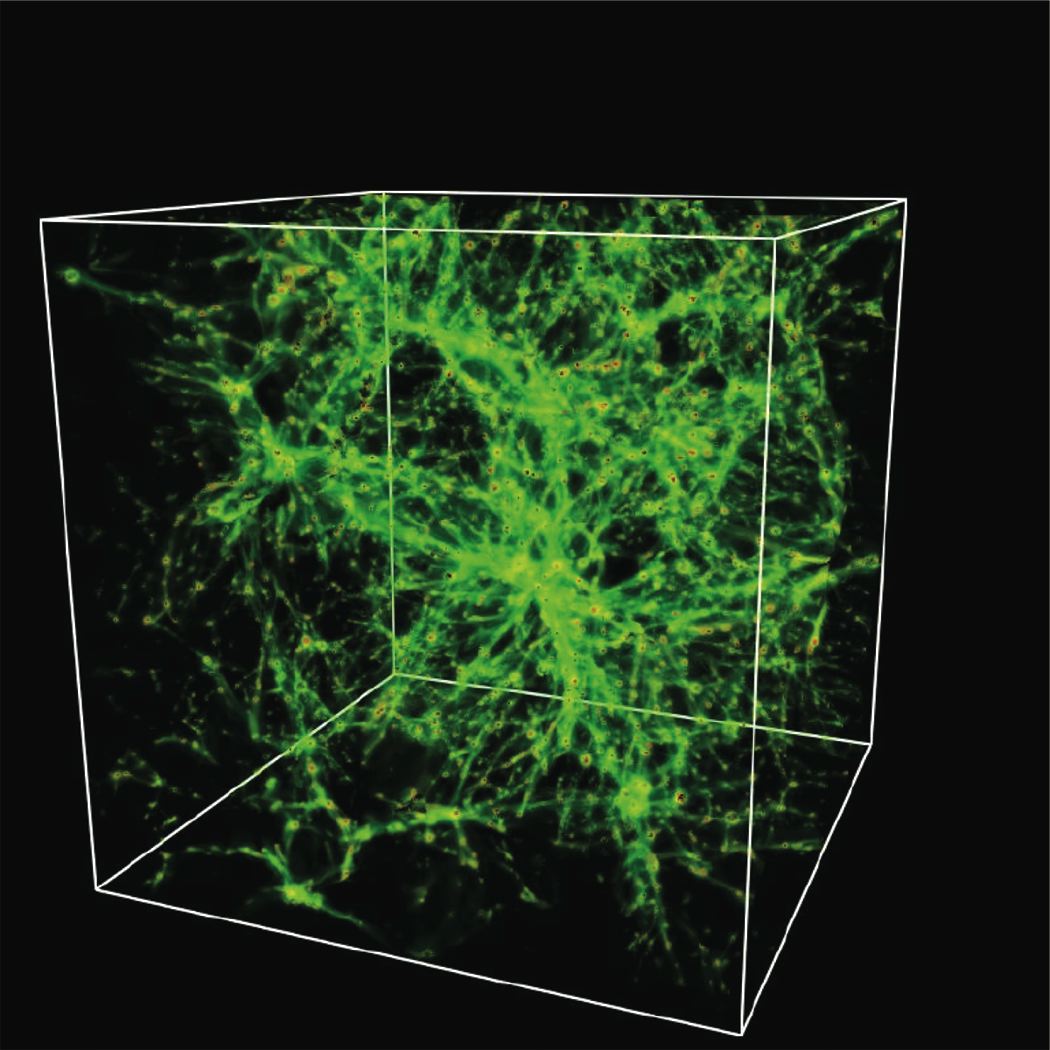 Simulation of dark matter and its place in the cosmic web. Credit: NASA
The ASTRID simulation also presented other interesting findings, such as the fact that low-mass galaxies appear to retain information about their initial “seed” black holes despite billions of years of growth through mergers. They also suggest that low-mass galaxies that have ceased forming new stars are more likely to contain black holes at their centers, while those that are still forming stars are more likely to have wanderers.
Ultimately, these results offer a framework that could lead to a more comprehensive approach to study the origins of black holes. This potential approach includes deep X-ray observations, optical and infrared spectroscopy, radio astronomy, and transient “flares” caused by black holes devouring stars. As Weller said:
Each of these methods can probe different parts of the population. By combining observations with the results from simulations, we may be able to identify the imprints of black hole formation and galaxy evolution.
Further Reading: YaleNews, The Astrophysical Journal Letters

