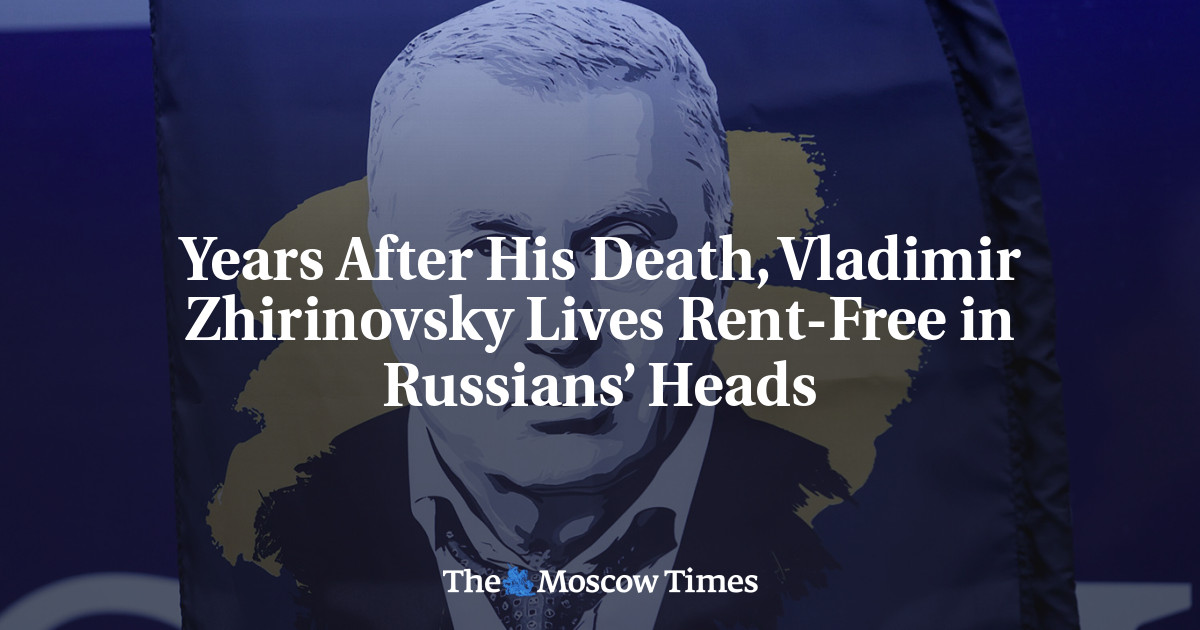
ОХУ-ын Ерөнхийлөгч Владимир Путин болон тус улсын олон нийтийн дунд талийгаач улстөрч Владимир Жириновскийг дурсах хандлага нэмэгдэж, түүнийг эх оронч үзэл болон стратегийн алсын харааны бэлгэдэл хэмээн үзэх болжээ.
Есдүгээр сарын 28-нд болсон парламентын намуудын удирдлагуудтай хийсэн уулзалтын үеэр Ерөнхийлөгч Владимир Путин Владимир Жириновскийг үгүйлж буйгаа илэрхийлсэн байна. 2022 онд 75 насандаа таалал төгссөн Жириновскийг ОХУ-ын улс төрийн тавцанд байхгүй байгаа нь өнөөгийн нөхцөл байдалд ихээхэн мэдрэгдэж байгааг тэрээр онцолжээ. Түүний байгуулсан Либерал ардчилсан нам (LDPR) өдгөө ч түүний нэр хүндийг ашиглан сурталчилгаа явуулж байгаа бөгөөд олон нийтийн дунд түүнийг таамаглал дэвшүүлэгч, үнэнч улстөрч хэмээн хүлээн авах нь нэмэгдсэн байна.
ОХУ-ын төрийн мэдлийн судалгааны байгууллага болох VTsIOM-ын 2025 оны гуравдугаар сарын тайлангаар, судалгаанд оролцогчдын 66 хувь нь Жириновскийд итгэдэг гэж хариулсан нь түүнийг амьд ахуй үеийнхээс өндөр үзүүлэлт юм. Шинжээчид үүнийг улс төрийн тогтолцооны өөрчлөлт болон нийгмийн дунд үүссэн тодорхойгүй байдалтай холбон тайлбарлаж байна. Ялангуяа Украйн дахь цэргийн ажиллагааны дараа түүний дэвшүүлж байсан үндсэрхэг үзэл баримтлал ОХУ-ын албан ёсны бодлогод илүү тод тусгалаа олох болсон нь түүний нэр хүндийг өсгөхөд нөлөөлжээ.
Улс төр судлаачдын үзэж буйгаар, Жириновскийн өдгөө ч Оросын нийгэмд хүчтэй байгаа нь өнөөгийн улс төрийн удирдагчдын дутагдалтай шууд холбоотой юм. Тэрээр өөрийн гэсэн өвөрмөц, чадварлаг илтгэх ур чадвараараа ялгарч байсан бөгөөд нийгэм эдийн засгийн хүндрэлтэй цаг үед олон нийт түүнийг дурсах нь элбэгшжээ. Путин болон Оросын энгийн иргэдийн хувьд Жириновский нь 2000-аад оны үеийн дурсамж болон улс төрийн тодорхой нэгэн орон зайг нөхөх бэлгэдэл болж байна.
Дэлгэрэнгүйг эх сурвалжаас харах
↓Эх сурвалжийг нээх ↓
In late September, President Vladimir Putin took a moment at a meeting with parliamentary party leaders to remember a familiar face missing from this year’s State Duma elections: Vladimir Zhirinovsky.
“I would like to say that we certainly miss him, especially under the current circumstances. It is a pity that he is gone,” Putin said at the Sept. 28 meeting.
More than four years after his death in 2022 at age 75, Zhirinovsky continues to hold a place in Russia’s popular consciousness, from TikTok to the Kremlin.
His party still campaigns on his image, social media users recast his speeches as prophecies and polling suggests that Russians remember him more fondly than they viewed him during his lifetime.
His posthumous appeal draws on a reputation for predictions that came true and nostalgia for an unfiltered, theatrical politician whose successors have struggled to match his charisma.
Meanwhile, the once-fringe nationalist rhetoric he championed has become more prominent in mainstream Russian politics since the invasion of Ukraine.
“Rest in peace, Uncle Vova; you always knew everything,” reads one comment on his official Instagram page.
Vladimir Zhirinovsky’s grave at Novodevichy Cemetery in Moscow.
Moskva News Agency
A fixture in Russian politics for decades, Zhirinovsky led the right-wing populist Liberal Democratic Party (LDPR) from its inception in 1992 and ran no fewer than six failed presidential campaigns.
As a lawmaker, he was better known for his provocative, outlandish speeches and clashes with fellow politicians than for his legislative work.
Among his more notorious statements were calls to use nuclear weapons against other countries and demands to seize Alaska from the U.S., along with numerous abusive comments toward women.
His persona nevertheless became a source of comic relief for many Russians and the inspiration for countless memes, Instagram reels and musical mixes.
Since his death, that trend has only grown. Social media users create AI videos that cast him as an honest politician and a near-prophet, often contrasting him against depictions of corrupt, greedy officials.
A March 2025 survey by state pollster VTsIOM found that 66% of respondents said they had trusted Zhirinovsky, up from 60% in a survey conducted shortly after his death. During his lifetime, trust in Zhirinovsky had usually fluctuated within 15-30%.
A demo of the Zhirinovsky chatbot at the 2023 St. Petersburg International Economic Forum. LDPR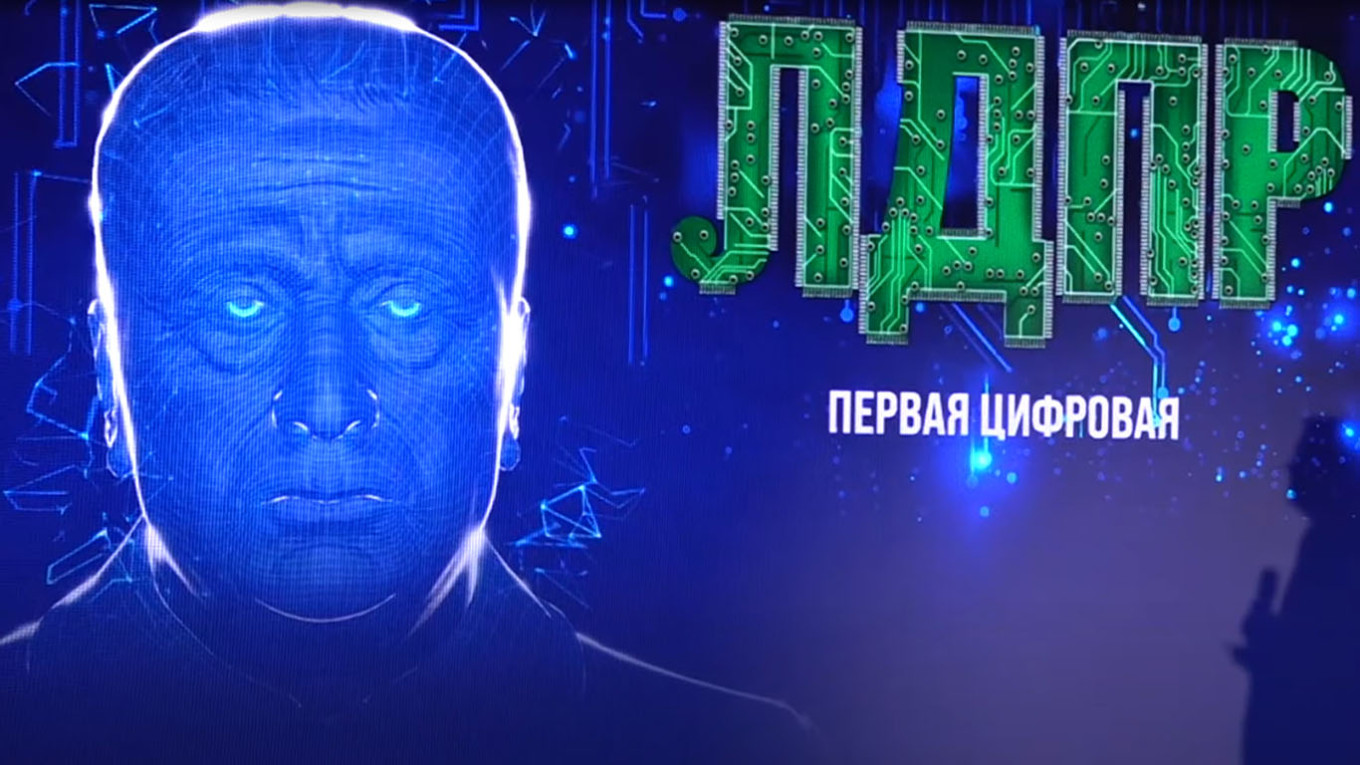
As during his lifetime, it can be difficult to tell where the admiration ends and irony begins.
Following reports that an employee at a Siberian anti-plague institute had fallen ill and died last week, excerpts from Zhirinovsky’s speeches about plague resurfaced on social media.
“Zhirinovsky even predicted the plague in Russia,” says the author of one post.
“He just ran his mouth a lot,” came a reply in the comments.
Yet the idea that Zhirinovsky foresaw events others failed to anticipate has become central to his posthumous popularity. Collections of his predictions that appear to have come true regularly circulate online.
One of the most widely cited examples comes from a State Duma speech in late 2021, when he appeared to anticipate Russia’s invasion of Ukraine.
“At 4 a.m. on Feb. 22, you’ll feel [our new policy],” Zhirinovsky said. “I’d like 2022 to be peaceful. But I love the truth, for 70 years I’ve said the truth. It won’t be peaceful. It will be a year when Russia once again becomes great.”
Russian troops invaded Ukraine on Feb. 24, two days after the date he had named.
Some of his statements from the 2000s have also been interpreted as forecasts of Russia’s annexation of Crimea. Many more predictions, including claims that the 2024 U.S. presidential election would be canceled and that NATO would collapse, would not come true.
VTsIOM head Valery Fedorov told the RBC news website that Zhirinovsky’s public image has evolved since his death from that of a scandal-prone politician to a symbol of “patriotism and strategic foresight,” a change he linked to the upheavals of recent years that he said have challenged Russians’ worldview.
“In times of fundamental shifts in the very foundations of how we see the world, radical critics of the old order often turn out to be the greatest realists,” Fedorov said. “Zhirinovsky, who fiercely and relentlessly stripped away the illusions surrounding the rulers and ideologues of the ‘unipolar world,’ proved to be a true herald of a new era of ‘warring kingdoms’.”
Putin and State Duma Speaker Vyacheslav Volodin visiting the “Zhirinovsky. Continuation. LDPR” exhibition, which marked Zhirinovsky’s 80th birthday, in April 2026. kremlin.ru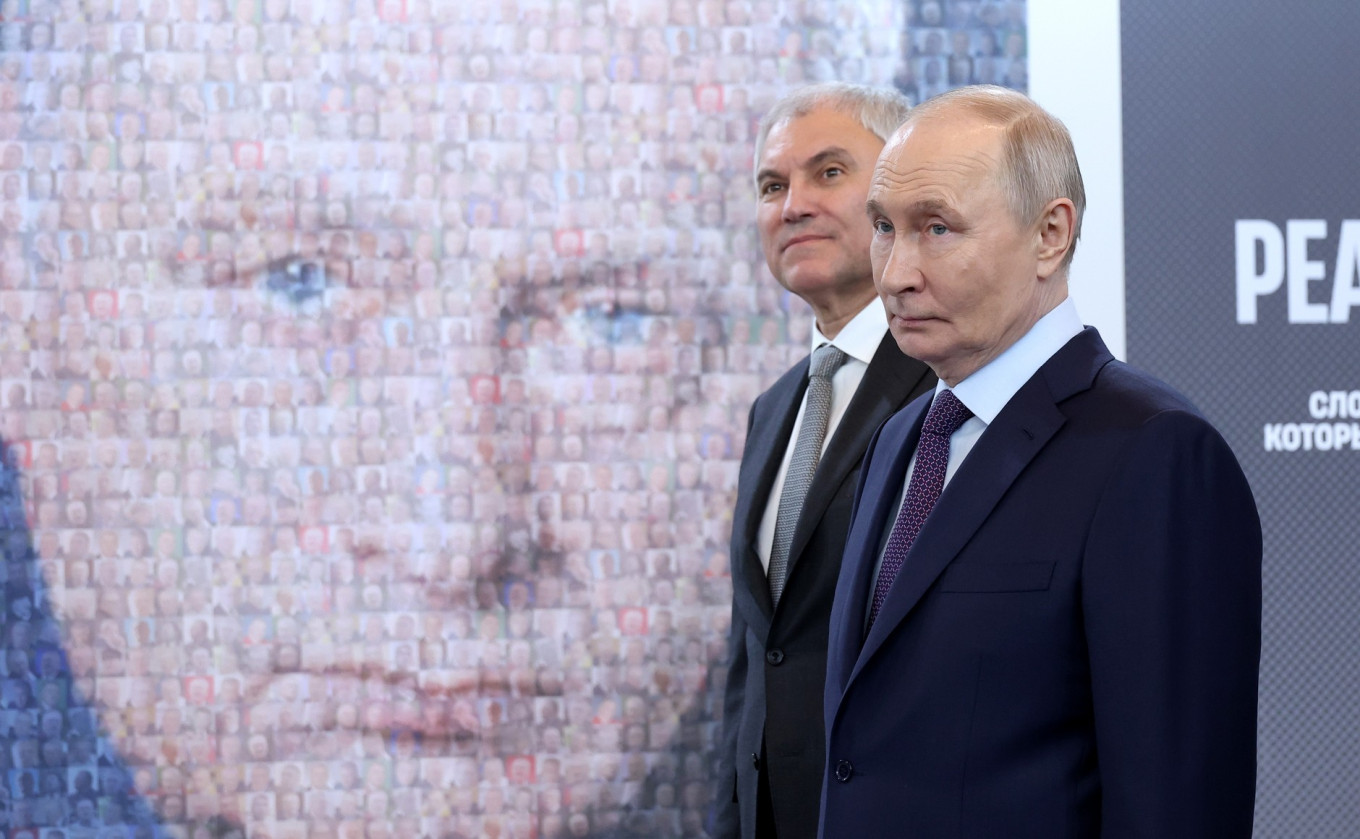
Exiled political analyst Abbas Gallyamov, a former Putin speechwriter, offered a different explanation.
“Of course, part of it is that people tend to think more kindly of someone after their death than during their lifetime,” Gallyamov told The Moscow Times.
“But the main reason is that Russia now has a kind of political vacuum: people are dissatisfied with the leaders they have, and no new ones are in sight,” he said. “That applies to the gray mass of officials like [State Duma Speaker Vyacheslav] Volodin, to opposition figures and to Putin himself.”
Zhirinovsky’s image has helped fill that vacuum, Gallyamov said.
“In terms of showmanship, no one comes close to him,” Gallyamov said. “Living standards are falling, there’s no gasoline, and none of the politicians are responding to people’s concerns. That’s when you start wistfully remembering the colorful, charismatic Zhirinovsky.”
Putin and ordinary Russians alike associate Zhirinovsky with the 2000s, a period they now recall with nostalgia amid the war in Ukraine and the economic malaise that has stemmed from it, Gallyamov said.
The “Zhirinovsky forever” exhibition at the Museum of Modern History of Russia in Moscow. Sergei Kiselev / Moskva News Agency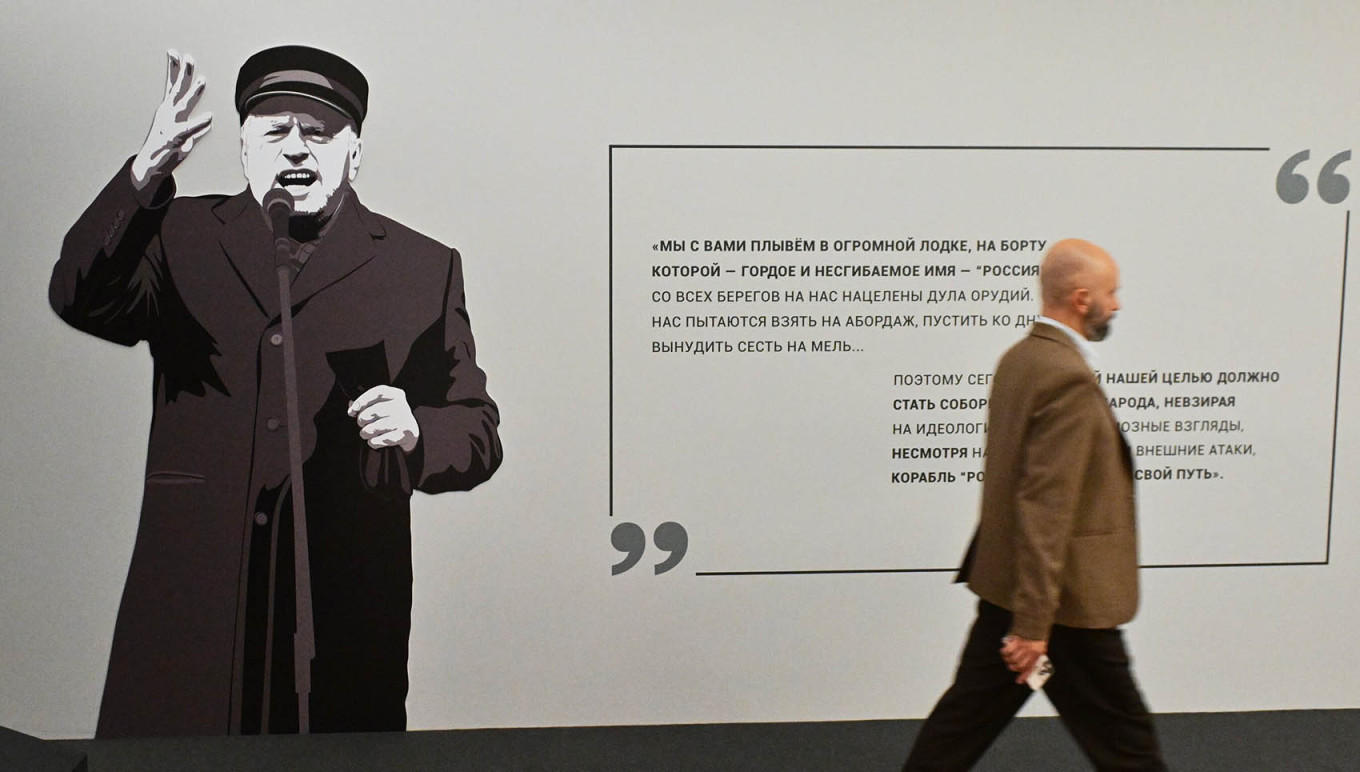
He also argued that Zhirinovsky helped build a constituency for the nationalist rhetoric that Putin later adopted as his own, then yielded his political niche to the president without putting up a fight.
As for the now 74-year-old Putin, remembering Zhirinovsky may also offer reassurance about his own mortality, Gallyamov suggested.
“The president is aging,” Gallyamov said. “He finds the thought of death unpleasant, but takes comfort in the idea that the ‘right people’ are remembered and loved even after they die.”
A Message from The Moscow Times:
Dear readers,
We are facing unprecedented challenges. Russia’s Prosecutor General’s Office has designated The Moscow Times as an “undesirable” organization, criminalizing our work and putting our staff at risk of prosecution. This follows our earlier unjust labeling as a “foreign agent.”
These actions are direct attempts to silence independent journalism in Russia. The authorities claim our work “discredits the decisions of the Russian leadership.” We see things differently: we strive to provide accurate, unbiased reporting on Russia.
We, the journalists of The Moscow Times, refuse to be silenced. But to continue our work, we need your help.
Your support, no matter how small, makes a world of difference. If you can, please support us monthly starting from just $2. It’s quick to set up, and every contribution makes a significant impact.
By supporting The Moscow Times, you’re defending open, independent journalism in the face of repression. Thank you for standing with us.
Continue

Not ready to support today?
Remind me later.
×
Remind me next month
Thank you! Your reminder is set.
We will send you one reminder email a month from now. For details on the personal data we collect and how it is used, please see our Privacy Policy.

