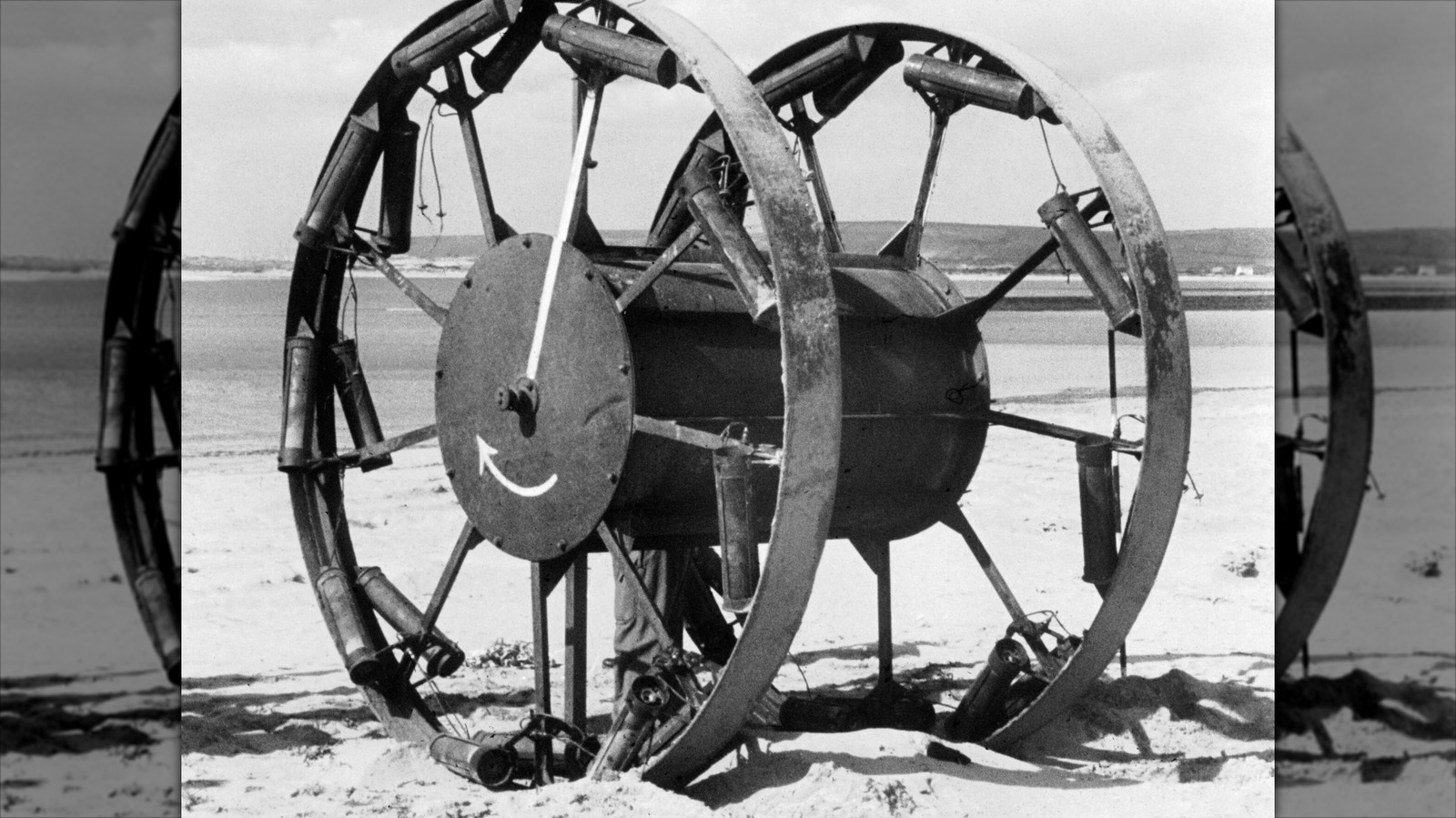
Холбоотны арми “Atlantic Wall”-ыг сэтлэх зорилгоор пуужингаар тоноглогдсон туршилтын төхөөрөмжийг бүтээсэн ч байлдааны нөхцөлд ашиглах боломжгүй нь батлагджээ.
Дэлхийн хоёрдугаар дайны үеэр Холбоотны хүчин Германы эзэмшлийн “Atlantic Wall” буюу Норвеги, Испани, Францын эрэг дагуух батлан хамгаалах шугамыг сэтлэх зорилгоор “Panjandrum” нэртэй өвөрмөц зэвсгийг бүтээжээ. Энэхүү төхөөрөмж нь хоёр том дугуйны хооронд нэг тонн тэсрэх бодис байрлуулж, түүнийг пуужингийн хүчээр өнхрүүлэн дайсны бэхлэлтийг мөргүүлж дэлбэлэх зориулалттай байв. Онолын хувьд энэ төхөөрөмж нь цагт 60 гаруй миль хурдлах чадвартай байх ёстой байсан юм.
Гэвч туршилтын явцад уг зэвсгийн хийц загвар нь байлдааны нөхцөлд бүрэн ажиллагаагүй болох нь тогтоогджээ. Төхөөрөмжийн эд ангиуд бат бөх бус байснаас гадна пуужингууд нь тогтворгүй ажиллаж, чиглэлээ алдан эргэн тойрны хүмүүс болон далай руу чиглэн явдаг байв. Энэхүү бүтэлгүй туршилтуудын улмаас цэргийн удирдлага уг төхөөрөмжийг ашиглахаас татгалзсан байна.
Эцсийн дүндээ Холбоотны цэргүүд туршигдсан, найдвартай арга болох “Bangalore” торпедог ашиглан бэхлэлтийг сэтлэх ажиллагааг амжилттай гүйцэтгэжээ. “Panjandrum” нь тухайн дайны үеийн цэргийн техник хэрэгслийн түүхэнд хамгийн этгээд, бүтэлгүй бүтээлүүдийн нэг болон үлдсэн юм.
Дэлгэрэнгүйг эх сурвалжаас харах
Эх сурвалжийг нээх ↓
World War II saw combat operations all over the planet, and the nations that participated in the conflict did so with all kinds of weapons, vehicles, and gear. The Nazis invented many crazy military machines throughout WWII, but Germany wasn’t the only country stretching its imagination on what might benefit the war effort, as other nations got into developing experimental weapons systems early on in the conflict. Perhaps the boldest, strangest, and most uncontrollable of these devices was the Panjandrum, which was designed to break the Atlantic Wall.
In preparation for D-Day, the Allied powers weighed the best method for breaching Germany’s defenses, and if you’ve seen “Saving Private Ryan,” you know that soldiers employed a device called a Bangalore, which was a type of torpedo that contained explosives inside of interconnected tubes. This helped breach the barbed wire and other obstacles, allowing the Allies to achieve success. What you didn’t see was the Panjandrum, for one simple reason: It didn’t work.
The concept revolved around tearing through the Atlantic Wall via a massive, rocket-propelled, explosive-carrying wheel. The British designed the Panjandrum specifically to breach Nazi defenses during Operation Overlord, but the large device failed to achieve its designed goal.It was meant to move out of a landing craft like a Higgins boat, through the water onto the beach, and explode to destroy a portion of the Atlantic Wall. Unfortunately, the device was abandoned for other tried and true options like Bangalore torpedoes.
The insane engineering of the Panjandrum
ThePanjandrumwas made out of a massive Catherine wheel, which is a type of pinwheel firework that spins. The same function was blown up to enable the Panjandrum to carry a 1-ton bomb. The idea was that it would roll up the beach, slam into the Atlantic Wall, which was what Adolf Hitler called the concrete bunker defenses built across 3,105 miles of Norway, Spain, and France’s coastline. Once it hit the wall, it would detonate, blasting a hole large enough for tanks to drive through.
That was the plan, and the concept had merit, but its execution failed every time. The Panjandrum stood 10 feet high and employed two large wheels sandwiched between a large steel enclosure that contained the explosive device. Rockets containing gunpowder were placed along the spokes at an angle, and once ignited, they propelled the device forward; given what was packed onto it, the Panjandrum could have reached speeds over 60 mph.That was the theory. In practice, that is decidedly not what happened, as you can see in the video above.
In its final test, several clamps broke, causing rockets to fire off in all directions. Once it hit some small craters in the sand that simulated artillery detonations, it turned starboard, careening towards one of the photographers. He ran for safety while generals and admirals dove for cover. Instead of hitting the targeted defenses, it veered back into the sea, proving itself a failure. After that, the Panjandrum was scrapped and remains one of the most bizarre devices dreamed up during WWII.

