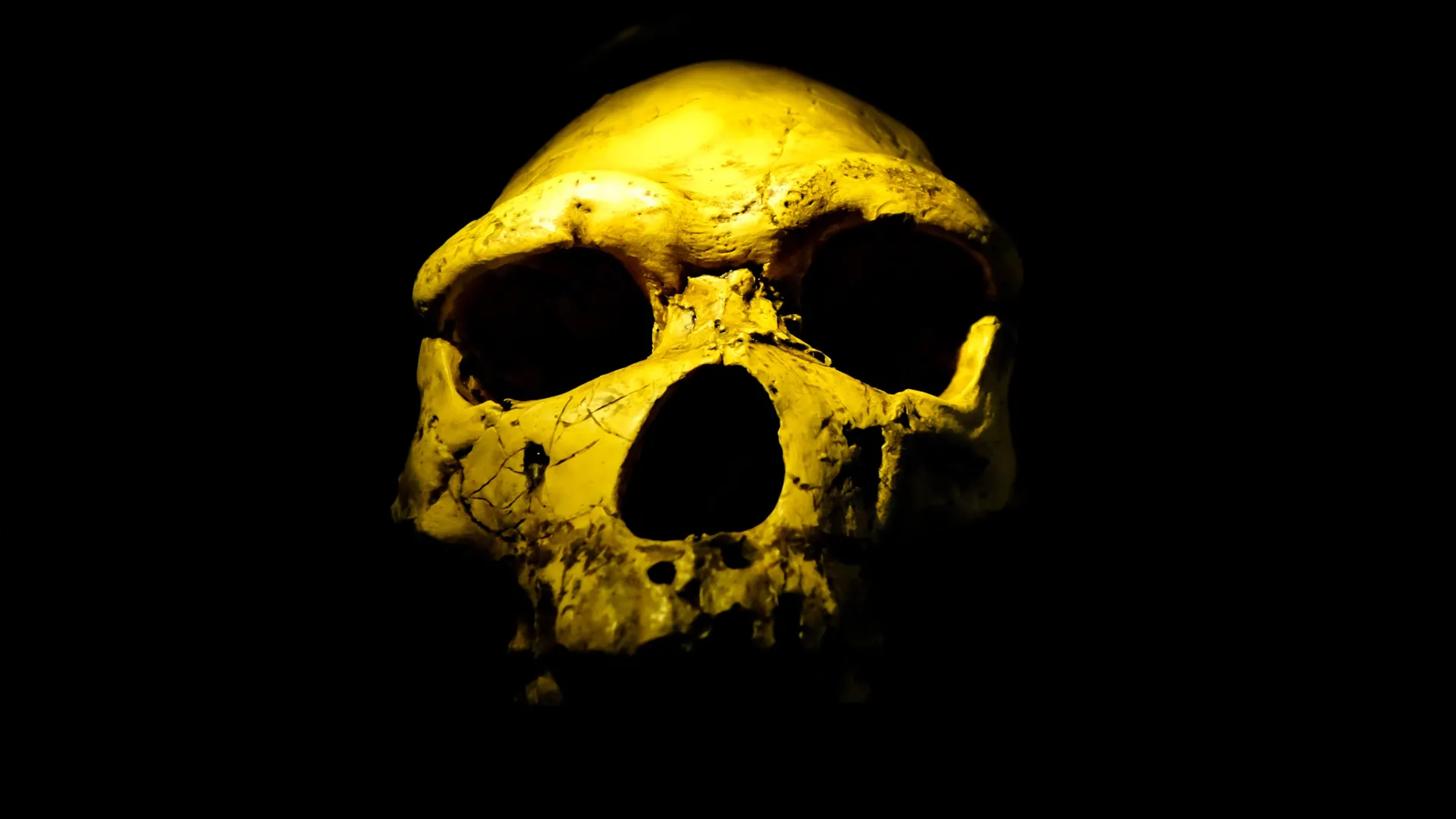
Өмнөд Африкийн Дримолен бүсээс олдсон шинэ олдворууд хүн төрөлхтний өвөг дээдсийн хувьслын түүхийг дахин тодотголоо.
Ла Троб их сургуулийн судлаачид Өмнөд Африкийн “Хүн төрөлхтний өлгий” хэмээх бүс дэх Дримолен уурхайгаас олдсон 18 шинэ олдворыг шинжлэн судалснаа Annals of Human Biology сэтгүүлд нийтэлжээ. Эдгээр олдворын дунд Homo erectus-д хамаарах насанд хүрсэн хүний гавлын ясны хэсэг байгаа нь уг төрөл зүйл тус бүс нутагт 2 сая жилийн өмнө буюу урьд өмнө тооцоолж байснаас 200 мянган жилийн өмнө оршин байсныг баталж байна. Энэхүү олдвор нь өмнө нь Гүржийн Дманиси орчмоос олдсон 1.8 сая жилийн настай олдворуудаас илүү эртнийх юм.
Судалгааны багийн ахлагч, доктор Жессе Мартин хэлэхдээ, Homo erectus нь хүн төрөлхтний шууд өвөг дээдэс гэж үздэг анхны төрөл зүйл бөгөөд Дримоленоос олдсон 2 сая жилийн настай энэхүү олдвор нь тэдний бие бялдрын хөгжлийн талаарх ойлголтыг өргөжүүлж байна гэв. Өмнө нь тус бүсээс олдсон Homo erectus-ын олдвор нь бага насны хүүхдийнх байсан тул насанд хүрсэн хүний анатомийн бүтэц тодорхойгүй байсан билээ.
Мөн тус малтлагаар P. robustus төрөл зүйлийн олдворууд олдсон нь тэднийг хүрээлэн буй орчны өөрчлөлтөд дасан зохицож, хувьсан өөрчлөгдөж байсныг харуулж байна. 2 саяас 1.8 сая жилийн өмнөх хугацаанд P. robustus нь том хэмжээний шүд, хүчирхэг зажлах булчинтай болж, хатуу хоол хүнс хэрэглэхэд илүү дасан зохицсон байна. Энэ нь тархины хэмжээ нь нэмэгдэж, шүд нь жижигрсэн Homo erectus-ын хувьслын замаас эрс ялгаатай байжээ.
Судалгааны үр дүнд 200 мянган жилийн хугацаанд P. robustus-ын бие махбод дахь микро-хувьслын өөрчлөлтийг нарийвчлан тодорхойлох боломжтой болсон байна. Судлаачид Дримоленоос олдсон P. robustus нь өөр нэгэн бүс болох Сварткрансаас олдсон төрөл зүйлээс ялгаатай тул P. robustus ukusa хэмээх дэд зүйлд ангилах нь зүйтэй гэж үзэж байна. Энэхүү олон талт олдворын цуглуулга нь эртний хүмүүсийн хувьслын үйл явцыг ойлгоход чухал ач холбогдолтой юм.
Дэлгэрэнгүйг эх сурвалжаас харах
↓Эх сурвалжийг нээх ↓
Archaeologists from La Trobe University have described 18 newly published hominin fossils from South Africa, including a second skull fragment belonging to Homo erectus. The discovery adds stronger evidence that the species was present in southern Africa 2.0 million years ago, about 200,000 years earlier than traditionally believed.
The fossil collection also includes remains of P. robustus. Those specimens suggest the species was undergoing gradual evolutionary changes as it adapted to shifting environmental and climatic conditions.
Fossils From South Africa’s Cradle of Humankind
The fossils come from Drimolen Main Quarry in South Africa’s ‘Cradle of Humankind,’ one of the world’s richest sites for remains of ancient human relatives. Although the quarry was discovered in 1992 and excavated through 2019, many of the fossils recovered there had never been formally described and remained largely unknown to science.
Researchers from La Trobe, working with colleagues in South Africa and the United States, have now analyzed and described another 18 fossils from the site. The remains have been assigned to Homo erectus and P. robustus.
In research published in Annals of Human Biology, the team reports the first known adult Homo erectus fossil from Drimolen. The specimen is about 2 million years old, making it roughly 200,000 years older than adult Homo erectus fossils discovered elsewhere, including specimens from Dmanisi in Georgia that date to about 1.8 million years ago.
“Homo erectus is the first species of hominin that researchers broadly agree fits within our own genus Homo and is likely directly ancestral to us. Drimolen preserves evidence for the first appearance of this species 2 million years ago; however, the original fossil, DNH 134, belonged to a child aged between two and four, and there was uncertainty about what the adult version may have looked like,” lead researcher Dr. Jesse Martin said.
“This paper publishes a new adult fossil attributed to Homo erectus, DNH 127, providing further confirmation that this species first appeared in southern Africa 2 million years ago.”
Two Human Relatives Took Different Evolutionary Paths
The newly described fossils also provide evidence that P. robustus changed over time. Between about 2 million and 1.8 million years ago, the species developed larger teeth and more powerful chewing muscles.
According to Dr. Martin, the contrast with Homo erectus is striking. While Homo erectus was developing a larger brain and smaller molar teeth, possibly as a result of eating more meat, P. robustus retained a brain only slightly larger than that of chimpanzees. At the same time, it evolved enormous molars suited to grinding and crushing tough, hard foods, functioning much like a mortar and pestle.
“These two human species shared the same landscape and are both preserved in Drimolen cave. While we know that Homo erectus and the lineage leading to us was ultimately the successful one, 2 million years ago P. robustus outnumbered Homo erectus at Drimolen by more than 10 to one. During this time period, it was our ancestors that looked like the outside long-odds chance to survive,” Dr. Martin said.
Fossils Reveal Evolution in Action
The Drimolen fossils also help researchers compare P. robustus populations separated by about 200,000 years.
“This paper confirms that the P. robustus fossils from the 2-million-year-old Drimolen Cave are slightly but importantly different from the P. Robustus fossils at the 1.8-million-year-old Swartkrans cave.
“During this 200,000-year period, P. robustus teeth became even larger, and so did the muscles associated with chewing. Hominin fossils are so rare that generally the differences between them are huge, and researchers are left to make educated guesses regarding what existed in the missing parts of the fossil record.
“However, the large number of fossils from Drimolen, some of which are published in this paper, allow an unprecedented insight into the micro-evolutionary changes that shaped human ancestors.
Dr. Martin said researchers had already recognized that the Drimolen population of P. robustus was distinctive enough to receive a separate subspecies designation, P. Robustus ukusa. The newly described fossils provide additional support for that formal classification.
The research involved scientists from the Palaeoscience Labs, Department of Archaeology and History, La Trobe University, Palaeo-Research Institute, University of Johannesburg, Evolutionary Studies Institute, University of the Witwatersrand, and Department of Anthropology, Washington University.

