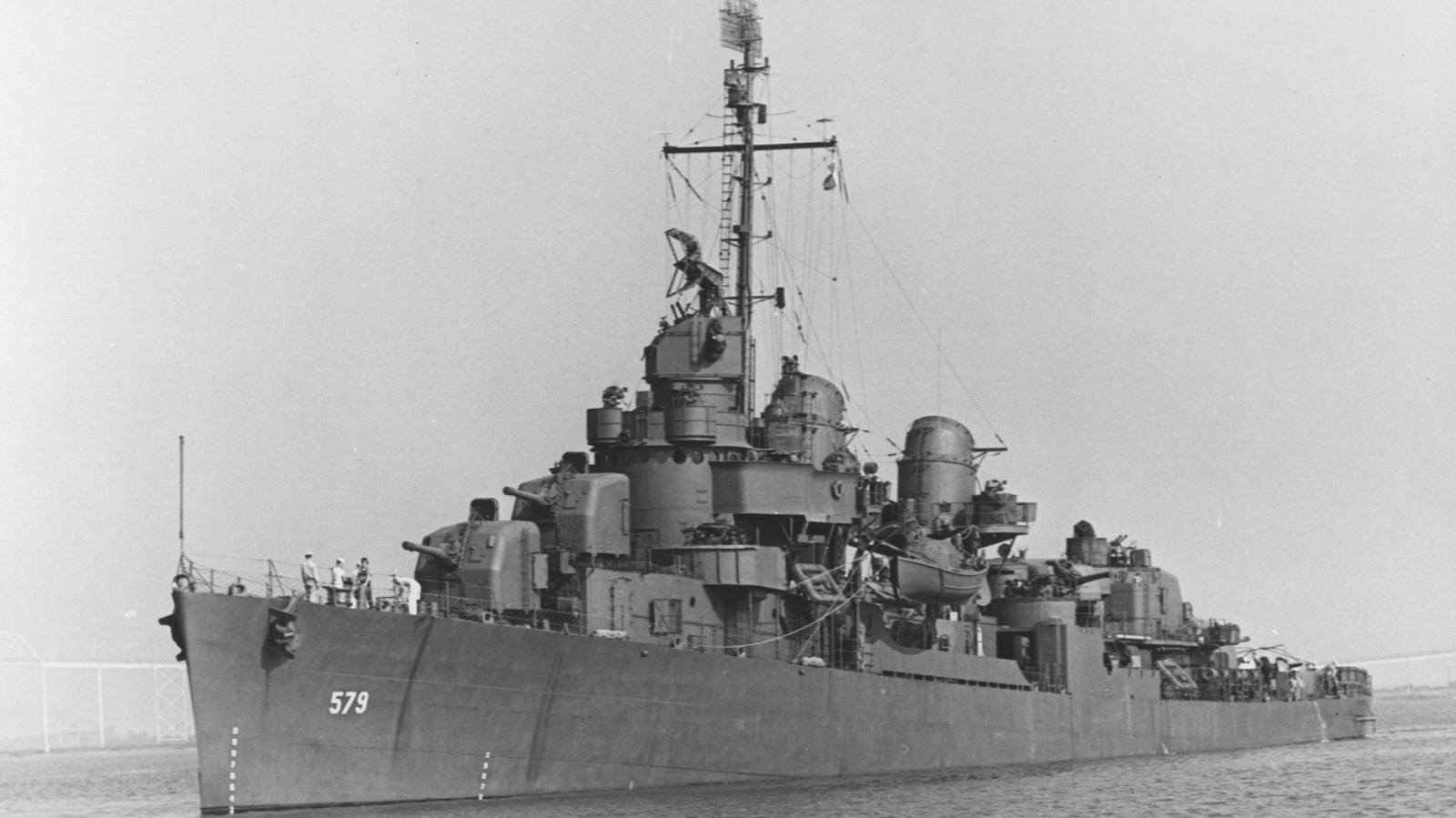
АНУ-ын тэнгисийн цэргийн хүчний Fletcher ангиллын сөнөөгч хөлөг онгоц нь олон тооны осол, алдаатай үйл ажиллагааныхаа улмаас дайны түүхэн дэх хамгийн бүтэлгүй хөлөг хэмээн тэмдэглэгджээ.
1943 оны долдугаар сард ашиглалтад орсон USS William D. Porter (DD-579) хөлөг онгоц нь 1943 оны арваннэгдүгээр сарын 12-нд Норфолк боомтоос гарахдаа зангууны буруу ажиллагаанаас болж ойролцоох хөлөг онгоцны тавцанг гэмтээснээр олон цуврал ослын эхлэл тавигджээ. Удалгүй хөлөг онгоцны гүний бөмбөг санамсаргүйгээр дэлбэрч, дараа нь хүчтэй давалгааны улмаас багийн нэг гишүүн амиа алдан, зуухны систем нь эвдэрсэн байна. Ерөнхийлөгч Франклин Д.Рузвельтийг Европ руу хүргэх үеэр хөлгийн багийнхан санамсаргүйгээр USS Iowa хөлөг онгоц руу торпедо харвасан нь ноцтой зөрчилд тооцогдож, улмаар хэргийг мөрдөн шалгах ажиллагаа явагджээ.
Уг хөлөг онгоц 1943 оны арванхоёрдугаар сарын 29-нд Аляскийн Дач Харборт шилжин ирж, Номхон далайн флотод үүрэг гүйцэтгэж эхэлсэн боловч асуудлууд үргэлжилсээр байв. 1944 оны нэгдүгээр сарын 1-нд багийн гишүүн согтуугаар 5 инчийн их бууг санамсаргүй харваж, сум нь баазын командлагчийн хашаанд туссан хэрэг гарчээ. Хэдийгээр хөлөг онгоц Окинавагийн тулалдаанд оролцохдоо дайсны зургаан онгоцыг устгаж, эрэг рүү гал нээх зэрэг амжилт гаргасан ч удаан үргэлжлээгүй юм.
1945 оны зургаадугаар сарын 10-нд Японы Aichi D3A1 шумбагч бөмбөгдөгч онгоц USS William D. Porter хөлгийг чиглэн дайрчээ. Онгоц хөлгийг оноогүй ч усны мандал дор дэлбэрснээр хөлөг онгоцны их бие гэмтэж, багийнхан хөлгөө орхин гарахаас өөр аргагүй болсон байна. Ийнхүү дайны туршид олон удаагийн осол, техникийн алдаанд өртөж байсан хөлөг онгоц Номхон далайд живж, үйл ажиллагаагаа дуусгавар болгожээ.
Дэлгэрэнгүйг эх сурвалжаас харах
Эх сурвалжийг нээх ↓
History is rife with unlucky ships, fromthe RMS Titanic to the SS Andrea Doria, and World War II had its fair share as well. The conflict saw more than a few of humanity’s mightiest warships sink to the bottom of the sea, but one stands out as arguably the unluckiest ship to ever sail during WWII: the USS William D. Porter (DD-579),a Fletcher-class destroyer commissioned in July 1943.
It served in both the Pacific and Atlantic theaters before a Japanese kamikaze attack sunk it in June 1945. While you might think that’s already something of an unlucky ending, being sunk by Japanese aircraft was but one of the unfortunate incidents to befall the ship. Many of these occurred when the Porter, named in honor of a Civil War officer, escorted President Franklin D. Roosevelt — traveling aboard one of WWII’s most legendary ships, the USS Iowa (BB-61) — to Europe during the war.
The crossing began with an anchor mishap, but that was just the start. One of its depth charges accidentally detonated during the voyage, while a series of other incidents saw the crew break radio silence, going against protocol. The Porter and its crew also nearly struck the USS Iowa with one of its own torpedoes. The destroyer was eventually ordered to Bermuda for an inquiry, and its trail of mishaps, crew fumbles, and poor naval practices helped the Porter earn the distinction as WWII’s unluckiest ship.
The many mishaps of the USS William D. Porter
While the USS William D. Porter’s shakedown cruise went off without a hitch, things went wrong very quickly. When it left its Norfolk, Virginia, port on November 12, 1943, its crew didn’t raise the anchor correctly. This caused it to tear across another destroyer’s deck, ripping away railings and lifeboats. The next day, the Porter accidentally lost a depth charge that rolled overboard and detonated underwater, as nobody had set its safety.
Later, a massive wave hit the destroyer, sending a sailor overboard to his death. The wave also flooded one of its boilers, causing the Porter to slow down for repairs. The crew radioed the USS Iowa to let it know what was happening, breaking radio silence andinfuriating the Chief of Naval Operations, Adm. Ernest J. King. It got worse: after an air defense drill, the Porter engaged in a torpedo drill, practicing striking the Iowa with the torpedo primer charges removed. But one test firing actually launched a torpedo at the Iowa. The Porter’s commander, Lt. Cdr. Wilfred Walter, sent a warning via signal lamp. When this didn’t work, the Porter broke radio silence again to warn the Iowa, which avoided the torpedo.
The Porter was sent to Bermuda, where the U.S. Navy conducted an inquiry into the incident. The Navy discovered that Chief Torpedoman Lawton Dawson forgot to remove the torpedo’s primer, for which he was sentenced to 14 years of hard labor, though the president waived the sentence. Once all of this business of nearly killing the president settled down, the Porter eventually joined the Pacific Fleet, reporting to Dutch Harbor, Alaska, on December 29, 1943.
The Pacific misadventures and ultimate fate of the USS William D. Porter
TheUSS William D. Porter’s inauspicious Atlantic adventure didn’t end its time in service, as it continued operating in the Pacific theater, where more problems arose. During a New Year’s Day party in 1944,an intoxicated sailor fired off one of the ship’s 5-inch guns. This sent a 55-pound shell into the base commander’s backyard during a holiday party, though nobody was injured.
For the next eight months, the Porter patrolled the Pacific, raiding the Kuril Islands before joining the fight in the Leyte Gulf. In 1945, the ship participated in the invasion of Okinawa, Japan. The Porter provided cover for the U.S. Marine Corps landing on the beach, functioning as an air defense picket ship. During the battle, the Porter successfully shot down six aircraft and fired its guns at enemy targets on land. Things, it seemed, were looking up. But it wasn’t to last.
On June 10, 1945, an Aichi D3A1 dive bomber set its sights on the Porter. While the Porter’s evasive maneuvers caused the plane to miss and hit the water, the aircraft was going fast enough that it ended up below the Porter’s keel, where it exploded, lifting the destroyer out of the water. The crew spent hours attempting to save the Porter, but in the end, everyone had to abandon ship, leaving the war’s unluckiest vessel to its fate in Davy Jones’ Locker, while the entire crew escaped with their lives.

