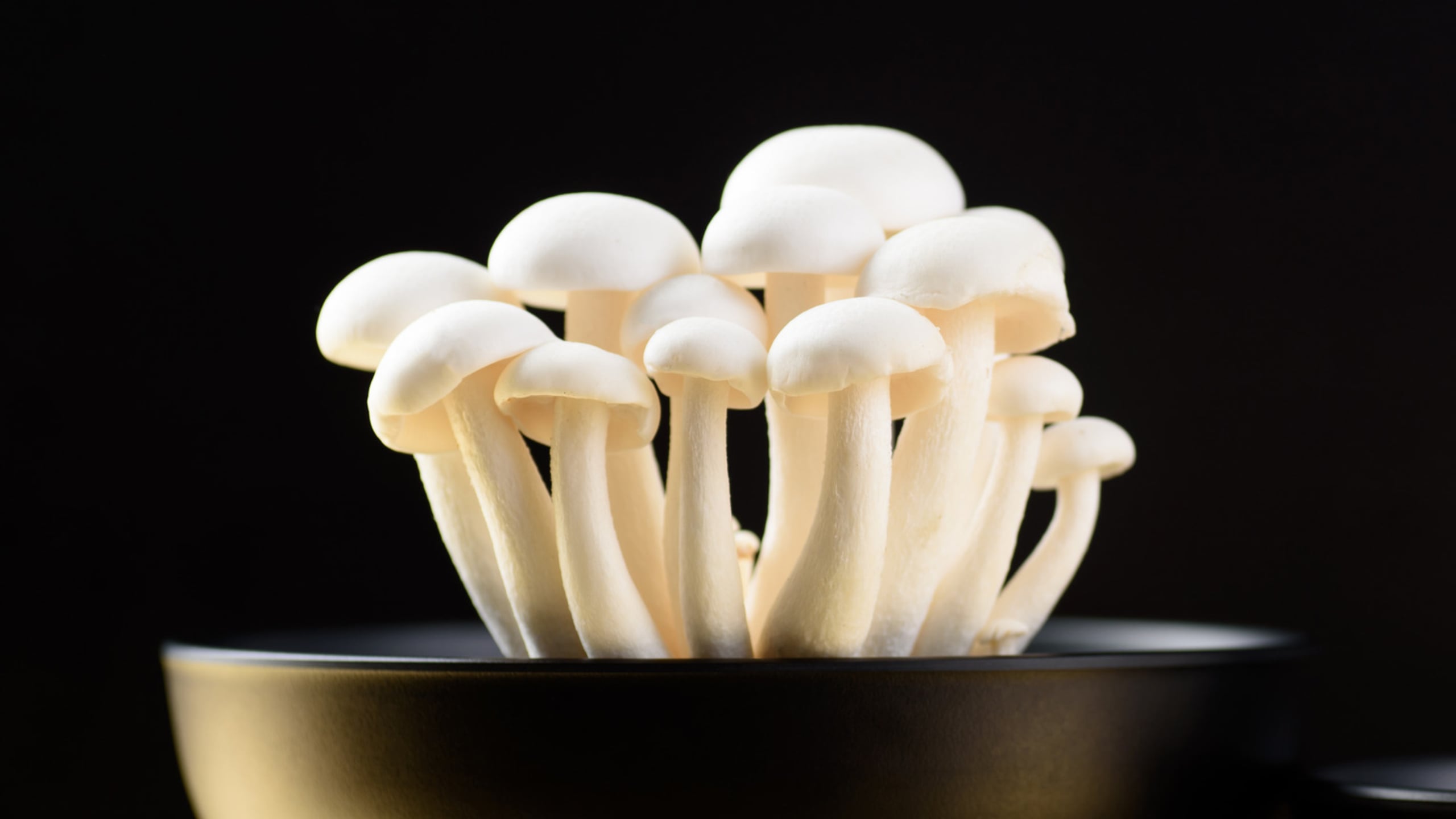
Ганнангийн анагаах ухааны их сургууль болон Шансигийн анагаах ухааны их сургуулийн судлаачид beech мөөгнөөс (Hypsizygus marmoreus) гаргаж авсан пептидүүд нь давсны амтыг хүчтэй мэдрүүлдэг болохыг лабораторийн судалгаагаар илрүүлжээ. Энэхүү нээлт нь хүнсний бүтээгдэхүүний натрийн агууламжийг бууруулж, амтыг нь хадгалах шинэ арга замыг нээж магадгүй юм.
Судлаачид ферментийн аргаар мөөгний уургийг задалж, машин сургалтын тусламжтайгаар ASHGEGF, LDDGF, GDDWT гэсэн гурван пептидийг сонгон авсан байна. Туршилтад оролцсон 19-34 насны 14 мэргэжилтний үнэлгээгээр, эдгээр пептид нь давсны амтыг 47-71 хувиар илүү хүчтэй мэдрүүлж, амтлах хугацааг уртасгаж байв. Электрон хэлний шинжилгээгээр ч мөн ижил үр дүн гарсан нь эдгээр молекул нь давсны мэдрэмжийг нэмэгдүүлдэг болохыг баталж байна.
Дэлхийн эрүүл мэндийн байгууллагаас натрийн хэт өндөр хэрэглээ нь цусны даралтыг ихэсгэж, зүрх судасны өвчлөлийн эрсдэлийг нэмэгдүүлдэг тул өдөрт 2 граммаас бага натри хэрэглэхийг зөвлөдөг. Гэвч давсыг багасгах нь хүнсний амтыг өөрчилдөг тул хэрэглэгчдэд хүлээн зөвшөөрөгдөхүйц хувилбар олох нь чухал асуудал юм. Компьютер загварчлалын үр дүнд эдгээр пептид нь хүний давсны амт мэдрэхүйн уурагтай холбогдож болох таамаглал дэвшүүлсэн ч энэ нь одоогоор зөвхөн лабораторийн түвшний судалгаа юм.
Судлаачид эдгээр пептидийг бодит хүнсний бүтээгдэхүүнд ашиглах боломж, аюулгүй байдал, тогтвортой байдлыг цаашид нарийвчлан судлахаар төлөвлөж байна. Одоогийн байдлаар эдгээр молекулыг бүхэл мөөг хэрэглэх замаар авах эсэх, эсвэл бодит хоолны найрлагад хэрхэн нөлөөлөх нь тодорхойгүй байна. Энэхүү судалгааны үр дүнг npj Science of Food сэтгүүлд нийтэлжээ.
Дэлгэрэнгүйг эх сурвалжаас харах
↓Эх сурвалжийг нээх ↓
You taste a bowl of soup and reach for the salt. A little more might bring the flavor together. But what if the same amount of salt could deliver a stronger salty taste?
Scientists in China have found three tiny fragments of mushroom proteins that did just that in laboratory tests. Added to salt solutions, the molecules made them taste saltier, with the strongest increasing perceived saltiness by about 71 percent.
The discovery could help researchers develop seasonings that preserve salty flavor while allowing less sodium.
The study in npj Science of Food, led by researchers at Gannan Medical University and Shanxi Medical University, tested peptides from the edible beech mushroom (Hypsizygus marmoreus).
Peptides are short chains of amino acids, the building blocks of proteins. Some have tastes of their own, including umami, the savory quality associated with mushrooms and other foods. Certain umami peptides can also strengthen the perception of saltiness.
That makes them interesting candidates for a familiar problem: reducing salt can change the taste of food, making a healthier formulation harder to enjoy.
TheWorld Health Organization recommendsthat adults consume less than 2 grams of sodium daily, equivalent to less than 5 grams of salt. High sodium intake raises blood pressure, increasing the risk of cardiovascular disease.
Researchers have already explored other ways to reduce sodium. Alarge trial previously covered by ScienceAlertfound health benefits from replacing regular salt with a mixture containing less sodium and added potassium.
The mushroom study tackles an earlier question: could an ingredient make the salt already present taste stronger?
To find the right molecules, the team used enzymes to break down mushroom proteins and separated out a fraction containing smaller molecules. Trypsin produced the strongest saltiness under the conditions tested.
Analysis revealed 6,092 peptide sequences. Testing every one would have been a substantial task, so the researchers used computational tools to narrow the search.
They screened for predicted properties including solubility, stability, toxicity, and allergenicity. Machine learning helped select sequences likely to produce umami, leaving five candidates to synthesize and test.
These predictions helped prioritize molecules; they didn’t establish the safety of a future commercial ingredient.
The next stage brought people into the process: 14 trained assessors, aged 19 to 34, evaluated the samples using a sip-and-spit method. Reference solutions helped them rate taste consistently.
For the saltiness comparison, the researchers added each peptide at 1 milligram per milliliter to a solution containing 3 milligrams of sodium chloride per milliliter. The control contained the same salt concentration without an added peptide.
Three molecules stood out: ASHGEGF, LDDGF, and GDDWT. Those letter sequences identify the amino acids in each peptide.
ASHGEGF increased the saltiness rating by 70.59 percent. LDDGF and GDDWT increased it by 49.02 and 47.06 percent, respectively.
That result may seem striking, but it needs careful interpretation.
A 71 percent increase in perceived saltiness doesn’t mean 71 percent of the salt could be removed. Both solutions contained the same salt concentration; the researchers did not establish how much sodium could be cut while keeping the taste unchanged.
The sensation also lasted longer. In fitted taste-intensity curves, saltiness lasted 75 seconds for the plain solution and 105 seconds when ASHGEGF was added. The other two peptides extended it to 90 seconds.
An electronic tongue, which measures chemical samples through electrical signals, provided complementary evidence that the mixtures differed, registering higher saltiness readings for all three mixtures than for the plain salt solution.
To explore why, the team turned to computer models of TMC4, a membrane protein associated with salt taste. Simulations suggested that the peptides could form stable associations with the model, largely through hydrogen bonds.
This doesn’t confirm how the molecules work in human taste cells, but it provides a possible explanation to investigate. Salt perception involves several pathways, and the authors say further receptor studies and cell experiments are needed.
Other ingredients, cooking, and storage could affect how well the peptides perform. The authors plan to test them in actual low-sodium foods and assess their sodium-reduction potential, sensory effects, and practical stability.
For now, no one has shown that adding these mushrooms to soup will reproduce the experimental result. The tests used specific synthesized peptides, rather than whole mushrooms.
The next challenge is to find out whether the peptides’ effect survives beyond water and salt.
A successful ingredient would need to work in foods people enjoy, at useful concentrations, with its safety and stability properly assessed in practice.
“These results propose a screening strategy for saltiness-enhancing peptides from Hypsizygus marmoreus and support their potential as taste enhancers for low-sodium food applications,” the researchers write in their paper.
There is a fair way to go before it’s something you can sprinkle into dinner.
Still, three small molecules offer a starting point for a useful possibility: making a little salt taste like more.
The research has been published in npj Science of Food.
This article was fact-checked by Rebecca Dyer and edited by Rebecca Dyer. While we pride ourselves on our process, we are only human. If you spot a mistake, please let us know.

