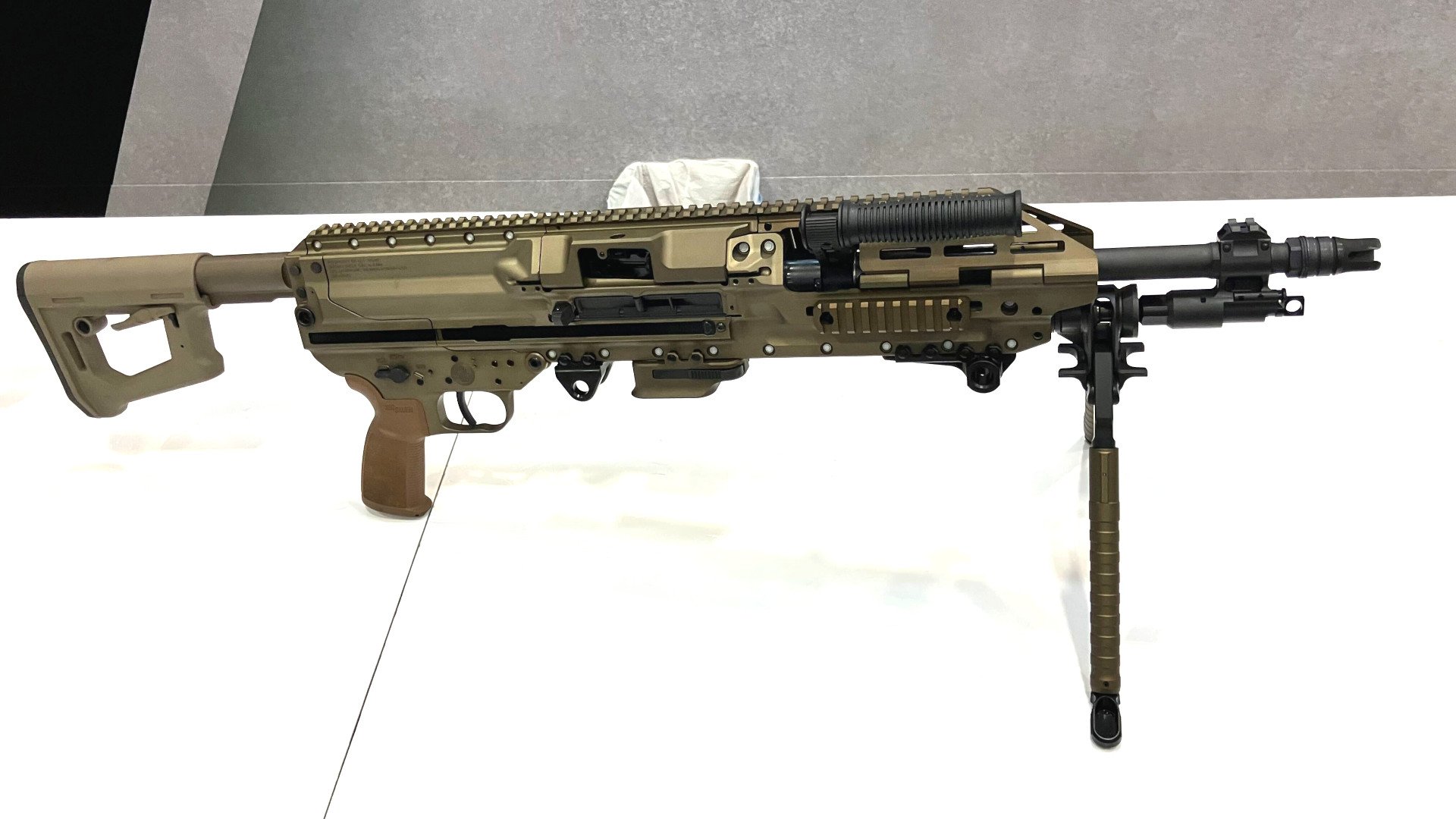
Зэвсэг үйлдвэрлэгч Sig Sauer компани АНУ-ын армийн NGSW хөтөлбөрийн хүрээнд нийлүүлж буй M250 хөнгөн пулемётын жин болон хэмжээг багасгасан A1 хувилбарыг бүтээжээ.
АНУ-ын армийн АНУ-ын Армийн холбооны (AUSA) чуулганы үеэр танилцуулсан M250A1 загварт голчлон зэвсгийн жинг хөнгөлөх, ажиллагааг сайжруулах чиглэлээр өөрчлөлтүүд орсон байна. Тус загвар нь 13 инчийн гол төмөртэй болсон бөгөөд 16 инчийн гол төмрийг ч мөн сонголтоор ашиглах боломжтой юм. Энэхүү өөрчлөлт нь M7 винтовыг M8 карбин болгон өөрчилсөнтэй ижил зарчмаар зэвсгийн маневрлах чадварыг нэмэгдүүлэх зорилготой ажээ.
Sig Sauer компанийн мэдэгдсэнээр, цэргүүд болон хөтөлбөрийн удирдлагын өгсөн санал хүсэлтийн дагуу зэвсгийн гол төмрийн бүтэц, гохны хамгаалалт, мөрний тулгуур болон tripod холболтын хэсгүүдийг илүү бат бөх болгосон байна. Ялангуяа хүйтэн уур амьсгалд бээлийтэй ашиглах боломжтой болгох үүднээс гохны хамгаалалтын зайг томруулж, гол төмрийг хурдан солих механизмыг илүү хялбаршуулжээ.
Одоогоор АНУ-ын арми M250A1 загварыг албан ёсоор хүлээн аваагүй байгаа ч удахгүй бүрэн нэвтрүүлнэ гэсэн хүлээлттэй байна. 6.8×51мм-ийн сум ашигладаг NGSW хөтөлбөрийн зэвсгүүд нь Афганистаны дайны туршлага болон орчин үеийн хуяг дуулга нэвтлэх шаардлагад үндэслэн 5.56×45мм-ийн M4A1 карбин болон M249 пулемётыг орлох зорилготой юм.
Дэлгэрэнгүйг эх сурвалжаас харах
Эх сурвалжийг нээх ↓
Feedback from the U.S. Army has led to an improved A1 version of the service’s still very new 6.8x51mm M250 light machine gun. Manufacturer Sig Sauer has shortened and lightened the barrel, reduced the overall weight, changed the buttstock, and made various other improvements to improve reliability and ease of use. The evolution of the M250 mirrors the transformation of Sig’s M7 rifle for the U.S. Army into the M8 carbine, where weight and bulk were major points of criticism of the original design.
Jason St. John, senior director of strategic products for the Defense Strategies Group at Sig Sauer, talked about the new M250A1 with our Howard Altman at the Association of the U.S. Army’s (AUSA) main annual convention today. The U.S. Army has already been acquiring and fielding baseline M250s as part of its Next Generation Squad Weapons (NGSW) program. The NGSW family also includes the M7 rifle and now the M8 carbine from Sig, both also chambered to fire the 6.8x51mm round. The Army chose Sig as the winner of the NGSW competition in 2022. The service is still in the early stages of fielding the NGSW family as replacements for a substantial portion of its existing 5.56x45mm M4A1 carbines and M249 Squad Automatic Weapons (SAW).
“We continuously and constantly evaluate and evolve our designs, and we discover things,” St. John told us. “Parts that might be able to be manufactured a little bit easier with a little bit of a design change. They might be more reliable, more durable than you currently have. You might look at the system and say, hey, we have an ability to make these recommendations because we see this from other customers across the board. We hear it from our inputs of soldiers that are in our ranks, and you know maybe old relationships out in the field.”
“The [NGSW] program office represents the entire formation, so they get feedback in the totality of every single unit that has them [M250s and other guns in the NGSW family] in their hands,” he continued. If “a systemic issue or something that needs to be addressed, then they run the soldier touchpoint events, which we’re fortunate enough to be a part of. And then we get unfiltered feedback from soldiers that day in the field while they’re encountering something that they have a concern about.”
As noted at the start, the most immediate standout feature on the M250A1 being shown at AUSA this week is the new 13-inch barrel. M250s entering Army service now have roughly 16-inch-long barrels. The Army’s official fact sheet says the machine gun was originally expected to come with a 17.5-inch barrel.
“We shortened the barrel to 13 inches, but the Army’s also buying the 16-inch barrel,” St. John explained. “So in some ways, you could consider it mission-configurable, whether they want to utilize a 13-inch barrel or a 16-inch barrel, to what they’re doing.”
“You’re going to maintain the same basic ballistics that you had with the M7 [rifle’s] 13-inch barrel, and then you’re going to have more maneuverability because you’re going to have a shorter weapon system,” he added. “You add the 16-inch barrel, and you get that lethality requirement with the length of barrel that they originally required. So you have some flexibility there.”
“You shorten the barrel, you’re going to lose velocity,” St. John did acknowledge. “We did not change the ammo. The Army had determined with the barrel change that they were meeting their ballistic and lethality goals with that length of barrel.”
With the current 6.8x51mm ammunition, “we’re operating in the mid-70s [sic; 70,000 pounds per square inch] as far as pressure, and the case has 125K psi potential,” he also noted. “If you wanted to shorten the barrel and you did have some lethality concerns or wanted more performance, all you need to simply do is just increase the little bit more pressure in the cartridge case, and you overcome that shortness.”
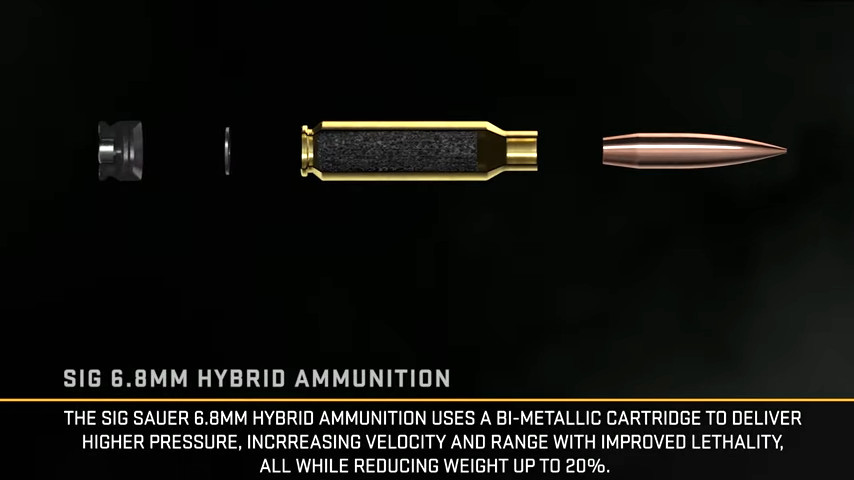
“We didn’t do that. The Army said it wasn’t necessary, but you know, as the battlefield evolves and defensive postures change, If that becomes necessary, one of the great things about the NGSW program is the ability for the weapon systems and the ammunition to grow in their performance capacity,” he continued.
In the case of the 13-inch barrel, “we tapered the barrel down a little bit to add a little bit of weight savings,” he noted.
TWZ has reached out to Sig about getting more complete specifications for the M250A1, including overall length and total weight with different barrel options. The baseline version weighs some 13 pounds, empty, and without optics and other accessories, according to the Army’s fact sheet. As already mentioned, the M7 rifle also got progressively shorter and lighter before giving way fully to the M8 carbine, in part through reprofiling of the barrel. The empty weight of the M8 with its 10-inch barrel is close to one pound less than that of the 13-inch barrelled M7.

Different barrels can be readily swapped out on the M250A1, as well as the baseline M250. However, the new variant features significant changes to the quick-change barrel arrangement on the gun and associated elements of the design.
“It was interchangeable before, but it didn’t have a quick-change barrel handle. It wasn’t meant to be changed, and therefore it didn’t need the insulation of [sic; for] a hot barrel like you get with a barrel with a quick-change barrel handle,” according to St. John. “I think initially with the [M]250 program, it wasn’t necessary, and potentially might not have been desired initially. And why put that weight burden on there if we weren’t going to utilize it, right?”
St. John did not elaborate further on why these features were initially deemed unnecessary.
“When you look at the top cover of the forearm, that used to be loose, and now it’s captured, meaning that when you change the barrel, it actually came off completely in your hand,” he also noted. “We utilized a similar design to our .338 MMG [Medium Machine Gun], and then we make it captured now, so you’re not going to lose it.”
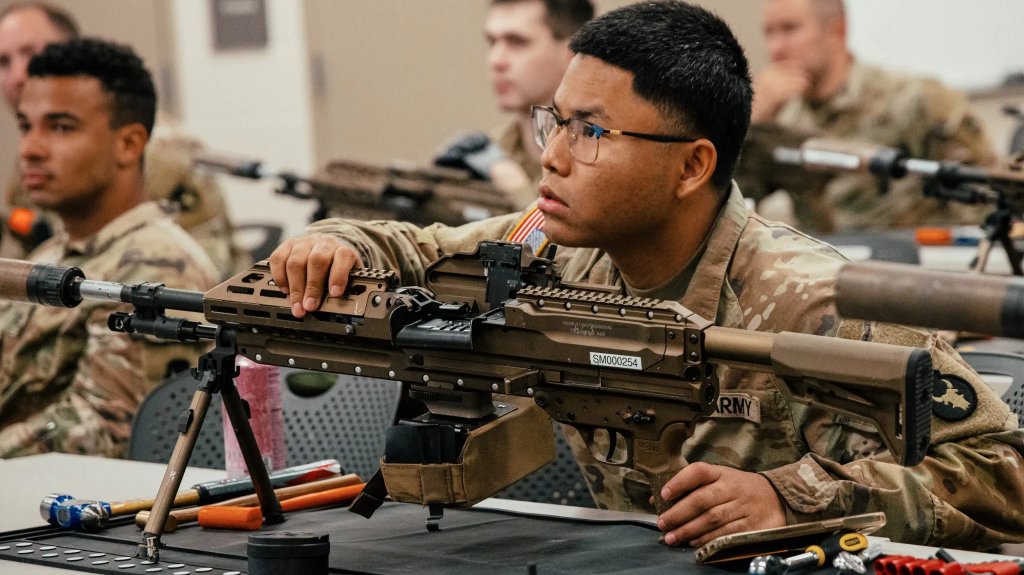
“We added a funnel to guide your gas piston in, so that when you’re doing barrel change operations, you don’t have to be precisely lined up,” he added. Now, “you have something that’s going to guide it in a stressful environment, to get that into position to do your barrel change.”
The M250A1 features a host of other changes that are unrelated to the barrel.
Sig also “improved our gas system a little bit, just to make it more reliable and durable,” to include modifications to keep it better “insulated from carbon and things like that.”
“We opened up the trigger guard to incorporate the Arctic fight, the Arctic glove, more so than just the operational normal tactical gloves,” according to St. John. “We opened it up a little bit more to accomplish that.”
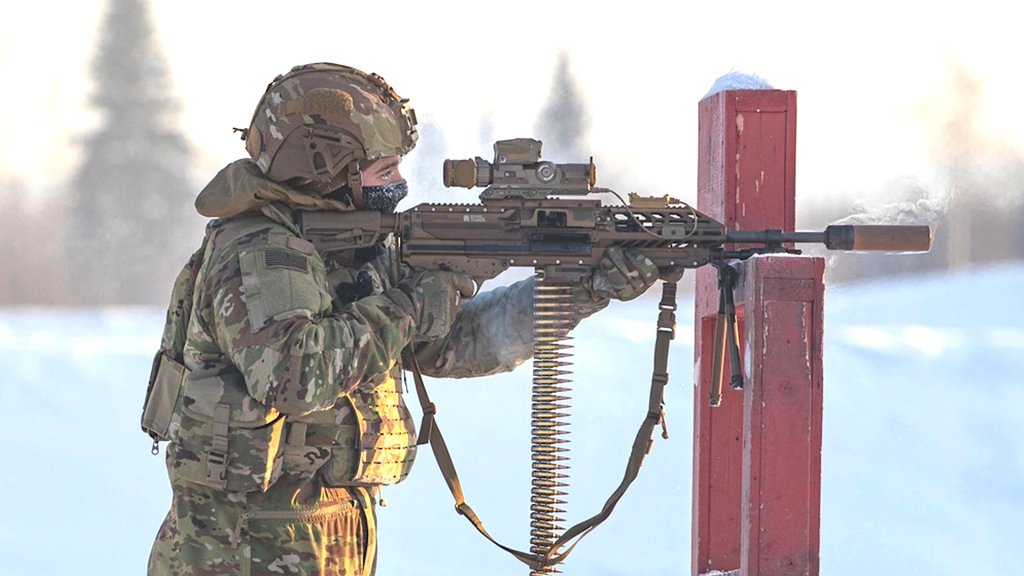
The Arctic is an ever-more strategic region where the U.S. faces growing geopolitical competition, especially from Russia and now China. Army officials also regularly point out that the harsh environment presents challenges when using standard equipment designed around use in more temperate locales.
“We improved the buttstock, and we improved the interface … to the receiver,” St. John explained. “We’ve made the interface between that more robust because through IMTing, and over time, and the buttstock getting slammed on the ground, and just normal military training and operations, we noticed that we had a tendency for some of them to loosen up and have some play in them.”
“The entire buttstock is a different buttstock than they had,” he added. “They [Army soldiers] preferred that buttstock over the buttstock that we had on it. So we just put soldiers’ preference on there. … It’s just a commercially available [design from] Magpul that they thought was better than the other Magpul that day one we were using.”
Changes were made to points where the M250 is designed to be attached to tripods on the ground or pintle mounts on vehicles.
“We put cross-bolts through the receiver to provide more durability,” he explained. “Initially, it was like an M-LOK type of lockup, and you can just think of a steel nut on an aluminum receiver being vibrated over a life cycle of the weapon system, it has some unfortunate wear characteristics. So, putting these cross pins redirects that force, and the way we lock it down with a saddle screw prevents that from happening and provides long-term durability to the receiver in the pintle and T&E [traverse and elevation] tripod-mounted configuration.”
The continued evolution of the M250 is not new. Sig talked to TWZ at AUSA last year about changes, including to the bipod and top cover, that were already making their way into the design.
The Army has yet to formally adopt the M250A1 configuration, and further changes could be made before service moves to officially acquire an improved version of the gun.
“This is likely to be the accepted configuration. We anticipate that acceptance,” Sig’s St. John told us. “We just finalized the acceptance on the M8, and they’re moving into the acceptance of the [M]250s. We anticipate right now, with the feedback that we’re getting from the program office, that the majority, if not all, of these changes are likely to be accepted.”
It’s important to reiterate that changes to the M7 rifle, and then the Army’s decision to transition fully to the further evolved M8 carbine, followed significant criticism of the core design of those guns and their ammunition, as well as the underlying doctrine. Sig has repeatedly pushed back on those critiques, and the Army continues to push ahead with the entire NGSW program.
Despite the steadily shortening barrels on guns in the NGSW family, the Army’s position remains that the weapons chambered for the new 6.8x51mm round offer essential additional accuracy, range, and terminal effectiveness over existing 5.56x45mm types. The genesis of the NGSW program had been heavily informed by the war in Afghanistan, where there were regular reports of U.S. ground units being outranged by their opponents. Adversary body developments were also a factor.
It is also important to point out that teething troubles are not at all uncommon in major weapon system programs, including when it comes to small arms. Sig has drawn attention to the less than positive reception that the AR-15/M16 family initially received in the mid-1960s, which led to a host of changes to that design. Rifles and carbines in that pattern are now in widespread service across the U.S. military and with dozens of armed forces and security services globally.
Regardless, even with the Army still very early on in the process of fielding the entire NGSW family of guns, the M250 light machine gun’s design is now evolving significantly.
Contact the author: joe@twz.com
The post Sig Sauer’s M250 Machine Gun Gets Shorter And Lighter After Army Feedback appeared first on TWZ.

