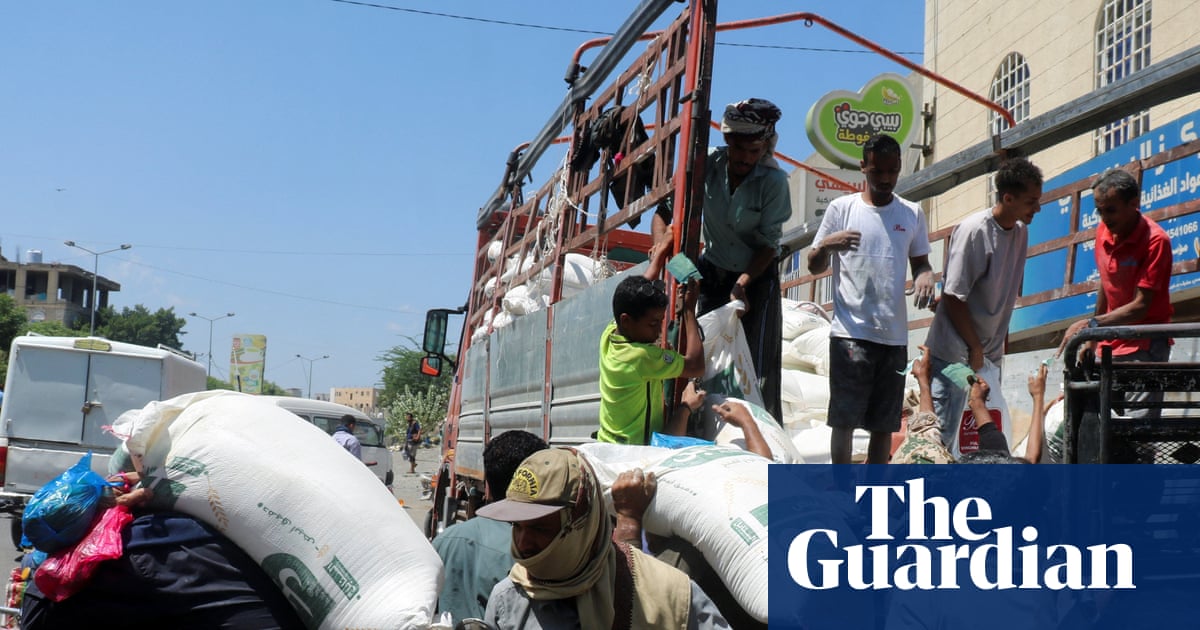
Хути босогчдын давшсанаар бүслэлтэд орсон тус хотын оршин суугчид шатахуун болон хүнсний бүтээгдэхүүний үнийн өсөлт, хангамжийн тасалдлаас болж хүнд нөхцөлд амьдарч байна.
Йемений гурав дахь том хот болох Таиз руу Ираны талыг баримтлагч Хути босогчид ойртож, Саудын Арабын дэмжлэгтэй засгийн газрын хүчин хотын орох гарцыг хааснаар нөхцөл байдал эрс хүндэрлээ. НҮБ-ын Дэлхийн хүнсний хөтөлбөрийн мэдээлснээр, тус хотын 800 мянга орчим хүн нэн шаардлагатай тусламж үйлчилгээ авах боломжгүй болсон байна. Аравдугаар сарын 3-наас хойш хүнсний бүтээгдэхүүний нийлүүлэлт эрс багассанаас үүдэн иргэд дэлгүүрүүдэд дугаарлан, үлдэгдэл барааг нөөцлөхийг хичээж байна.
Хути босогчид өнгөрсөн сард Улаан тэнгисийн эрэг орчмыг хяналтдаа авах цэргийн ажиллагаа эхлүүлснээр 2022 онд НҮБ-ын зуучлалаар тогтоосон гал зогсоох хэлэлцээрийн үеийн харьцангуй тайван байдал алдагдсан юм. Босогчид нэг сарын дотор 1000 гаруй км нутаг дэвсгэрийг эзлэн авч, олон улсын тээврийн чухал гарц болох Баб аль-Мандабын хоолойг хяналтдаа оруулжээ. Үүний хариуд Саудын Арабын тал босогчдын хяналтад буй Санаа хот руу цохилт өгч, талуудын хооронд мөргөлдөөн үргэлжилж байна.
Таиз хот нь 2014 оноос хойш засгийн газрын хяналтад байсаар ирсэн бөгөөд хойд болон өмнөд хэсгийг холбосон стратегийн чухал цэг юм. Хэрэв уг хот унавал засгийн газрын төв байрладаг Аден хот бүслэлтэд орох эрсдэлтэй байна. Одоогийн байдлаар орон нутгийн болон засгийн газрын хүчин сөрөг довтолгоо хийж хотыг хамгаалж байгаа хэдий ч аюулгүй байдлын улмаас сургууль, их дээд сургууль болон төрийн байгууллагууд аравдугаар сарын 4-нөөс эхлэн үйл ажиллагаагаа зогсоожээ.
Дэлгэрэнгүйг эх сурвалжаас харах
↓Эх сурвалжийг нээх ↓
Ali Abdulsamed spent all day waiting and walking. Like many people in the besieged Yemeni city of Taiz, he was searching for some food for his family of six. But each time he reached the end of the queue at the grocers, he was greeted with empty shelves. He would go on foot to the next shop, unable to afford the price of petrol, which more than doubled last week.
After visiting more than a dozen stores, Abdulsamed managed to find a 25kg bag of wheat flour – sold at more than twice its usual price. It would have to do, he was lucky to find anything at all.
As Iran-allied Houthi rebels advance and the Saudi-backed Yemeni government forces closes off routes into the city, conditions in Taiz have become increasingly difficult. Yemen’s third most populous city has found itself besieged from all sides, with its supplies of fuel, food and other basic goods cut off.
The UN World Food Programme (WFP) warned on Monday that the fighting has denied vital assistance to 800,000 people in Taiz: a city of about 1 million which already had some of the highest levels of food insecurity in the country.
The speed of the Houthi advance gave people little time to prepare, prompting a sudden rush on stores and driving up the price of goods still left in the city. Crowds have been gathering around grocery stores and gas stations, trying to stock up on the essentials as fears of shortages spread.
“I wasn’t aware that the situation would become difficult so suddenly and that shops would close, but since 3 October, almost all food items have disappeared,” said Abdulsamed, 48. “I don’t have savings to stock up on food for the family, so I resorted to selling my wife’s gold ring.”
He, like many others in Taiz, has stopped driving or even taking buses as petrol and bus fares have become too expensive. To avoid paying, Abdulsamed sometimes walks up to 10km (6 miles) a day.
Abdulsamed works in a mobile repair shop on one of the main streets in the heart of Taiz. Traffic outside used to be constant and the shop was visited by a steady flow of customers. Now, the street is almost empty, save for those few people in Taiz scrambling to find supplies before hurrying home.
The sound of explosions and gunfire echoes throughout the day.
Taiz has become the new frontline in the war between the Houthis and Yemeni government forces after the Houthis launched a military campaign last month to take Yemen’s Red Sea coast. The renewed offensive interrupted four years of relative calm in Yemen after a UN-brokered ceasefire froze frontlines in 2022.
The Houthis have moved south at a blistering speed, seizing more than 1,000km of territory over the last month which gives them control over the Bab al-Mandab strait: a vital shipping lane. They have traded strikes with Saudi Arabia, launching attacks on Riyadh airport and seeing rebel-controlled Sana’a hit in return, as the Saudis try to support Yemeni government forces.
Their offensive was halted at Taiz, a city that has never fallen out of Yemeni government control since the country’s civil war began in 2014, and has been a long-sought goal for the rebels. The city sits at the crossroads between the north and the south, and if it should fall to the Houthis, Aden, the seat of Yemen’s government, will be cut off.
So far the Houthis have failed to capture the city. Its rugged terrain is defended by local fighters as well as reinvigorated government forces, who announced a counteroffensive two weeks ago to push back the Houthis.
But those who live in Taiz fear the Houthis cannot be kept at bay forever. Conversations at home, the mosque and at work are all dominated by the war. The latest news is shared at the dinner table, with out-of-school children asking their parents what will happen next.
“Residents expect the war to reach the city soon, so everyone is stocking food at home, preparing to stay indoors for a long time and ensuring they have all their necessities,” said Abdulsamed.
Life in the once busy city ground to a halt as fighting drew closer last week. Schools, universities and many public institutions in Taiz closed on 4 October out of concern for the safety of students and employees.
“This is not a time for studying. What we need now is to have enough food and water at home and wait until Taiz overcomes this crisis,” said Rawa, a 35-year-old schoolteacher, who asked to be identified only by her first name.
Rawa spends almost all of her time at home, only leaving to scrounge for supplies. She used to spend her weekend afternoons at a nearby park, but on Sunday, arriving to find it completely deserted, she turned around and went back home.
Even home offers little safety. Rawa’s house is located close to the frontlines in eastern Taiz and the sounds of explosions have been growing closer in recent days. In the past, she would have fled to her ancestral village south of Taiz, as she had done in the past. But now, the road is blocked.
As fighting draws closer, she can do little more than make sure she feels prepared for a long siege. But, with each day, food and basic supplies grow more expensive.
“We are just lucky we can afford [goods] and now have enough food and water at home,” said Rawa.

