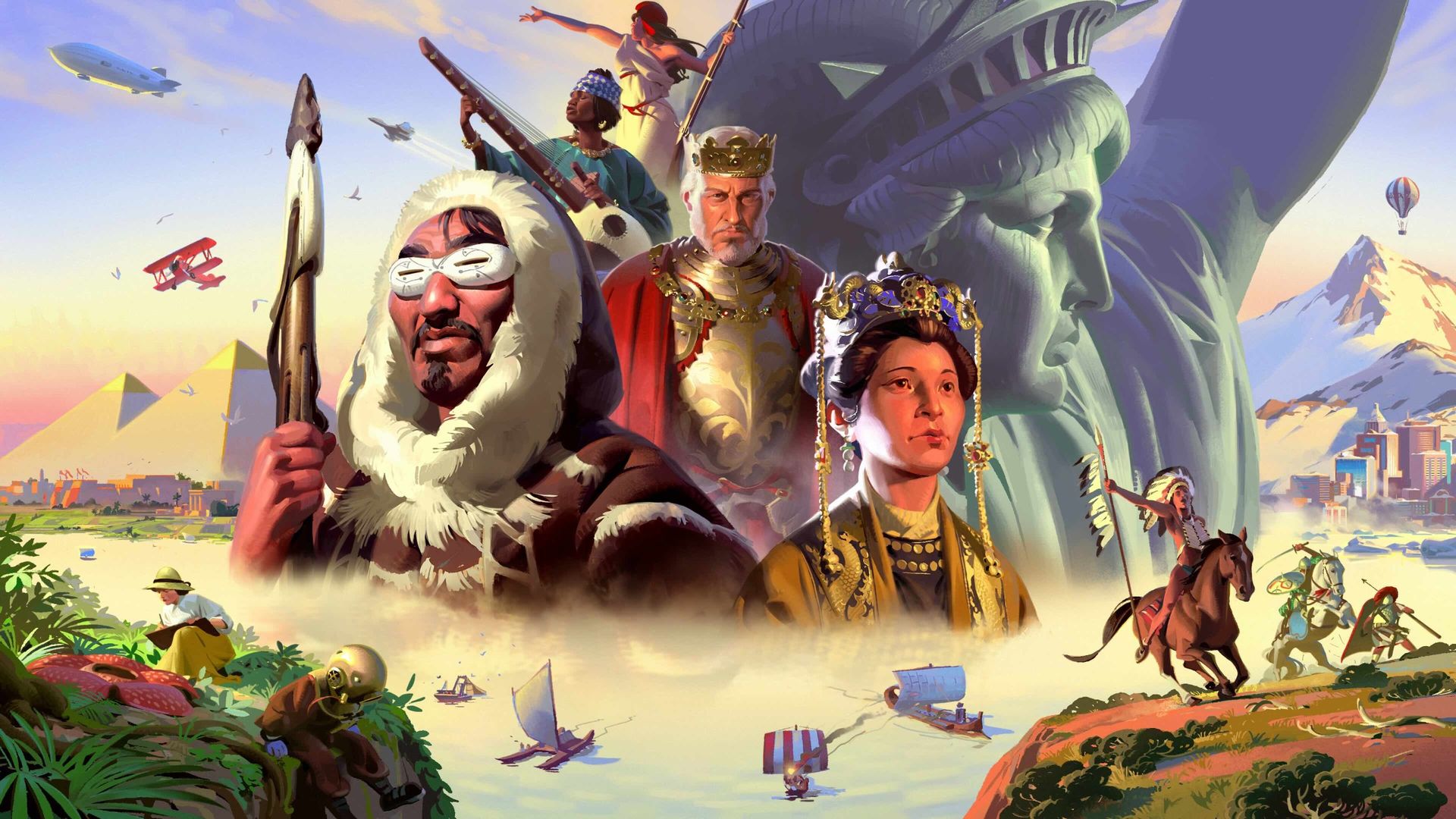
Amplitude студи Humankind 2 тоглоомоороо дамжуулан соёлын систем болон хүрээлэн буй орчны харилцан хамаарлыг илүү гүнзгийрүүлэн хөгжүүлж байна.
Amplitude студийн боловсруулж буй Humankind 2 тоглоом нь соёлын хөгжил болон газар зүйн байршлын нягт уялдааг онцлон харуулж байна. Тоглоомын явцад тоглогчид эхлээд өөрийн нутаг дэвсгэртэй холбоотой “First Tale” хэмээх анхны домог, хүчин зүйлсийг сонгох бөгөөд энэ нь тухайн соёлын цаашдын хөгжил, нөөц ашиглалт болон орчны дасан зохицох чадварт нөлөөлдөг. Уур амьсгалын өөрчлөлт нь тоглоомын явцад байгалийн болон тоглогчийн үйл ажиллагаанаас хамааран хувьсах тул тоглогчид өөрчлөгдөж буй нөхцөлд тааруулан соёлоо адаптаци хийх шаардлагатай болно.
Тоглоомын соёлын систем нь өмнөх ангиасаа ялгаатай нь илүү ур чадварын мод (skill tree) бүхий бүтэцтэй болжээ. Тоглогчид эрин үе солигдох бүрт түүхэн замнал, газар нутаг эсвэл гадны нөлөөлөлд тулгуурлан соёлоо өөрчлөх боломжтой бөгөөд нийт 70 төрлийн соёлыг багтаасан байна. Энэхүү систем нь хотуудыг илүү өвөрмөц, нэгэн хэвийн бус байдлаар хөгжүүлэх боломжийг олгох зорилготой аж.
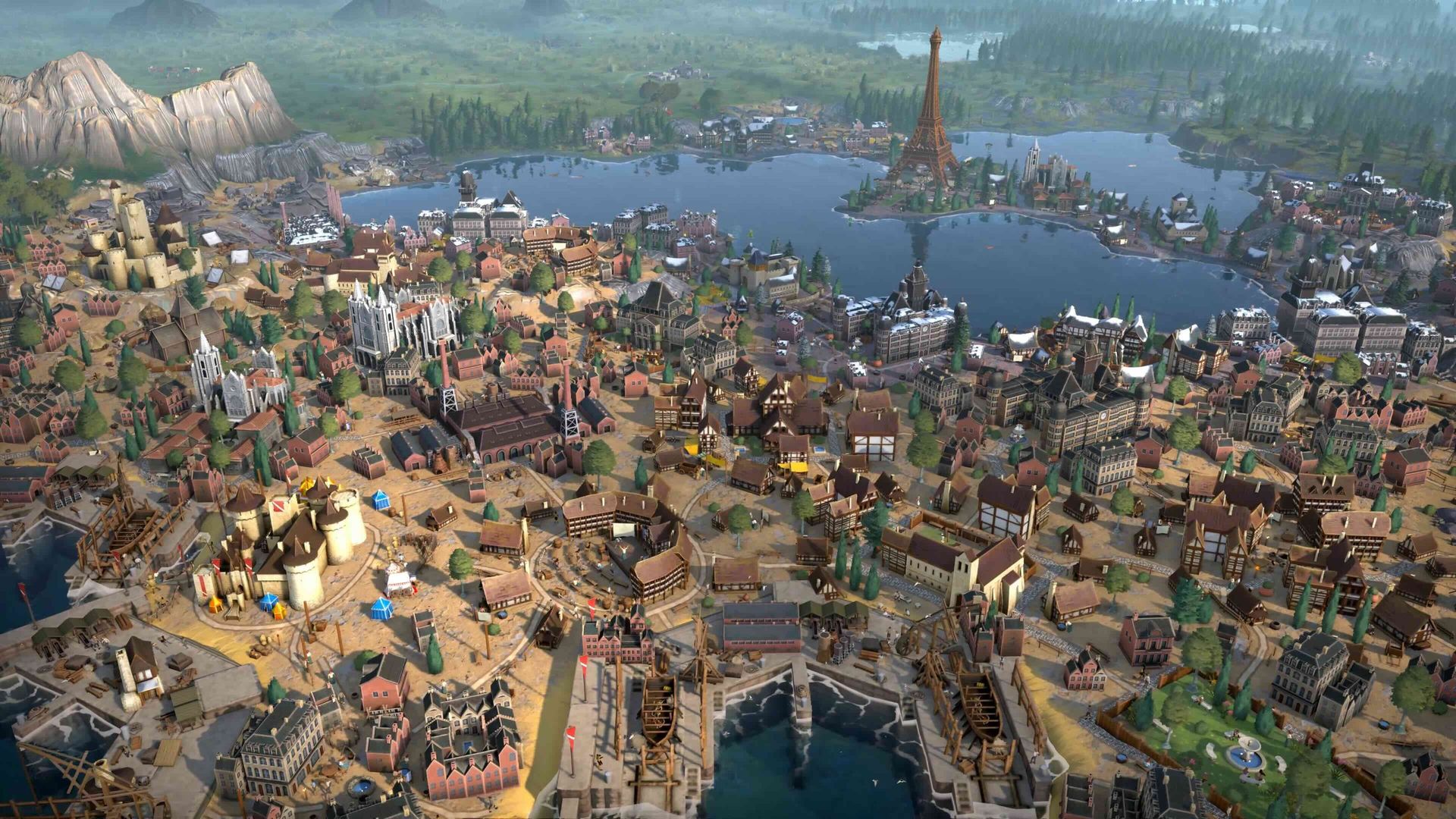
Техникийн хувьд Amplitude студи график дүрслэл, анимаци болон ачаалах хугацааг сайжруулснаа онцолсон байна. Тоглоом нь хуучин техник хангамж дээр ч хэвийн ажиллахаар оновчлогдсон бөгөөд гайхамшигт байгууламжуудыг бүтээх үйл явцыг илүү нарийвчилсан анимациар баяжуулжээ. Humankind 2 тоглоом нь 4X стратеги төрөлд шинэ стандартыг тогтоохоор төлөвлөгдөж байгаа бөгөөд худалдаанд гарах тов нь ирэх онд товлогдсон байна.
Дэлгэрэнгүйг эх сурвалжаас харах
↓Эх сурвалжийг нээх ↓
We all know the tale of Civilization 7. It came, it saw, it had you choose a new civ at the dawn of each age and that annoyed quite a lot of people indeed. Sic transit gloria Meier-i.
So I was a bit surprised when Amplitude sat us down for a look at Humankind 2 and focused so much on its culture system, reworked from the first game, but a big part of which is selecting new cultures to embrace as the eras chug along—Egyptians becoming Berbers, or Romans, or even English (a dreadful fate) if circumstances conspire to allow it in the game’s sandbox.
But I liked what I saw. The other big talking point of the hands-off demo I got was on climate and biome, and how that intersects with and shapes culture. Humankind 2’s vision of history is a dialectical one, where a culture is shaped by a biome which is changed by a culture which is influenced by a biome which… you get the idea. Climate isn’t static, either. Just like real life, it’ll undergo natural and unnatural disruptions depending on chance and player/NPC activity.
So it all feels like an intricate and natural take on (a type of) materialist history. Just, you know, a materialist history where the Egyptians might find themselves waking up to snow one day.
The white sun of the desert
Our demo started us off looking at a map of the world—as in Earth, the actual world—dotted with numerous tribes. The interplay of environment and culture kicks off immediately: each tribe gets a “First Tale” linked to the territory in which they begin, the founding myths that act as the kernels for the full-fledged cultures that will eventually develop. They provide buffs (+X Authority, +Y Learning, and so on) and changes to tiles and citizen roles.
These are the things that, from the jump, make you just a little bit better at existing in your chosen environment than the other guys on the map, and that are meant to make your faction feel less like it emerged, fully-formed, from nowhere at all. We ended up with a tribe in the general vicinity of modern-day Egypt whose First Tale, appropriate enough for the banks of the Nile, was “Flood Tamer”—the upshot being that they consumed less water and were better at putting water and its generation to positive uses than average.
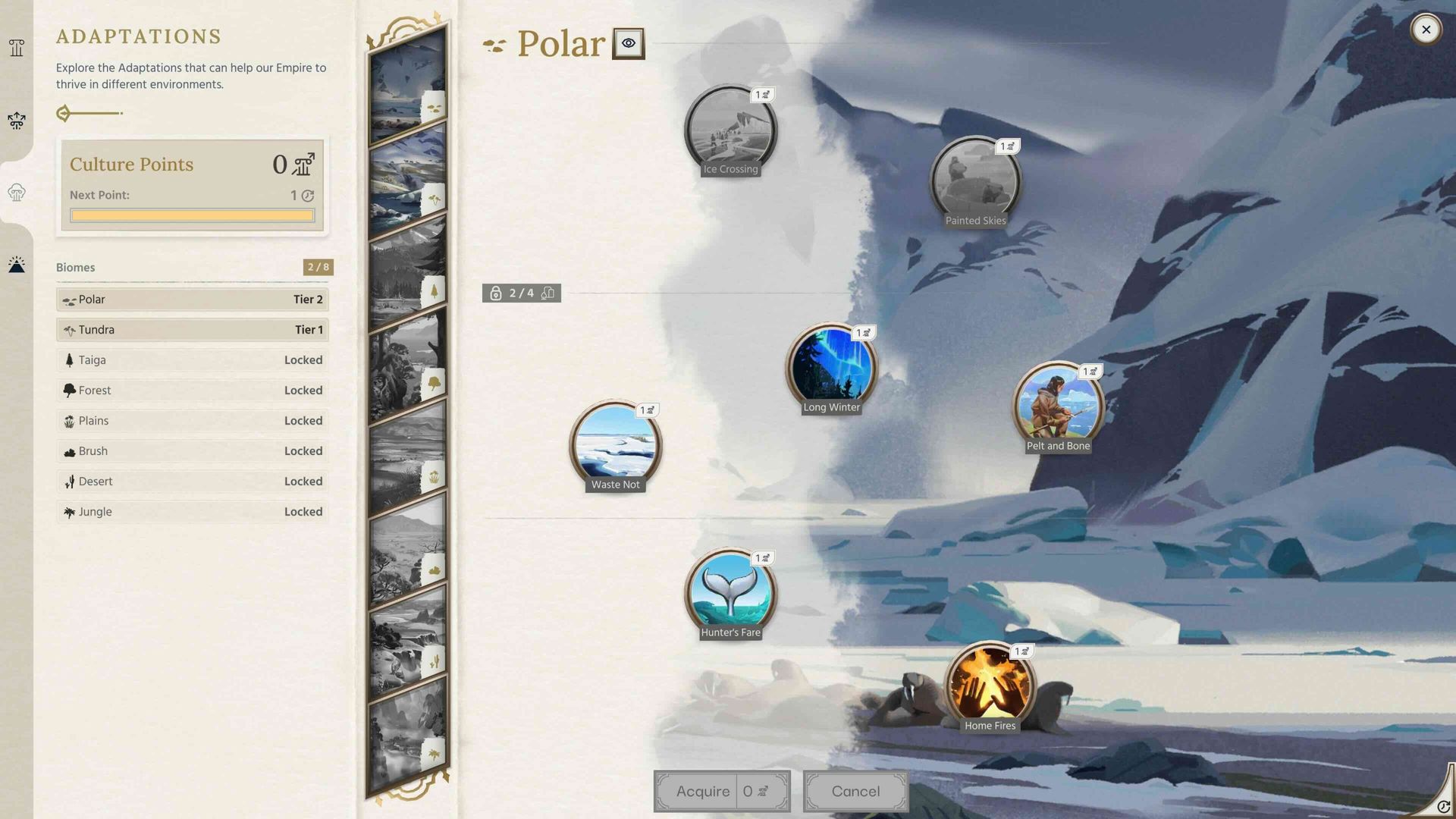
Amplitude says that Humankind 2’s different starting biomes will have a dramatic impact on the shape of your game, especially as you start drilling down past the broad bonuses of your selected First Tale and into the more specific trees of “Adaptations” you can make to deepen your culture’s affinity for its chosen biome. As Ancient Egypt, sweating in the sun of the North African desert, we could spend culture points to unlock adaptations like mudbricks, camel herding, heat endurance, and so on—various ways to adapt to the sweltering heat and scarce water of your chosen home.
Our culture and selected adaptations let us actually scrounge up some water in the African desert, but Amplitude noted that this was no reason to rest on our laurels. Climate shifts, like the actual Medieval Warm Period or Little Ice Age, can occur, turning biomes more arid or humid. Your carefully selected adaptations can be blunted by mother nature, though that’s not to say it’s impossible to adapt to radical change: toward the end of the demo we leapt into a save which saw Egyptian civilisation blanketed in snow, sheets of ice climbing the sides of the pyramids. Its adaptations now focused on warmth, whaling, and the long-term preservation of scarce resources.
The goal of all this is very Amplitude: factions that feel distinguished by more than a different aesthetic and a set of starting bonuses, and that feel uniquely tied to, and shaped by, the world around them. Having only really seen Ancient Egypt in action, I can’t make any declarations as to its success, but I struggle to imagine a player starting in the Tundra, Taiga, Forest, or Brush biomes making the same moves our demo did.
Likewise, if our desert-adapted Egyptians suddenly marched into the Jungle, I get the sense they would find themselves at a serious disadvantage compared to the environment’s native inhabitants. This is something you could feasibly exploit, one day. Amplitude suggested that, if you had a culture that was incredibly good at handling arid environments, you might willingly trigger some sort of nuclear apocalypse to render the whole Earth that way. Great news for you, bad news for your enemies who grew up in the snow (and for the billions of vaporised people, I suppose).
Culture shock
Amplitude is trying to move away from what it called “monolithic” cultures in Humankind 1—consisting of “a unity, a building, and a bonus, basically”—into something more skill-tree-based in the second game.
Every culture has a set of customs you can unlock, divided by tier, and which you equip and activate in a limited number of bonus slots. They do pretty much what you’d expect—Egypt can opt into a pharaonic tradition to buff its authority generation, or get better at wringing water from the desert sand—but it’s another way the studio is trying to make each faction feel unique, tailored, and adapted specifically to its material conditions.
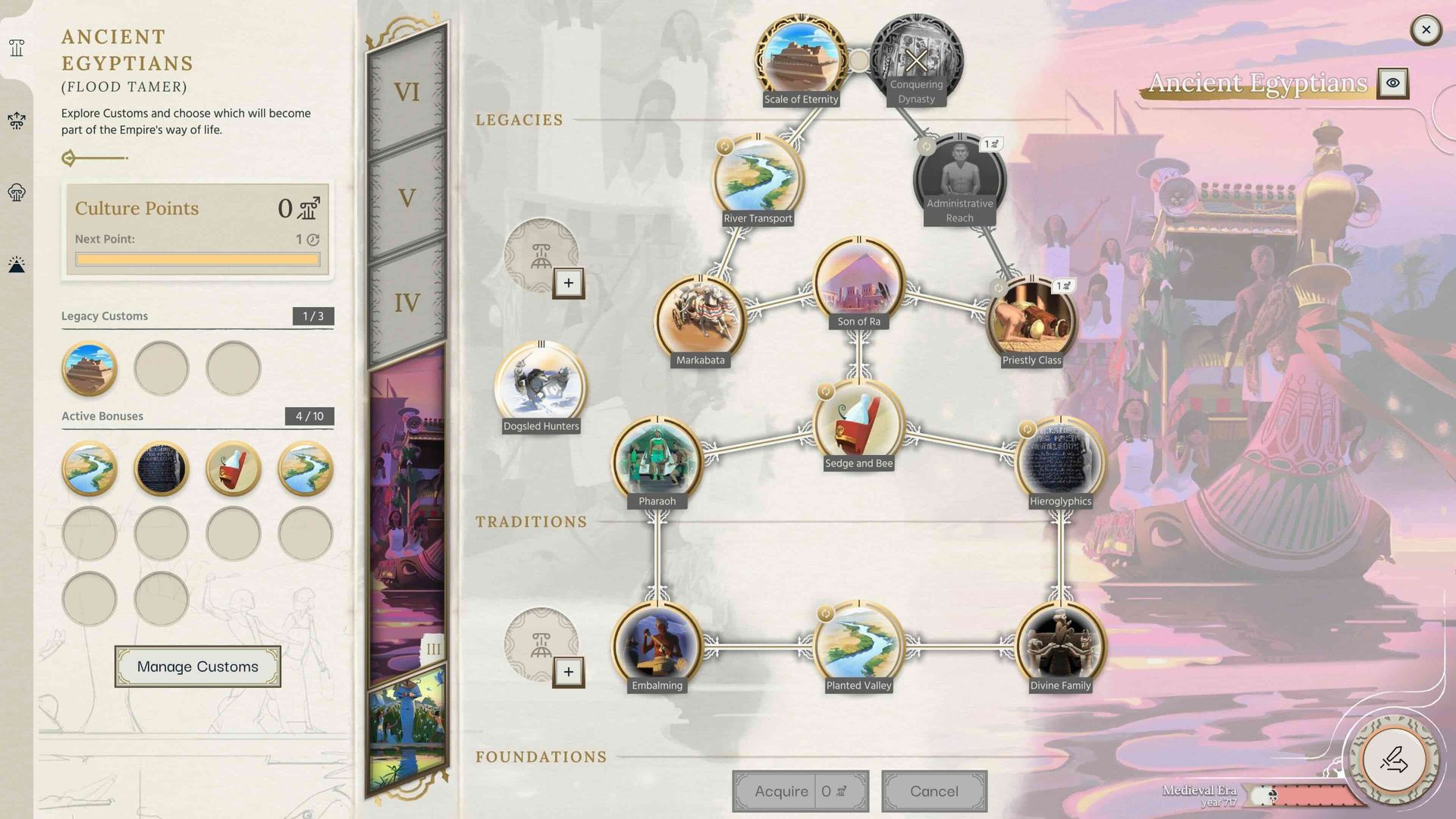
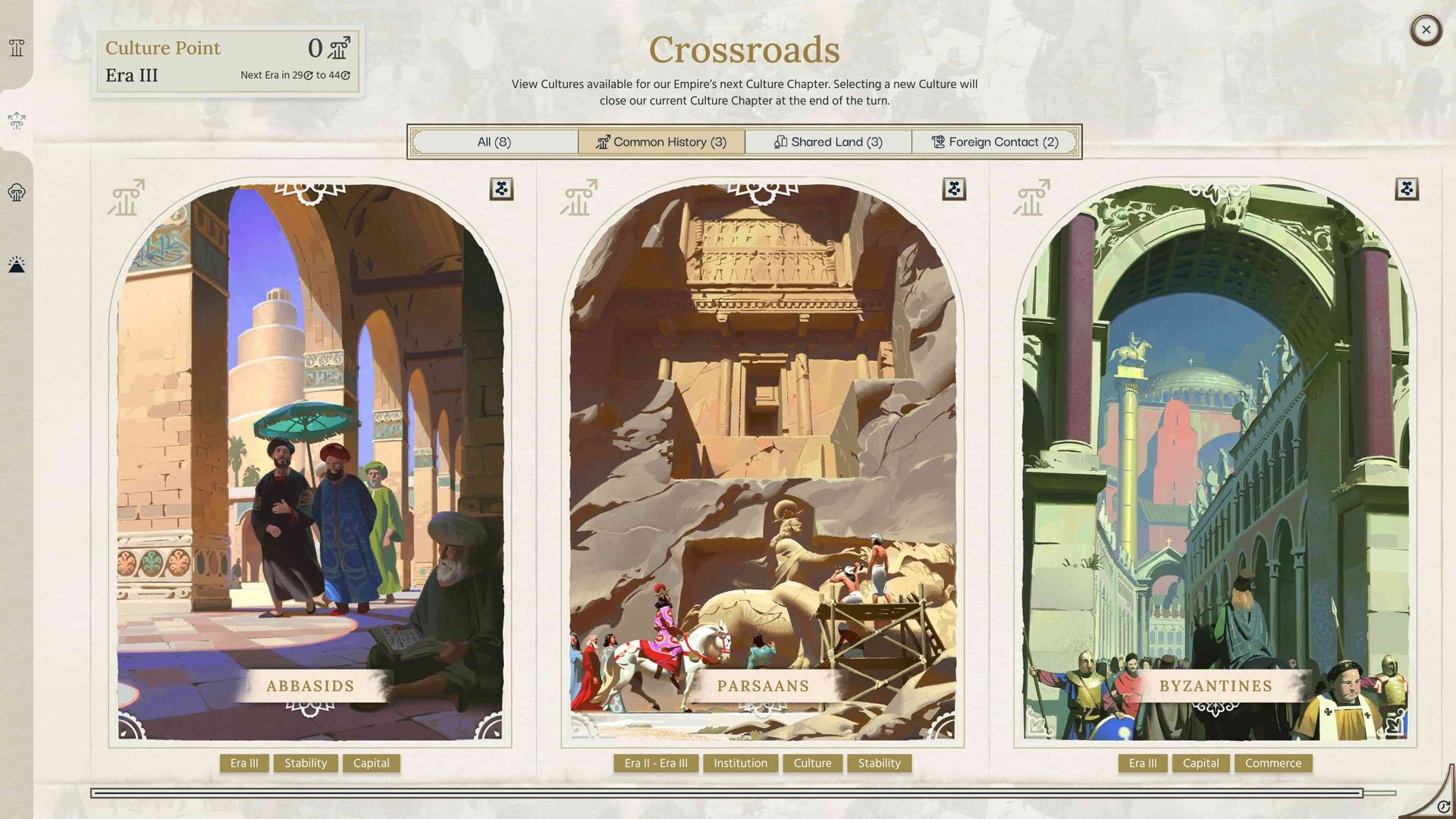
As the eras pass by, your culture will approach “Crossroads” points, where you can decide to diverge based on either common history, shared land, or foreign contact (the first being free, the second costing culture points, and the third costing even more culture points). New cultures unlock new customs, new city aesthetics, and new roles (Humankind 2’s take on a pop and job system for your cities). There are 70 cultures total, said the studio.
This did not, in the small example I was shown, seem quite as jarring as Civ 7’s implementation of its own similar concept, rather it was just one way in which Amplitude is trying to make each of your sessions in the game feel different. “With Humankind 2 you will make really unique cities that won’t just be the same template over and over,” pledged the studio, in contrast to the first game.
Also a contrast to the first game: production values. Amplitude touted its new effects and animations as it played—wonders now assemble themselves bit-by-bit in dramatic fashion when completed, for instance—and talked up the game’s load times even on ageing rigs. It’s not the most important thing, maybe, but it does look quite nice, and makes the game feel like more of a genuine competitor to Civ, with all that series’ lavishly rendered cutscenes and wonder animations.
I certainly didn’t see enough of Humankind 2 to make any sweeping declarations about it or its upcoming place in the 4X canon, but I’ll tell you this: I’m intrigued. Amplitude seems to be taking a lot of good lessons from both its own back catalogue and the general 4X space for Humankind 2, and I’m eager to see how they all come together when the game releases next year.

