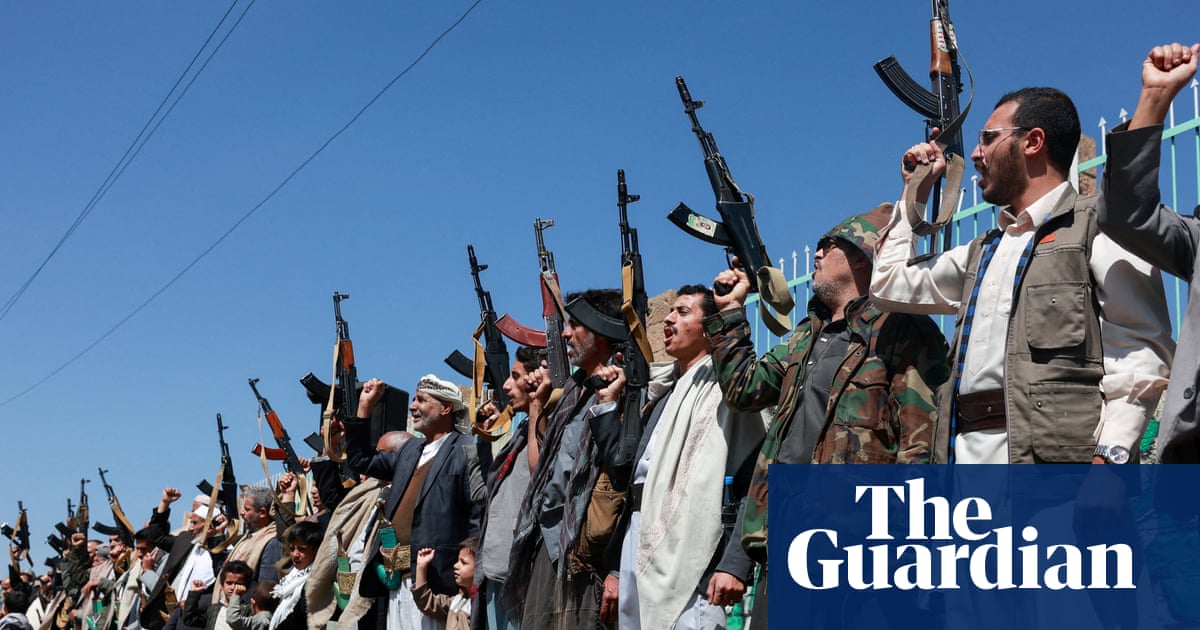
Йемений Таиз хотын орчимд өрнөж буй тулаан нь стратегийн ач холбогдолтой далайн хоолойг хяналтандаа авах зорилготой бөгөөд энэ нь олон улсын аюулгүй байдалд заналхийлж байгааг тус улсын Ерөнхий сайд асан мэдэгджээ.
Йемений Ерөнхий сайд асан, одоогийн Ерөнхийлөгчийн зөвлөх Маеен Абдулмалик Саид Таиз хотыг Ираны дэмжлэгтэй Хути босогчид эзлэн авбал Баб аль-Мандабын хоолой болон Аден хот руу хүрэх зам тэдний хяналтад орох аюултайг анхааруулав. Түүний үзэж буйгаар, Хути босогчдын зорилго нь зөвхөн Йеменийг бүхэлд нь хянах бус, Ираны үүсгэсэн эмх замбараагүй байдлыг өргөжүүлэхэд чиглэж байна. НҮБ-аар хүлээн зөвшөөрөгдсөн засгийн газрын хүчин болон Хути босогчдын хооронд 2022 онд байгуулсан эвлэрлийн гэрээ цуцлагдаж, өнгөрсөн сараас цэргийн ажиллагаа дахин эрчимжсэн нь нөхцөл байдлыг улам хүндрүүлээд байна.
Саид засгийн газрын цэргүүдийн хоорондын зохицуулалт сул байгааг хүлээн зөвшөөрч, Хути босогчид алсын тусгалтай дроны технологи эзэмшсэн нь аюулгүй байдлын шинэ сорилт болсныг онцолжээ. Тэрээр 2017 онд энгийн пуужингууд ашигладаг байсан босогчид өдгөө Ираны тусламжтайгаар баллистик пуужин болон дроны үйлдвэрлэлийн хүчин чадлаа эрс нэмэгдүүлснийг сануулав. Ийм төрлийн зэвсэгт бүлэглэлүүд нь орчин үеийн технологи ашиглан хүчирхэг улсуудад заналхийлж буй “радикал терроризмын шинэ эрин” үе ирснийг тэрээр тэмдэглэсэн байна.
Таиз хотод 500,000 гаруй хүн амьдардаг бөгөөд босогчид хотыг бүслэх оролдлого хийж байгаа нь иргэдийн хувьд хүмүүнлэгийн томоохон гамшиг авчрах эрсдэлтэй байгаа юм. Өмнөд хэсгийн салан тусгаарлагчдын удирдагч Айдарус аль-Зубайди босогчдын эсрэг цэргийн хүчээ дайчлахыг уриалсан ч энэ нь Саудын Араб тэргүүтэй бүс нутгийн хүчнүүдийн хувьд ээдрээтэй нөхцөл байдлыг үүсгээд байна. Засгийн газрын зүгээс Хути босогчдыг ялагдуулахын тулд дотоодын хүчнүүдээ нэгтгэж, улс төрийн бусад асуудлаа хойшлуулахыг Саид уриаллаа.
Дэлгэрэнгүйг эх сурвалжаас харах
↓Эх сурвалжийг нээх ↓
The future of western security is being fought out in the mountains and hills surrounding the south-western Yemeni city of Taiz, the country’s former prime minster has said.
Maeen Abdulmalik Saeed, now an adviser to Yemen’s president, said it would be catastrophic if the city fell to the Iran-backed Houthi rebels, since control of the strategic Bab al-Mandab strait in the Red Sea and the road to Aden – the site of the UN-recognised government – would be lost.
Appealing for more western help, Saeed said he had no doubt that the Houthis intended to seize control of all of Yemen, and claimed their goal was “to help Iran to expand the chaos”.
Saeed admitted the lack of coordination among government-backed troops, competition between Gulf states and a slowness to appreciate the implications of Yemen acquiring long-range drone technology had contributed to the pressure facing his government, and its chief backer Saudi Arabia.
“We only have light weapons and Saudi Arabia did not plan at an early stage for this escalation, but it is never too late to regain our position,” he said.
Saeed called on the west to think through the implications of allowing the Houthis to take control of Yemen, arguing the country would never be secure with Houthis on the land.
Saeed is not only an adviser to the Yemeni president, Rashad al-Alimi, he was prime minister between 2018 and 2024 and a former negotiator with the Houthis.
He said: “The battle around Taiz is not just a battle for Taiz, but a broader battle that involves the whole of the western world, and one of the most important maritime straits. The Houthis know controlling Taiz is controlling the straits and it’s the highlands before the straits and the coastal city of Mocha and the Gulf of Aden. If Taiz is lost, access to the strait will be lost. The rest of the country will come later. The Houthi plan is to control the whole of Yemen.”
Taiz has become the new frontline in the war between the Houthis and Yemeni government forces after the Houthis launched a military campaign last month to take Yemen’s Red Sea coast, ending four years of relative calm in Yemen after a UN-brokered ceasefire froze the frontlines in 2022.
He said existing intelligence showed the Houthis were already seeking to control parts of the south, including the former Soviet camp at al-Sabiha, in the Lahij governorate, and eventually Aden. “The Houthis bleed a lot,” he said, “they suffer a lot, but they always want quickly to use their gains or any collapse to gain more land.”
With some Houthi leaders offering safe passage to armed groups to leave the city, he said for now the Houthis were allowing some fuel and commodities into the urban area of Taiz which houses more than 500,000 people, but in the meantime they were expanding their control of rural areas and smaller major cities.
Saeed said: “In a matter of days there will be a full siege and they will try to enter the city. I know the Houthis. They will show some flexibility until they are ready to control. It will be much worse than the siege of 2015. It will be catastrophic.”
He described Taiz as a modern democratic city untied to tribal culture, and predicted the Houthis would try to impose their Zaydi education, financial and tax systems very quickly, but the citizens would continue to resist. “The loss of Taiz would have a very significant symbolic impact on the idea of the modern state in Yemen and of resisting the Houthi project which relies on tribal networks and extremist religious education.”
Saeed admitted Taiz only had light weapons and the government had not been prepared for the loss of the west coast, allowing the Houthis to attack Taiz from four different axes.
“We have good troops,” he said, “but the problem is the coordination. We needed more communication between the National Shield Forces, National Resistance Forces and the Giants Brigades. It’s been a wake-up call inside the government and the army because not enough happened between the truce of 2022 and the restart of the fighting this year to reorganise the troops. The Houthi ideology solely is to fight.”
He added: “I hope now that the knife has come to our neck, and the Houthis represent a critical threat, the priority would be to come together to defeat the Houthis, and then to discuss other demands and guarantees.”
The exiled leader of the southern secessionist force, Aidarous al-Zubaidi, on Tuesday called for a mobilisation of southern troops against the Houthis, but coupled this with a demand for a referendum on secession within two years. He brought tens of thousands on to the streets in support on Wednesday, but his return would be a bitter pill for Riyadh to swallow.
Saeed said it was not a coincidence that the Houthi attack along the Red Sea coast in September had come when Iran was under heavy pressure.
“Its airplanes and airports cannot operate, 90% of the oil was coming out of Hormuz. That is why they attacked the Saudi east-to-west pipelines. The Houthis, by talking about a Saudi blockade, have found a reason to hit the Saudi oil installations, airports and they want to do it now because the only thing Iran can do is to keep expanding the consequences of the war for America.”
He said Houthi military capability and negotiating power had been transformed over the last decade leading to its ability to target key sites in Saudi Arabia now. “In 2017, the Houthis had nothing but blind missiles to fire at us that missed their targets.” By 2020, he said intelligence existed that Iranian experts operating from the Houthi capital Sana’a were training Houthis and in December of that year, in a devastatingly effective attack, they fired ballistic missiles at Aden airport. The attack left 28 dead and 107 injured, including Saeed himself, newly installed as prime minister. The missile travelled 186 miles (299km).
He explained: “We thought even then they did not have that many missiles, but since then the Iranians have expanded their manufacturing lines.” In January 2022, using missiles, the Houthis attacked Abu Dhabi oil tanker trucks more than 900 miles away.
In October 2022, inside Yemen, they struck the Nushayma oil terminal and al-Dhabba port, severely damaging government finances. By the time the US attacked Yemen in March 2025, he said “it was clear the Houthis had dozens of targeted missiles, land sea missiles and drones. They had become a unified front with Iran, and developed their missile base.”
He warned: “This is a new era of radical terrorism. It is not the old chaotic one of Isis and al-Qaida. It is semi-state actors and militias threatening powerful states with cheap technologies, and smuggled third-party components. The way Iran has invested in the Houthis could become a model for threatening navigation elsewhere. It is a new model of war, without traditional armies, needing different air defences. Gulf countries have to reshape and rethink their defences”.

