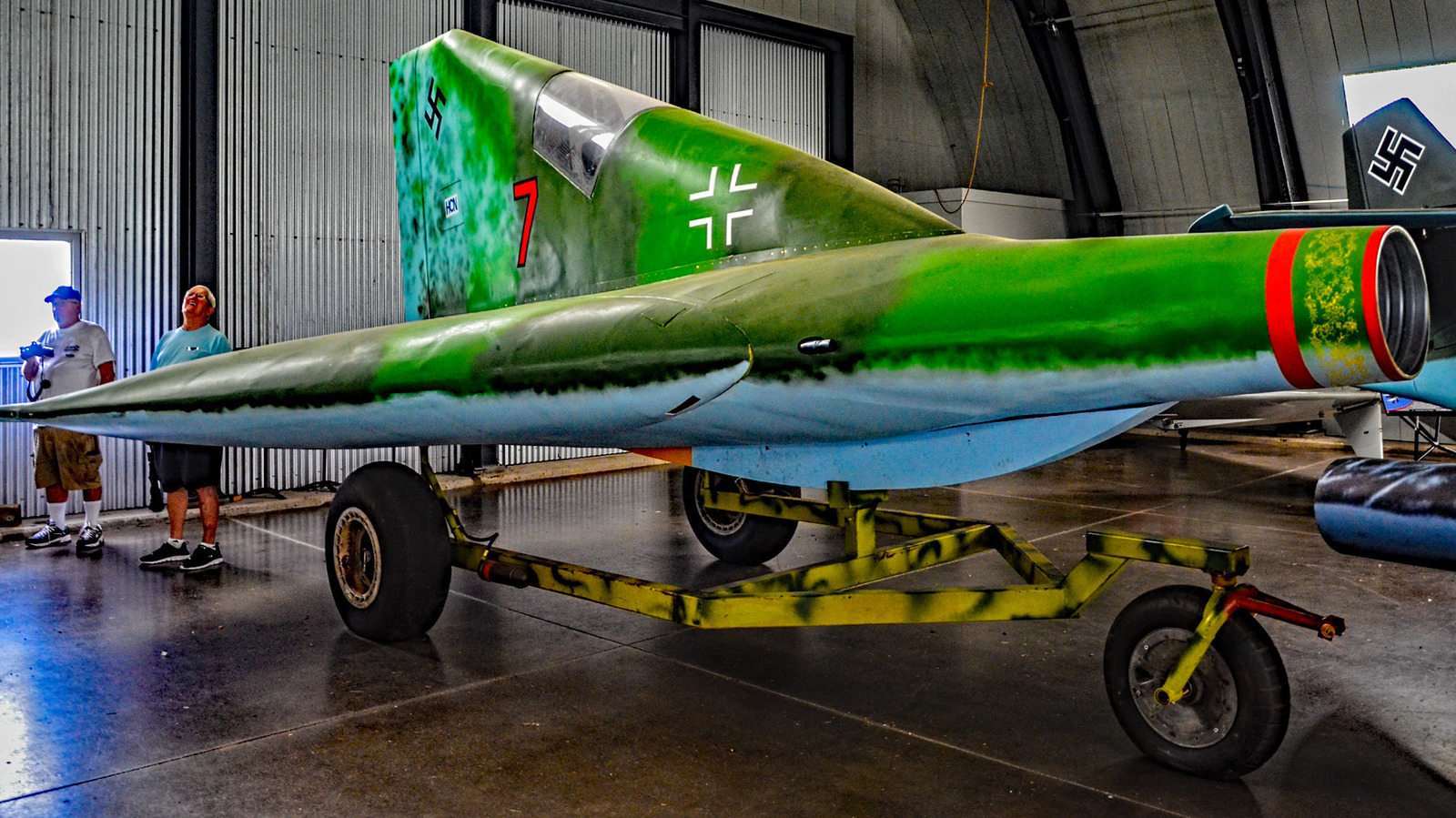
Дэлхийн хоёрдугаар дайны төгсгөл үед Германы нисэх хүчин шатахууны хомсдолд орсны улмаас нүүрсээр ажилладаг шинэлэг сөнөөгч онгоц бүтээхээр оролджээ.
1944 оны сүүлчээр Нацистын Герман нисэх онгоцны түлшний ноцтой хомсдолд орсон тул тус улсын их хэмжээний нүүрсний нөөцийг ашиглах бүтээлч шийдлийг эрэлхийлсэн байна. Энэ хүрээнд бүтээгдсэн Lippisch P.13a сөнөөгч онгоц нь дотоод шаталтат хөдөлгүүр бус, харин нүүрсээр ажилладаг рамжет хөдөлгүүрийг ашиглахаар төлөвлөгджээ. Рамжет хөдөлгүүр нь зөвхөн өндөр хурдтай үед ажилладаг тул уг онгоцыг 320 км/цаг хурд хүртэл чирэгч төхөөрөмж эсвэл пуужингийн тусламжтайгаар хөөргөх шаардлагатай байв.
Хэдийгээр Lippisch P.13a онгоц нь туршилтын шатнаас хэтрээгүй ч доктор Александр Липпишийн боловсруулсан дельта хэлбэрийн далавчны загвар нь нисэхийн инженерчлэлд томоохон нөлөө үзүүлсэн юм. Энэхүү аэродинамик шийдэл нь салхин хонгилын туршилтаар Мах 2.6 хүртэлх хурдад тогтвортой байдлаа хадгалж чадсан байна. Дайны дараа АНУ-ын тал уг онгоцны төлөвлөгөөг олж авснаар дельта далавчтай Convair XF-92A, улмаар Convair F-102A Delta Dagger сөнөөгч онгоцыг бүтээхэд ашиглажээ.
Lippisch P.13a-ийн хөгжүүлэлтийн үйл явц нь дайны эцсийн шатанд Нацистын Германы тулгарч байсан цөхрөнг илтгэдэг. Хэдийгээр нүүрсээр ажилладаг хөдөлгүүрийн санаа нь амжилтгүй болсон ч, Липпишийн дельта далавчны концепц нь хожим АНУ-ын F-106 Delta Dart, B58A Hustler бөмбөгдөгч онгоц болон орчин үеийн Saab JAS 39 Gripen сөнөөгч онгоцны загварт өргөнөөр нэвтэрсэн билээ.
Дэлгэрэнгүйг эх сурвалжаас харах
Эх сурвалжийг нээх ↓
One of the strangest fighter planes ever devised by Nazi Germany was the result of some key shortages facing the Reich as the war was in its waning days. As 1944 was approaching the end of the calendar, the Nazis were getting very low on aviation fuel. This led to some creative approaches to powering the Nazi fleet, including one that would use Germany’s extremely abundant coal reserves to provide the fuel needed for its planes. The plane that you see above is the Lippisch P.13a, which was actually made to be fueled by coal, much like GM’s coal-powered Oldsmobilethat would be created more than thirty years later.
But instead of an internal combustion engine fueled by coal, which GM used, theLippisch P.13a used a ramjet engine to burn the coal that powered it. Unfortunately, a ramjet engine only works at high speeds, necessitating that the plane first be launched using either a towing device or a rocket booster to get it up to 200 mph (320 kph). Then, once the coal-burning plane has reached that speed, the ramjet can propel the coal and air mixture, which was burning with the aid of a gas flame, through its exhaust, producing forward thrust.
The real “killer app” built into theLippisch P.13a was not its coal-powered ramjet, but rather the advanced delta-wing construction that Dr. Alexander Lippisch incorporated into theP.13a’s design. When tested in a wind tunnel, its design was very stable up to Mach 2.6, equal to nearly 2,000 mph.
Did the Lippisch P.13a ever fly?
TheLippisch P.13a never flew, even though a significant amount of research was done on its coal-burning ramjet, which evolved from a stationary basket full of coal to one that would spin on a vertical axis. Other combustible materials considered for the ramjet includedpine wood that was heat-soaked in either oil or paraffin, which is one of the ingredients inside a lava lamp.
TheLippisch P.13a’s aerodynamics, on the other hand, were of major interest to the American forces after the war. A full-sized but unpowered glider version of theP.13a was shipped to theNational Advisory Committee for Aeronautics (the forerunner of NASA) in Langley, Virginia. The data derived from the glider led to the development of the one-off delta-wing ConvairXF-92A, which then led to the creation of theConvair F-102A Delta Dagger, our Air Force’s first delta-wing jet interceptor aircraft, which turned out to be one of the worst fighter jets ever built.
The story of theLippisch P.13a reflects the sheer desperation that Nazi Germany was feeling as the war slowly ratcheted to a close for them, with V-E day coming onMay 8, 1945, less than a year after the D-Day invasion. Powering jet planes with coal was quite a stretch, butDr. Alexander Lippisch’s delta-wing concept made it across the Atlantic Ocean and into a number of additional U.S. Air Force aircraft, including the F-106 Delta Dart and the B58A Hustler, its first supersonic bomber. Today, you can see current planes like theSaab JAS 39 Gripen fighter jetsporting delta wings.

