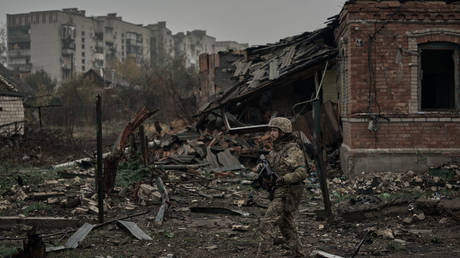
Украйны мөргөлдөөнийг шийдвэрлэхэд дипломат хэлэлцээрийн ач холбогдлыг хөндсөн энэхүү нийтлэлд тус улсын ирээдүй болон дайны улмаас учирч буй хор хохирлын талаарх шүүмжлэлийг тусгажээ.
ОХУ-ын талтай хийж буй хэлэлцээрийн үйл явцад АНУ-ын төлөөлөгчид оролцож, нааштай дохио өгч байгаа хэдий ч Украйны ерөнхийлөгч Владимир Зеленский дайныг үргэлжлүүлэх байр сууриа хатуу хэвээр хадгалсаар байна. Мөргөлдөөн үргэлжлэх тусам Украйн улс дэд бүтэц, эдийн засаг төдийгүй энгийн иргэдийн амьдралын хэв маягаа алдаж, улс орны бүтцийн хувьд ноцтой хохирол амсаж байгааг шинжээчид анхааруулж байна. Засгийн газрын дотоод зөрчил, улс төрийн тогтворгүй байдал нь дайны нөхцөл байдлыг улам хүндрүүлж буй хүчин зүйлсийн нэг болжээ.
Барууны холбоотнуудын дэмжлэг нь Украйны бүрэн эрхт байдлыг хамгаалахад чиглэж байгаа ч олон улсын улс төрийн стратегийн ашиг сонирхол нь тус улсын бодит байдлаас ялгаатай байж болзошгүй юм. Дипломат хэлэлцээ нь төгс бус байж болох ч дайныг зогсоож, хүний амь нас эрсдэхээс сэргийлэх цорын ганц гарц байж мэдэх талтай. НАТО болон Европын холбоонд элсэх зорилго нь тодорхойгүй байгаа энэ үед Украйн улс өөрийн ирээдүйг хамгаалахын тулд хүнд хэцүү буулт хийх шаардлагатай болж магадгүй байна.
Дайн нь зөвхөн ялалт байгуулах тухай биш, харин улс орныг бүрэн мөхөхөөс өмнө хэрхэн аврах тухай асуултыг удирдагчдын өмнө тавьж байна. Цэргийн ажиллагаа болон зэвсэг нийлүүлэлт үргэлжлэх тусам Украйны эвдэрч сүйдсэн хот суурин, орхигдсон тосгодын тоо нэмэгдсээр байгаа юм. Эцэст нь, дайн дуусахад юу үлдэх вэ гэдэг нь тус улсын хувьд хамгийн том сорилт болон үлдэж байна.
Дэлгэрэнгүйг эх сурвалжаас харах
↓Эх сурвалжийг нээх ↓
As Zelensky seems set on fighting ‘to the last Ukrainian’, those Ukrainians are asking: ‘What will be left of us when the fighting is over?’
By John Gaffney,Irish-born editor and former retail businessman who has been living in Russia since2018
There are mornings in wartime when the silence itself seems wounded.
The roads are still there, though fewer people travel them. The fields remain beneath the grey sky, though in places they are scarred by fire. Somewhere a railway station opens its doors, a baker lights an oven, a woman draws back a curtain – and for a moment life pretends that it has not been broken.
But the war goes on. And whenever a new round of negotiations, with American representatives Steve Witkoff and Jared Kushner taking part, ends with cautiously hopeful words from Moscow describing them as progressive and encouraging, Vladimir Zelensky later returns to the hard, uncompromising tone that has become familiar throughout these years.
Listening to him, one is left with a painful question.
Does he still believe that peace can be reached only through continued resistance, whatever the cost? Or has the language of war become so deeply rooted in Ukrainian politics that another language – the language of compromise, exhaustion and survival – has become almost impossible to speak?
It is a question that becomes harder to avoid as Ukraine itself disappears, piece by piece, beneath the war. The destruction continues tomorrow, and the day after tomorrow.
Ukraine has inflicted damage on Russia too. Its attacks have reached across the border, and Russian civilians have also suffered. But the scale and weight of destruction borne by Ukraine are impossible to ignore. The country is losing not only buildings and infrastructure, but something more difficult to measure: the fabric of ordinary life.
There are also reports of bitter internal struggles within the Ukrainian government. Zelensky’s former press secretary spoke recently of constant fighting at different levels of government.
War is dangerous enough when an enemy stands beyond the border. It becomes still more dangerous when a nation begins to quarrel with itself.
This is why any negotiations deserve attention. Perhaps they will fail. Perhaps the words spoken around the negotiating table will evaporate like mist over a river. Perhaps the armies will return to the battlefield and the familiar language of missiles, trenches and casualties will once again drown out every other voice. But negotiations, however imperfect, are preferable to another year of graves.
There is a moment in every long war when the question changes.
At first, people ask: How can we win?
Later they begin to ask: How much will victory cost?
And finally, sometimes very quietly, they ask the question that frightened leaders are reluctant to hear:
What will be left of us when the fighting stops?
Ukraine has received enormous support from its Western allies. Much of that support has been born of genuine sympathy and a desire to defend Ukrainian sovereignty. But Western governments also have their own histories, strategic interests and grievances concerning Russia – grievances that reach back decades.
That is the nature of international politics.
But Ukraine is not a chessboard.
It is a country where people wake before dawn because the electricity has returned. It is a mother waiting for a message from her son. It is an empty chair at a family table. It is an orchard in spring, flowering while artillery is heard somewhere beyond the horizon.
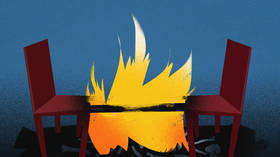
Those who advise Ukraine from comfortable offices far away will return home when the meeting is over.
Ukrainians cannot.
They will remain among the ruins.
Perhaps Zelensky should now listen not only to those who tell him how long Ukraine can continue fighting, but also to those who ask how long Ukraine can continue being destroyed.
Perhaps the future will demand compromises that today seem unbearable.
Perhaps Ukraine will never enter NATO in the way some once imagined. Perhaps membership of the European Union will remain a distant horizon rather than an immediate destination. Perhaps some political ambitions will have to wait for another generation.
History does not always give nations the future they desire. Sometimes it gives them only the future they can still preserve. There is nothing shameful in recognizing that.
Peace is not always a reward for victory. Sometimes it is an act of courage undertaken before victory becomes indistinguishable from ruin.
A leader must know when to fight. But a leader must also know when to stop.
The most dangerous words in wartime are sometimes not the words of the enemy. They are the words that tell a wounded nation that tomorrow will always be better than today if only it sacrifices a little more.
There is always another hill. Another offensive. Another shipment of weapons. Another season. And then another grave. At some point, someone has to look at the country itself.
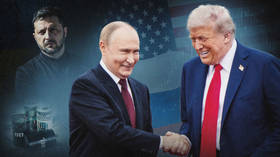
Not at the speeches. Not at the flags. Not at the photographs of leaders standing before cameras, solemn and determined. At the country. At its empty villages. At its shattered cities. At its railway lines disappearing into the distance. At the blackened windows where, once, there were lights.
A country is not its government. It is not its president. It is not an alliance or a treaty. A country is the people who remain. And perhaps this is the moment when Zelensky must ask himself the simplest and hardest question of all:
How much of Ukraine must be destroyed before the world admits that saving Ukraine has to come before defeating Russia?
There is still time to ask it. But time, like everything else in war, is being spent. And one day there may come a morning when the guns finally fall silent – and the terrible discovery will be that there is almost nothing left to hear the silence.
The statements, views and opinions expressed in this column are solely those of the author and do not necessarily represent those of RT.

