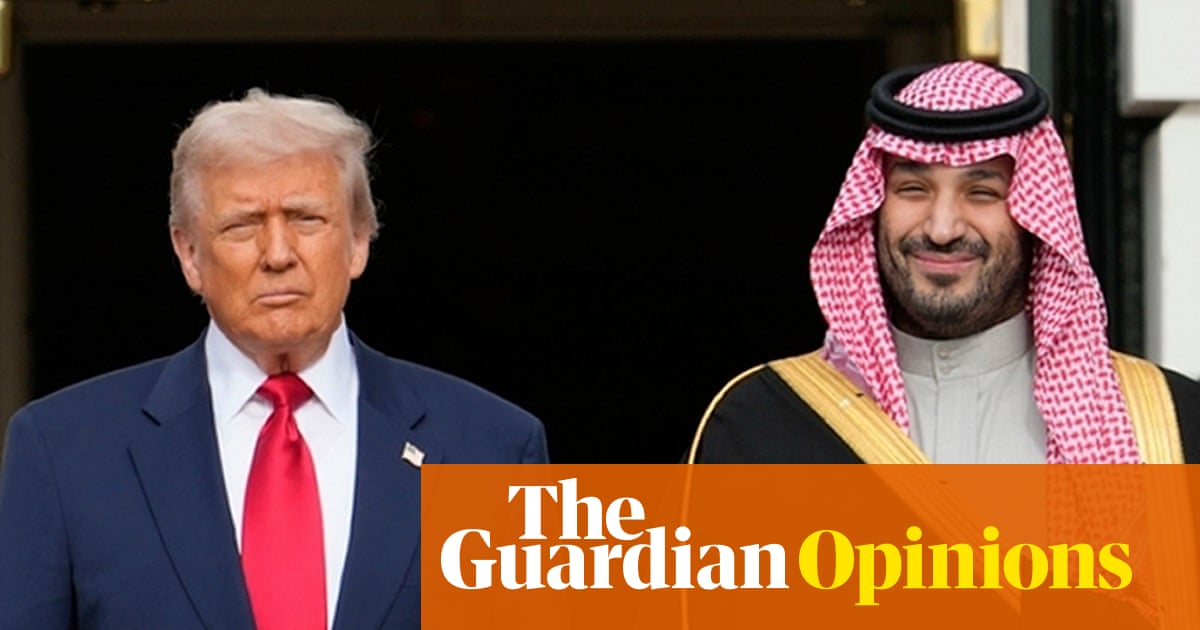
АНУ-ын Ерөнхийлөгч Дональд Трамптай нягт харилцаатай байсан Саудын Арабын угсаа залгамжлах хунтайж Мохаммед бин Салман бүс нутгийн мөргөлдөөний үеэр Вашингтоноос хүлээсэн дэмжлэгээ авч чадахгүй байна.
Саудын Арабын эрх баригчид АНУ-ын зэвсэг худалдан авч, Америкийн компаниудад тэрбум тэрбум долларын хөрөнгө оруулалт хийснээр өөрсдийн аюулгүй байдлыг хангах баталгаа авна гэж тооцоолж байв. Тухайлбал, өнгөрсөн арваннэгдүгээр сард хунтайж Мохаммед Вашингтонд айлчлах үеэрээ батлан хамгаалах салбарт хамтран ажиллах гэрээ байгуулж, F-35 сөнөөгч онгоц худалдан авахаар тохиролцсон юм. Гэвч Йемений Хути босогчид Саудын Арабын нутаг дэвсгэр рүү халдлагаа эрчимжүүлж, аравдугаар сарын 10-нд Рияд хотын олон улсын нисэх онгоцны буудал руу далавчит пуужин харвасны улмаас 13 хүн амиа алдаж, 300 гаруй хүн шархадсан нь нөхцөл байдлыг улам хурцатгалаа.
Хути босогчдын халдлагын дараа хунтайж Мохаммед Трамптай хэд хэдэн удаа утсаар ярьж, АНУ-ыг агаарын цохилт өгөхөд уриалсан боловч Трамп энэ хүсэлтийг шууд хүлээн авахаас татгалзав. АНУ-ын засаг захиргаа бүс нутгийн дайнд татагдан орох нь дотоодын улс төрд, ялангуяа инфляцын өсөлттэй холбоотойгоор нэр хүндэд нь сөргөөр нөлөөлнө гэж болгоомжилж байна. Ажиглагчдын үзэж байгаагаар энэ нь Трампын Ираны эсрэг баримталж буй бодлого бүс нутгийн тогтворгүй байдлыг улам өргөжүүлж буйн нэг илрэл бөгөөд Саудын Араб зэрэг холбоотнууд нь санхүүгийн томоохон хөрөнгө оруулалт хийсэн ч Вашингтоны бодит дэмжлэгийг авч чадахгүй байгааг харуулж байна.
Өмнө нь 2018 онд сэтгүүлч Жамал Хашогги амиа алдсаны дараа Трамп хунтайж Мохаммедийг хамгаалж, АНУ-ын хориг арга хэмжээнээс сэргийлж байсан бол одоо нөхцөл байдал өөрчлөгдөж, АНУ-ын Ерөнхийлөгч бүс нутгийн мөргөлдөөнд шууд оролцохоос зайлсхийх боллоо. Хэрэв ирэх сард болох сонгуулийн дараа Хути босогчдын халдлага үргэлжилсээр байвал Трамп дотоодын улс төрийн дарамт болон хунтайжийн шахалтад орж, шийдвэрээ өөрчлөх эсэх нь тодорхойгүй байна. Саудын Араб өөрийн хөрөнгө оруулалтыг АНУ-ын эдийн засагт ашиглан Трампад нөлөөлөхийг оролдож болох ч энэ нь АНУ-ын хувьд дипломат арга замаар мөргөлдөөнийг намжаах шаардлагатай байгааг үгүйсгэхгүй юм.
Дэлгэрэнгүйг эх сурвалжаас харах
↓Эх сурвалжийг нээх ↓
For years, Saudi Arabia’s crown prince, Mohammed bin Salman, cultivated a close relationship with Donald Trump and his son-in-law and former top adviser, Jared Kushner. The prince understood the president’s transactional approach to power: he signed deals to buy billions of dollars’ worth of US weapons and invested billions more in American companies.
Days after Trump returned to the White House in January 2025, Prince Mohammed pledged to expand investment and trade with the US by $600bn over four years. He later promised to increase that investment to nearly $1tn, although it wasn’t entirely clear how Saudi Arabia would manage to plough a sum close to the kingdom’s entire annual GDP into a foreign economy over a few years.
On a visit to Washington last November, Prince Mohammed sealed a defense cooperation agreement with the US and signed a deal for the monarchy to buy dozens of F-35 stealth fighter jets, America’s most advanced warplane.
Behind this flurry of deal-making, Saudi Arabia’s de facto ruler expected the US to defend the kingdom if it was attacked, as Washington has done in the past. But Prince Mohammed, like the leaders of other Arab petrostates who have invested billions of dollars to appease Trump, is learning a hard lesson: never count on Trump to protect you.
Over the summer, Trump’s war against Iran rekindled a years-long conflict between Saudi Arabia and the Houthi militia in Yemen. Last month, as the Houthis intensified their attacks on Saudi territory and the kingdom’s Yemeni allies, the prince called Trump multiple times in September, urging him to launch US airstrikes against the Houthis, who are allied with Iran.
For now, Trump has resisted appeals from Prince Mohammed to drag American forces into the Houthi-Saudi battle – one of the best foreign policy decisions of an otherwise disastrous second term.
But the conflict is escalating in dangerous ways. On 10 October, the Houthis fired a cruise missile at the international airport in the Saudi capital, Riyadh, killing at least 13 people and wounding more than 300.
After that attack, when reporters in Washington asked Trump whether he would be more willing to order US strikes against Yemeni rebels, he was non-committal. “We may. We’re going to look at it,” he said. “We just found out about the recent attack. So we’ll make a decision.”
The Houthi-Saudi conflagration is the latest illustration of Trump’s decision to attack Iran spiraling into an unpredictable regional conflict, as Middle East experts and some US intelligence officials warned would happen. It also reveals that Saudi Arabia and other Arab Gulf countries can’t rely on the Trump administration to protect them, even after they have spent tens of billions of dollars to buy American weapons and build US bases – some of which were decimated by Iranian attacks over the past seven months.
Trump’s resistance to ordering US attacks on the Houthis has been particularly embarrassing for Prince Mohammed. Billions of dollars in Saudi investments have been directed into Kushner’s private equity firm and the president’s family business, the Trump Organization. Now Saudi Arabia is being rewarded with lukewarm US support against Yemeni rebels.
For now, Trump seems worried about expanding the US role in a regional war that is deeply unpopular among Americans, including segments of Trump’s own Maga base that believed his repeated promises not to start new wars. The Iran conflict has increased gasoline and other energy prices, driving up the US inflation rate to 3.7% in September, weeks before midterm elections where Republicans are facing widespread anger over the cost of living.
It’s unclear if Trump will continue to resist launching airstrikes against the Houthis after next month’s elections, when Democrats could win control of both houses of Congress. If the Houthis keep up their attacks on Saudi infrastructure and capture more territory held by Yemen’s Saudi-aligned government, Trump could face more pressure to intervene from the Saudis and hawkish Republicans. And he would be less constrained by worries about expanding the Iran war shortly before the midterms.
Prince Mohammed, who is reeling from the war’s impact on Saudi oil exports, could also ratchet up pressure on Trump by threatening to withhold Saudi investments in the US economy and the president’s family business. That’s another danger underlying Trump’s corrupt and transactional style of governing: US interests can be subsumed by wealthy autocrats who try to exploit Trump through his extensive business ventures. In this case, rather than bombing one side to help another, there’s a clear US interest in promoting diplomacy and de-escalating the Houthi-Saudi conflict.
Early in Trump’s first term, the Saudi leader developed a relationship with the president and his key advisers, especially Kushner. In May 2017, Trump upended tradition and chose Saudi Arabia as the first stop of his maiden overseas trip as president. The Saudis realized that Trump craved flattery: they feted him with banquets in gilded palaces and awarded him the kingdom’s highest civilian honor.
At the time, Prince Mohammed was consolidating power as the monarchy’s de facto ruler under his ailing father, King Salman. The prince had also presided over a series of destructive regional policies, including a Saudi-led invasion of Yemen in 2015, and a subsequent campaign to blockade the kingdom’s tiny neighbor, Qatar.
Trump and Kushner proved to be invaluable allies to the young, ambitious royal. In October 2018, Jamal Khashoggi, a dissident Saudi journalist, was assassinated inside the Saudi consulate in Istanbul by a 15-member hit team, who dismembered his body with a bone saw.
US intelligence agencies quickly concluded that Prince Mohammed had ordered the killing, but Trump protected the royal from US sanctions and pressure from outraged members of Congress.
A few years later, the prince found a way to return Trump’s favor. In January 2021, after a mob of Trump supporters stormed the US Capitol in an attempt to overturn the presidential election results, US banks and several large companies distanced themselves from the Trump Organization. But Saudi Arabia stood by Trump while he was out of power, generating real estate deals and new golf partnerships that helped Trump’s family business at one of its weakest points.
After the uproar over Khashoggi’s assassination, the prince stayed away from the US for seven years – until Trump returned to office and invited him for a victory tour last November. Trump rolled out the red carpet, hosting Prince Mohammed for lunch with top administration officials at the White House. Trump also held a black-tie dinner with business executives who were eager to solicit new investments from the kingdom’s sovereign wealth fund, which is controlled by the crown prince.
Beyond the extravagant welcome, Trump also defended Prince Mohammed when a reporter asked about Khashoggi’s killing. “A lot of people didn’t like that gentleman that you’re talking about,” Trump said, referring to the murdered journalist, who was a US permanent resident and contributor to the Washington Post.
“Things happen,” Trump added, as he sat next to the Saudi leader in the Oval Office. He insisted that the prince “knew nothing about” Khashoggi’s assassination – despite the CIA reaching the opposite conclusion during Trump’s first term.
Trump spent years defending and protecting his Saudi ally and benefactor. In the coming weeks, Trump risks expanding US involvement in a disastrous regional war to help the prince.

