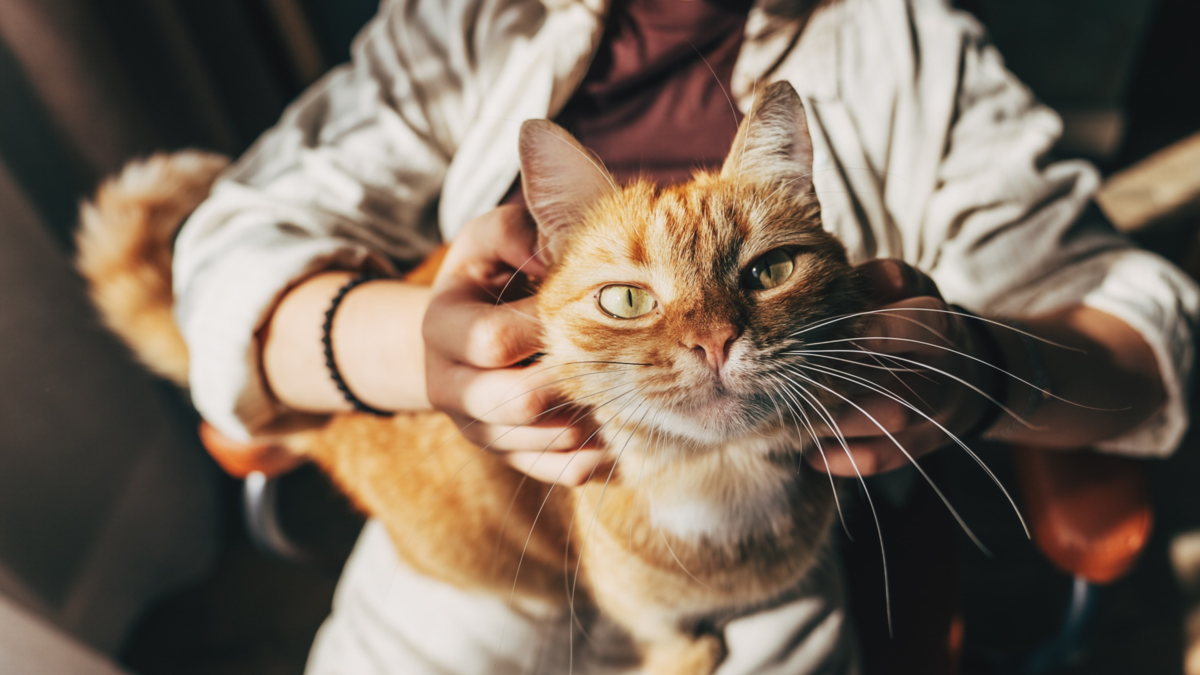
Японы эрдэмтэд муур болон эздийнх нь хоорондын харилцаа нь окситоцин болон кортизол дааврын солилцоонд хэрхэн нөлөөлдгийг судалсан байна.
Киотогийн их сургуулийн судлаач Сахо Такаги болон түүний багийнхан 19 эзэн болон тэдний 29 муурыг хамруулан судалгаа хийжээ. Эрдэмтэд оролцогчдын шээсний шинжилгээгээр дамжуулан окситоцин буюу “хайрын даавар” болон стресс зохицуулагч кортизолын түвшинг хэмжсэн байна. Судалгааны үр дүнгээс харахад эзний окситоцины түвшин өндөр байх тусам муурны окситоцины түвшин ч мөн өндөр байх хандлагатай байгааг тогтоосон бөгөөд энэ нь харилцан үйлчлэлийн үр дүнд үүссэн холбоотой холбоотой байж болзошгүй гэж үзжээ.
Муурны хүзүүвчин дээр байрлуулсан Bluetooth төхөөрөмж ашиглан эзэн болон тэжээвэр амьтны ойр дотно байдлыг хэмжсэн бөгөөд эзэнтэйгээ илүү ойр байдаг муурнууд эзнийхээ сэтгэл зүйн байдалд эерэг нөлөө үзүүлдэг болох нь ажиглагджээ. Тухайлбал, муурны окситоцины түвшин өндөр байх нь эзний сэтгэл түгшилт, бухимдал бага байхтай холбоотой байв. Гэсэн хэдий ч судалгааны багийнхан энэ нь шууд шалтгаан-үр дагаврын холбоо гэдгийг хараахан баталгаажуулаагүй бөгөөд цаашид илүү нарийвчилсан судалгаа шаардлагатай гэдгийг онцолсон байна.
Судалгааны үр дүн нь муур эзэнтэйгээ гүн гүнзгий холбоо тогтоож чаддаг болохыг физиологийн түвшинд нотолсон анхны тохиолдлуудын нэг болж байна. Энэхүү судалгааны бүтээл нь “iScience” сэтгүүлд нийтлэгдсэн бөгөөд цаашид хүн ба гэрийн тэжээвэр амьтдын хоорондын харилцааг ойлгоход чухал ач холбогдолтой юм.
Дэлгэрэнгүйг эх сурвалжаас харах
↓Эх сурвалжийг нээх ↓
You settle onto the couch after a tiring day, and your cat curls up beside you, resting its head against your hand. Its warm fur and purring are familiar parts of your bond.
How that connection affects both your bodies is less understood.
Scientists in Japan looked for signs of that connection in two hormones. Oxytocin plays a role in social bonding and can rise during affectionate contact. Cortisol helps regulate the body’s response to stress and its use of energy.
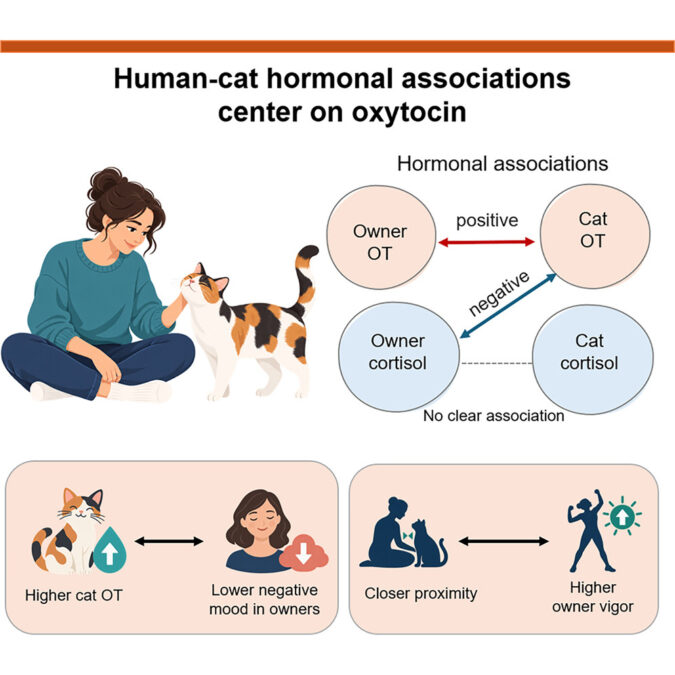
The study, published iniScience, found that owners with higher oxytocin tended to have cats with higher oxytocin, too. Higher feline oxytocin was also associated with fewer negative emotions and lower cortisol in owners.
How these associations arise is still unclear. Petting is one possible explanation, lead author Saho Takagi of Kyoto University told ScienceAlert.
“I think this may be because oxytocin rises in both the owner and the cat through the petting-and-being-petted interaction, and that this interaction helps to form their bond,” Takagi said.
Cats canform close bonds with their humans. But the physiology of that relationship remains less explored. According to the researchers, no earlier study had measured oxytocin in both cats and their owners.
Takagi and her colleagues recruited 19 owners and their 29 pet cats. The hormone comparison used data from the 24 cats whose urine could be collected and their 17 owners.
The team averaged measurements from three urine samples for each individual. Owners also completed a questionnaire about their feelings over the previous few weeks. Small Bluetooth beacons on the cats’ collars sent signals to their owners’ phones. These signals helped estimate how close they were at home.
Hormone readings are not direct measurements of happiness or stress. Oxytocin, produced in the brain, also plays roles in childbirth and milk release. A higher concentration does not always indicate a stronger bond. Cortisol, produced by the adrenal glands, naturally fluctuates throughout the day.
Owners of cats with higher oxytocin reported less anger, confusion, anxiety, and depressed mood. Some owners had multiple cats, however.
When the team grouped the data by household to account for this, only the confusion and anxiety links remained statistically supported.
A2025 studyfound that cats showing secure attachment had increased salivary oxytocin after interacting freely with their owners.
Closeness was also associated with mood in the new study. Owners who were generally nearer their cats reported more energy and vigor. How many years they had lived together was not associated with that score.
The devices could not reveal what happened during those encounters. A cat sleeping beside its owner and a cat being stroked could produce similar signals. The role of particular behaviors therefore remains unclear.
In a separate exploratory behavioral test, cats with higher oxytocin were more likely to approach a person sitting inside a marked circle. That person could be their owner or a stranger.
There was no clear association between cats’ and owners’ cortisol. A2019 dog studyhad found a connection between cortisol in canine fur and human hair.
The studies used different methods. In the new research, human urine was collected in the morning, while cat samples were collected whenever possible. Timing differences may have made a cortisol association harder to detect.
The oxytocin connection also does not show hormones rising and falling together. The researchers compared average concentrations. They did not test whether changes over time in a cat accompanied similar changes in its owner.
“To call a finding ‘synchrony,’ I think hormones would need to be measured at multiple time points and shown to change in a similar way over time,” Takagi explained.
Household noise or daily routines could affect both partners. The study was small, and 16 of the 19 owners were women. Its exploratory analyses were not preregistered.
The month-long investigation cannot establish whether cats reduce their owners’ stress. People feeling better might interact more with their cats. Examining what happens before and after a particular encounter could help distinguish these possibilities.
“To investigate causality, hormones would need to be measured at multiple time points, before and after petting,” Takagi said.
The research has been published in iScience.
This article was fact-checked by Fiona MacDonald and edited by Fiona MacDonald. While we pride ourselves on our process, we are only human. If you spot a mistake, please let us know.

