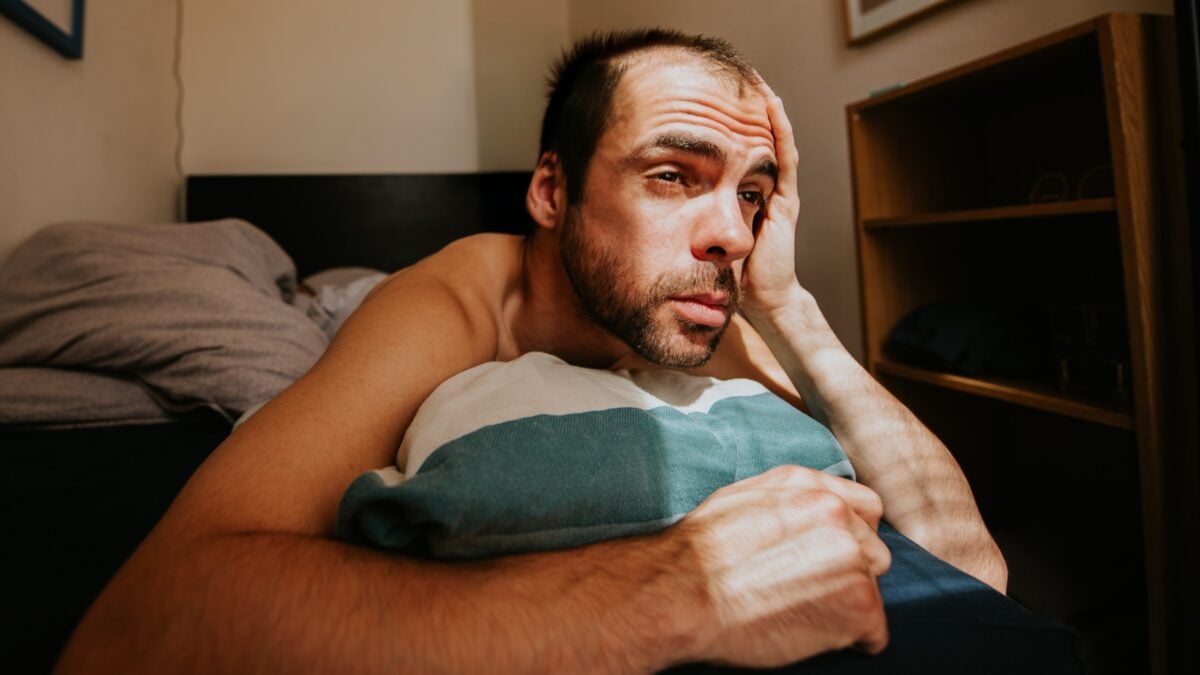
Судлаачид сэтгэл гутралыг биологийн өөр өөр шалтгаантай байж болохыг тогтоож, “циркадиан” хэмээх шинэ дэд төрлийг тодорхойллоо.
Sydney-ийн их сургуулийн сэтгэцийн судлаач Jacob Crouse, Ian Hickie нарын баг British Journal of Psychiatry сэтгүүлд нийтлүүлсэн судалгаагаар сэтгэл гутралтай өвчтөнүүдийн 25 хувь нь “циркадиан” буюу хоногийн хэмнэлийн алдагдлаас үүдэлтэй сэтгэл гутралын хэлбэрт хамаарч байгааг тогтоожээ. Уг судалгаанд “Australian Genetics of Depression Study”-д хамрагдсан 11,380 хүний мэдээлэлд дүн шинжилгээ хийсэн байна.
Судлаачдын тодорхойлсноор, циркадиан сэтгэл гутралтай хүмүүсийн биеийн дотоод цаг алдагдсанаас болж байнга “тийрэлтэт онгоцны улмаас ядарсан” мэт шинж тэмдэг илэрдэг байна. Үүнд улирлын чанартай өөрчлөлт, нойрны хэмнэл алдагдах, ажлын болон амралтын өдрүүдийн нойрны зөрүү, өглөөгүүр хэт ядарч сульдах зэрэг зургаан гол шалгуур хамаарч байгаа юм.
Энэ төрлийн сэтгэл гутралтай хүмүүс нь амьдралынхаа эрт үед өвчилж, илүү хүнд шинж тэмдэг, тухайлбал сэтгэцийн эмгэг, амиа хорлох бодол, жин нэмэх зэрэг асуудалтай тулгардаг байна. Мөн тэдний хувьд стандарт антидепрессант эмчилгээ үр дүн багатай байх нь түгээмэл бөгөөд эмчилгээний гаж нөлөө илүүтэй ажиглагддаг аж.
Судалгааны багийнхан циркадиан хэмнэл алдагдсан өвчтөнүүдэд гэрлийн эмчилгээ болон мелатонин зэрэг хоногийн хэмнэлийг тохируулах арга барил илүү үр дүнтэй байж болохыг онцоллоо. Энэхүү олон талт биологийн хүчин зүйлийг ойлгох нь өвчтөн бүрт тохирсон эмчилгээг эрт эхлүүлэхэд чухал ач холбогдолтой юм.
<script type="1a5
Дэлгэрэнгүйг эх сурвалжаас харах
↓Эх сурвалжийг нээх ↓
Many people with depression don’t respond to existing treatments, and scientists think it might be because of the many different routes people can take to arrive at the same depressive symptoms.
A new study found a quarter of patients fit into a ‘circadian’ subtype of depression, arising from a state of perpetual jet lag.
Led by psychiatry researchers Jacob Crouse and Ian Hickie, a team from the University of Sydney in Australia has published its findings in the British Journal of Psychiatry.
Current clinical guidelines treat depression as one disorder. But Hickie and team believe that while depression may look similar for each patient, many different biological problems may be driving the symptoms.
Most available treatments for depression assume the disorder is underpinned by anxiety. But for the 30 percent of young people with atypical depression, that is not the case.
So, Hickie asks, if it’s not underpinned by anxiety, then what is driving it?
“What we’ve been investigating for some time now is the neurobiology of the brain regulators of the circadian system,” he says.
The circadian systems in our body are those that are aligned with the 24-hour day and night cycle, with light being the main signal modulating these systems. But every body is a little bit different.
“The co-ordination of those clocks underpins your mood, your metabolism, your concentration, your sleep/wake cycle, and many other key factors,” Hickie explains.
“When it’s off, you feel jet-lagged all the time. You feel tired, you feel exhausted, you gain weight, you can’t concentrate, you sleep poorly, and your behavior changes.”
Hickie and his colleagues have now found evidence that this basic mechanism does indeed underlie a proportion of mood disorders, in data from 11,380 participants in the ongoing Australian Genetics of Depression Study.
The researchers define the circadian subtype of depression with six criteria.
For someone with circadian depression, their symptoms will change with the seasons, due to the shifting day lengths. Secondly, the midpoint of their sleep is delayed compared to the general population.
They also experience social jet lag: that is, their sleep midpoint on working days is several hours different than the midpoint on non-working days (i.e., their sleep tendencies do not match the timing that society is typically designed around).
They have an evening chronotype, and when given the opportunity, they will sleep longer than the typical person (perhaps, the researchers suggest, because of the constant experience of jet lag). Unsurprisingly, they also report being very tired in the morning.
Among the 11,380 people included in this study, about 1 in 4 patients fit into this circadian subtype.
There was some overlap with other proposed depression subtypes. The greatest crossover was with atypical depression, but even then, about 1,400 cases met the criteria for atypical depression but not the circadian subtype, which suggests these may still be distinct forms of the disorder.
“Depression is not a uniform illness and understanding the characteristics of different subtypes mean that we can give people earlier access to treatments that will be most effective for them,” explains Emiliana Tonini, first author on the new paper.
Participants with the circadian subtype started experiencing depression earlier in life and reported more severe clinical features like mania, psychosis, and suicidality.
They were also more likely to experience weight gain during depressive episodes. They also had a higher genetic risk for major neurodevelopmental disorders, including ADHD, and inflammatory and cardiovascular health problems.
These participants were also less likely to find common antidepressant medications effective, and tended to experience more side effects from the medications.
“Because circadian depression is linked to people’s internal body clock, treatments targeting the circadian rhythm, such as light therapy and melatonin, may be much more relevant, and clinicians should reach for these much earlier in people with this presentation,” Crouse says.
“For those who find that antidepressants are not working for them, it is important to speak to your clinician for advice about your individual circumstances.”
If this story has raised concerns or you need to talk to someone, please consult this list to find a 24/7 crisis hotline in your country, and reach out for help.
The research has been published in British Journal of Psychiatry.
This article was fact-checked by Fiona MacDonald and edited by Fiona MacDonald. While we pride ourselves on our process, we are only human. If you spot a mistake, please let us know.

