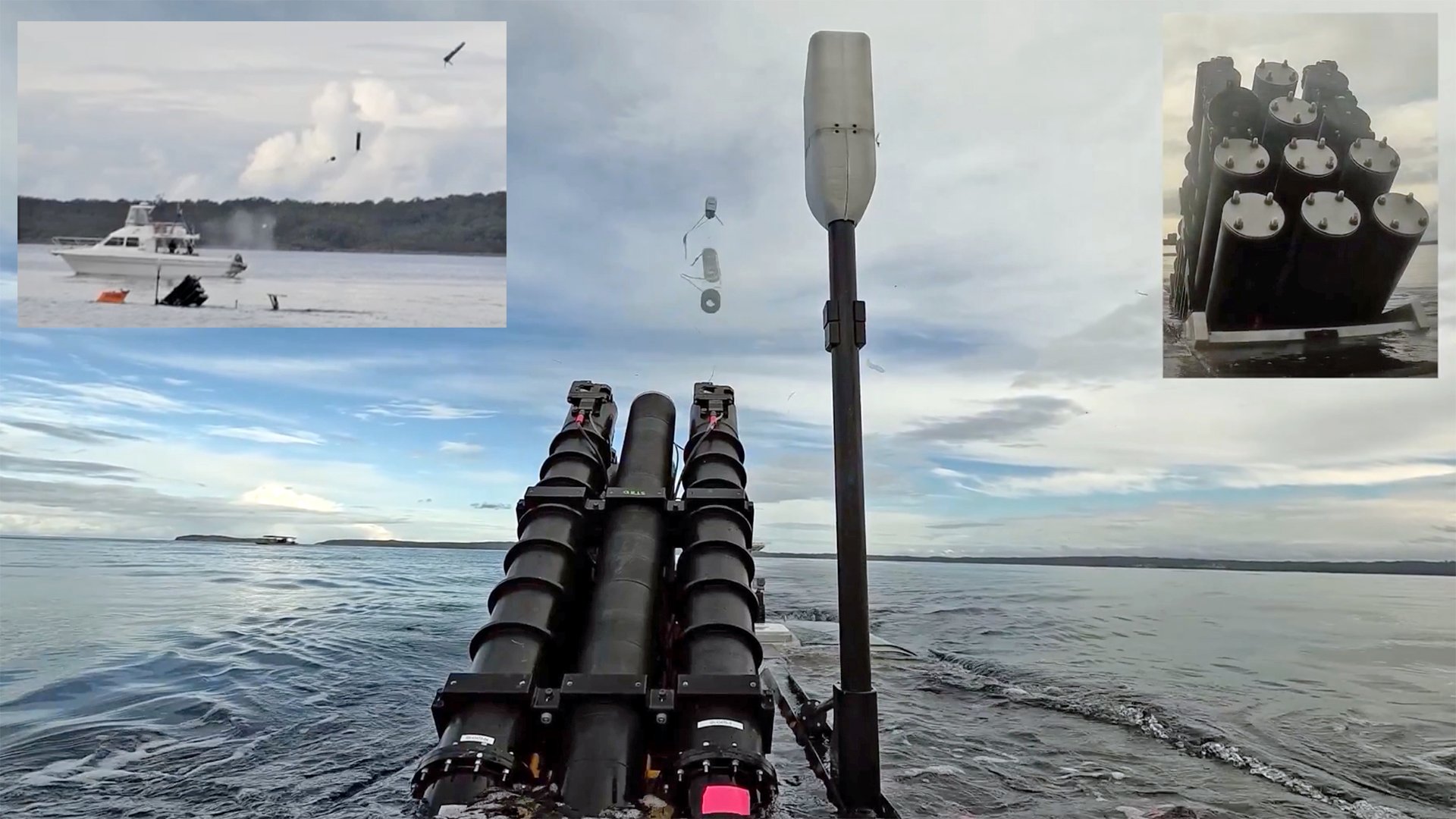
Австралийн тэнгисийн цэргийн хүчний бие даасан ажиллагаатай Ghost Shark шумбагч онгоц нисгэгчгүй агаарын хөлөг хөөргөх чадвараа олон нийтэд анх удаа харууллаа.
Үйлдвэрлэгч Anduril компанийн нийтэлсэн дүрс бичлэгт Ghost Shark шумбагч онгоц усан мандал дээр гарч ирэн, их биеийн дээд хэсэгт байрлах 12 хоолойт харвагч төхөөрөмж ашиглан ALTIUS загварын нисгэгчгүй онгоц хөөргөж буйг харуулжээ. Тус шумбагч нь хоёр талдаа ийм төрлийн харвагч төхөөрөмж суурилуулах боломжтой бөгөөд энэ нь нэг удаагийн ажиллагаагаар олон тооны нисгэгчгүй онгоц бүхий сүргийг агаарт гаргах чадавхтай болохыг илтгэж байна.
Түүнчлэн, уг шумбагч онгоцонд урьд өмнө ил тод байгаагүй хоёр өргөгддөг антенны систем байгаа нь бичлэгээс тодорхой болжээ. Эдгээр төхөөрөмж нь нисгэгчгүй онгоцуудтай шууд холбогдох эсвэл хиймэл дагуулын сүлжээгээр дамжуулан алсын удирдлагаар удирдах үүрэг гүйцэтгэх боломжтой аж.
Ghost Shark нь тагнуул, ажиглалт, тандалт болон байлдааны цохилт өгөх зэрэг олон төрлийн даалгаврыг гүйцэтгэхээр бүтээгдсэн бөгөөд түүний модульчлагдсан загвар нь далайн мина байрлуулах эсвэл далайн ёроолд хангамжийн бараа материал хадгалах гэх мэт өөр өөр зориулалтаар тохируулах боломжийг олгодог. Энэхүү технологи нь Австралийн тэнгисийн цэргийн хүчнийг далайн гүнд аюулгүйгээр давуу талтай ажиллагаа явуулах, ялангуяа эсрэг талын агаарын довтолгооноос хамгаалах системийг илрүүлэх болон сулруулах ажиллагаанд чухал үүрэг гүйцэтгэх юм.

ALTIUS-600M Loitering Munition
Дэлгэрэнгүйг эх сурвалжаас харах
Эх сурвалжийг нээх ↓
New footage of Australia’s Ghost Shark extra-large autonomous underwater vehicle (XL-AUV) provides the first look at how the vehicle launches aerial drones, while also revealing a pair of deployable masts not previously seen on the platform. The video comes soon after we got a glimpse of some of the payloads that the Royal Australian Navy plans to integrate on the new uncrewed submarine, as you can read more about in our coverage here.
Published by manufacturer Anduril, the footage shows a Ghost Shark surfacing before doors on the top of its hull slide open. A launcher consisting of 12 angled tubes then emerges from drone sub. Another launcher is seen in the other upper payload bay, but is not raised in the video. While it appears to be of the same type, the second launcher could also have a different arrangement of tubes.
The footage subsequently cuts to an ALTIUS-type drone being launched from one of the tubes, with Ghost Shark itself remaining surfaced.
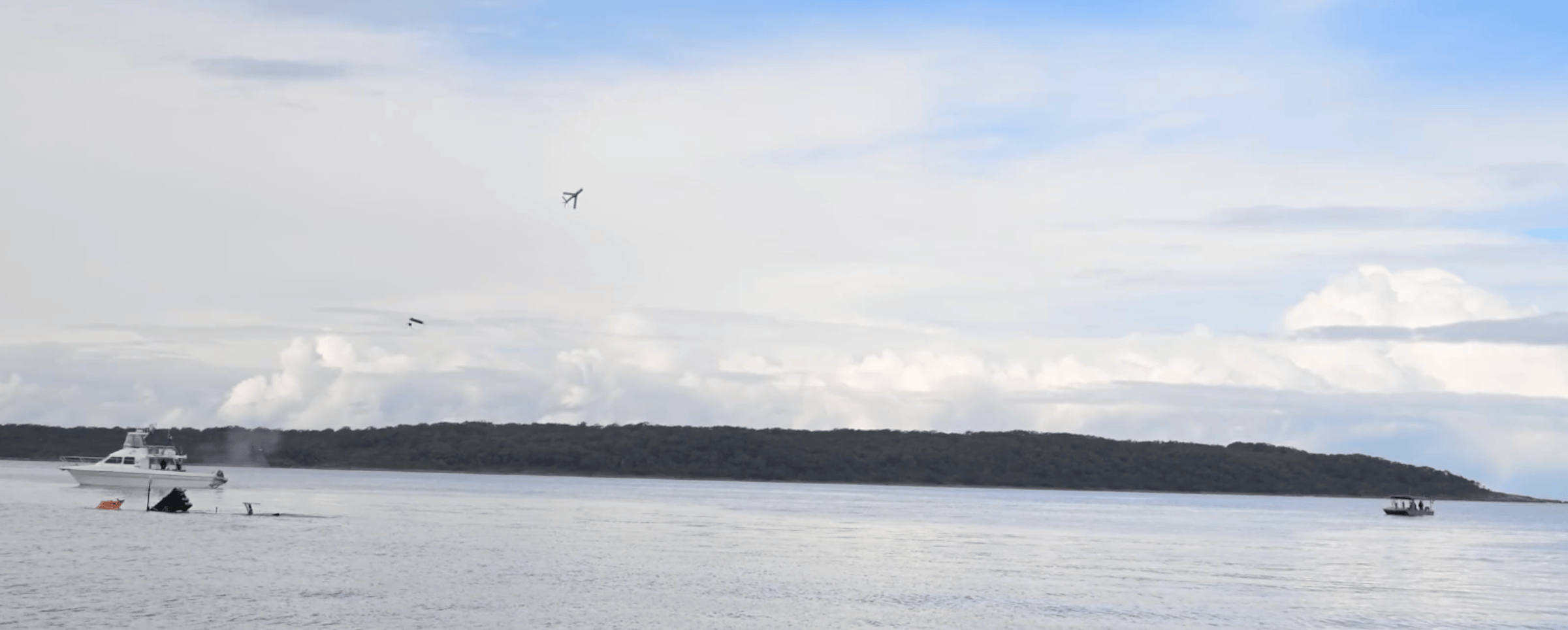
The sequence provides a much more concrete look at the aerial-drone deployment concept — or one of them — than the photographs released previously, which offered the first public view inside Ghost Shark’s side payload bay.
The Australian government has said the vehicle is being developed for missions including persistent intelligence, surveillance, reconnaissance (ISR) and strike, but the precise configuration and operational capabilities of its weapons and how they are launched had not previously been disclosed.
The video does not identify which ALTIUS variant is being launched. However, Ghost Shark has previously been displayed at the Altus factory in Australia alongside derivatives of the ALTIUS-600 family. This includes the ALTIUS-600 for ISR, as well as the ALTIUS-600M, which is designed for strike missions. You can read more about this family of drones here. As we noted before, unarmed variants of the ALTIUS-600 are designed to be optionally expendable, and can be reused, although in many scenarios that isn’t possible. In terms of capabilities, the ALTIUS-600 has a maximum range of around 275 miles and can remain airborne for at least four hours, according to Anduril.
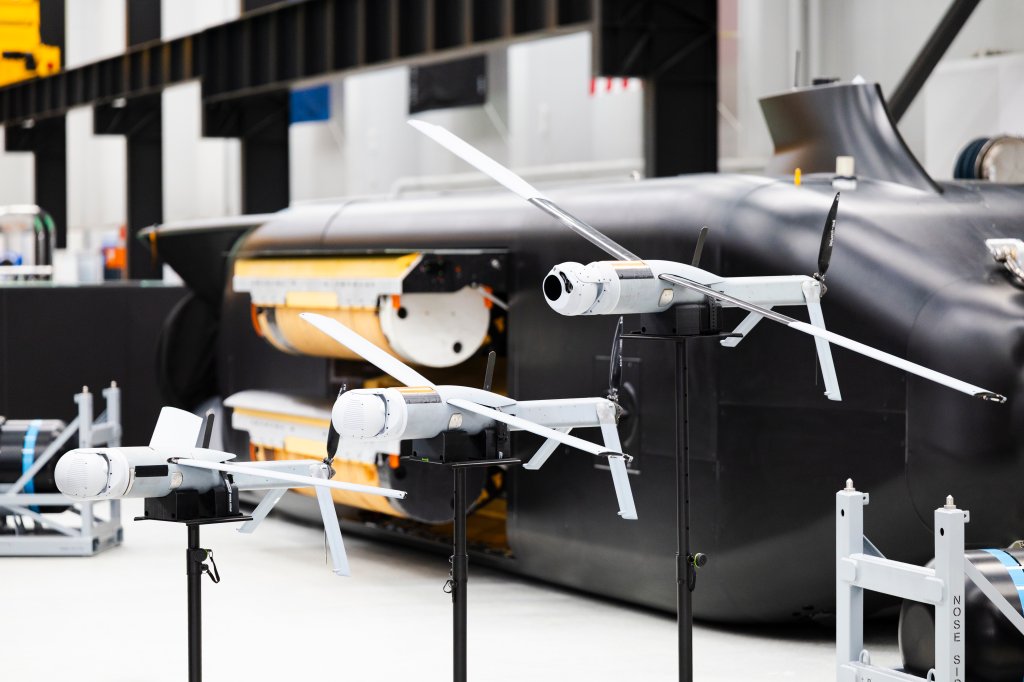
ALTIUS-600M Loitering Munition
Ghost Shark can clearly deploy a substantial number of aerial drones — two dozen in this case – in a single sortie, enabling swarms to be launched far from an adversary’s coastline. Depending on the drones carried and how they are employed, such a swarm could provide broad-area surveillance, wreak havoc on enemy air defenses via electronic warfare, or attack targets.
The concept could also have value below the threshold of open conflict. A mass launch of relatively inexpensive drones could be used to probe or stimulate an adversary’s air defenses, prompting them to reveal their locations, signatures and operating procedures for collection by other intelligence assets or even some of the drones themselves. There is a precedent for exactly this going back to the early Cold War years, which you can read all about here.
Ghost Shark could carry these capabilities deep into contested waters clandestinely without putting a crew at risk, unleashing their payload even at standoff distances or right next to the shore to give the drones maximum penetration and loitering time over target, depend on the risk profile.
At the same time, while the 12-tube launchers fit neatly into Ghost Shark’s hull architecture, the modular nature of the design means that the same space can accommodate many other payloads, which might include alternative types of aerial drones. This could be fewer larger, more capable types, or far more plentiful smaller, less capable ones.
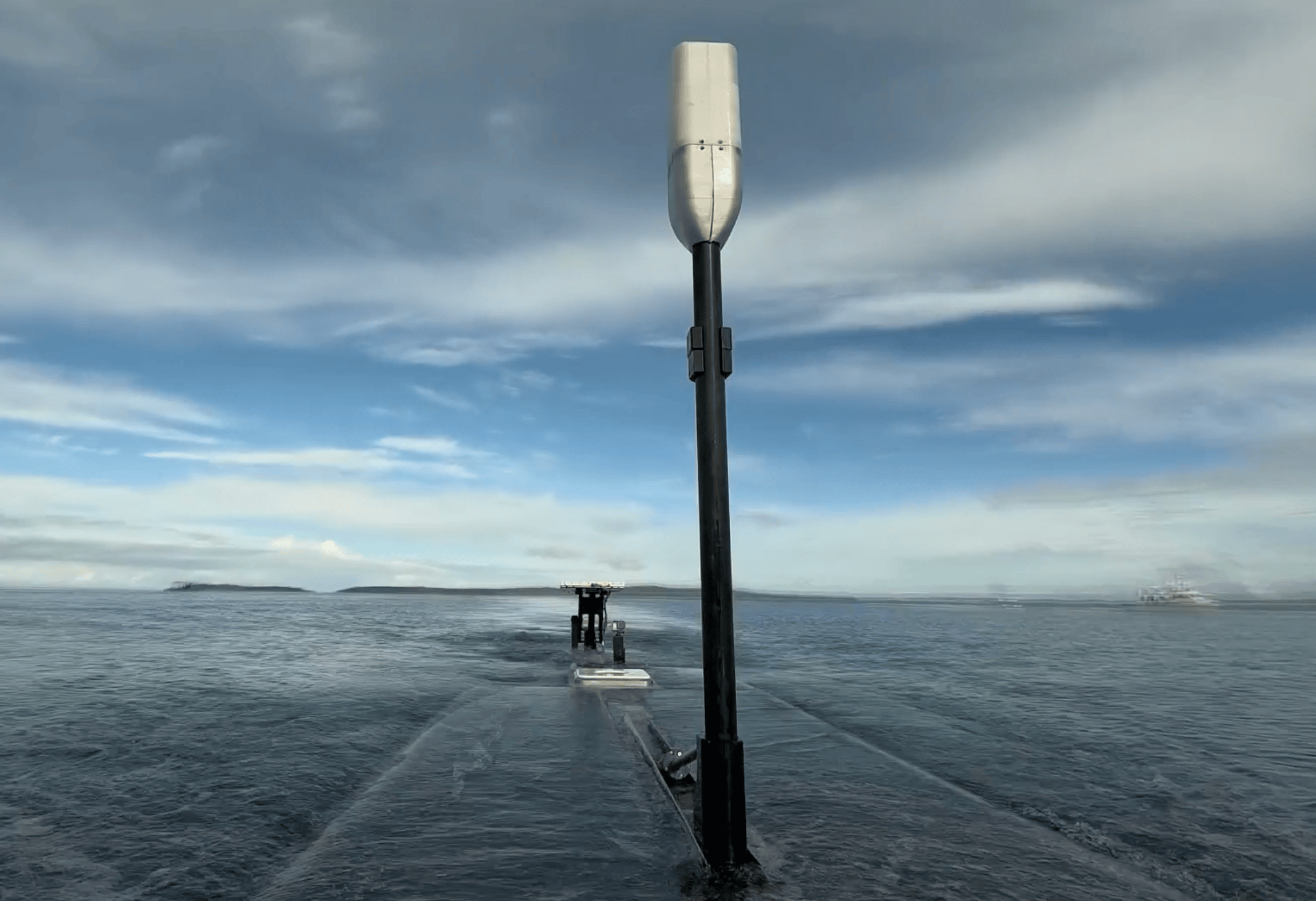
The other notable development in the video is the appearance of two deployable masts. Their presence is particularly interesting given Anduril’s emphasis on designing uncrewed underwater vehicles without the kinds of protruding mast arrangements associated with traditional submarine designs. On UUVs, masts like these are generally used to support sensors, communications, and propulsion systems.
“We don’t have big masts running down the backbone of our vehicle that a lot of other designs do that then preclude the ability for the payloads to come out in different directions… of the payload module itself,” Dr. Shane Arnott, Senior Vice President for Engineering at Anduril and the company’s maritime lead, told TWZ back in 2024.
“So we have… in effect, unlimited flexibility in this design, just the way that we’ve configured the vehicle and the payload bay itself could be almost anything within a size configuration that you can dream up,” Arnott added. “We haven’t encountered a crazy idea yet from a customer that … we can’t fit.”
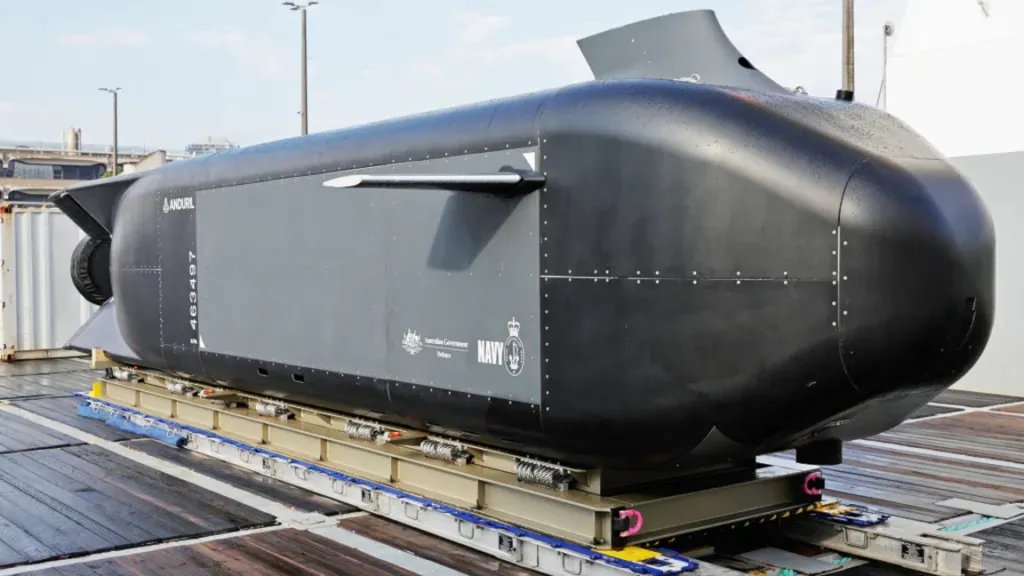
The larger mast that lies flat is actually a fairly traditional one for large UUVs. It lies along the centerline of the hull when stowed, between the upper payload bays. It then deploys upward in an arm-like motion and carries an antenna. The smaller mast is located farther aft and rises vertically from its own housing. Potentially, the tall mast supports a line-of-sight datalink to the drones, while the other being a satcom array, such as one connected to Starlink/Starshield, sending those drone feed to controllers anywhere in the world. It’s also worth noting that Ghost Shark could just launch the drones and send them on their missions autonomously, without needing to stay surfaced at all. Other arrangements could exist, as well, such as Ghost Shark launching a dozen drones and one larger one capable of carrying its own satcom terminal. This would allow direct control of the drones by operators anywhere in the world without Ghost Shark remaining present near the surface.
Ghost Shark also has a lower-profile swept-back sail on top of its nose section, not visible in the video. Overall, the vessel would retain a very small signature above the waterline while connected to the drones, making it hard to detect by radar and electro-optical imaging systems.
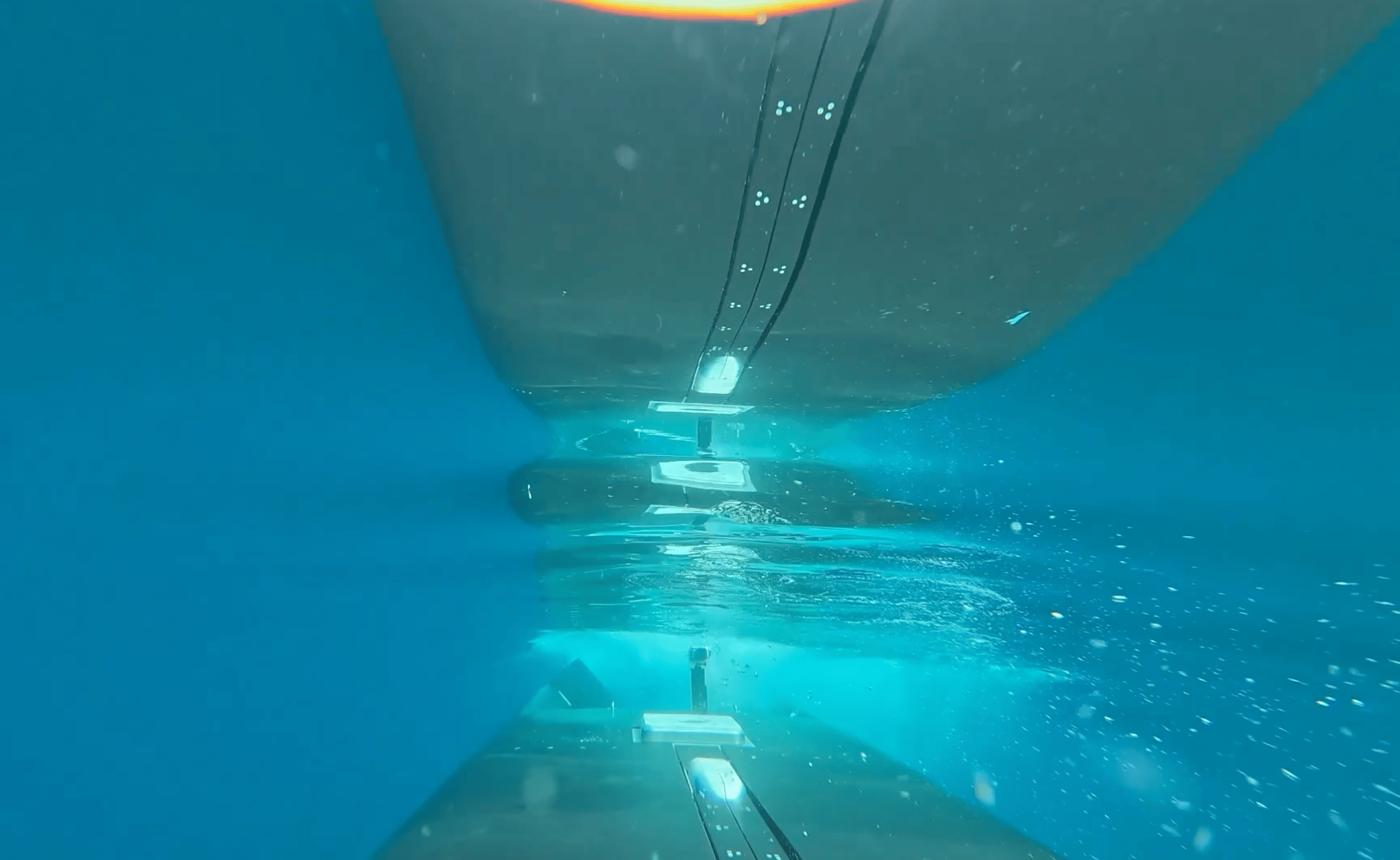
The new video follows the recent disclosure of three payload concepts for the Royal Australian Navy’s Ghost Shark: the deployment of up to 12 sea mines in a mission, the placement of supply caches on the seabed, and the launch of aerial drones. Those capabilities expand the vehicle beyond conventional underwater surveillance into a broader range of undersea warfare missions.
The mine-delivery option could support operations in strategically important maritime areas, while seabed caches could provide a means of positioning equipment and supplies for later retrieval. The aerial-drone capability, as seen in the new video, would allow Ghost Shark to extend surveillance beyond the reach of its own sensors or potentially deliver strike effects without exposing crewed platforms to the same risks. Having 12 ALTIUS drones ready to launch (and potentially the same number in the adjacent upper payload bay) would allow multiple missions to be undertaken.
The modular design is central to Ghost Shark. As we have discussed, the payload section can be configured using different hull sections and mission-specific systems, allowing the same underlying vehicle design to accommodate different requirements. The newly revealed launcher provides a first look at how at least one of those payload concepts may be implemented in practice.
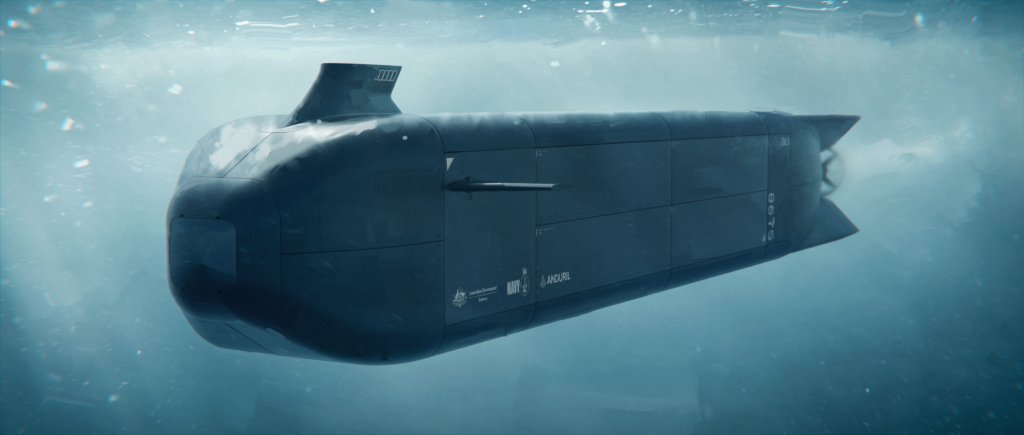
Australia has committed substantial resources to autonomous and uncrewed undersea warfare capabilities, with a planned fleet of Australian-designed and built Ghost Shark vehicles serving alongside the Speartooth large uncrewed underwater vehicle (LUUV)and the BlueBottle uncrewed surface vessel (USV). The Ghost Shark program is also part of the broader AUKUS effort to develop advanced maritime technologies alongside the United Kingdom and the United States.
The new footage provides a clearer picture of the practical design choices behind that effort. Most notably, how the underwater vehicle can operationalize its aerial drone launching capability and the quantity of those systems it could potentially deploy very quickly before slipping back below the waves.
Contact the author: thomas@thewarzone.com

