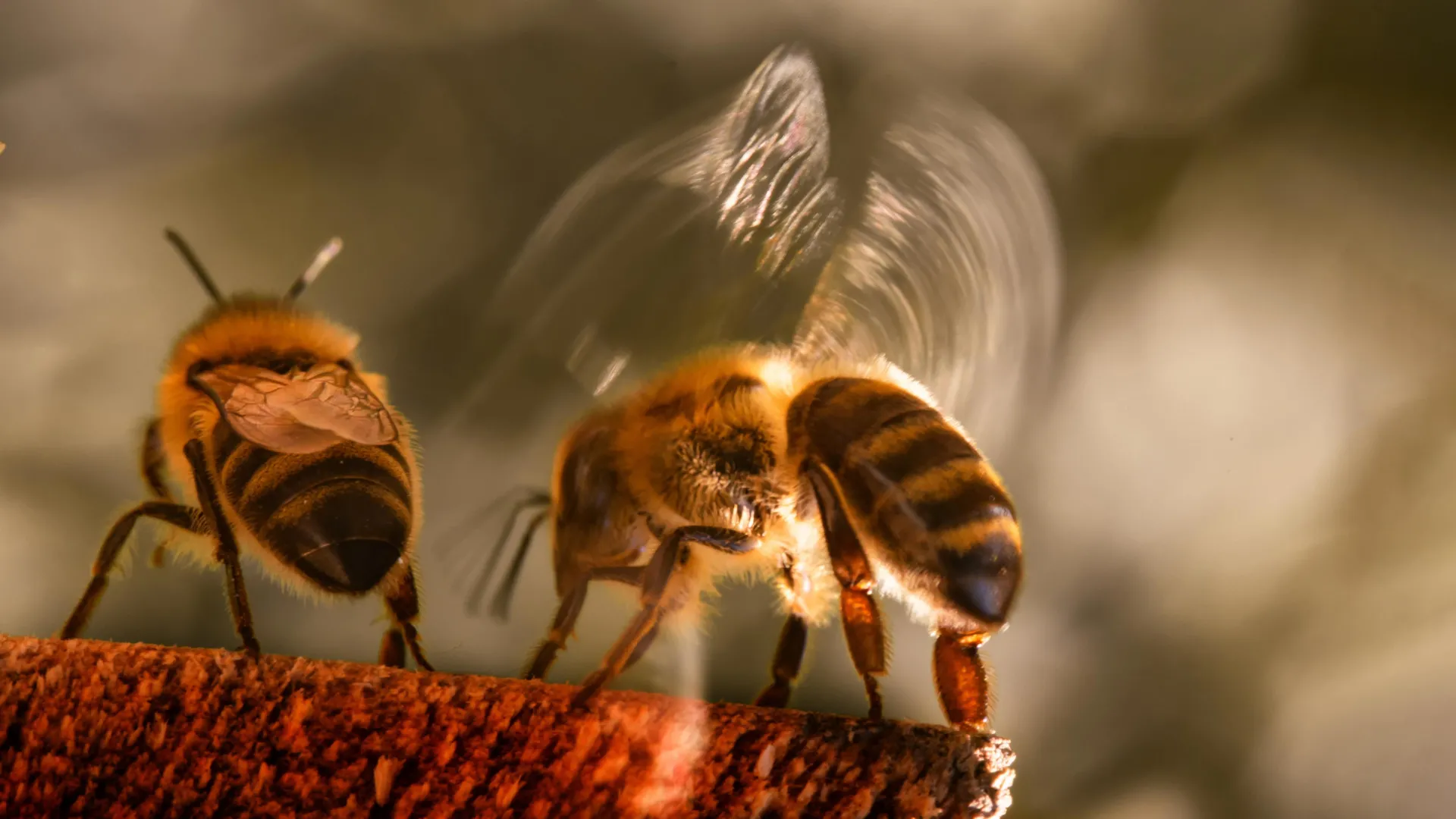
Их Британийн судлаачид зөгийн балны зөгий нь хоол тэжээлийн төлөөх өрсөлдөөнд түрэмгий зан авир гаргаж, бусад шавжийг цэцгээс хөөх замаар нөөцийг давамгайлдаг болохыг илрүүлэв.
Anglia Ruskin University (ARU)-ийн судлаачид Английн Кембриж хот болон түүний орчимд хоёр жилийн турш ажиглалт хийж, зөгийн балны зөгий нь бусад шавжид хэрхэн нөлөөлж байгааг судалжээ. “Ecological Entomology” сэтгүүлд нийтлэгдсэн уг судалгаагаар зөгийн балны зөгий нь бусад шавжийг цэцгээс хөөх, түлхэх, айлган сүрдүүлэх замаар хоол тэжээлийн хүртээмжийг хязгаарлаж байгааг баримтжуулсан байна. Судлаачид 93 цагийн турш ажиглалт хийхдээ зөгийн балны зөгий нь цэцгийн тоос хүртээгч бусад шавжтай өрсөлдөхдөө ихэнх тохиолдолд ялалт байгуулж, өрсөлдөгчөө хооллох боломжоос нь салгаж байгааг тогтоожээ.
Судалгааны үр дүнгээс үзэхэд зөгийн балны зөгий ихтэй газарт бусад шавжийн тоо толгой багасч, хоол тэжээлийн төлөөх өрсөлдөөн илүү ширүүн болж байна. Тухайлбал, зөгийн балны зөгийн нягтаршил хоёр дахин нэмэгдэхэд зарим төрлийн зөгий болон бусад шавжийн тоо 14 хувиар буурчээ. Цорын ганц үл хамаарах тохиолдол нь 2001 онд Их Британид анх бүртгэгдсэн, уугуул бус “ivy bee” хэмээх зөгий байсан бөгөөд тэд хоол тэжээлийн бүсээ хамгаалахын тулд зөгийн балны зөгийг хөөж чаддаг болох нь ажиглагджээ.
Уур амьсгалын өөрчлөлт нь ирээдүйд энэхүү өрсөлдөөнийг улам хурцатгаж болзошгүй гэж эрдэмтэд анхааруулж байна. Дулаан цаг агаарт ургамлын нектар багасч, хоол тэжээлийн хомсдол үүсэх магадлалтайгаас гадна зөгийн балны зөгий нь дулаанд илүү идэвхтэй болдог нь зэрлэг шавжуудад сөрөг нөлөө үзүүлэх эрсдэлтэй юм. Судлаач Виктория Бакл уг судалгаа нь зөгийн аж ахуйг буруутгах зорилгогүй, харин зэрлэг шавжуудыг хамгаалах арга замыг олоход чиглэсэн гэдгийг онцолсон байна.
Дэлгэрэнгүйг эх сурвалжаас харах
↓Эх сурвалжийг нээх ↓
Honey bees are proving to be formidable competitors for food in the UK, and scientists have discovered that they frequently use aggression to drive other pollinators away from flowers. New research has documented how honey bees chase, displace, and intimidate rival insects, providing the first detailed evidence of how extensively they interfere with other species’ access to food.
The study, conducted by researchers at Anglia Ruskin University (ARU) and published in Ecological Entomology, followed pollinator activity over two years at five locations in and around Cambridge, England. Each site was situated within 300 meters of an established honey bee colony.
Researchers observed insects visiting bramble (Rubus fruticosus) and ivy (Hedera helix), two flowering plants that provide important supplies of nectar and pollen. Both attract large numbers of insects during their flowering periods, making them useful places to investigate competition for food.
Honey Bees Dominate the Competition for Flowers
To examine how different pollinators interact, the team divided flower visitors into five groups: honey bees, bumble bees, solitary bees, hoverflies, and an ‘other’ category containing butterflies, beetles, and wasps.
Over 93 hours of observation, the scientists documented encounters in which one insect interrupted another’s feeding or prevented it from reaching a flower. Each interaction was classified according to its outcome. A ‘win’ occurred when one insect gained access to a flower at the expense of another, which experienced a ‘loss’ of feeding opportunities. A ‘share’ meant both insects were able to access the flower without conflict.
The results revealed a clear pattern. Locations with greater concentrations of honey bees generally had fewer other pollinators and experienced more competition for flowers. Honey bees also emerged victorious in a larger proportion of their encounters with other insects.
On bramble flowers, doubling the density of honey bees was associated with a 14% decrease in bumblebee abundance. On ivy, higher honey bee numbers were linked to reduced numbers of solitary bees and hoverflies.
Honey Bees Chase Away Rival Pollinators
The honey bees did not simply reach flowers before their competitors. They frequently initiated aggressive encounters, driving other insects away to secure feeding opportunities.
Other pollinators actively avoided honey bees in 28% of observed interactions on bramble and 36% of those on ivy. In at least 20% of the encounters honey bees won on either plant, they physically pushed aside or chased away competing insects.
Aggressive behavior initiated by species other than honey bees was uncommon. However, one insect stood out as an exception.
The ivy bee, a solitary species not native to Britain that was first documented in the country in 2001, was the only pollinator observed actively challenging honey bees. Unlike most other insects, ivy bees sometimes defended their feeding spots by chasing or displacing honey bees, successfully competing for access to flowers.
Climate Change Could Make Competition Worse
The findings are part of a broader research effort to understand competition among pollinators and identify ways to reduce its ecological effects.
The results also come as beekeeping continues to expand across the UK. The number of registered beekeepers increased from 19,000 in 2010 to 47,000 last year, reflecting growing numbers of managed honey bee colonies.
Researchers warn that rising temperatures could add to the pressure on wild pollinators. Their observations showed that competitive encounters became more frequent during warmer conditions.
One possible explanation involves changes in flower nectar production. When plants experience ‘heat stress’, they can produce less nectar, potentially forcing more insects to compete over a smaller supply of food.
Temperature also affects different pollinators in different ways. Bumblebees and hoverflies are sensitive to high temperatures and may forage more effectively in cooler weather. Honey bees, by contrast, generally become more active as temperatures rise. Previous research found that increasing the temperature by 12°C caused a tenfold increase in the number of honey bees leaving their nests.
Together, these differences suggest that continued warming could give honey bees an even greater competitive advantage over some wild pollinators.
Protecting Wild Pollinators as Honey Bee Numbers Grow
Lead author Victoria Buckle, a PhD student at Anglia Ruskin University (ARU) in Cambridge, England, emphasized that the research is intended to improve conservation efforts rather than discourage people from keeping honey bees.
“The aim of our study was not to discourage beekeeping, but to better understand how competition happens between wild and managed pollinator species with the aim of helping to conserve our wild pollinators, which play such an important ecological role.
“We found that most interactions when competing for food were instigated by honey bees and they had a greater number of ‘wins’, resulting in a loss of forage for other pollinators. Bumblebees, solitary bees and hoverflies would avoid, be displaced by and on some occasions be chased off by honey bees.
“An interesting exception was the ivy bee, which would win contests more often against honey bees. It is the first time, to our knowledge, such behaviors have been observed and shows ivy bees are able to ‘hold their own’ in such encounters.
“However, honey bees outcompeted all other wild pollinators and based on our findings, future predicted warming in the UK is only likely to further exacerbate interference competition from dominant honey bees. Therefore, it’s important to find ways to ensure honey bees and wild pollinators can continue to coexist, particularly in locations with a high density of hives, such as urban areas.”

