ОХУ-ын Украйн руу хийсэн бүрэн хэмжээний түрэмгийллийн дараа Европын орнууд батлан хамгаалах салбараа бэхжүүлэх, зэвсэг үйлдвэрлэлийн хараат байдлаа бууруулах зорилгоор үйлдвэрлэлийн хүчин чадлаа нэмэгдүүлж байна.
Сүүлийн 20 жилийн турш Их Британи танкны их бууны хоолойг гадаадаас худалдан авахаас өөр аргагүй байдалд байсан юм. Гэвч 2022 онд Украйнд эхэлсэн дайн батлан хамгаалах салбарт стратегийн өөрчлөлт хийхийг шаардаж, Их Британи улс Германы Rheinmetall компанитай хамтран Шропшир хотод их буу болон танкны хоолой үйлдвэрлэх шинэ үйлдвэрийг нээлээ.
Тус үйлдвэр нь НАТО-гийн стандартад нийцсэн 155 мм-ийн их бууны хоолойг эхний ээлжид үйлдвэрлэх бөгөөд ирээдүйд Challenger 3 танкны 120 мм-ийн хоолойг үйлдвэрлэхээр төлөвлөж байна. Британийн Батлан хамгаалахын сайд Уэс Стрийтинг болон армийн командлагч, генерал сэр Роли Уокер нарын зүгээс зөвхөн шинэ технологи бүтээх бус, харин үйлдвэрлэлийн хэмжээг нэмэгдүүлж, шаардлагатай хүчин чадлыг түргэн хугацаанд бүрдүүлэх нь стратегийн чухал ач холбогдолтойг онцоллоо.
Rheinmetall компанийн гүйцэтгэх захирал Армин Паппергерийн мэдэгдсэнээр, тус компани албан ёсны гэрээ байгуулахаас өмнө Британийн армитай харилцан тохиролцсоны үндсэн дээр хөрөнгө оруулалтаа эхлүүлсэн байна. Шинэ үйлдвэр жилд 245 их бууны хоолой үйлдвэрлэх хүчин чадалтай бөгөөд шаардлагатай тохиолдолд энэ тоог 1000 хүртэл өсгөх боломжтой юм. Энэхүү алхам нь Европын орнууд АНУ-ын зэвсгийн нийлүүлэлтээс хамааралтай байдлаа багасгаж, өөрсдийн батлан хамгаалах салбарын бие даасан байдлыг хангах томоохон зорилтын нэг хэсэг болж байна.
Дэлгэрэнгүйг эх сурвалжаас харах
↓Эх сурвалжийг нээх ↓
For the last 20 years, Britain was not able to put a barrel on its tanks without buying from abroad. Relying on foreign allies seemed like a reasonable choice during years of relative security (for wealthy countries at least) after the end of the cold war.
But Russia’s full-scale invasion of Ukraine in 2022 has changed the calculation – and prompted a scramble to rearm among European countries – including the UK.
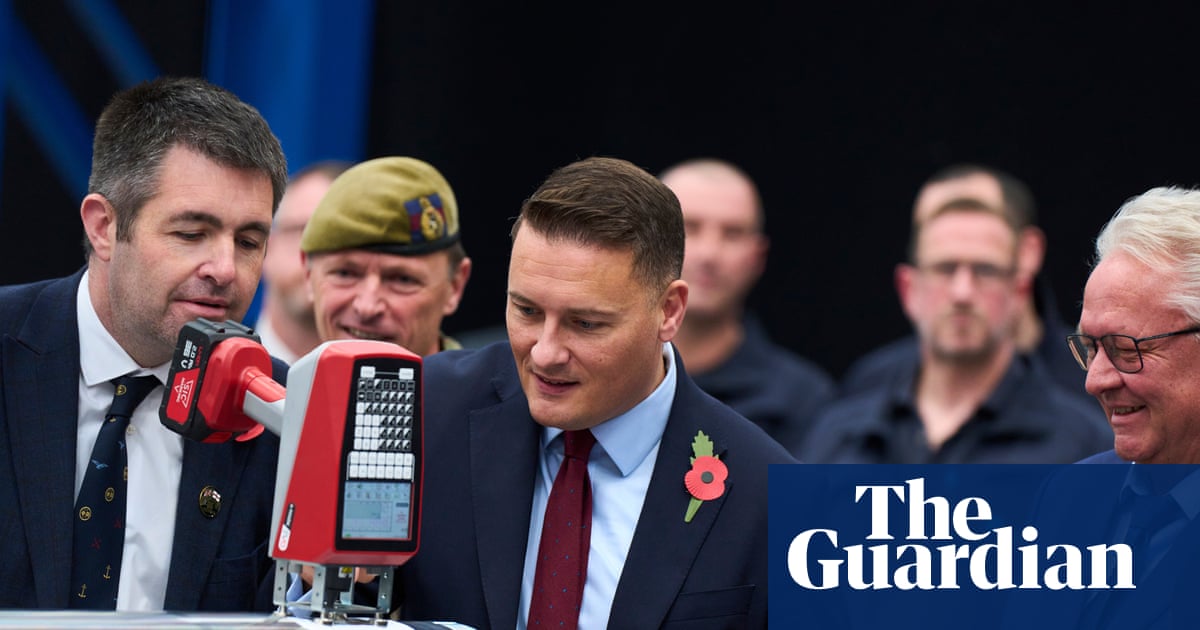
Evidence of that scramble was on display in Shropshire on Thursday, where the UK defence secretary, Wes Streeting, opened a factory hastily constructed by Germany’s Rheinmetall to make barrels for artillery and British tanks.
Such was the urgency that Rheinmetall’s chief executive, Armin Papperger, said the company had started investment “off the back of a handshake” before Christmas last year with Gen Sir Roly Walker, who leads the British army as chief of the general staff, without waiting for a formal contract.
Eight months later, production of the first barrels at the plant in Telford has started. Papperger said he was in talks over producing more ammunition in the UK as well, with a decision due in the next six to eight months.
Streeting said: “It is not enough to simply out-innovate those who would wish us harm – though we must. We must also out-produce them too. Because advantage increasingly belongs to those who can manufacture at scale and field the capability fastest.”
The factory takes a 3.2 tonne, 8-metre cylinder of specialised steel alloy and drills a hole through it to make the barrel shape. The surfaces are then honed to remove imperfections, before another turning tool adds spiral rifling to add to artillery accuracy. A specialised machine – one of only two in the world – increases the pressure inside the barrel to about 15,000 times the air at sea level to harden it for the explosive power needed to propel shells as far as 30km (18 miles).
The Ukraine war will go down in history as the moment when militaries woke up to the brutal new reality of drone warfare. But for all the focus on uncrewed weapons, Walker said they cannot rival more traditional armaments for sheer firepower.
“In Ukraine, we know that both sides fire tens of thousands of rounds of artillery ammunition every day, and that generates a weight of fire and levels of lethality across the battlefield that drones alone cannot replicate,” said Walker, in a speech at the factory opening.
Walker said it had been “sad” when the UK was unable to continue centuries of artillery manufacture that had lasted through the Napoleonic wars, two world wars and the cold war. Much of that work was carried out at the Royal Arsenal in Woolwich, which opened in the 17th century (and whose workers set up a football club that moved to north London in 1913). Yet production ceased in 1967, with the work scattered first around the country and then in some cases moving abroad.
The new Telford gun hall will bring that capability back to the UK, albeit starting with production for guns for German-made self-propelled, remote control howitzers that take Nato-standard 155mm ammunition. However, in the future it will also be able to make slightly smaller tank barrels that use 120mm rounds. These include the Challenger 3 tank, which is now going through final testing, and a British version of the remote control howitzer planned for after May 2028.
The factory will be able to make 245 barrels each year, plus 50 breeches – the part at the base of the barrel – although Papperger said capacity could theoretically be expanded to as much as 1,000 a year within four or five years – but only if the orders came in. Exports may also be on the agenda.
Papperger added that Nato allies could manage with smaller output than Russia and its client states because of their higher quality. A Russian barrel will be able to fire about 500 times before breaking, while the products from Telford should survive as many as 4,000 shots, he said.
after newsletter promotion
The Telford investment followed an agreement in 2024 between the then prime minister, Keir Starmer, and his German counterpart, Olaf Scholz. It was part of a wide-ranging pact for the two largest military spenders in Europe to work together more closely.
Rheinmetall employs approximately 685 people in Telford, although only 35 will work in the gun hall, rising to 100 when it is at full capacity – hardly enough to kickstart the “reindustrialisation” of Britain desired by Andy Burnham. The bulk of the workers in Telford make the Challenger and Boxer armoured vehicles in a joint venture with Britain’s key armsmaker, BAE Systems.
Rheinmetall has been among the biggest beneficiaries of the massive increase in European spending on defence and supplying arms to Ukraine. US intelligence services in 2024 reportedly foiled a Russian plot to assassinate Papperger in apparent retaliation over the company’s production of weapons for Kyiv.
The German company’s market value has risen from about €4.2bn (£3.5bn) in the days before Russia’s invasion to €47bn on Wednesday – although it has dropped back from a peak of nearly double that last year. Rheinmetall and other European defence companies, including BAE Systems and British jet engine maker Rolls-Royce, have benefited particularly from European governments eager to reduce reliance on the US arms industry at a time when the White House has shown itself willing to divert supplies to its own militaries ahead of allies.
Papperger said more governments were saying they wanted control over their weapons production. That could help to mollify Donald Trump, the US president, who has shown himself willing to undermine previously firm alliances.
“To be a strong partner, you need strong armies,” said Papperger. “But on the other side, you need a strong industry. And this is what we do at the moment. We build up the industry.”

