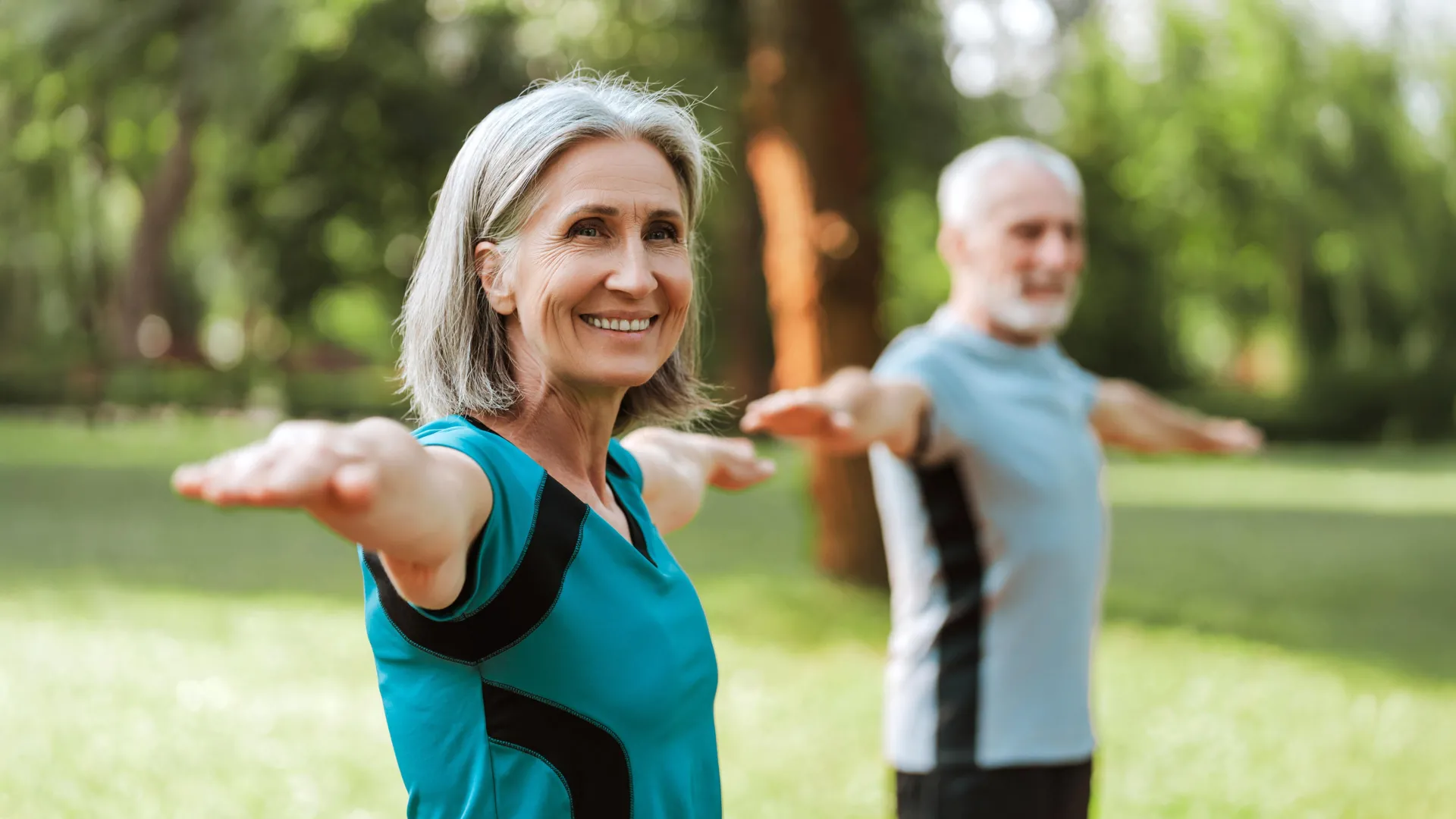
Судалгаагаар тогтмол дасгал хөдөлгөөн хийх нь Паркинсоны өвчний улмаас үүсэх хөдөлгөөний болон танин мэдэхүйн үйл ажиллагааны алдагдлыг удаашруулж болохыг харууллаа.
2026 оны аравдугаар сарын 7-нд Neurology сэтгүүлд нийтлэгдсэн судалгаагаар Паркинсоны өвчтэй хүмүүсийн биеийн тамирын идэвхтэй байдал нь ой санамж, сэтгэн бодох чадвар болон хөдөлгөөний доройтлыг удаашруулдаг болохыг илрүүлжээ. Охайо мужийн Цинциннатийн их сургуулийн эрдэмтэн Дон-Вүү Рю тэргүүтэй судлаачид хөнгөн болон дунд зэргийн Паркинсоны өвчтэй 294 хүний эрүүл мэндийн байдлыг долоон жилийн турш ажигласан байна.
Судалгаанд оролцогчид ажлын байр, гэр ахуйн ажил болон чөлөөт цагаараа хийдэг дасгал хөдөлгөөнийхөө талаарх асуулгыг бөглөж, үүний дагуу тэднийг идэвхжилийн түвшингээр нь гурван бүлэгт ангилжээ. Эрдэмтдийн ажиглалтаар, хамгийн идэвхтэй бүлгийн хүмүүсийн танин мэдэхүйн үйл ажиллагааны оноо бараг өөрчлөгдөөгүй бөгөөд хөдөлгөөний шинж тэмдгүүд нь бусад бүлэгтэй харьцуулахад илүү удаан доройтсон байна.
Энэхүү судалгаа нь биеийн тамирын дасгал хөдөлгөөн ба өвчний явцын хооронд холбоо хамаарал байгааг тогтоосон боловч дасгал нь өвчний явцыг шууд удаашруулдаг гэсэн баттай дүгнэлтэд хүрээгүй байна. Судлаачид өвчтөнүүдийн өөрсдийн мэдээлэлд тулгуурласан нь судалгааны нэгэн хязгаарлалт болсныг тэмдэглэжээ.
Паркинсоны өвчний үед биеийн тамирын дасгалын ач тус нь дасгал хийж буй хугацаа болон тууштай байдлаас шалтгаалж болохыг эрдэмтэд онцоллоо. Уг судалгааг Gardner Family Foundation болон Precision Medicine in Neurodegenerative Diseases сангууд санхүүжүүлсэн байна.
Дэлгэрэнгүйг эх сурвалжаас харах
↓Эх сурвалжийг нээх ↓
People with Parkinson’s disease who are more physically active may experience slower declines in memory, thinking, and movement, according to a new study published October 7, 2026, in Neurology, the official medical journal of the American Academy of Neurology.
The findings suggest that staying active could offer two important advantages for people living with Parkinson’s. However, researchers emphasize that the study identified a connection between physical activity and slower symptom progression. It does not establish that exercise directly causes the disease to progress more slowly.
“Parkinson’s disease is a brain disorder that causes movement and cognitive problems that gradually worsen leading to disability and a loss of independence,” said study author Dong-Woo Ryu, MD, PhD, of the University of Cincinnati in Ohio. “Previous research has shown associations between physical activity and movement symptoms. Our study found physical activity may have dual benefits, with associations with slower declines in movement and cognition.”
Tracking Exercise and Parkinson’s Symptoms Over Seven Years
The research involved 294 adults with mild to moderate Parkinson’s disease. Participants were 66 years old on average, and researchers monitored their health for up to seven years.
To understand their activity habits, participants completed questionnaires estimating how many hours each week they spent being physically active. The questions covered activities performed at work, around the home, and during hobbies or recreation.
Researchers classified activities by their intensity. Moderate activities included brisk walking, doubles tennis, leisurely swimming, and household tasks such as cleaning windows, vacuuming, or mowing the lawn. More demanding activities included running, cycling at higher speeds, participating in team sports, playing singles tennis, shoveling, and carrying heavy objects.
The team examined physical activity in three ways. First, they calculated the total time participants spent doing moderate or vigorous activities. Second, they estimated overall activity volume by combining duration with intensity, giving greater weight to strenuous exercise. Third, they separately measured the amount of time spent doing vigorous activities.
Based on total weekly activity time, participants were placed into three categories. Those in the least active group reported up to four hours per week, the moderately active group reported four to eight hours, and the most active group reported more than eight hours.
Each year, participants also completed assessments designed to track changes in thinking and memory, along with tests evaluating the severity of their Parkinson’s symptoms.
More Activity Linked to Slower Memory Decline
One of the most striking differences emerged in cognitive performance. Researchers used a 30-point test of thinking and memory, with lower scores reflecting poorer cognitive function.
Among participants in the least active group, scores fell by an estimated average of 0.478 points each year. The moderately active group experienced a much smaller annual decline of 0.090 points.
For the most active participants, the estimated average yearly decrease was only 0.007 points, indicating that their cognitive scores remained nearly unchanged over time.
The researchers also examined changes in Parkinson’s movement symptoms using an assessment scored from zero to 132. Higher numbers represented more severe symptoms, and participants began the study with an average score of 23.
In the least active group, symptom scores increased by an estimated 0.143 points annually, indicating a slight worsening. By contrast, scores decreased by 0.225 points per year in the moderately active group and by 0.783 points in the most active group.
Even after accounting for participants’ age, sex, and how long they had been living with Parkinson’s, the researchers found that the most active group experienced slower cognitive decline and less worsening of movement symptoms than the least active group.
The connection was not limited to one measure of exercise. Higher total activity time, greater overall activity volume, and more time spent exercising vigorously were each associated with slower deterioration in both thinking abilities and movement symptoms.
Why Consistent Physical Activity May Matter
The results suggest that remaining physically active over time could be especially important for people with Parkinson’s disease. Researchers noted that even relatively small differences in the rate of decline might become more significant when they accumulate over several years.
“The possible benefits of physical activity for people with Parkinson’s disease may depend on how long they stay active and whether they continue exercising over time,” said Ryu. “While our study found small differences between activity levels, these differences may become more meaningful over time. Since participants generally had good thinking and memory skills at the start of the study, our results should be interpreted with caution and further studies are needed.”
The researchers also identified an important limitation. Physical activity levels were based on participants’ own reports rather than direct measurements, meaning some estimates may have been inaccurate.
Although the findings strengthen the evidence connecting physical activity with better long-term outcomes in Parkinson’s disease, additional research will be needed to determine whether exercise itself can slow the progression of symptoms.
Funding for the study came from a grant provided by the Gardner Family Foundation and the Precision Medicine in Neurodegenerative Diseases Fund.

