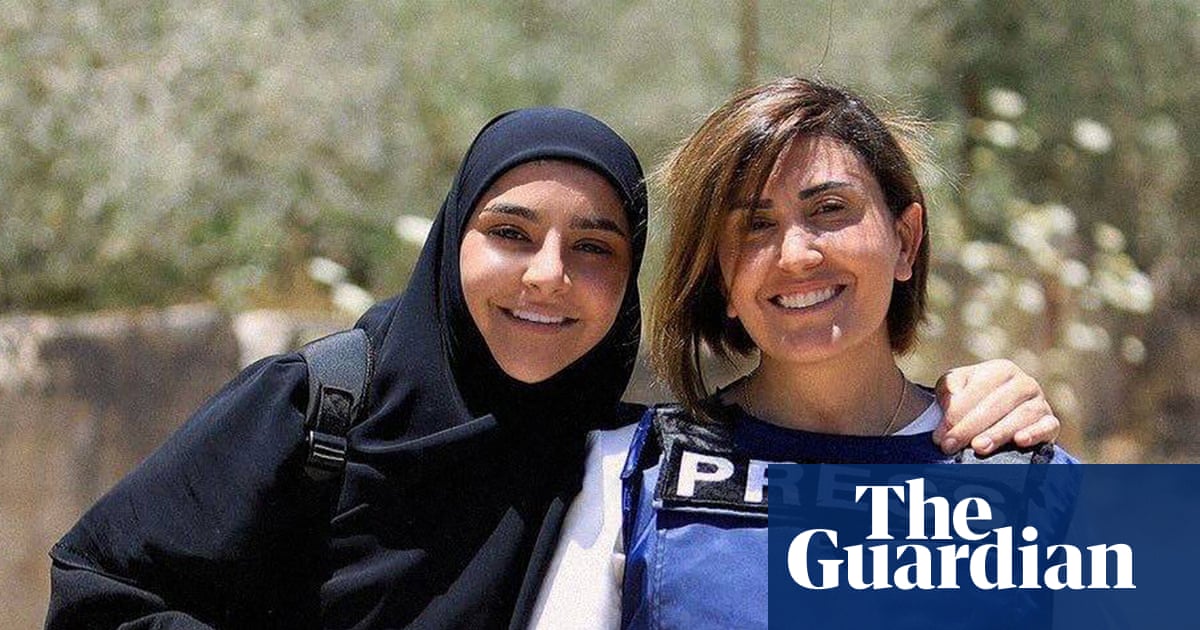
Израйлын цэргийн хүчин Ливанд гал зогсоох хэлэлцээр байгуулсны дараа сэтгүүлчдийг онилсон халдлага үйлдэж, улмаар тусламж үзүүлэхээр ирсэн түргэн тусламжийн автомашиныг ч мөн пуужингаар харвасан хэрэг гарлаа.
Дөрөвдүгээр сарын 22-ны өдөр Ливаны өмнөд хэсгийн Аль-Тири тосгонд баримтат дүрс бичлэг хийж явсан гэрэл зурагчин Зейнаб Фараж болон сэтгүүлч Амал Халил нар Израйлын дрон болон пуужингийн довтолгоонд өртжээ. Сэтгүүлчдийн зорчиж явсан автомашины өмнө явсан өөр нэгэн тээврийн хэрэгсэл эхлээд пуужингийн цохилтод өртөж, дотор нь явсан хоёр хүн амиа алдсан байна. Үүний дараа тусламж үзүүлэхээр оролдсон сэтгүүлчдийн машин руу дахин халдсаны улмаас Амал Халил амиа алдаж, Зейнаб Фараж хүнд гэмтсэн байна.
Израйлын арми энэхүү үйлдлээ гал зогсоох хэлэлцээрийг зөрчсөн саботаж хийгчдийг илрүүлсэн хэмээн тайлбарласан бол хүний эрхийн байгууллагууд үүнийг дайны гэмт хэрэг гэж үзэж байна. Халдлага болохоос нэг долоо хоногийн өмнө Израйлын цэргийн төлөөлөгч сэтгүүлч Амал Халилын бүтээлийг “террорист медиа” хэмээн нэрлэж, түүнд заналхийлсэн мессежүүд ирж байжээ.
Одоогийн байдлаар Зейнаб Фараж биеийн болон сэтгэл зүйн гүн гэмтлийн улмаас эмчлүүлж байгаа бөгөөд Ливан дахь мөргөлдөөний улмаас нийт 600 орчим хүн Израйлын дроны халдлагад өртөж амиа алдаад байна. Олон улсын хүний эрхийн байгууллагууд сэтгүүлчид болон эмнэлгийн ажилтнуудын эсрэг чиглэсэн энэхүү үйл ажиллагааг ноцтой зөрчил хэмээн шүүмжилсээр байна.
Дэлгэрэнгүйг эх сурвалжаас харах
↓Эх сурвалжийг нээх ↓
It was mid-April and after a month of deadly airstrikes across Lebanon, Israel agreed to a ceasefire. Much of the bombing had focused on southern Lebanon, where entire villages had been demolished. But with the truce, people were hopeful of being able to return to their homes or to see what remained.
Zeinab Faraj, a 21-year-old photojournalist, decided to join Amal Khalil, 42, a newspaper reporter in Lebanon, on a trip to an area in the south of the country to document the aftermath of war. The two had worked together on a number of assignments after Khalil had seen Faraj’s work on social media and contacted her.
“I expected it to be like every other time. Amal and I would go out, take some footage and then leave. I had absolutely no sense of fear. We could hear some gunfire and artillery, but as a videographer, you find those things important to document and capture,” says Faraj, who was freelancing alongside finishing her degree in radio and TV.
By the time they reached the village of al-Tiri on the afternoon of 22 April, Faraj began to look out the window and reminisce. She was born and grew up in the nearby city of Bint Jbeil. “My whole life revolved around this area. As we say, a fish suffocates when it’s taken out of water. That’s how we feel whenever we leave Bint Jbeil.”
Ahead of them was a car carrying Ali Nabil Bazzi, 27, a municipal official in Bint Jbeil, and Mohammed Hourani, 37, a friend of the mayor. They had met them by chance earlier in the day at Tebnine governmental hospital, which had become a gathering point because people considered it relatively safe and would base their movements from there. Bazzi was due to sign a marriage contract that evening, but was still keen to join the trip.
Faraj says she did not hear the missile coming, just the sound of Khalil screaming and then the sight of the car in front of them on fire. The two women got out of their car.
“I do not know how I managed to stay so calm. The only thing I could think was: if I come closer, I will be able to see Ali. Maybe I will be able to pull him out.”
Khalil kept repeating: “Oh God, they’re gone.” Slowly, Faraj began to understand what was going on. “I could see their bodies torn apart.”
Then the drones appeared.
“When the drones came, my heart started pounding in a terrifying way. The drone started coming very close to my face. I tried to cover my face, but whenever I did, it would fly back up. That was when I really felt the real danger.”
The drones flew low and close as Khalil and Faraj frantically made phone calls to emergency services who repeatedly assured them that help was on its way. Faraj says the assurances were “like an anaesthetic”, something that briefly numbed the reality that no one was rescuing them.
One of the paramedics on a call told them to get into their car and try to drive back up the road, as ambulances were being preventing from driving to where they were. But as they tried to get into the car, it was struck by a missile.
Both of them were thrown backwards, with Khalil wrapping her arms around Faraj. As the drone continued to circle overhead, Khalil said she hoped it would “think we were dead”.
With the nearby car engulfed in flames, they decided to take shelter in a nearby house. Khalil had visible injuries, with blood on her face, hand and leg. Faraj says she sent her sister a last message before her phone died: “There’s no hope left. Forgive me.”
after newsletter promotion
Inside, they sat on a bathroom floor. Khalil was unable to move, so Faraj says she crawled to a position from where she could watch the road. Suddenly a drone descended towards her.
“It had been high up and suddenly it came down. The way it descended was terrifying. My heart stopped.” Soon after this, Faraj says she came back inside and began to feel tired and detached from what was happening. “I felt alone.”
Then came the sound of a missile falling. “I’ve never heard anything like it in my life. I’ve heard so many strikes and drones, but this was completely different. It was terrifying and Amal was screaming,” she says.
She does not remember what happened next, but when she opened her eyes an enormous weight was pressing down on her body. Everything was black and she could barely breathe. She was trapped underneath rubble. “I couldn’t bear the weight. It felt like something was pushing me down, crushing me. All I cared about was being able to breathe.”
Faraj says she then heard a voice and thought it was her father, but it was a paramedic who had managed to reach the scene of the attack. As he held her by the shoulders, Faraj says she instinctively clung to him and refused to let go. “I told him: ‘Don’t leave me. I’m afraid to stay alone.’” He stayed beside her while a second paramedic cleared the rubble.
As the sound of drones returned once more, the paramedics quickly pulled Faraj free as she screamed from the pain. At about the same time, Faraj says she heard a stun grenade dropped by the drone. As they drove away in the ambulance, she repeatedly mistook the sound of the vehicle for a drone. “They’re going to hit us. We’re not going to make it,” she says she kept repeating.
After they got to a hospital, Faraj says she started to ask about Khalil. At first the nurses tried to reassure her. But eventually, she says, they fell silent. “That’s when I knew she was gone.” Khalil is believed to have died about an hour before the paramedics had been allowed to return to the area again after rescuing Faraj.
The Israeli military justified their attack saying they had identified saboteurs violating the ceasefire. However, human rights groups called it a war crime. As Khalil and Faraj took refuge in the building the Israeli military received repeated messages urging them to allow a rescue operation. A week before the attack, an Israeli military spokesperson shared a video of Khalil published by her newspaper and described it as “terrorist media”. Khalil had also received death threats from Israeli numbers.
Today, as Faraj prepares to return to university, she still struggles to walk properly and has visible injuries to a hand. An injury to her face has affected the movement of one eyebrow; others are hidden by her clothes and hijab. Her limp is especially hard to bear. “I was always on the move. I lost that. Even climbing stairs can be hard,” she says.
At first she was in shock, she says, but now more symptoms are starting to appear. She wakes at night screaming and buries herself in the pillows as if a missile is going to strike. The sound of drones and warplanes put her on edge.
Returning to frontline journalism feels uncertain and she says she is repeatedly haunted by the image of Hourani lying on the ground after the first missile attack. “His head was turned towards me. His eyes open and looking at me. That is something I will never get out of my head.”

