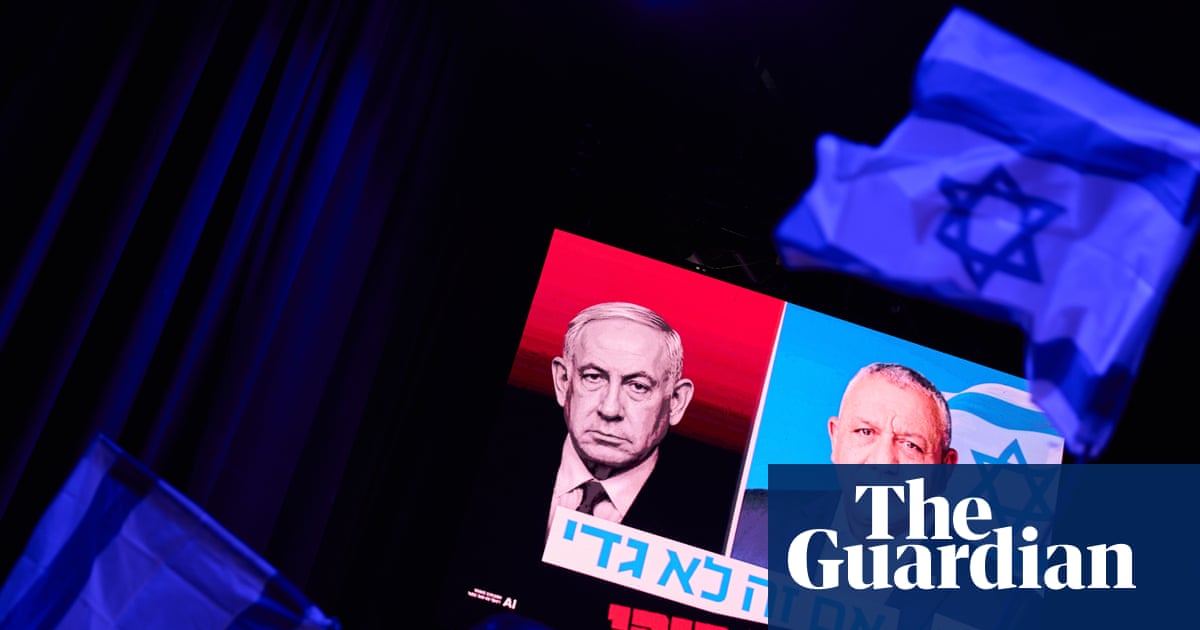
2023 оны аравдугаар сарын 7-ны халдлагын дараах анхны сонгууль Израйлын улс төрийн тогтолцоо болон бүс нутгийн аюулгүй байдалд томоохон өөрчлөлт авчрах төлөвтэй байна.
Мягмар гарагт болох энэхүү сонгууль нь Израйлын түүхэн дэх хамгийн чухал үйл явдлуудын нэгд тооцогдож байна. Тус улс 2023 оны аравдугаар сарын 7-нд ХАМАС бүлэглэлийн халдлагад өртөж, 1,200 орчим иргэнээ алдсанаас хойш Газын зурвас дахь цэргийн ажиллагаа, Ирантай хийсэн зэвсэгт мөргөлдөөн болон Баруун эрэг дэх хурцадмал байдалтай нүүр тулаад байна. Одоогийн Ерөнхий сайд Беньямин Нетаньяху авлигын хэргээр шүүгдэж байгаа бөгөөд эрх мэдлээ хадгалж үлдэх нь түүний хувьд улс төрийн төдийгүй хувийн амин чухал асуудал болоод байна.
Сонгуулийн гол өрсөлдөгч нь Израйлын зэвсэгт хүчний штабын дарга асан, улс төрд шинээр орж ирж буй Гади Айзенкот юм. Түүний тэргүүлж буй “Яшар” буюу “Шударга ёс” нам нь Нетаньяхугийн баруун жигүүрийн эвслийн эсрэг байр суурьтай байгаа бөгөөд сонгогчдын дунд аюулгүй байдал, ардчилсан институцуудыг хамгаалах, хэт даврагч үзэлтэй тэмцэх асуудлууд гол хэлэлцүүлэг болж байна. Нетаньяхугийн эсрэг хүчнүүд аравдугаар сарын 7-ны халдлагын асуудлаар улсын хэмжээний мөрдөн байцаалт явуулж, хэт ортодокс иудейчүүдийн цэргийн албанаас чөлөөлөгдөх эрхийг цуцлах амлалт өгөөд байгаа юм.
Санал асуулгын дүнгээс үзэхэд Нетаньяхугийн “Ликуд” нам болон түүний эвсэл олонхийн суудал алдах магадлалтай байна. Гэсэн хэдий ч сөрөг хүчний тал нь иудейн намууд болон Палестины иргэдийг төлөөлөх намуудад хуваагдмал байгаа нь эвсэл байгуулах үйл явцыг төвөгтэй болгож байна. Израйлын Кнессет буюу парламентад 120 суудал байдаг бөгөөд ямар ч нам дангаараа олонхи болж чаддаггүй тул эвслийн засгийн газар байгуулах нь зайлшгүй юм.
Сонгуулийн үеэр 15 сая орчим хүн Израйлын хяналт дор амьдарч байгаа ч бүгд санал өгөх эрхгүй байна. Тухайлбал, Баруун эрэг, Иерусалимын зүүн хэсэг болон Газын зурваст амьдарч буй олон сая палестинчууд санал өгөх эрхгүй байгаа нь ардчилсан үйл явцын хүрээн дэх маргаантай асуудлуудын нэг хэвээр байна. Сонгуулийн урьдчилсан дүн мягмар гарагийн орой гарах төлөвтэй байгаа ч эцсийн үр дүн тодорхой болоход хэд хоног ч шаардагдаж болзошгүй юм.
Дэлгэрэнгүйг эх сурвалжаас харах
↓Эх сурвалжийг нээх ↓
On Tuesday Israel holds its first election since the 7 October 2023 Hamas attacks, the deadliest day in the country’s history, which resulted in the deaths of about 1,200 people, the majority of them civilians.
Since then Israel has pursued a war of annihilation in Gaza, launched two inconclusive wars with Iran, and intensified a campaign of state-backed ethnic cleansing in the occupied West Bank.
Domestically the coalition formed by Benjamin Netanyahu has taken aim at democratic institutions, including the supreme court. Many Israelis have described this election as the most consequential in their country’s history.
Who are the main players?
The prime minister, Benjamin Netanyahu, has led Israel for 19 out of the last 30 years, most recently at the head of a far-right coalition. He is seeking a new mandate with the endorsement of the US president, Donald Trump, and the fight is personal as well as political. He is on trial for corruption; losing power may mean a greater risk of jail time.
His main rival is Gadi Eisenkot, a former head of the Israeli military and relative political newcomer, the son of Moroccan immigrants who rose to the heart of Israel’s establishment from humble beginnings. His son and two nephews were killed fighting in Gaza in 2024.
He lacks Netanyahu’s charisma, but has embraced that as part of a campaign positioning him as the opposite of Israel’s current leader, down to the name of his new party – Yashar, or “Honesty”.
What are the key issues for voters?
Israel’s security is at the heart of the election, overshadowing even the soaring cost of living. Opponents of the current government point to the catastrophe of the 7 October attacks, the erosion of democratic institutions, rise of religious extremism and the cost of open-ended, multi-front wars.
They have promised a state commission of inquiry into 7 October, and most have pledged to end draft exemption for ultra-Orthodox men, a source of deep resentment among families whose loved ones are serving or have been killed.
They are also concerned about international isolation, amid broadening sanctions over settlement expansion, and an accelerating brain drain among the elite.
Netanyahu has tried to shift blame for 7 October onto Israel’s security establishment, and despite presiding over the deadliest day in Israel’s history, he claims to be the only leader with the experience and international contacts to keep the country safe.
He recently posted an AI image of a nuclear bomb hitting Tel Aviv on social media, with the claim “anyone who cares about their physical existence” should pause before voting for the opposition.
His far-right allies have called for the ethnic cleansing of Gaza and the occupied West Bank, and expansion of settlements.
His ultra-Orthodox partners want to preserve a decades-old exemption from conscription and subsidies for religious study.
What are the polls saying?
Most polls show Netanyahu’s Likud and his current coalition parters losing their majority. That fall in voter support has been fairly consistent for more than two years.
They also show a clear anti-Netanyahu majority. However those opposition seats are divided between the bloc of Jewish Israeli parties, led by Eisenkot’s Yashar, and parties representing Palestinian citizens of Israel.
The Jewish Israeli parties are unlikely to have a majority on their own, but have mostly ruled out going into coalition with Palestinians.
Palestinian politicians have indicated they might support a minority government of the Jewish Israeli parties in order to unseat Netanyahu’s far-right coalition.
How does the system work and when might we get results/a new government?
The Knesset has 120 seats, with lawmakers voted in through a system of proportional representation. No single party has ever claimed a majority of 61 seats, so Israel has always been governed by coalitions.
When the results are in, the president invites the party with the largest number of seats to try to agree a governing coalition.
Exit polls are released at 10pm Israeli time (8pm GMT), and the first indication of actual voting counts usually emerges in the early hours of the morning.
Getting full results could take much longer, with the outcome potentially hanging on the electoral fortunes of two small parties, which need to win 3.25% of the overall vote to take up seats in the Knesset. Polling puts both around this threshold. If they cross it, they each get four seats, which would have a significant impact on coalition building options.
The far-right Amcha Yisrael is led by the former general Ofer Winter who has pledged to back Netanyahu for prime minister if he gets into the Knesset. The Reservists is a rightwing Zionist party focused on ensuring universal conscription whose leaders sit between the two blocs. They have ruled out joining any government supported by either the ultra-Orthodox – key Netanyahu allies – or Palestinian parties whose backing Eisenkot is likely to need.
If it goes down to the wire, counting could potentially take more than a day.
How democratic is the vote – and who is being disenfranchised?
About 15 million people live in areas under Israeli control. Just over 7 million Jewish Israelis and 1.7 million Palestinian citizens of Israel live within the country’s pre-1967 borders, known as the “green line”, and have full voting rights.
In the occupied West Bank, more than 500,000 Israeli settlers can vote. They live among 3.1 million Palestinians who are subject to military rule and do not have the right to vote.
In occupied East Jerusalem more than 230,000 Israelis with voting rights live among 350,000 Palestinians who cannot vote.
Two million Palestinians in Gaza, who live under Israeli military occupation, according to the international court of justice, also have no vote.

