Европын холбоонд элсэх хэлэлцээг зогсоосон эрх баригчдын шийдвэр болон дотоодын улс төрийн хурцадмал байдал нь Гүрж улсыг тодорхойгүй ирээдүйн өмнө авчирлаа.
Гүржид 2024 оны аравдугаар сарын 26-нд болсон парламентын сонгуулийн үр дүнг эсэргүүцсэн жагсаал хоёр жил үргэлжилж байна. Эрх баригч “Гүржийн мөрөөдөл” нам 2028 он хүртэл Европын холбоотой нэгдэх хэлэлцээг эхлүүлэхгүй гэдгээ мэдэгдсэний дараа арваннэгдүгээр сарын 28-нд эсэргүүцлийн хөдөлгөөн оргилдоо хүрсэн юм. Шүүмжлэгчид тус намыг авторитар дэглэм тогтоож, улс орноо ОХУ-д ойртуулж байна хэмээн буруутгаж байна.
Гүржийн эдийн засаг 2025 онд 7.5 хувиар өсөж, 5.5 сая жуулчин хүлээн авсан хэдий ч улс орны дотоод нөхцөл байдал ээдрээтэй хэвээр байна. 2022 онд Украйнд ОХУ бүрэн хэмжээний цэргийн ажиллагаа явуулснаас хойш олон арван мянган орос иргэн Гүрж рүү дүрвэж, үл хөдлөх хөрөнгийн зах зээлд дарамт учруулж эхэлсэн нь иргэдийн дургүйцлийг төрүүлжээ. 1990-ээд оны салан тусгаарлагчдын мөргөлдөөн болон 2008 оны ОХУ-Гүржийн дайныг эргэн санасан олон нийт ОХУ-ыг эзлэн түрэмгийлэгч хэмээн үздэг.
ОХУ нь Гүржийн газар нутгийн 20 орчим хувийг эзэлж, дипломат харилцаа тасалдсан ч эдийн засгийн хувьд Москватай хамааралтай хэвээр байна. Европын холбооны зүгээс Гүржийн эрх баригчдын хууль дээдлэх ёс болон улс төрийн хэлмэгдүүлэлтийн асуудлаар шүүмжлэлтэй хандаж байгаа нь нөхцөл байдлыг улам хүндрүүлж байна. Украйн дахь дайны үр дүн нь Гүржийн цаашдын геополитикийн хувь заяанд шууд нөлөөлөхүйц хүчин зүйл болоод байна.
Дэлгэрэнгүйг эх сурвалжаас харах
↓Эх сурвалжийг нээх ↓
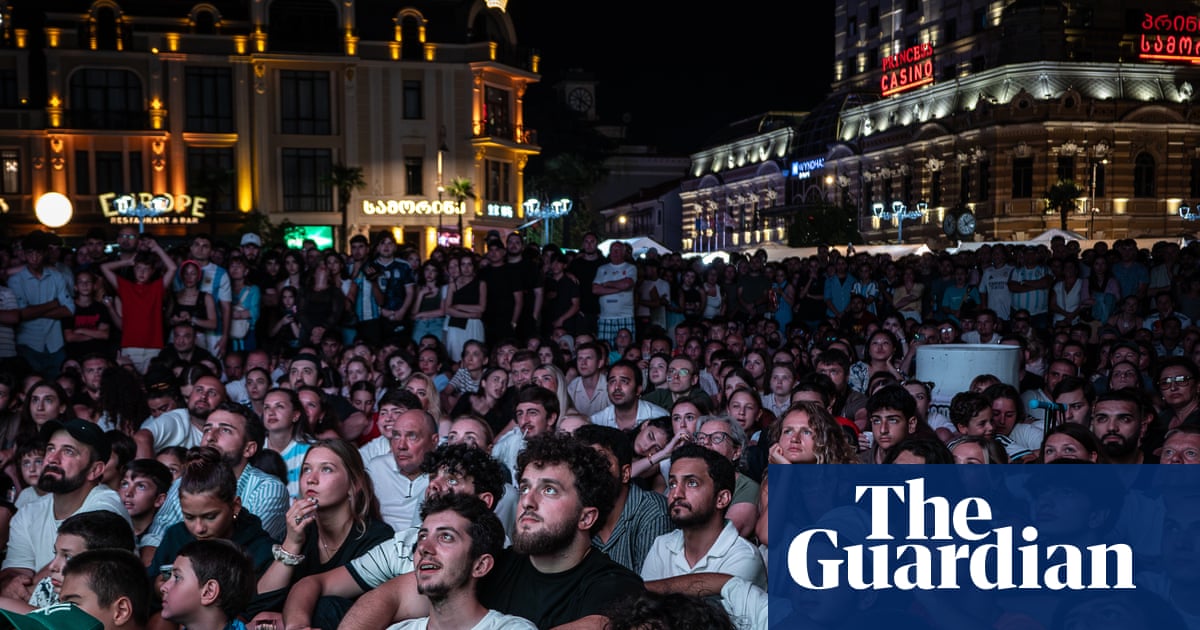
In the heart of Tbilisi’s Armenian quarter, Avlabari Square is where crowds gather for the “Saturday March”. Every weekend, protesters head towards the Bridge of Love, reach Freedom Square and march towards parliament, chanting slogans against Irakli Kobakhidze’s government.
-
Demonstrators in Tblisi take part in the Saturday March, when pro-European parties and movements march through the historic centre to protest against the policies of the ruling Georgian Dream party, which critics accuse of being pro-Russian.
For years, the target has been the same: Georgian Dream, the ultraconservative party in power since 2012, accused of growing authoritarianism and, through its decision to suspend EU accession talks, moving the country closer to Moscow again. Georgia was granted EU candidate status in 2023.
Monday marks two years since the contested parliamentary elections on 26 October 2024 that ignited the political crisis. Protests began two days later and peaked on 28 November, when the government announced it would not put the opening of EU negotiations on its agenda before the end of 2028.
-
Two homeless people shelter in the decaying entrance to the Metallurgist sanatorium, an abandoned Soviet-era hotel. Formerly a famous spa town, Tskaltubo hosted 120,000 visitors a year, including Joseph Stalin, who came to enjoy its 22 sanatoriums. After the collapse of the USSR, the area fell into decline and most of the sanatoriums and hotels were abandoned. Today, only a few hundred tourists visit the town’s sole remaining spa centre.
-
Books lie scattered across rooms at the Museum of Local Traditions in Tskaltubo, Georgia, where the library is being rebuilt.
Georgia is experiencing a curious paradox: while many of its citizen would like the country to be more democratic and form closer ties to Europe, Georgia is attracting growing numbers of tourists drawn to its historic sites, post-Soviet atmosphere and unspoilt landscapes.
While the streets of Tbilisi have become the stage for one of the longest protest movements in recent history, in 2025 the country, according to data from the Georgian National Tourism Administration, recorded a high of more than 5.5 million international tourist visits: an 8.4% increase on 2024 and almost 10 times the number (about 560,000) who visited the country 2o years ago.
-
A tourist walks through one of the rooms of the Joseph Stalin Museum. The Soviet dictator was born in Gori in 1878, and the museum was established in 1937 near his birthplace. Transformed into a museum glorifying Stalin in 1957, it remained open even after the collapse of the USSR and the 2008 war with Russia.
Travellers come not only from Europe; many are from the Middle East, and large numbers come from Russia.
After the full-scale invasion of Ukraine in 2022, tens of thousands of Russian citizens relocated to Georgia, bringing money and opening businesses, but also exerting strong pressure on the property market by buying homes across the country.
This has fuelled discontent among a population that, mindful of the early 1990s wars against Russian-backed separatists in South Ossetia and Abkhazia, and the brief August 2008 war fought against Moscow, also in South Ossetia, continues to consider Russia an occupying power.
-
An abandoned Soviet-era building in Chiatura – one of Georgia’s most important mining towns, where manganese is extracted. The industry faces a severe environmental and economic crisis, which has prompted continuing protests by workers.
The mythical land of the Golden Fleece and the Argonauts – the ancient Greeks called the journey to reach it “the longest possible voyage” – is now a republic roughly the size of Ireland, with a population of fewer than 4 million. Georgia emerged from the fall of the Soviet Union in 1991.
Sandwiched between Russia and Turkey (alongside Armenia and Azerbaijan), it offers a wealth of attractions that draw tourists: quaint mountain villages scattered along the Georgian Military Road, ancient Orthodox churches overlooking rivers and valleys, fascinating post-Soviet cities with a decaying atmosphere, wine with a millennia-old history, a lively “Las Vegas” on the Black Sea (the port of Batumi) and a dynamic, cosmopolitan capital.
-
Visitors relax on the pebble beach north of the historic centre in Batumi, with a large container ship heading into the port in the background. Home to numerous casinos and a rapidly growing tourist destination, Batumi is known as the ‘Las Vegas of the Black Sea’ and is also an important commercial port.
Tbilisi, with its rich underground scene and repurposed industrial spaces, is reminiscent of 1990s Berlin. One of its crown jewels, a true symbol of national independence, is the Rustaveli theatre, renovated 20 years ago by the billionaire who founded Georgian Dream in 2012: Bidzina Ivanishvili. Now in his 70s, Ivanishvili served as Georgian prime minister between 2012 and 2013 and made his fortune in Russia during the 1990s after the Soviet collapse.
-
People on a train in Tbilisi. Opened in 1966 to facilitate travel in a city that stretches along the river and is built on steep slopes, the metro network was the fourth-largest in the Soviet Union. Today, the metro, which has two lines and 23 stations, carries 400,000 passengers a day.
-
Georgians attend a concert at Mtatsminda Park. Founded in the 1930s, the park stands 770 metres above sea level and features restaurants, a rollercoaster, a concert venue, and a large ferris wheel visible from much of Tbilisi.
Today, the relationship between Georgia and Russia is built on a contradiction that is difficult to resolve. After the 2008 conflict and the consolidation of Russian military control over Abkhazia and South Ossetia (regions accounting for approximately 20% of Georgian territory), diplomatic relations between the countries were severed.
Yet economically, Moscow remains a partner that is difficult to replace: trade, tourism, remittances and Russian capital, along with energy imports, prop up Tbilisi’s economy, which, despite strong growth – GDP rose by 7.5% in 2025, marking five consecutive years of expansion – continues to be affected by unemployment, low wages, widespread poverty and, in many rural areas, depopulation.
But Georgia’s predicament extends beyond its domestic political crisis, reflecting wider geopolitical tensions.
Relations with Brussels have deteriorated recently; the EU has criticised the Georgian government’s record on the rule of law and political repression. And many believe a strengthening of Moscow in the Ukraine war could significantly increase its ability to exert pressure on the Caucasus.
Both of which make the question inevitable: does the future of a vulnerable Georgia – internationally isolated and with limited domestic support – also hinge on the fate of Ukraine?

