Их Британийн Сангийн яам газрын тосны томоохон орд болох Rosebank-ийг ашиглалтад оруулахаар төлөвлөж байгаа нь байгаль орчны асуудал хариуцсан байгууллагуудын шүүмжлэлийг дагуулаад байна.
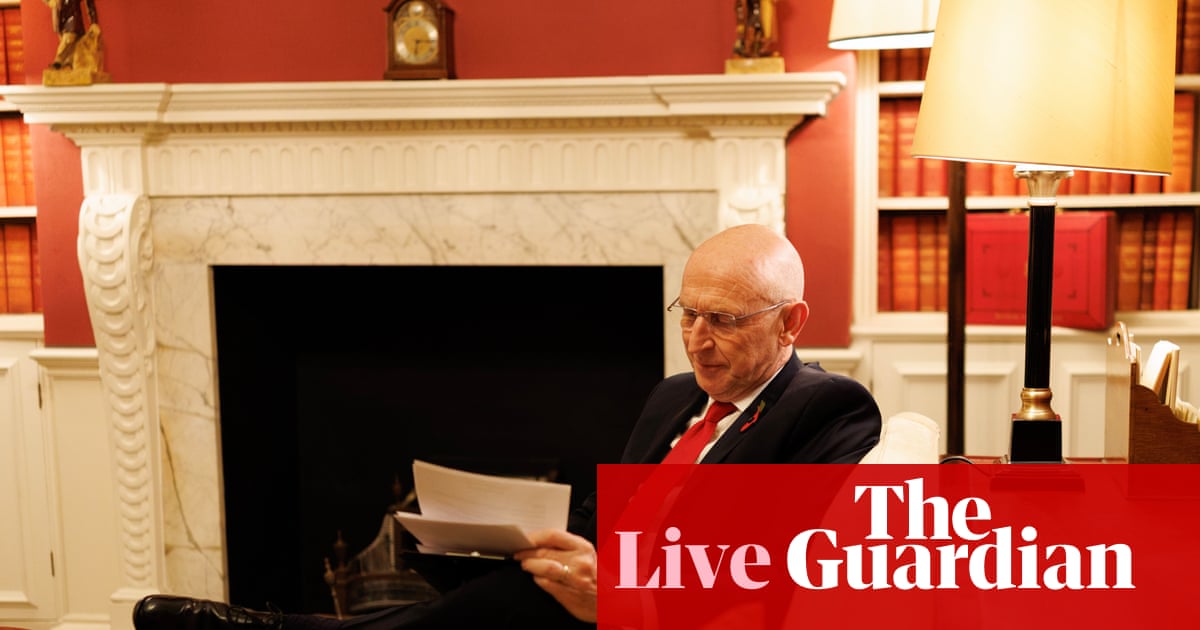
2026 оны аравдугаар сарын 28-ны өдөр тус улсын Сангийн сайд Жон Хили төсвийн төслөө танилцуулахаар бэлтгэж байна. Засгийн газрын дотоод эх сурвалжуудын мэдээлснээр, Rosebank ордыг ашиглах нь Их Британийн хүлэмжийн хийн ялгарлыг бууруулах зорилттой зөрчилдөхгүй гэж үзэж байгаа аж. Хэрэв уг төслийг зогсоовол улсын төсөвт жилд 500 сая хүртэлх фунт стерлингийн татварын орлого дутагдах эрсдэлтэй бөгөөд энэ нь Засгийн газрын санхүүгийн төлөвлөгөөнд аль хэдийн тусгагдсан мөнгө юм.
Ногоон намын тэргүүн Зак Полански энэхүү шийдвэрийг ирээдүй хойч үеэ худалдсан хэрэг хэмээн эрс буруушаав. Тэрээр өөрийн байр суурийг илэрхийлж, Засгийн газрын энэхүү төсөв нь газрын тосны шинэ өрөмдлөгийг дэмжсэнээрээ залуу үеийнхний ирээдүйг үгүйсгэж байна хэмээн мэдэгдлээ.
Өнөөдрийн төсөв нь манай ирээдүй болон залуучуудын хувьд Стармерын гаргасан аливаа шийдвэрээс ч дор харагдаж байна.
Газрын тосны асар их хэмжээний шинэ өрөмдлөгийг зөвшөөрөхөд суурилсан төсөв бол бидний ирээдүйг худалдсан хэрэг юм.
Үүний зэрэгцээ Жон Хили хийн төлбөрийн суурь хураамжийг цуцлах шийдвэр гаргаснаа зарласан бөгөөд цаашид цахилгааны төлбөрөөс ч мөн суурь хураамжийг авахгүй байх тал дээр эрчим хүчний зохицуулах байгууллага болох Ofgem-тэй зөвшилцөхөөр төлөвлөж байна. Гэсэн хэдий ч энэхүү үйл явцыг илүү төвөгтэй бөгөөд цаг хугацаа шаардсан ажил хэмээн тайлбарлаж байна.
Санхүүгийн шинжээч Мартин Люис энэхүү алхмыг нааштайгаар хүлээн авч, ирэх нэгдүгээр сараас эрчим хүчний үнэ 27 хувиар өсөх төлөвтэй байгаа энэ үед Засгийн газар ард иргэдээ дэмжих нэмэлт арга хэмжээ авах нь зүйтэй гэдгийг онцоллоо. Сөрөг хүчин болох Консерватив намын зүгээс үүнийг “илбэчдийн заль мэх” буюу бодит шийдэл биш, зөвхөн анхаарал сарниулах оролдлого хэмээн шүүмжилж байна.
Дэлгэрэнгүйг эх сурвалжаас харах
↓Эх сурвалжийг нээх ↓
Key events
Green leader Zack Polanski says budget could be ‘betrayal of future’, after it emerges tax forecasts assume Rosebank going ahead
Today Kiran Stacey and Pippa Crerar report that the giant Rosebank oilfield can be approved without breaching the UK’s emission targets. They also reveal that, if the government were to block Rosebank (which is far more controversial with environmentalists than the Jackdaw gasfield approved last week), the Treasury would lose up to £500m a year in tax revenue – money which is already included in the government’s fiscal planning assumptions.
There may be more on this in the budget documents published this afternoon.
For the Green leader Zack Polanski, this is one of the most important revelations of the day. In response, he said:
double quotation mark Today’s budget looks like being worse for our future and the young than even anything Starmer came up with.A budget based on approval of mass new oil drilling is a betrayal of our future.
Healey also looking at removing standing charges from electricity bill, Martin Lewis says
Martin Lewis said that, when he met John Healey this morning, the chancellor said that, having removed standing charges from gas bills, he would also like to get rid of them from electricity bills. Lewis said:
double quotation mark The chancellor said he will be talking to Ofgem about how they get rid of the charge on electricity as well, but that is ‘trickier’ apparently and will take longer.
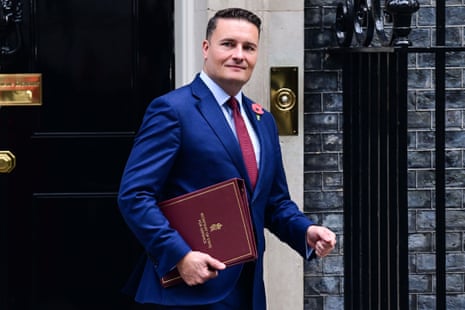
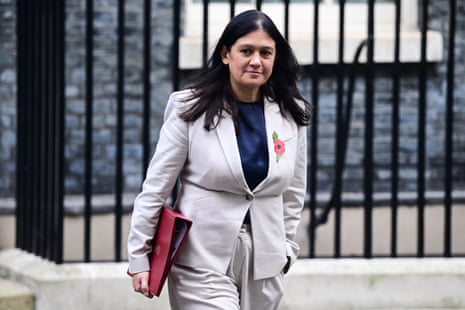
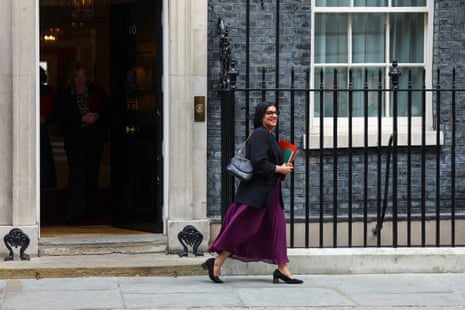
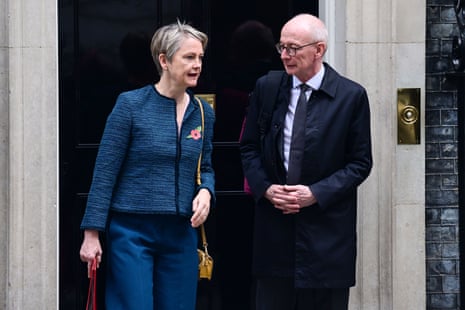
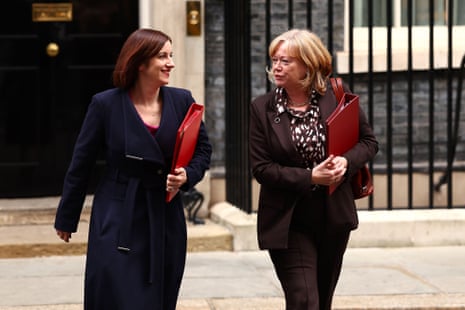
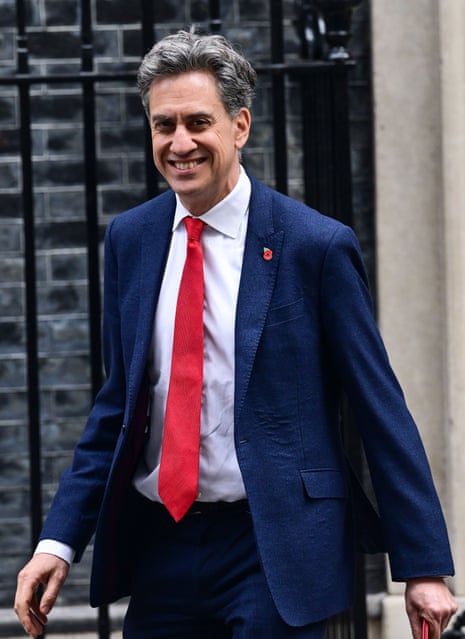
Here are pictures of ministers leaving No 10 after cabinet this morning.
None of them are looking particularly glum.
Investment firms welcome reports that cut to cash Isa allowance to be reversed
The Financial Times is reporting this morning that John Healey will “use his budget to scrap controversial plans to slash the annual cash Isa allowance from £20,000 to £12,000, after concluding it was the wrong way to persuade people to invest more in stocks and shares”.
Most people in the City work on the basis that, if the FT is reporting a budget story on the day it is being delivered, it is safe to believe it is true. Investment companies have welcomed the news.
Simon Harrington, head of public affairs at PIMFA, a financial management company, said:
double quotation mark We welcome John Healey’s decision to reverse his predecessor’s controversial plans to slash the annual cash ISA allowance from £20,000 to £12,000. We have consistently argued that cutting the allowance was unlikely to achieve the government’s ambition of encouraging more people to invest, and risked making the stocks and shares ISA – the very wrapper it wants people to use – less attractive.
And Will Stevens, a partner at Killik & Co, a wealth management company, said:
double quotation mark The decision to retain the full Cash ISA allowance is a sensible one. Whilst there is a legitimate policy objective in encouraging more people to invest for long-term growth, reducing the allowance risked being perceived as penalising sensible saving behaviour rather than promoting investing.
The gas standing charges decision has also been welcomed by Nesta, a thinktank that recently published a paper arguing for exactly this policy. Andrew Sissons, director in sustainable future at Nesta, said:
double quotation mark Ditching the gas standing charge rightly takes a big chunk off millions of people’s energy bills, sharing costs more fairly and giving cash-strapped households a much-needed boost. This measure will provide relief to the poorest households who ration their gas use but it will also mean that switching to electric heating such as heat pumps is a better deal for some households that use more gas.
The report includes this chart showing how many households are likely to lose and gain from the measure.
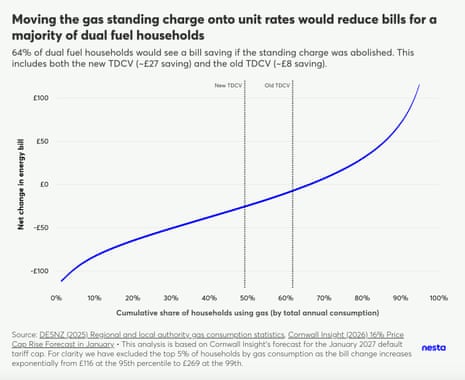
Nesta estimates that, based on current TDCV (typical domestic consumption values), a typical dual-use household will save £27 a year.
But there has been a more positive response from Simon Francis, coordinator of the End Fuel Poverty Coalition. He said:
double quotation mark Removing the gas standing charge will bring real relief to many low-income households who use very little energy and for prepayment customers it could stop debt building up in the summer months.It’s also welcome that the chancellor acknowledges that wider measures are needed to bring down bills and we will wait to see if he matches these words with more action in the budget later. Moving levies off electricity bills and into general taxation, as reported, would also be a positive step.
Getting rid of standing charges on gas bills really ‘sleight of hand’, Tories claim
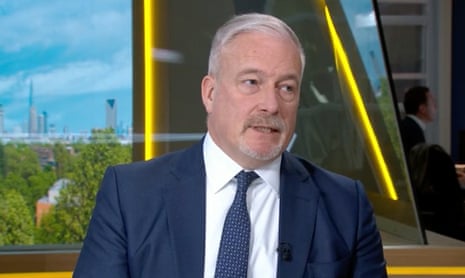
The Conservatives have dismissed the chancellor’s decision to get rid of standing charges from energy bills just “sleight of hand”. In an interview on GB News, Richard Fuller, the shadow chief secretary to the Treasury, said:
double quotation mark We know there’s a problem with energy prices coming down the track. That’s why the Conservatives last year actually announced that cheap energy plan to get rid of VAT on people’s energy bills and roll back some of the net zero taxes that burden people’s bills.But what Labour is doing is really sleight of hand. They’re moving it from one aspect of your energy bill or your taxes, and putting it somewhere else. Under the Conservatives, of course, we would make the tougher decisions on public spending, so the actual energy bills and people’s taxes would be coming down.
Green party says ‘business-as-usual budget’ won’t deliver hope
The Green party has put out this response to the news that gas standing charges will be abolished. A spokesperson said:
double quotation mark Abolishing standing charges is more tinkering from a government that is failing to take the bold action needed to end the cost of living crisis.Energy bills have skyrocketed in recent years and are set to rise by hundreds of pounds again this winter.
‘Hope’ is an easy thing to promise but will not be delivered by a business-as-usual budget.
Money saving expert Martin Lewis welcomes gas standing charge abolition, and says further energy bills support likely in budget
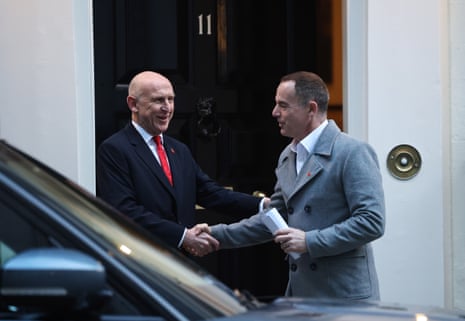
John Healey found time to hold a meeting with Martin Lewis, the founder of MoneySavingExpert.com, in Downing Street this morning. Lewis is one of the most trusted voices on personal finance in Britain, and he has been campaigning for standing charges to be removed from gas bills for some time.
Speaking to the media afterwards, Lewis said Healey was in a good mood. He said he asked the chancellor if there would be a support scheme to help people with energy bills from January, when costs are set to rise sharply. Lewis said Healey would not confirm anything, but he said that “reading between the lines” he gathered that there will be an announcement on this. Lewis speculated that this could be an increase in the warm homes discount, or it could be help for people in lower council tax bands.
Lewis said:
double quotation mark The biggest issue in energy right now is that we’re expecting a 27% rise in the price cap in January. I asked the Chancellor whether he will be intervening on that. He told me I’d have to wait for the budget, but reading between the lines, yes, there will be an announcement today.Whether it’s an increase in the Warm Home Discount, or whether it’s council tax band, or whether it’s done via a payout for people in say council tax bands A-D as a proxy for household income as Rishi Sunak did who knows.
John Healey says chancellor scrapping gas standing charges will save 60% of homes £45 a year
Good morning. When Andy Burnham became PM, he signalled that he wanted to end 40 years of neoliberalism. Judging by all the briefing about what will be in the budget today, neoliberalism is probably safe for another year or so because Burnham and his chancellor, John Healey, have decided not to use this as a moment for big, transformative change, but to instead opt for a more low-risk, every-little-bit-helps fiscal statement. There are radical elements in the Burnham agenda, but mostly they will have to wait for another day. In a video setting the scene for the budget, Healey sums it up with the slogan: “Breathing space today, and fresh hope for the future.”
Here is Pippa Crerar and Heather Stewart’s overnight splash story previewing the budget.
And here is an analysis by Phillip Inman setting out the main items we are expecting.
Every chancellor, though, likes to have at least one big surprise for the speech. This is the headline they want for tomorrow’s papers. We don’t know yet what Healey has chosen, but there is a lot of speculation that it will involve energy bills.
We have already had an announcement from the Treasury at 7am this morning about standing charges being removed from gas bills. Julia Kollewe has the story here.
According to the Treasury, this could save around 60% of families around £45 a year. It says:
The chancellor will announce today an end to this unfair and outdated practice. He will ask Ofgem to deliver removal of these charges – which are £108 a year for the typical household on average – in 2027 or as soon as possible after.
Instead, these fixed costs will be paid on the unit rate, which could save 60% of account-holding households around an average of £45 off their annual bill.
While this might sound like a modest cost of living measure – almost an “everyday fix” – Burnham and Healey – perhaps sensitive to the charge that there is not much radicalism in the budget – are presenting this as the start of something more ambitious. In a statement this morning, Burnham said this shows he’s “determined to reform our broken energy market” and Healey says:
My budget will draw a line in the sand on an energy policy that has failed British billpayers for years, letting extra costs on bills pile high and leaving households even more exposed to global shocks.
Healey is speaking at 12.30pm. We have also got PMQs today, but I will mostly be focusing on the budget, with reaction and analysis, and Graeme Wearden, who writes the Guardian’s business live blog, will be joining too to provide added firepower.
And we will also have comments open below the line (BTL).
Here is the agenda for the day.
8.45am: Andy Burnham chairs cabinet, where John Healey, the chancellor, will brief ministers on what’s in the budget.
Noon: Burnham faces Kemi Badenoch at PMQs.
12.30pm: Healey delivers the budget.
Around 1.30pm: After Healey finishes, Kemi Badenoch gives a speech responding to the budget. Other MPs respond as the budget debate continues through the afternoon.
2.30pm: Jonathan Haskel, chair of the Office for Budget Responsibility, holds a press conference.
3.30pm: Nigel Farage, the Reform UK leader, and Robert Jenrick, his Treasury spokesperson, hold a press conference to give their reaction to the budget.
If you want to get in touch, you can post a comment BTL and, if it’s addressed to Andrew, I may find it using a word search. But I am more likely to see it if you email politics.live@theguardian.com.

