Израилийн хойд хэсгээс олдсон эртний зааны шүд нь 700 мянга орчим жилийн өмнөх эртний хүмүүсийн амьдрах орчин, нүүдлийн замыг шинжлэх ухааны үндэслэлтэйгээр нээн харуулж байна.
Израилийн Иорданы хөндийд байрлах Гешер Бенот Яаков (Gesher Benot Ya’aqov) археологийн талбайгаас олдсон энэхүү зааны соёо болон араа шүд нь тухайн үеийн экосистемийг сэргээн зураглахад чухал ач холбогдолтой болжээ. Хайфагийн их сургуулийн докторант Ханна Фаррелл болон түүний багийнхан компьютер томограф, 3D загварчлал, изотопын геохими, цэцгийн тоосны шинжилгээ зэрэг олон талт аргыг ашиглан судалгаа хийсэн байна. Шинжилгээний үр дүнд тухайн бүс нутаг нь ой мод, задгай тал, намгархаг газар, гол мөрөн бүхий эртний хүмүүс болон аварга том амьтдыг тэтгэх чадвартай, баялаг орчин байсныг тогтоожээ.
Уг олдвор нь Плейстоцений галавын үед хамаарах шулуун соёот зааны (Palaeoloxodon antiquus) үлдэгдэл бөгөөд тухайн газраас олдсон базальт чулуун зэвсгүүд нь Ашелийн соёлын үед эртний хүмүүс тэнд амьдарч байсныг баталж байна. Судлаачдын үзэж буйгаар, уг бүс нутаг нь Африк болон Евразийг холбосон Левантийн коридорын чухал хэсэг байсан бөгөөд ус, ургамал, амьтны нөөцөөр баялаг байсан нь эртний хүмүүсийн нүүдэл, оршин тогтноход нөлөөлсөн байх магадлалтай юм.
Тель-Хай их сургуулийн профессор Гонен Шарон болон түүний хамтрагчдын малтсан энэхүү талбай нь эртний хүмүүс өөрчлөгдөж буй байгаль орчинд хэрхэн дасан зохицож байсныг ойлгоход түлхүүр болж байна. Quaternary Science Reviews сэтгүүлд нийтлэгдсэн уг судалгаа нь эртний олдворуудыг зөвхөн тухайн амьтантай холбохоос илүүтэйгээр, тэдний амьдарч байсан экосистемийг бүхэлд нь судлах нь хүн төрөлхтний хувьслыг ойлгоход чухал болохыг харуулж байна.
Дэлгэрэнгүйг эх сурвалжаас харах
↓Эх сурвалжийг нээх ↓
A single ancient elephant tooth is offering scientists a remarkable glimpse into a world that existed nearly 700,000 years ago. Found in northern Israel, the fossil has helped researchers reconstruct a surprisingly lush prehistoric landscape filled with forests, rivers, wetlands, and abundant vegetation. This ancient environment supported enormous elephants and some of the region’s earliest human populations, revealing how access to water and natural resources may have helped our ancestors survive and move between continents.
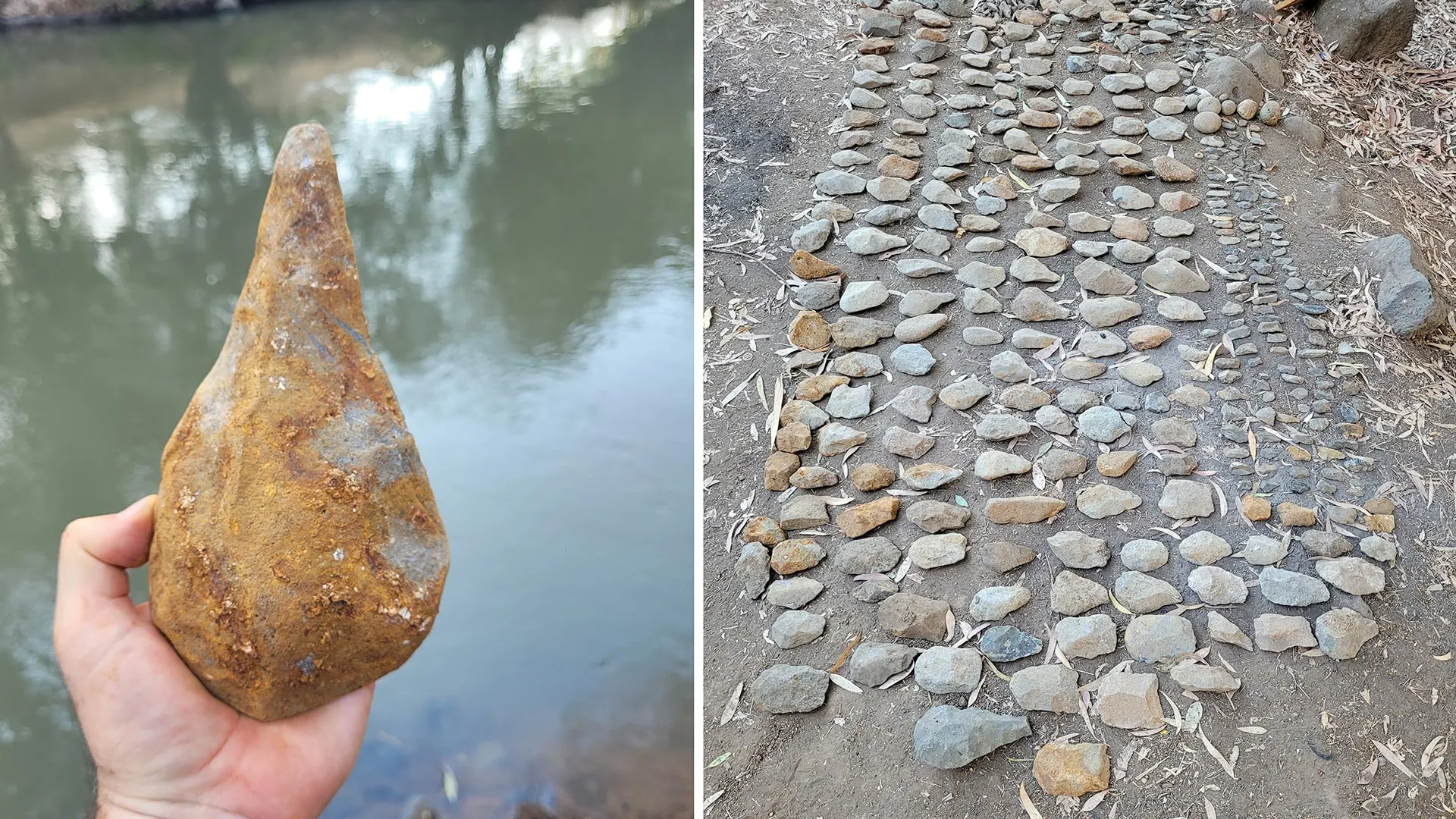
The discovery comes from Gesher Benot Ya’aqov (GBY-NBA), an archaeological site where early humans produced stone tools hundreds of thousands of years ago. Elephant remains were unearthed alongside handaxes and cleavers made from basalt, a volcanic rock. These implements belong to the Acheulian tradition, one of the oldest and most widespread stone tool technologies in human history.
The research, published in Quaternary Science Reviews, was led by Hannah Farrell (a PhD candidate at Haifa University). The team examined a large elephant molar and fragments of tusk recovered from Gesher Benot Ya’aqov (Daughters of Jacob Bridge), situated in the Jordan Rift Valley just south of today’s Hula Valley. The site was excavated by Prof. Gonen Sharon of Tel-Hai University of Kiryat Shmona in the Galilee and his colleagues.
A Giant Elephant Tooth Reveals a Lost Prehistoric World
The fossils belonged to Palaeoloxodon antiquus, commonly known as the straight-tusked elephant. This enormous prehistoric animal was among the largest land mammals of the Pleistocene, the geological period that included the most recent ice ages.
Rather than focusing only on the animal itself, the scientists treated its tooth as a record of the world in which it lived. Teeth can preserve chemical clues about an animal’s diet and surroundings, allowing researchers to investigate environmental conditions from hundreds of thousands of years ago.
To uncover those clues, the team combined several scientific techniques, including CT scans, 3D reconstruction, microscopic examination of tooth wear, isotope geochemistry, and pollen analysis. CT imaging allowed them to examine the fossil’s internal structure, while chemical measurements and microscopic evidence helped build a picture of the ancient habitat.
The results pointed to a remarkably persistent landscape containing woodlands, open grasslands, marshes, flowing rivers, and shallow bodies of water. Carbon isotope measurements suggested that the elephant lived in an environment with a dependable water supply. Meanwhile, pollen preserved in nearby sediments revealed a variety of wetland plants, including reeds, sedges, willow, tamarisk, and aquatic vegetation.
Together, these findings suggest that the region offered a diverse and productive environment capable of supporting both giant mammals and early human communities.
An Ancient Oasis Along a Crucial Human Migration Route
The location of this prehistoric landscape makes the discovery particularly significant. The Hula Valley lies within the Levantine Corridor, a natural passage connecting Africa and Eurasia that played an important role in the movements of ancient humans and animals.
Researchers believe the area functioned as a relatively stable ecological refuge, maintaining vital habitats and resources over long periods. Its rivers, wetlands, forests, and grasslands would have offered dependable sources of water, vegetation, and animal life for populations traveling through the region.
For early humans, access to such environments could have made the difference between surviving in an unfamiliar landscape and being unable to sustain a population. Understanding these habitats may therefore help explain how ancient human groups moved through the region and adapted to changing environmental conditions.
According to Prof. Sharon, “understanding how humans and animals responded to environmental change hundreds of thousands of years ago helps us better understand the forces that shaped our species.”
The findings highlight the importance of studying ancient landscapes alongside the fossils and artifacts found within them. By reconstructing the environments that supported prehistoric life, researchers can gain a clearer understanding of the conditions that influenced early human survival and migration.
“The availability of water, vegetation, and animal resources shaped where humans and wildlife could survive,” Sharon says. “The wetlands, rivers, and woodlands of the Hula Valley helped sustain life along one of the world’s earliest migration corridors, offering a rare opportunity to understand the ecological conditions that supported both animals and human populations nearly 700,000 years ago.”
The study brought together specialists from several Israeli universities. Farrell of the University of Haifa conducted the research using material from the site excavated by Sharon and his colleagues. Additional collaborators included Cheryl A. Makarewicz (isotope studies) and Nimrod Marom (archaeozoology) of the University of Haifa, as well as Minji Jin and Dafna Langgut (pollen studies) of Tel Aviv University.

