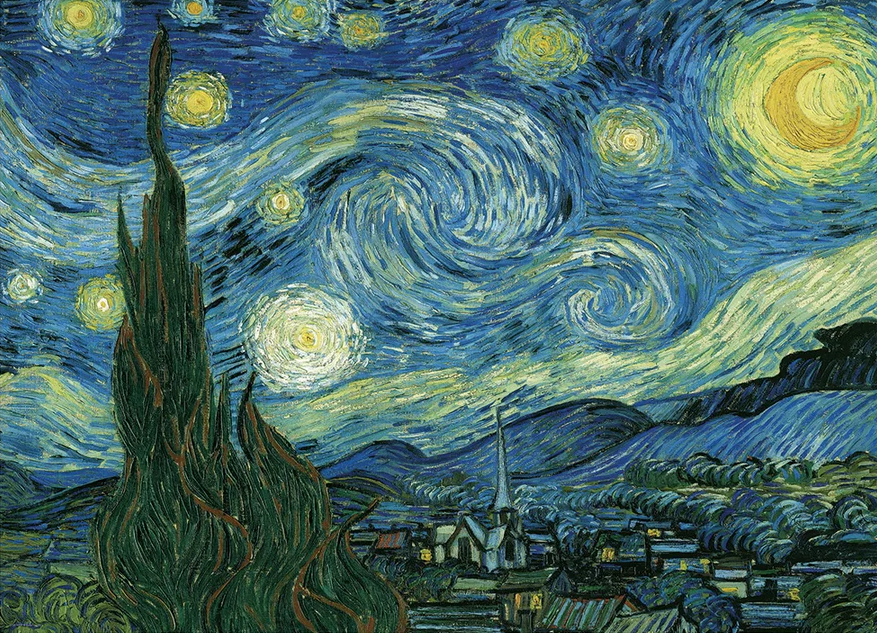
Одон орон судлаачид Ван Гогийн алдарт бүтээлийг дүрслэхдээ тухайн үеийн шөнийн тэнгэрийг бодитоор ажиглан буулгасныг статистик шинжилгээгээр тогтоожээ.
Винсент Ван Гогийн “Одтой шөнө” бүтээлийг зураач зүгээр нэг сэтгэмжээрээ зурсан уу, эсвэл Сен-Реми хотын шөнийн тэнгэрийг бодитоор дүрсэлсэн үү гэдэг асуулт олон арван жилийн турш маргаан дагуулсаар ирсэн. Өмнө нь Альберт Бойм, Чарльз Уитни нарын судлаачид уг зургийг зургадугаар сарын дунд үеийн тэнгэртэй холбон тайлбарлаж байсан ч тэдний дүгнэлт зөрчилдөж байв. Харин SLLAB компани болон Кёнхи их сургуулийн Сансар судлалын сургуулийн хамтарсан шинэ судалгаагаар уг зураг бодит ажиглалт дээр суурилсан болохыг Scientific Reports сэтгүүлд нийтэлжээ.
Судлаачид Ван Гогийн зурсан сар, Сугар гариг болон Хядасын одны бөөгнөрлийн байрлалыг ажиглалтын геометрийн аргаар шинжилсэн байна. Тэдний тогтоосноор, 1889 оны зургадугаар сарын 18-ны өдөр сар тэргэлдэх шатандаа байсан нь зураг дээрх хавирган сартай таардаггүй ажээ. Харин долдугаар сарын 22-ны өдөр сар хавирган хэлбэртэй байсан бөгөөд Хядасын одны бөөгнөрөл Сугар гаригтай хамт зүүн зүгт мандаж байсныг тооцоолсон байна.
Судалгааны багийнхан Сен-Реми хотод Ван Гогийн байгалийг ажиглаж байсан цэгийг олж тогтоосны дараа статистик хэлбэрийн шинжилгээ хийжээ. Ингэхэд зураг дээрх гол таван од нь Хядасын одны бөөгнөрөлтэй яг таарч байсан нь батлагдсан байна. Энэхүү аргачлалыг цаашид Ван Гогийн бусад шөнийн бүтээлүүдэд хэрэглэх боломжтой бөгөөд “Café Terrace at Night” бүтээл дээр туршиж үзэхэд “Зуны гурвалжин” одны ордтой тохирч байжээ.
Дэлгэрэнгүйг эх сурвалжаас харах
Эх сурвалжийг нээх ↓
Starry Night, the iconic painting by legendary Impressionist Vincent Van Gogh, has inspired debate among art historians and astronomers for decades. Was the painting something that Van Gogh was spontaneously inspired to create in the early morning hours in July 1889, or did it present a realistic depiction of the night sky over Saint-Rémy (where he painted it)? According to a recent study conducted jointly by South Korean telescope manufacturer SLLAB and the School of Space Research at Kyung Hee University, it’s the latter.
For over a century and a half, scholars focused primarily on religious and symbolic interpretations of the painting. It was not until the mid-1980s that studies were presented that analyzed its astronomical aspects. These were conducted by UCLA art historian Albert Boime (1984) and Harvard astronomer Charles Whitney (1986), who examined celestial correspondences and proposed constellation identifications based on a mid-June date. However, the two reached conflicting conclusions, and no studies since have examined the painting using observational geometry.
The study, presented in Scientific Reports (a Nature journal), instead narrows the dates on which a crescent Moon, Venus, and the Hyades star cluster (which appear closely together in the painting) fell within Van Gogh’s field of view. The study’s first author, Elijah Jeong-hyun Kim, CEO of SLLAB and a Ph.D. candidate at Kyung Hee University’s School of Space Research, has spent years building telescopes and observing the night sky and was inspired to weigh in on the debate.
(a)The stars in The Starry Night (1889) overlaid by the real stars after matching for size, orientation, and position; red dashed lines show the residual differences. (b) The stars in Café Terrace at Night (1888), left, and the stars around the Summer Triangle. Credit: Kim et al., Scientific Reports
“To an observational astronomer, the cluster of stars in The Starry Night is the Hyades in Taurus,” he said. “But the moment I read the earlier studies explaining it as Aries, I heard the painting calling to me.” The research builds on Kim’s previous book (released in 2025) and began with two field trips to France in 2019 to gather additional evidence and add quantitative data. Traditionally, the painting was dated to June 18th, 1889, based on a letter Van Gogh wrote to his brother, Leo.
However, on that date, the Moon was in its waning gibbous phase, which does not match the slender crescent in the painting. On July 22nd, the Moon was a crescent, and the Hyades cluster would have been seen rising in the east alongside Venus (placing it in the Taurus constellation). In the past, that date was thought to be one when Van Gogh experienced one of his seizures, but cross-analysis of the original French and Dutch letters and the details mentioned in both suggests his seizure began in late July.
Using on-site photographs taken in Arles, the team verified Van Gogh’s field of view overlooking the Rhône River. Afterward, they traveled to Saint-Rémy, where they located the spot where Van Gogh drew the landscape in preparation for his painting. They then conducted a statistical shape analysis to confirm that the five central stars in the painting corresponded to the Hyades cluster, which matched even more closely in the pen drawing Van Gogh made after he finished the painting.
These results suggest that the sky in the painting was based on actual observation rather than pure impressionist feeling. The methods employed could also be extended to other historical night paintings, leading to collaborative efforts between astronomers and art historians. The team has already used the same method on another of Van Gogh’s famous creations that features stars in the sky – Café Terrace at Night (painted in 1888) – and found a possible match to the Summer Triangle asterism.
“I hope this work prompts a renewed, multidisciplinary look at the sequence and working methods of the Saint-Rémy paintings, and at Van Gogh’s movements that summer,” Kim said. “Our conversation with Van Gogh’s other skies is still ongoing. We plan to tell those stories one by one.”
Further Reading: EurekAlert!, Nature

