Сөнөөгч онгоцны шинэчлэл хурд, нислэгийн уян хатан чанараас үл үзэгдэх байдал, мэдээллийн систем, хиймэл оюунд шилжжээ.
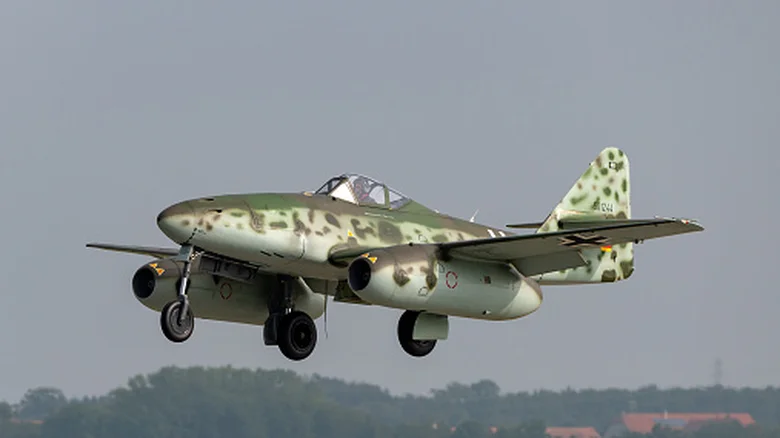
1940-өөд онд Германы Messerschmitt Me 262 нь байлдаанд оролцсон анхны тийрэлтэт сөнөөгч онгоц болж, 1944 оны дундуур Германы дээгүүр тагнуул хийж байсан Британийн Mosquito онгоцыг таслан зогсоожээ. Ойролцоогоор 1,400 ширхэг үйлдвэрлэснээс 20 орчим хувь нь л ашиглалтад орсон бөгөөд түлшний хомсдол, холбоотнуудын бөмбөгдөлт байлдааны хэрэглээг нь хязгаарлав.
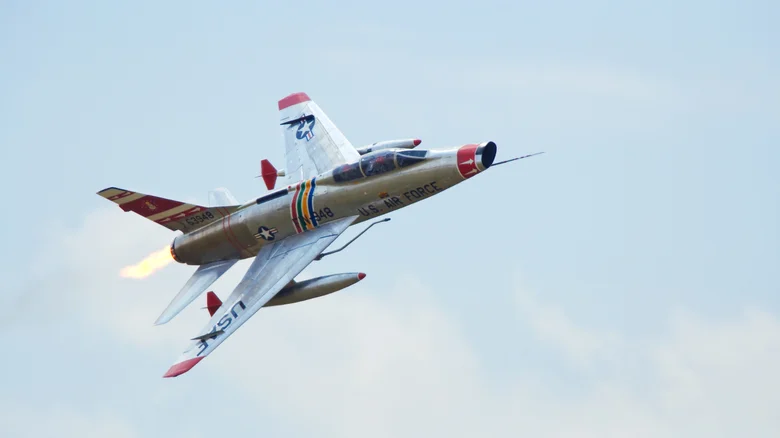
1955 онд үйлдвэрлэлд орсон F-100 Super Sabre нь дуунаас хурдан нисэх чадвартай, олноор үйлдвэрлэсэн анхны сөнөөгч онгоц гэж нийтээр үздэг бөгөөд Вьетнамын дайнд оролцож, дээд хурд нь Mach 1.16 хүрч байв.
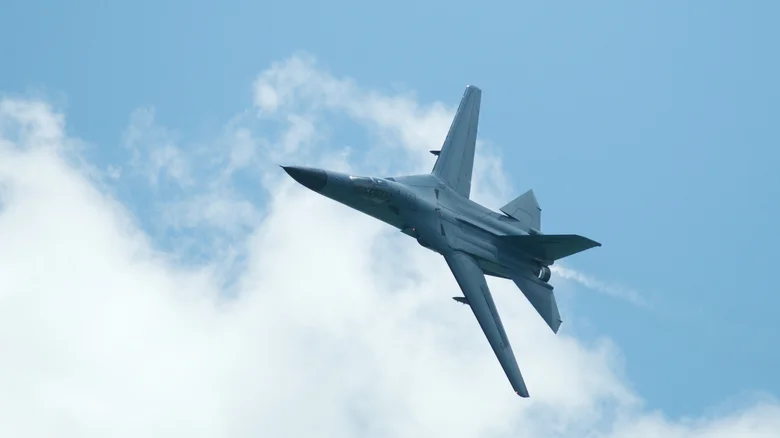
1960-аад оны F-111 Aardvark нь нислэгийн явцад далавчныхаа дэлгэмэл өнцгийг өөрчилдөг, ийм далавчтай анхны цуврал үйлдвэрлэлийн тийрэлтэт онгоц байлаа. Далавчийг удаан хурданд дэлгэж өргөлтийг нэмэгдүүлэх, хурдан нисэх үед хойш нь хурааж агаарын эсэргүүцлийг бууруулах боломжтой байв; уг онгоц Вьетнам, 1980-аад оны Ливи болон “Цөлийн шуурга” ажиллагаанд ашиглагджээ.
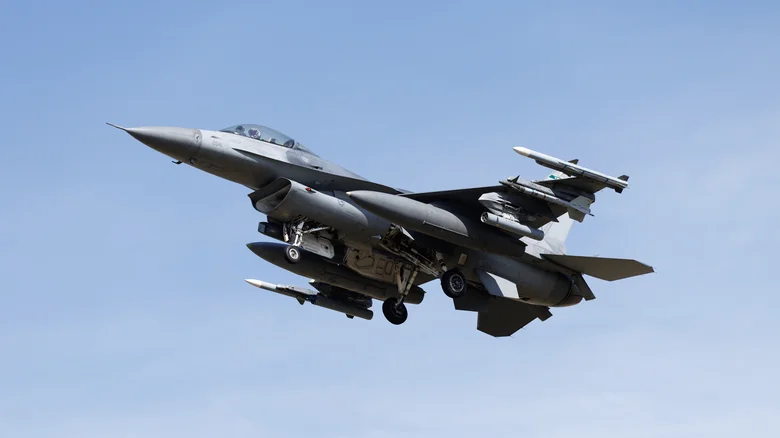
1970-аад оны F-16 Fighting Falcon харин компьютерын удирдлагатай нислэгийн системийг түгээмэл болгосон бөгөөд Mach 2 хүртэл хурдлах чадвартай, дэлхийд хамгийн өргөн тархсан сөнөөгч онгоцны нэг болж, ойролцоогоор 4,600 ширхэг үйлдвэрлэгджээ.
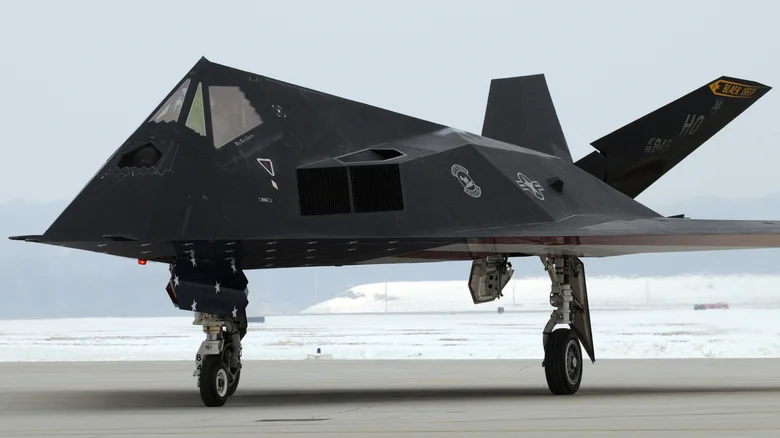
1980-аад оны F-117 Nighthawk-ийн хэлбэр болон тусгай материал нь радарын ойлтыг багасгаж, дайсанд илрэх боломжийг бууруулахад чиглэсэн; агаарын цэнэглэлтээр нислэгийн хүрээг нь үндсэндээ хязгааргүй гэж тодорхойлжээ.
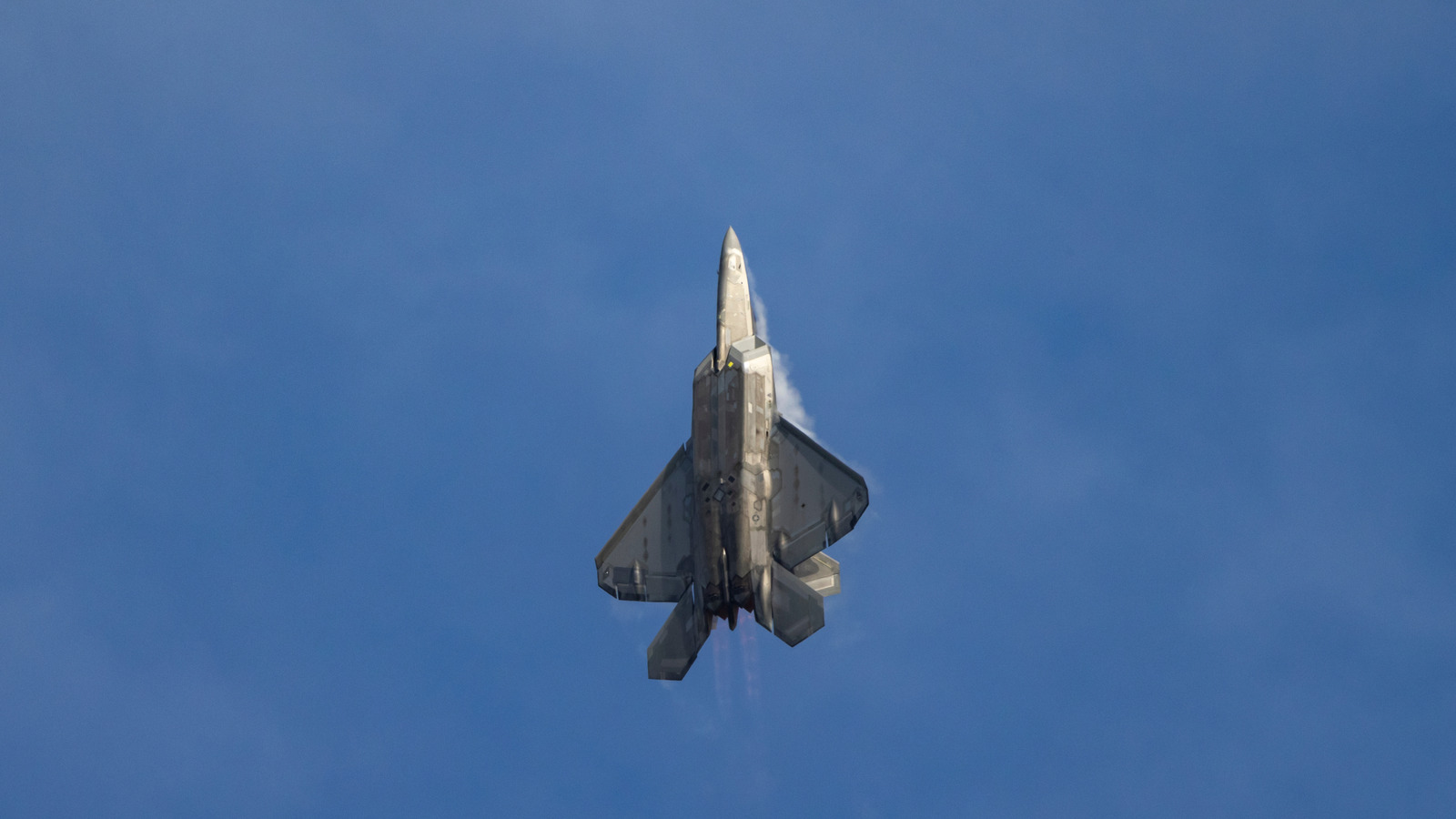
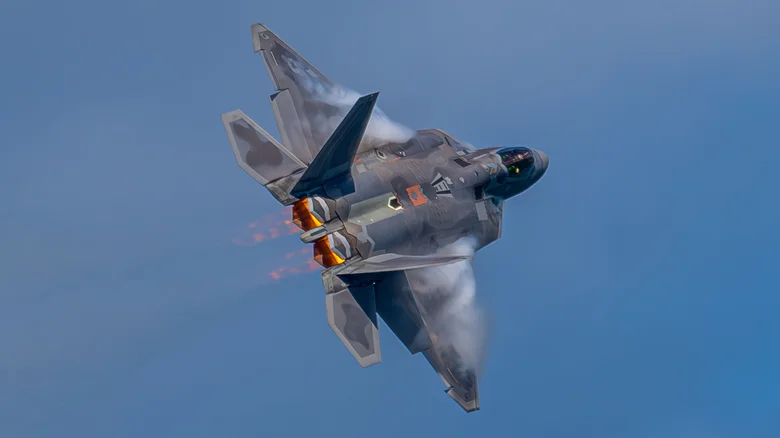
1997 онд анхны нислэгээ хийсэн F-22 Raptor нь үл үзэгдэх технологи, шатаагчгүйгээр дуунаас хурдан нисэх чадвар, чиглэлээ өөрчилдөг хөдөлгүүрийн хошуу болон дотоод зэвсгийн тасалгааг нэгтгэсэн бөгөөд 2005 онд ашиглалтад орсон. АНУ-ын экспортын хоригтой энэ онгоцны технологийн шинэчлэлээс гадна олон төрлийн системийг нэг загварт нэгтгэсэн нь онцлог юм.
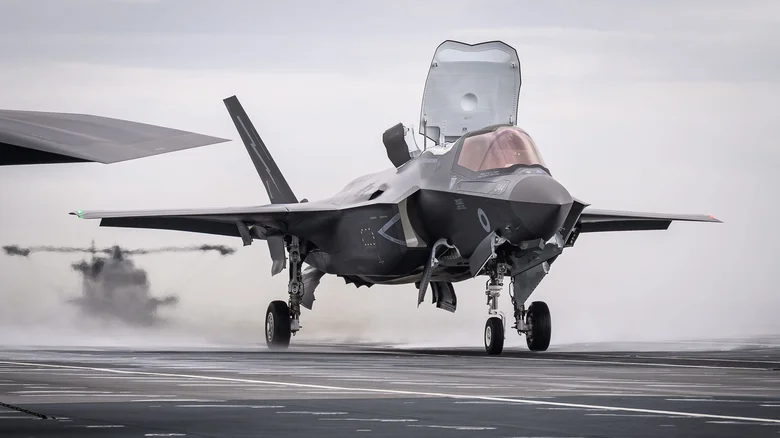
2006 онд анхны нислэгээ хийсэн F-35 Lightning II нь 2015 онд ашиглалтад орж, F-22-ыг орлох бус, түүнд нэмэлт үүрэг гүйцэтгэх платформ болон хөгжжээ. Түүний мэдрэгчийн мэдээллийг нэгтгэх, солилцох боломж болон хэт улаан туяаны камерын дүрсийг нисгэгчийн дуулганд дамжуулах систем нь сөнөөгчийг зэвсэг тээвэрлэгчээс тандан илрүүлэх, мэдээлэл боловсруулах хэрэгсэл болгон өргөжүүлсэн байна.
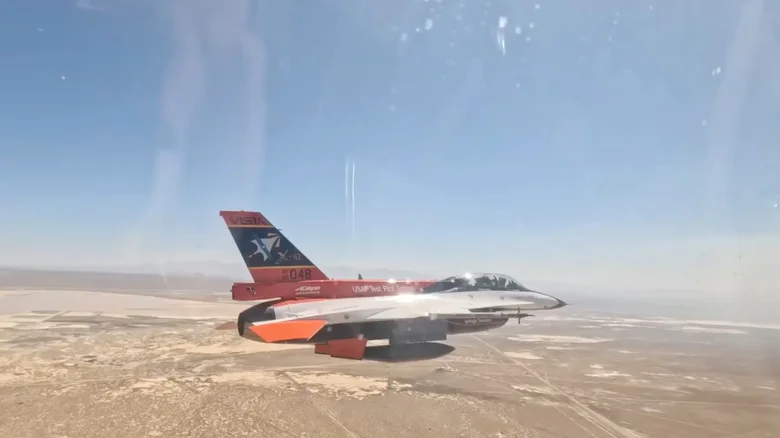
Хятадын J-20 нь тус улсын нам ажиглагдах чадвартай сөнөөгч онгоц бүтээж, тав дахь үеийн онгоцны салбарт өрсөлдөх чадавхаа харуулсан бол DARPA-гийн X-62A Vista 2025 онд хиймэл оюунаар удирдуулан хүнтэй F-16-тай дуураймал агаарын тулалдааны туршилт хийжээ.
Дэлгэрэнгүйг эх сурвалжаас харах
Эх сурвалжийг нээх ↓
The world of fighter jets is unique in one way above all else. Where one new breakthrough, one new technology, or one new material is introduced, it quietly (or not so quietly) makes the rest of the lineup obsolete. Every so often, a jet will turn up and flaunt a bit of engineering that no one was able to make work before, and then it’s a rush to play catch-up, at least on the part of other air forces in the world. And often, in that catching-up process, the previous king will be dethroned, and the cycle begins again.
From the first crude flames of the 1940s right up until the modern jets using AI to perform Hollywood-esque maneuvers, this is a process that we’ve seen play out time and again. Indeed, many of the best fighter jets and planes of all time owe their existence to this aerial arms race. The particularly striking bit is looking past at the previous eight decades and seeing what each time period focused on. First, things were about raw physics –- going faster, higher, and longer than others. Then, things became about engineering progress, using variable geometry wings, for instance.
Then came the dawn of what you couldn’t see, and the advent of stealth jets. And today, everything is about the software powering these amazing machines. Picking a single standout from each era is going to ruffle feathers, but every jet on this list earned its place by genuinely breaking the mold of the time.
1940s – Messerschmitt Me 262
Ryan Fletcher/Getty Images
The first in the world to make a fighter jet that actually saw combat were the Germans, who came up with the Messerschmitt Me 262 Schwalbe. The jet saw combat towards the end of war, when an Me 262 intercepted a UK Mosquito plane that was taking recon photographs over Germany in mid-1944. The Me 262 was quite advanced for the time, shipping with twin Jumo 004 engines made by Junkers, with each unit capable of producing 1,980 pounds of thrust.
While comparatively paltry by modern standards, these twin engines were sufficient enough to rocket this 15,600-pound jet to a maximum speed of 540 mph,though the 262’s cruising speed was lower, at 460 mph. The jet was relatively lithe, measuring 34 feet and 9 inches in length, with a wingspan of 41 feet. It also had an impressive (for the time, anyway) service ceiling of 38,000 feet, though range was severely limited, coming in at just 650 miles.
Around 1,400 units of the Me 262 were produced, thoughthe jet came about too late to make a marked difference in the war. When we said it was the first jet to see combat, we should note that only about 20 percent of all 262s ever produced actually got put into service. A great many were destroyed via Allied bombing raids; towards the end of the war, Germany was facing severe supply chain crises, so fuel was in especially short supply, further limiting what could have potentially been a turnaround fleet of aircraft for the Nazis.
1950s – F-100 Super Sabre
Darren Brode/Shutterstock
The technology for jets advanced extremely quickly, and by the 1950s, we had the F-100 Super Sabre, which consensus says is the world’s first supersonic production fighter jet. The technology had been proven in the late ’40s by the Bell X-1 (a prototype aircraft) that was famously piloted by Captain Chuck Yeager, who broke the sound barrier multiple times in testing. This prototype eventually turned into the Super Sabre, which ended up being produced by North American Aviation. The initial plane was the F-86 Sabre, or “Sabre 45” – a reference to its 45-degree swept wing design, but there were multiple teething problems related to aerodynamics with the Sabre.
After some improvements, the F-100 Super Sabre was born in 1955, and would go on to serve most notably in the Vietnam war before being mothballed in 1972after a short 17 years in service. Over this time period, 2,294 F-100s were produced. It’s crazy to think about the leap that came about between the Messerschmitt Me 262, which was at the end of the day a very crude and rudimentary jet, to the F-100 Super Sabre that could sustain supersonic flight with ease.
Power for the F-100 came from a lone 10,200-pound-producing J57 turbojet made by Pratt & Whitney. The plane itself was 47 feet, 5 inches long with a 38-foot, 9-inch wingspan, and had a top speed of Mach 1.16, or 892 mph. The service ceiling was 50,000 feet, and the operational range was 1,661 miles –- a marked improvement from the 262 of a decade prior.
1960s – F-111 Aardvark
Thor Jorgen Udvang/Shutterstock
Next up, in the 1960s came the F-111 Aardvark, which means “earth pig” in Afrikaans-– that also earned the moniker of the “whispering death” during the Vietnam war. The Aardvark was the world’s first production jet to feature what became known as “variable sweep” wings –- or, in layman’s terms, a jet that could change the angle of its wings in flight. The primary benefit of this layout was the versatility the jet had; since the wings could fold outward forming a larger profile (and thus, more lift) at slower speeds, and could be slicked back into a more folded configuration for supersonic flight, giving the jet a more streamlined profile, and thus, less air resistance.
In terms of power, the F-111 shipped with dual TF30s from Pratt & Whitney that could each produce 25,100 pounds of thrust when the afterburner was at maximum. These engines allowed the F-111 Aardvark to reach a maximum speed of 1,452 miles (Mach 1.91), and gave the plane the impressive range of 2,971 miles. It was a giant plane, coming in with a length of 73 feet, 6 inches, with a 32-foot wingspan while “swept” in. It could almost double its wingspan too, with the wings being 63 feet when fully opened up. The jet saw combat in the Vietnam war, in Libya in the 1980s, and in operation Desert Storm, where it is famously credited with destroying over 1,500 tanks.
1970s – F-16 Fighting Falcon
Dan Kitwood/Getty Images
The F-16 Fighting Falcon has evolved a lot over the past 50 years –- and yes, one of America’s most legendary current-service jets really is half a century old at time of writing. This is the first jet on our list that isn’t the “first of” something major or earth-shattering, but it certainly leaned heavily into the avionic systems. By a long margin, the F-16 is the jet that normalized computer-mediated and fly-by-wire flight controls. The F-16 is powered by a single F100 engine made by Pratt & Whitney, capable of putting out 27,000 pounds of thrust in the C/D variant. This power setup can rocket the jet to its max speed of 1,500 mph (Mach 2), and gives it a range of more than 2,002 miles, and a service ceiling of at least 50,000 feet.
The jet is about 49 feet long, and has a wingspan of about 33 feet. If the F-16 didn’t exist, then our pick for the 1970s would have gone to the F-14 Tomcat, which could track up to 24 targets at once, courtesy of a very advanced AN/AWG-9 radar -– but the F-16 is undoubtedly the king here. Also, one of the biggest strengths of the F-16 is that it is the most common fighter jet in service across the entire globe. The U.S. has exported this capable fighter and its platform to countries such as Israel, Korea, the UAE, Greece, and Pakistan, among many others. To date, an estimated 4,600 F-16 Fighting Falcons have been produced across various blocks and generations, undoubtedly netting General Dynamics and Lockheed Martin a lot of money in the process.
1980s – F-117 Nighthawk
Everett Collection/Shutterstock
The F-117 was a completely new take on the fighter jet, opting to eschew the dogfighter-esque build of generations prior. Instead, it came with what we can only describe as being a flying Dorito that must have given rise to several UFO-sighting claims over the years. The shape is not just to stand out from the crowd;it’s particularly angled to reflect the maximum amount of radar waves. This, coupled with the exotic materials that the F-117 is made of, gave it an extremely low radar signature, making the plane almost invisible to the enemy. For a plane that was developed during the height of the Cold War, it was a terrifying display of the technology that America had in its back pocket at the time.
Power for the F-117 came from dual F404 turbofan engines from General Electric, and note that neither engine was equipped with afterburners. This is logical, as no afterburners helps keep the plane’s infrared exhaust signature low, and eliminates the potential for a sonic boom that can be heard for miles around. Each of the F404 turbofans produces 10,600 pounds of thrust, which can push the Nighthawk to its top speed of 684 mph, or Mach 0.84. Now, remember, this isn’t a plane designed for extreme speed but for invisibility, loitering above the enemy until it is called into action. To that end, the F-117 has basically unlimited range with aerial re-fueling, and it has a 45,000-foot service ceiling.
1990s – F-22 Raptor
Greg Meland/Shutterstock
The F-22 Raptor is considered so vital to U.S. defense interests that there is a blanket ban on exporting the F-22 to any foreign country, no matter how closely allied it is to America. Now, the Raptor didn’t bring in any particularly new tech (that we know of). However, it amalgamated lots of other design and tech from other jets into one mega package. Stealth tech, low observability, sustained supersonic flight without afterburners, two-dimensional thrust-vectoring nozzles, electronic warfare, internal weapons bays, and more. In terms of power, the F-22 gets its from twin F119 Pratt & Whitney turbofan engines that do feature afterburners, with each unit capable of producing a whopping 35,000 pounds of thrust at maximum.
Those engines make the F-22 one of the very few fighter jets capable of speeds above Mach 2 that exist. Furthermore, the Raptor also features the now-iconic thrust-vectoring nozzles that give the jet additional maneuverability in the air. The jet also includes several materials that aid in reducing its radar signature, meaning it too, incorporates some stealth aspects into its build. In terms of dimensions, it’s pretty svelte for what it is, coming in with a length of 62 feet, 1 inch, along with a wingspan of 44 feet, 6 inches, and it stands 16 feet, 8 inches tall. Also, before anyone rushes to the comments, we acknowledge that the F-22 entered service officially in 2005; we classed it as a ’90s jet because it first flew in 1997.
2000s – F-35 Lightning II
Leon Neal/Getty Images
While many people assume that the F-35 was meant to be a replacement to the F-22, it has turned into more of a complementary platform over the years. And yes, just like the F-22 Raptor that we took a look at above, this jet officially entered service after the decade cutoff, joining the ranks in 2015. However, we still include it in the 2000s, since it had its first flight one year after the F-22 was introduced, in 2006. The F-35 Lightning II is powered by a single F135 engine manufactured by Pratt & Whitney, capable of producing 43,000 pounds of thrust.
The plane is 51 feet long, and has a wingspan of 35 feet, and is equipped with afterburners. The engines can push the F-35 Lightning II to a maximum speed of approximately 1,200 mph (Mach 1.6), and also give the plane a service ceiling of 50,000 feet, along with an operational range of 1,350 miles -– not too shabby. In terms of the innovation it brought about, every single impressive talking point on the F-35 is purely technological. For example, this was arguably the jet that took fighters from plain ol’ weapons into weapons-and-surveillance-and-detection platforms. It redefined the fighter as an information-processing and information-sharing system, rather than simply a platform for carrying weapons. It can even feed info from infrared cams directly to the pilot’s helmet visors, helping in low or even no visibility conditions.
2010 – Chengdu J-20 Mighty Dragon
Kevin Frayer/Getty Images
Next up, we have the J-20, manufactured by Chinese defense giant, Chengdu. The plane’s nickname is the “Mighty Dragon”, and the specs on paper certainly back up that moniker. China claims it is very good at striking marine targets with precision, but this is to be seen. The powerplants on the J-20 are the WS-15s from theAero Engine Corporation of China (AECC), and there are two of them, with unknown thrust amounts. That said, the jet is estimated to have a top speed of 1,320 mph (Mach 1.7), along with a service ceiling of at least 66,000 feet. The jet also has a range of 2,000 miles in total, though, of course, information on the J-20 is severely limited.
Many aviation aficionados are quick to point out that the J-20 closely resembles the F-22 Raptor in its silhouette and looks, but the J-20 is actually a fair bit larger than the Raptor. Where the F-22 has a wingspan and length of about 44 feet and 62 feet respectively, the J-20 comes in nearly eight feet longer, at 69 feet, 7 inches. Its wingspan is slightly shorter though, coming in at 42 feet, 8 inches in length. We think it deserves a spot on our list since it was truly the first non-western stealth jet that really gave anyone from NATO a run for its money. It demonstrated China’s ability to field an operational low-observable fighter and challenge the previously American-dominated fifth-generation fighter market. European-designed fighter jets like the Eurofighter Typhoon and Dassault Rafale do lag behind comparatively.
2020s – X-62A Vista
And finally, the most advanced jet of the 2020s -– at least at the time of writing -– is the X-62A Vista, an acronym for Variable In-flight Simulation Test Aircraft. The plane was developed by the Defense Advanced Research Projects Agency (DARPA). The plane itself is a F-16D Fighting Falcon made by General Dynamics underneath, though with significantly modified parts both inside and outside the jet. It is 48 feet, 7 inches long, has a wingspan of 32 feet, 2 inches, and a service ceiling of 50,000 feet at least. It also boasts a range of 3,200 miles, though future upgrades may increase that even more.
The plane is powered by a lone F110 turbofan equipped with an afterburner, which can make up to 28,200 pounds of thrust with the afterburner engaged fully. This engine gives the X-62A Vista a top speed of 1,350 mph, or Mach 1.76, which is quite impressive. However, the most impressive thing about the Vista is the fact that in 2025, a successful test flight was completed wherein the Vista went up against a manned F-16 in a dogfight –- but the Vista was entirely piloted by artificial intelligence. The Vista in question could potentially be used as an autonomous support aircraft for other manned (or unmanned) U.S. aircraft in the future –- which is really wild to think about.

