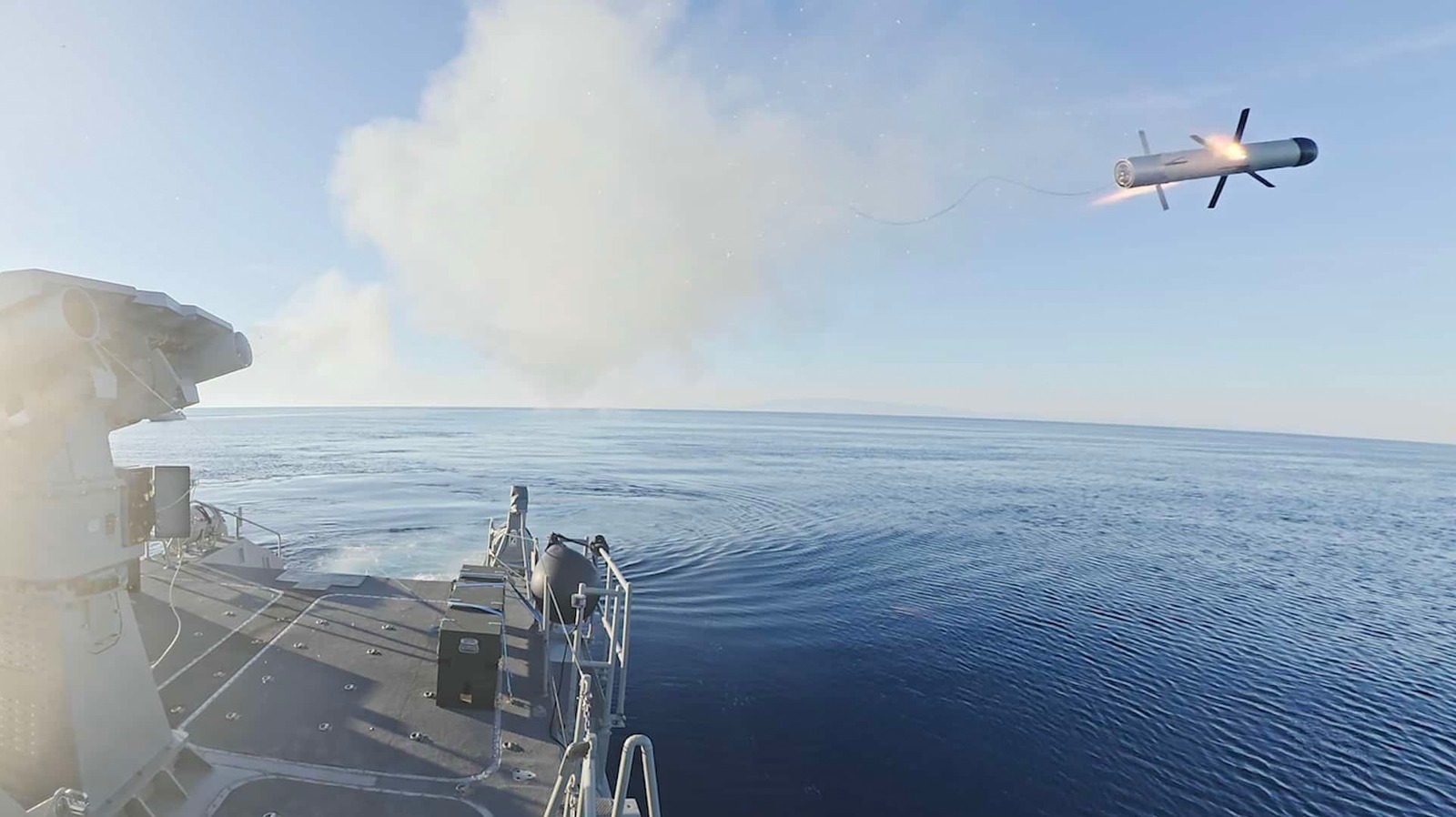
Критийн тэнгисийн хойд хэсэгт болсон сургуулилтад Грек, Израилийн тэнгисийн цэргийн хүчин оролцжээ.
АНУ-ын Тэнгисийн цэргийн хүчин голлон оролцоогүй уг SINKEX сургуулилалт 2026 оны аравдугаар сарын 21-нд болжээ. Lockheed Martin-ийн боловсруулсан Spike NLOS болон Spike ER пуужинг туршсан байна.
Spike NLOS пуужинг Machitis ангиллын эргүүлийн хөлөг болон Mk. V тусгай ажиллагааны завинаас харважээ. Зорилтот хөлөг нь Грекийн Тэнгисийн цэргийн хүчний Elli ангиллын Bouboulina (F463) фрегат байсан бөгөөд пуужингийн цохилт ихээхэн гэмтэл учруулсан ч живүүлээгүй; Papanikolis ангиллын шумбагчаас харвасан AEG SUT 264 торпедо хөлгийг живүүлсэн байна. 1983 онд ашиглалтад орсон уг фрегат нь ангидаа хамгийн сүүлд баригдсан хөлөг байв.
Spike пуужингууд нь оптик-электрон болон хэт улаан туяаны мэдрэгчтэй бөгөөд нислэгийн явцад бодит цагийн дүрс дамжуулж, тагнуул, тандалт, хайгуулын мэдээлэл цуглуулах боломжтой. Зургаа дахь үеийн эдгээр пуужинг далайгаас эрэгт цохилт өгөх болон далайд байгаа байг шууд онилоход ашиглаж болохоос гадна хуурай замын болон агаарын платформоос харах шугамаас цаадах байг цохих боломжтой.
Грек улс одоогоор найман хөлөгтөө Spike пуужин суурилуулсан бөгөөд тус улс Израильтай хамтран туршилтад оролцжээ. Эх сурвалжид дурдсанаар, пуужинг АНУ-ын арми болон Грек, Израилийг багтаасан олон улсын зургаан түнш ашигладаг; АНУ-ын арми 2020 оноос AH-64 Apache зэрэг нисдэг тэргүүддээ Spike NLOS суурилуулж эхэлсэн байна.
Дэлгэрэнгүйг эх сурвалжаас харах
Эх сурвалжийг нээх ↓
The United States Navy (USN) uses a lot of different types of rockets and missiles, and when it comes time to test the efficacy of these weapons, it has a fun way of doing so. The USN often conducts a special type of exercise called a SINKEX, and as the name implies, it’s an exercise that involves sinking a ship. Instead of going out and finding an enemy vessel somewhere in the world, the USN typically destroys one of its own decommissioned vessels.
While the USN wasn’t principally involved, that’s precisely what occurred in October 2026’s SINKEX in the northern Cretan Sea. The missile in question is the Spike NLOS, a new missile developed by Lockheed Martin that is a multi-platform-capable, organic long-range precision strike munition. Another missile in the family, the Spike ER, was also tested. The exercise occurred on October 21, 2026, in the wider maritime area of the northern Cretan Sea, and it involved allied ships from both the Greek and Israeli navies.
The Spike NLOS missiles were fired from a Machitis-class patrol vessel and a Mk. V Special Operations Craft (SOC), demonstrating the missile’s efficacy when deployed from relatively small vessels. Instead of a U.S. Navy ship, the Hellenic Navy’s Elli-class frigate Bouboulina (F463) served as the target for both missiles. Alongside the two missiles, a coordinated strike involving an AEG SUT 264 torpedo, which was fired from a Hellenic Navy Papanikolis-class submarine, also struck and sank the target ship, which was initially commissioned in 1983 as the final member of its class.
Spike Missiles offer a fire-and-forget option for America’s allies
While the Spike NLOS and Spike ER missiles didn’t sink the target frigate, which is different from a destroyer, they did considerable damage before a torpedo sent the vessel to Davy Jones’ Locker. Unsurprisingly, that’s what the missiles were designed to do, as they’re combat-proven, long-range precision strike missiles used by the U.S. military and six international partners, including Greece and Israel. While the SINKEX in October used the missiles for naval operations, they’re also capable of operating via ground and aviation assets to strike targets beyond line-of-sight.
The missiles feature electro-optical and infrared-seeking targeting sensors, providing real-time video throughout the missile’s flight. They can even gather intelligence, surveillance, and reconnaissance (ISR) while in flight, delivering it back to the unit that fired them, making the Spike missile family well-suited for modern combat operations. As of this writing, Greece has equipped eight of its vessels with the missiles, and they worked closely with Israel to test them during the October 21 exercise.
The current missiles are from the sixth generation, featuring significant upgrades over previous models. They’re capable of both sea-to-shore fire support and sea-to-sea direct engagements, as was the case in this exercise. Other uses include firing Spike NLOS missiles from helicopters, as the U.S. Army began outfitting its choppers, like the fast-moving AH-64 Apache attack helicopter, with the versatile weapon systems in 2020. As more exercises prove the reliability of Lockheed’s latest missiles, it’s likely that other allies will adopt them in the future, ensuring greater flexibility in maritime and non-maritime operations.

