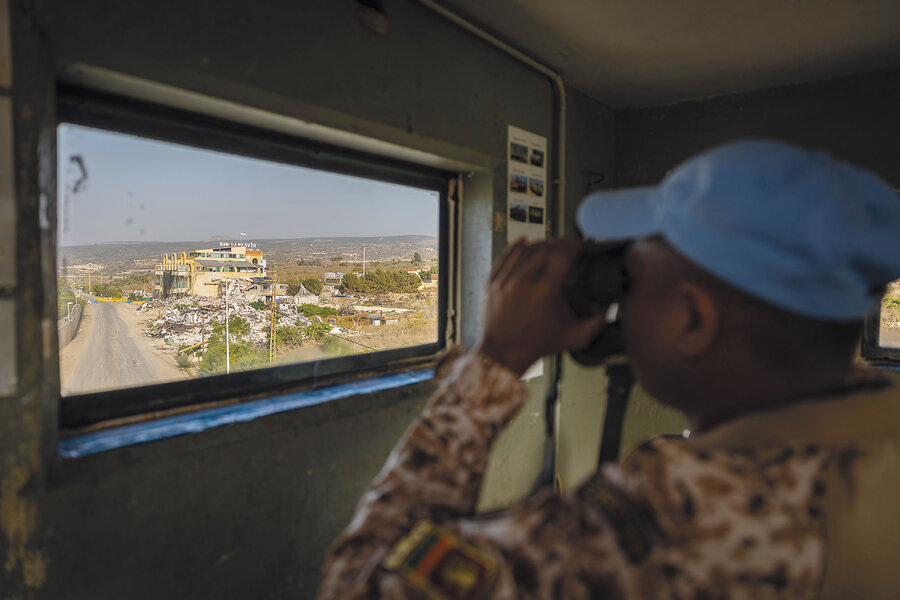
Накура хотын сүйрэл, НҮБ-ын энхийг сахиулагчдын ирэх жилийн татан буулгалт оршин суугчдын ирээдүйн талаарх болгоомжлолыг нэмэгдүүлжээ.
Ливаны өмнөд хэсгийн Накура хотод 4,000 орчим хүн амьдардаг байсан ч одоо оршин суугчид нь бүгд дүрвэжээ. Израиль, Хезболла бүлэглэлийн хоорондын мөргөлдөөний улмаас төрсөн хотоо орхисон Каролина Ризкалла энэ оны эхээр гэр бүлийн ресторанаа эргэж очиход хотын ихэнх барилга нуранги болсон байв. Түүний ресторан ч сүйдсэн бөгөөд тэр одоо хүртэл буцаж очиж чадаагүй байна.
Бейрут дахь Карнегийн Ойрх Дорнодын төвийн шинжээчдийн мэдээлснээр, Израилийн арми сүүлийн хоёр жилд Ливаны өмнөд хэсэгт 230 гаруй ам дөрвөлжин миль нутагт хяналтаа тогтоожээ. Мөргөлдөөн судлаач Ахмад Байдуны тооцоогоор, Израилийн эзэлсэн бүсэд 73 тосгон багтаж байгаа бол Израилийн Батлан хамгаалахын сайд Израиль Кац цэргийн ажиллагааны үеэр 60 тосгоныг устгасан гэж мэдэгджээ. Израиль Хезболлагийн дэд бүтэц, хонгил, зэвсгийн нөөцийг устгаж, хил орчмоор дахин хүчээ төвлөрүүлэхээс сэргийлэх шаардлагатай гэж тайлбарладаг.
НҮБ-ын Аюулгүйн зөвлөл АНУ, Израилийн шахалтын дараа 2025 оны наймдугаар сард UNIFIL-ийн мандатыг 2026 оны арванхоёрдугаар сарын 31-нд дуусгахаар санал өгсөн бөгөөд үүний дараа энхийг сахиулагчид Ливанаас гарч эхэлнэ. Зургаадугаар сарын 19-нд Хезболлатай гал зогсоох тохиролцоонд хүрснээс хойш Израилийн арми олон арван шинэ байрлал байгуулсан гэж UNIFIL-ийн албан тушаалтан мэдээлжээ. UNIFIL гал зогсоох зөрчлийн талаар мэдээлж, бүс дэх цөөн хэдэн христийн тосгонд хүмүүнлэгийн тусламж хүргэсээр байгаа ч оршин суугчид НҮБ-ын хүчнийг гарсны дараа хяналтгүй байдал үүсэх вий гэж санаа зовж байна.
Ливаны Засгийн газар Хезболлаг зэвсгээ хураалгах арга хэмжээ авч байгаа ч тус бүлэглэл Израиль Ливанаас гарсны дараа л зэвсгээ хураалгана гэж мэдэгддэг; Израиль харин Хезболла зэвсгээ хураахаас нааш цэргээ татахгүй гэсэн байр суурьтай байна. Израилийн ирээдүйн бодлого тодорхойгүй бөгөөд Ливаны нөхцөл байдалд Вашингтоны шаардлага нөлөөлнө гэж шинжээчид үзэж байна. Өмнөд Ливаны дүрвэгсдийн олонх гэр орон, амьжиргаа, ойр дотнын хүмүүсээ алдсан бөгөөд дахин мөргөлдөөн гарах вий гэсэн болгоомжлолтой байна.
Дэлгэрэнгүйг эх сурвалжаас харах
↓Эх сурвалжийг нээх ↓
Naqoura, Lebanon
|
Nov. 06, 2026, 2:17 p.m. ET
|
5 min read
The last time Carolina Rizkallah opened the door to her family restaurant in southern Lebanon was early this year. She wasn’t returning to work. It was to feed the stray cats.
Chez Samir, named after her late father, had once served grilled fish in the Mediterranean town of Naqoura, just two miles from the Israeli border. Fighting between Israel and Hezbollah had driven Ms. Rizkallah from her hometown, and going back was dangerous.
When she arrived, Ms. Rizkallah says, two strange men were there – along with her feline dependents.
“‘Carolina, come inside. We need to speak with you,’” she recalls the men saying to her. “‘Where are you going? Come back, come back,’” they shouted as she fled.
Ms. Rizkallah, now in the city of Tyre, says she still doesn’t know if the men who startled her were Hezbollah or Israeli. She never did make it back to the restaurant. A photograph sent to her later confirmed that Chez Samir, like almost every other building in town, had been reduced to a pile of rubble.
She never saw those cats again.
Oliver Marsden/File
Carolina Rizkallah stands in the kitchen of her restaurant, Chez Samir, in Naqoura, Lebanon, in 2024, before it was destroyed by the Israeli military during fighting with Hezbollah in 2026.
The Monitor was granted rare access to Naqoura, whose population of around 4,000 is gone now. The Israeli military carried out much of the destruction here. Israeli troops patrol the ruins and run a command post out of the old Reve de La Mer Hotel, festooned with anti-drone nets and Israeli flags.
Naqoura’s only other residents, holed up in their headquarters, are members of the United Nations Interim Force in Lebanon. U.N. peacekeepers have been deployed in southern Lebanon since 1978, when Israel first invaded the country. In August 2025, under pressure from the U.S. and Israel, the U.N. Security Council voted to end UNIFIL’s mission on December 31, 2026. That is when U.N. forces will begin withdrawing from Lebanon.
An open-ended occupation
Israeli troops show no signs of leaving anytime soon. An official with UNIFIL says the Israel Defense Forces has set up dozens of new positions since a ceasefire deal with Hezbollah was reached on June 19. Local people worry that with no one on the ground watching what is happening, the place they have known as home could be lost forever.
Over the last two years, Israel’s military has extended its reach into southern Lebanon, now occupying more than 230 square miles of territory from the coast near Naqoura eastward to Mount Hermon, on the border with Syria, according to experts at the Carnegie Middle East Center in Beirut. Most of this stretch of land has been transformed into wasteland.
Oliver Marsden
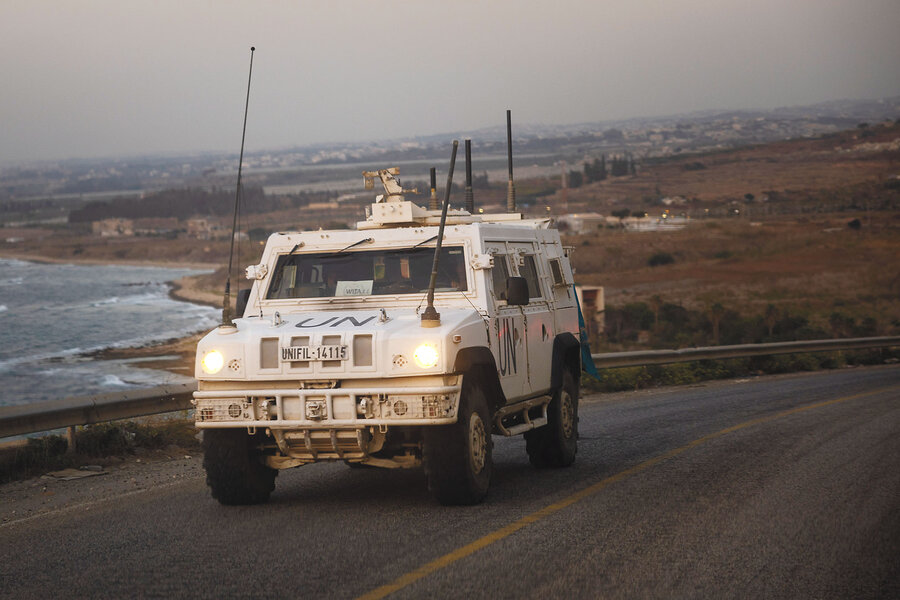
A UNIFIL armored personnel carrier drives south toward Naqoura along the main coastal highway in Israeli-occupied southern Lebanon, Oct. 23, 2026.
Ahmad Baydoun, an independent conflict researcher, counts 73 villages inside the area of southern Lebanon occupied by Israel. Most were inhabited by Shiite Muslims. In a recent interview, Israeli Defense Minister Israel Katz said 60 villages had been destroyed by the military.
Israel says this is necessary to eliminate Hezbollah infrastructure, tunnels, and weapons caches – and to prevent Hezbollah from regrouping just across from Israel’s border.
UNIFIL continues to operate in the area, report ceasefire violations by both sides, and provide aid to the few Christian villages still inhabited in the Israeli-controlled zone. Residents displaced from southern Lebanon say they have lost homes, livelihoods, and loved ones.
“I have nothing. No family. No one. Zero,” Ms. Rizkallah says, sipping coffee and looking out toward the Mediterranean. “No relatives and no financial support from anybody. Will I reopen my restaurant? I cannot answer that.”
The future of southern Lebanon, in no small measure, will be decided beyond the small country’s borders. Israel just held national elections, and no matter what the next government in Jerusalem looks like, the Israeli military’s plans for Lebanon are far from clear, experts say.
Michael Milshtein, a senior analyst at the Moshe Dayan Centre of Tel Aviv University, sees no “strategy or long-term [Israeli] policy in southern Lebanon. They have been stuck in the same situation zone with no war for almost half a year. A twilight zone.”
Dr. Milshtein, who is also a reserve officer in the Israeli military, says that Washington will ultimately determine Lebanon’s future.
“It will be Donald Trump. And the main question is what the White House will demand, or what the White House will want, from Israel.”
The planned departure of UNIFIL from southern Lebanon is making people here anxious. Residents say that, without an independent observer force, the Israeli military will have a free hand to carry out more demolitions and extend its occupation.
The end of a U.N. mandate
Driving south toward Naqoura, the coastal road is lined with blue-and-white Israeli flags. Two new yellow security gates block part of the highway. There is a new electronic buoy at sea as well. Inside the town, UNIFIL staff members pointed out U.N. security cameras that they say were sabotaged by the Israeli military.
Oliver Marsden
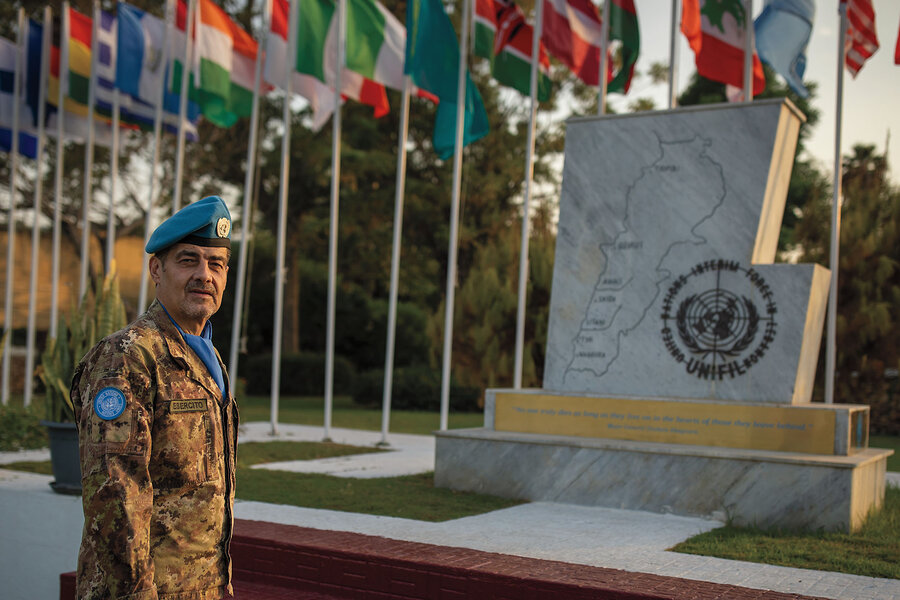
UNIFIL force commander, Maj. Gen. Diodato Abagnara stands near flags of participating nations at the UNIFIL headquarters in Naqoura, Lebanon, Oct. 23, 2026.
Maj. Gen. Diodato Abagnara, UNIFIL’s top commander based in Naqoura, says U.N. peacekeepers carry out vital work here.
“It’s very important to maintain some important functions delivered by UNIFIL during the last years,” he says. “The de-conflictionliaison. The humanitarian support. Our ability to support the Lebanese armed forces.”
Israel has long accused U.N. peacekeepers of failing to prevent Hezbollah from arming itself. European governments have said they are willing to send peacekeeping troops to Lebanon, but only under a U.N. mandate.
“To be honest, my perception is at this moment, Israel wants to avoid any imminent threat,” says General Abagnara. “And so they want to maintain control.”
Deepen your worldview
with Monitor Highlights.
Politics with respect
Get political stories with respectful analysis.
There‘s a world of new ideas in every
Books newsletter.
There‘s more to life, enrich yours with
Culture & Learning weekly.
Follow humanity‘s discoveries with
Science & Nature stories in your inbox.
Gain a spiritual perspective
from the stories in your inbox.
Want to understand the deeper impact of critical events? Learn the Monitor‘s insight.
Already a subscriber?Log in to hide ads.
The Lebanese government has taken steps to force Hezbollah to give up its weapons, but the Iran-backed Shiite militant group says it will only disarm after Israel leaves Lebanon. Israel says it will not leave until Hezbollah disarms. Residents of southern Lebanon such as Carolina Rizkallah are left with a catch-22 situation: unable to plan for their future, and fearing another outbreak of war.
“Thousands and thousands and thousands of people died, and thousands of people relocated, including me who has lost everything,” she says angrily. “And the problem is we might repeat this after a few years … this is insane.”

