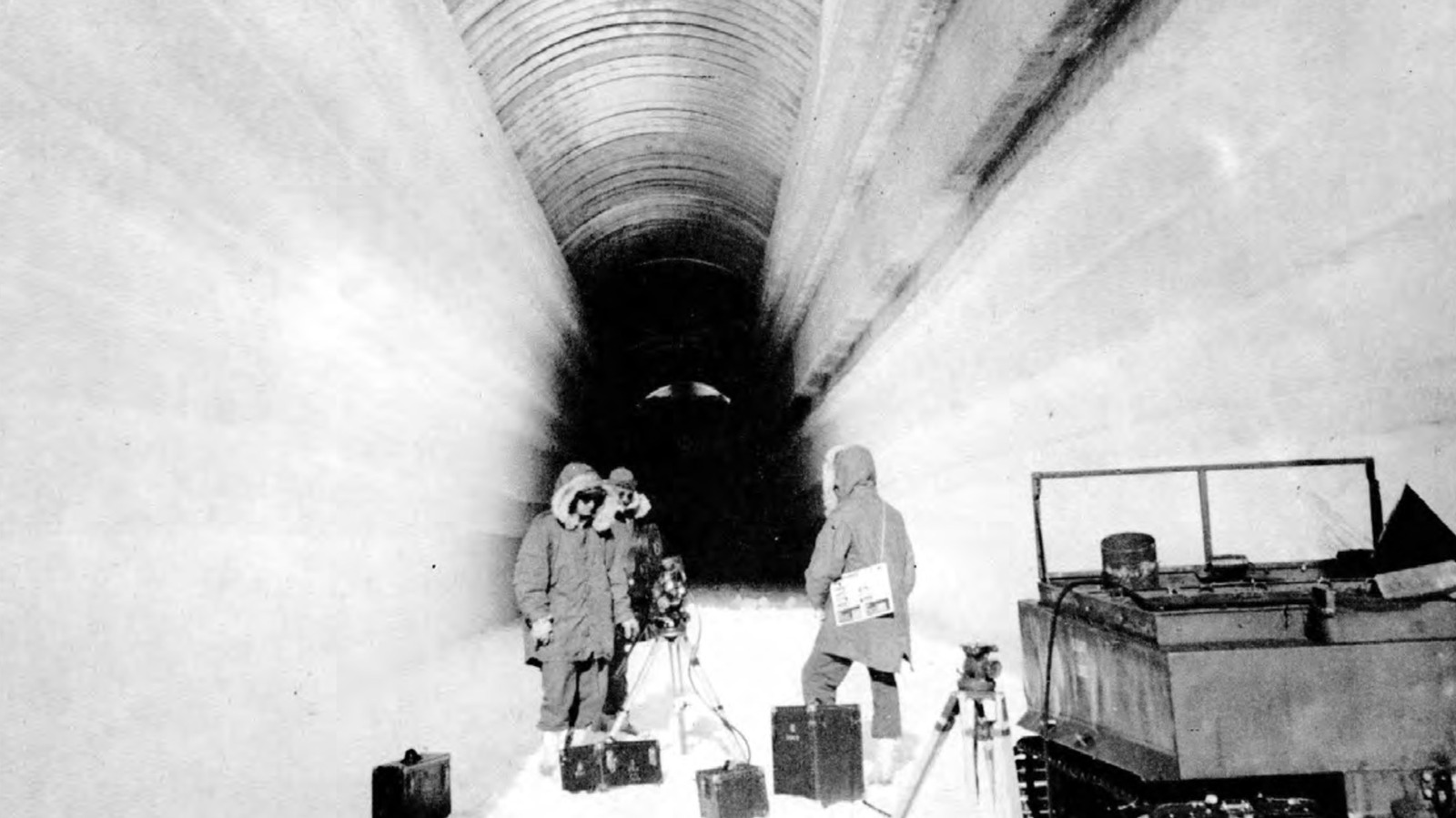
АНУ-ын Гренланд дахь баазыг мөсөн доорх цөмийн пуужингийн силосын төлөвлөгөөтэй холбон байгуулж байв.
Хүйтэн дайны үед АНУ Camp Century-г шинжлэх ухааны судалгааны бааз хэмээн олон нийтэд танилцуулж байсан ч мөсөн доор цөмийн зэвсэг хөөргөх байрлал байгуулах Project Iceworm төлөвлөгөөтэй байжээ. Гэвч Гренландын мөсөн бүрхүүлийн доор өргөн хэмжээний силосын сүлжээ байгуулах төлөвлөгөө хэрэгжээгүй.
Баазын доорх мөсөн бүрхүүлээс бараг нэг милийн гүнд байсан хурдасны дээжийг авч, хожим дахин илрүүлэн судалжээ. Дээж хамгийн сүүлд нарны гэрэлд ойролцоогоор 416 мянган жилийн өмнө өртсөн бөгөөд тухайн үед энэ бүс мөсгүй байсныг судлаачид тогтоосон; дээжийг Хойд туйлаас өмнө зүгт 800 орчим милийн зайд авсан байна. 2017 онд дахин илэрсэн дээжээс Гренландад тундрын өвс, бут сөөг, хөвд ургаж байсныг мөн тогтоожээ.
Судлаачдын үзэж буйгаар, 424 мянгаас 374 мянган жилийн өмнөх Далайн изотопын 11-р үеийн дунд зэргийн дулаарал мөсийг их хэмжээгээр хайлуулж, дэлхийн далайн түвшнийг дор хаяж 5 фут буюу 1.5 орчим метрээр нэмэгдүүлсэн байна. Агаар мандлын нүүрсхүчлийн хийн хэмжээ мөс хайлахад нөлөөлж, хэдэн мянган жил үргэлжилсэн дулаан мөстлөг хоорондын үеийг бий болгосон гэж судлаачид үзжээ. Вермонтын их сургуулийн эрдэмтэн Пол Биерман уг судалгааны үр дүнг Гренландын мөсөн бүрхүүлийн ихэнх хэсэг дулааралтын үед алга болсныг батлах хүчтэй нотолгоо гэж тодорхойлсон байна.
Дэлгэрэнгүйг эх сурвалжаас харах
Эх сурвалжийг нээх ↓
The Cold War was an interesting time that saw the United States and the Soviet Union compete with one another in weapons development, a Space Race, and more. It was during the Cold War that the U.S. decided to build a base called Camp Century in Greenland. However, this base was not solely used for scientific study, as was publicly disclosed at the time. It was also used to store nuclear weapon launch sites beneath the ice, hiding and protecting them from the Soviets so they could be used should the need arise.
Fortunately, that never happened, and Camp Century didn’t become a sprawling complex of silos spread beneath Greenland’s ice sheet. Under Project Iceworm, which was the name given to the silo construction plan, sediment buried nearly a mile beneath the ice sheet was extracted and only recently discovered and analyzed. Researchers determined that the last time the sediment was exposed to sunlight was around 416,000 years ago, and at that time, the area was ice-free. This is significant, as the sample was taken around 800 miles south of the pole.
By studying the sediment, scientists can determine a great deal about the Earth’s climate from 400,000 years ago, which is beneficial to modern climatologists. Greenland wasn’t just ice-free, as the samples that were rediscovered in 2017 show that it had grasses, shrubs, and moss characteristic of a tundra. The discovery offers clues as to what the world looked like before modern humans evolved, and it also indicates the global impact of and how best we might stave off climate change, the impact of melted ice sheets on sea levels, and more.
Greenland was truly green long ago
Today, Greenland’s ice sheet is nearly two miles thick in parts, and around three times the size of Texas. However,the sediment samples from beneath Camp Century reveal that it was a very different place 416,000 years ago. That’s not enough geologic time for much tectonic plate movement, so the warming that was identified through the samples wasn’t caused by any shift. Instead, the samples revealed that the ice likely melted less than 1 million years ago.
Climate scientists determined that only a moderate warming caused the dramatic melting, so a rise in global temperature doesn’t need to be extreme to impact Greenland’s ice sheet. The moderate warming period is known as Marine Isotope Stage 11, which lasted from 424,000 to 374,000 years ago, and resulted in a global sea level rise of at least 5 feet. Five feet isn’t much when you’re lowering a basketball hoop to dunk, but a global sea level rise of that magnitude would cause disastrous impacts to coastal cities around the world.
The thawing was caused, in part, by CO2 levels in the atmosphere, which impacted the ice slowly, causing an interglacial period that lasted for thousands of years. University of Vermont scientist Paul Bierman, one of the researchers involved in the study, told Phys.org, “It’s really the first bulletproof evidence that much of the Greenland ice sheet vanished when it got warm.” By learning more about Greenland’s past periods of melting, scientists can better understand how increased levels of CO2 impact an ice sheet that has, in the past, significantly raised global sea levels.

