
Хоол хүнс, өндөрлөг орчин, нарны туяа зэрэг хүчин зүйл хүний генетикийн өөрчлөлтөд нөлөөлсөөр байгааг судалгаанууд харуулжээ.
Хүний хувьслыг эртний өвөг дээдэс босоо явдаг болсон түүхээр хязгаарлах аргагүй. Генетикийн судалгаагаар сүүлийн хэдэн мянган жилд хооллолт, амьдрах орчинтой холбоотой өөрчлөлтүүд байгалийн шалгарлаар тархсан нь харагдаж байна. Тухайлбал, 10 мянга орчим жилийн өмнөөс мал маллаж, сүү хэрэглэж эхэлсэн зарим хүн лактозыг шингээх боломж олгодог генийн хувилбартай байжээ; эдгээр хувилбар Европ, Зүүн Африк, Ойрх Дорнодод тархсан бөгөөд өнөөдөр дэлхийн насанд хүрэгчдийн 30–35 хувь лактозыг шингээж чаддаг.
Өмнөд Америкийн Андын нурууны уугуул кечуа хүмүүс төмсийг эрт гаршуулсан бөгөөд судлаачдын үзэж буйгаар тэд цардуул шингээх чадвараараа онцгой. Төмс тариалж эхэлснээс хойш тодорхой генийн хувилбарын олон хуулбартай хүмүүс үе тутамд амьд үлдэх эсвэл үр удмаа үлдээхэд 1.24 хувийн давуу талтай байсан байж болзошгүй. Энэ бага зөрүү олон үеийн турш хуримтлагджээ.
Түвдийн өндөрлөгт 10 мянга гаруй жил амьдарсан хүмүүс хүчилтөрөгч багатай орчинд дасан зохицсон шинжтэй. 2024 онд судлаачид Төвдийн бүлгүүдийн цус хүчилтөрөгч зөөвөрлөх чадварыг сайжруулдаг дасан зохицлын нотолгоог мэдээлсэн бөгөөд 3,500 метрээс дээш өндөрт амьдарсан Балбын 417 эмэгтэйн дунд цусан дахь хүчилтөрөгчийн ханалт өндөр байх нь амьд төрөлтийн тоотой холбоотой байв.

Арьсны өнгө ч орчны нөлөөгөөр хувьсан өөрчлөгдсөний жишээ юм. Баруун Евразийн эртний ДНХ-ийн томоохон сангаас сүүлийн 10 мянган жилд өөрчлөгдсөн бараг 500 генийн хувилбар илэрсний дотор цайвар пигментацтай холбоотой хувилбаруудын тархалт нэмэгдсэн байв. Судлаачид үүнийг нарны тусгал багатай бүсэд амьдарч, Д аминдэм багатай хоол хүнс хэрэглэдэг тариаланчдын дунд уг хувилбар давуу талтай байсантай холбон тайлбарлажээ.
Богино хараа ч генетикийн өөрчлөлттэй холбоотой байж болзошгүй. 2021 оны судалгаагаар уг эмгэгтэй холбоотой аллелийн давтамж Их Британид сүүлийн 25 жилд өссөн бөгөөд судлаачид байгалийн шалгарал үүнд нөлөөлсөн байж болохыг дурджээ. Зарим генийн хувилбар залуу насанд үр өгөөжтэй ч хожим сөрөг нөлөө үзүүлж болохыг “эсрэг плейотропи” гэдэг; иймээс хувьсал үргэлж эрүүл мэндэд ашигтай шинжийг сонгодоггүй.
Дэлгэрэнгүйг эх сурвалжаас харах
↓Эх сурвалжийг нээх ↓
Our species’ evolution is often symbolized as a four-legged chimpanzee slowly morphing into an upright hunter.
But that’s not where our story ends.
Today, evidence suggests that humans are still evolving, and it shows in our very physiology: from our skin, to our eyes, to our blood.
Take, for instance, our gut. It contains one of the strongest documented examples of modern natural selection that scientists have yet found.
Roughly 10,000 years ago, humans in some parts of the world began to domesticate cows and other grazers. Then, they learned how to milk these animals.
But the trouble was, the adult mammalian gut was unprepared for the lactose.
Some of our ancestors, however, had gene variants that meant they could tolerate dairy without getting sick.
That made all the difference.
Modern gene studies in Europe, East Africa, and the Middle East suggest that over time, variants for lactose tolerance spread through natural selection.
Today, that is probably why 30 to 35 percent of the global adult population can tolerate lactose.
Meanwhile, in the Andes of South America, it is not milk but the potato that has shaped human gut evolution.
The Quechua people of highland Indigenous Andean ancestry were some of the first in the world to domesticate the potato.
Earlier this year, researchers found that this population seems better equipped for starch digestion than almost any other on Earth.
“Biologists have long suspected that different groups of humans have evolved genetic adaptations in response to their diets,” said evolutionary anthropologist Omer Gokcumen of the University at Buffalo.
“But there are very few cases where the evidence is this strong.”
When the ancestors of Indigenous Andeans began growing potatoes, those with higher copy numbers of a certain gene variant probably gained an evolutionary advantage.
Starting around 10,000 years ago, those with roughly 10 copies or more had a 1.24 percent survival or reproductive advantage per generation.
That’s small, but it’s enough to add up over the millennia.
“Those with lower copy numbers were eliminated from the population over time, perhaps because they had less number of offspring, and the ones with the higher copy numbers remained,” said Gokcumen.
Related: Humans in The Andes Seem to Have Evolved an Unusual Genetic Ability
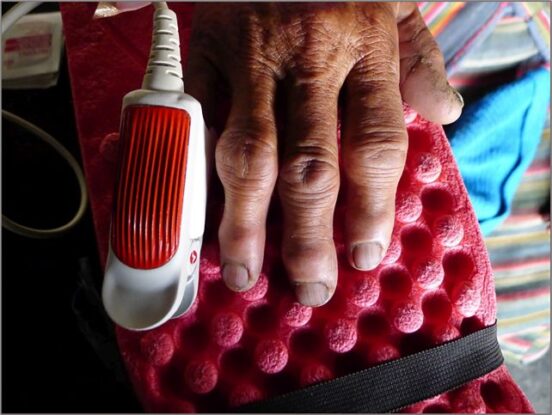
Adaptations to our environment also run through our very veins. Take humans who live on the Tibetan plateau, for instance.
Here, high-altitude living for more than 10,000 years has led to fascinating adaptations among local communities.
For years now, anthropologist Cynthia Beall of Case Western Reserve University in the US has been studying how the human body responds to a lack of oxygen at high altitude.
In 2024, she and her team reported evidence showing that Tibetan communities possess adaptive traits that improve their blood’s ability to deliver oxygen.
“This is a case of ongoing natural selection,” Beall said at the time.
The example is especially strong given the association with reproduction.
Among 417 Nepalese women who had lived their entire lives at altitudes above 3,500 meters (11,480 feet), those who demonstrated the highest rate of live births showed red blood cells with unusually high oxygen saturation.
“We knew that higher oxygen saturation of hemoglobin was beneficial; now we understand that the higher the saturation, the more beneficial,” Beall told ScienceAlert’s Michelle Starr.
“The number of live births quantifies the benefits.”
Some signs of natural selection can also be seen on the outside of our bodies.
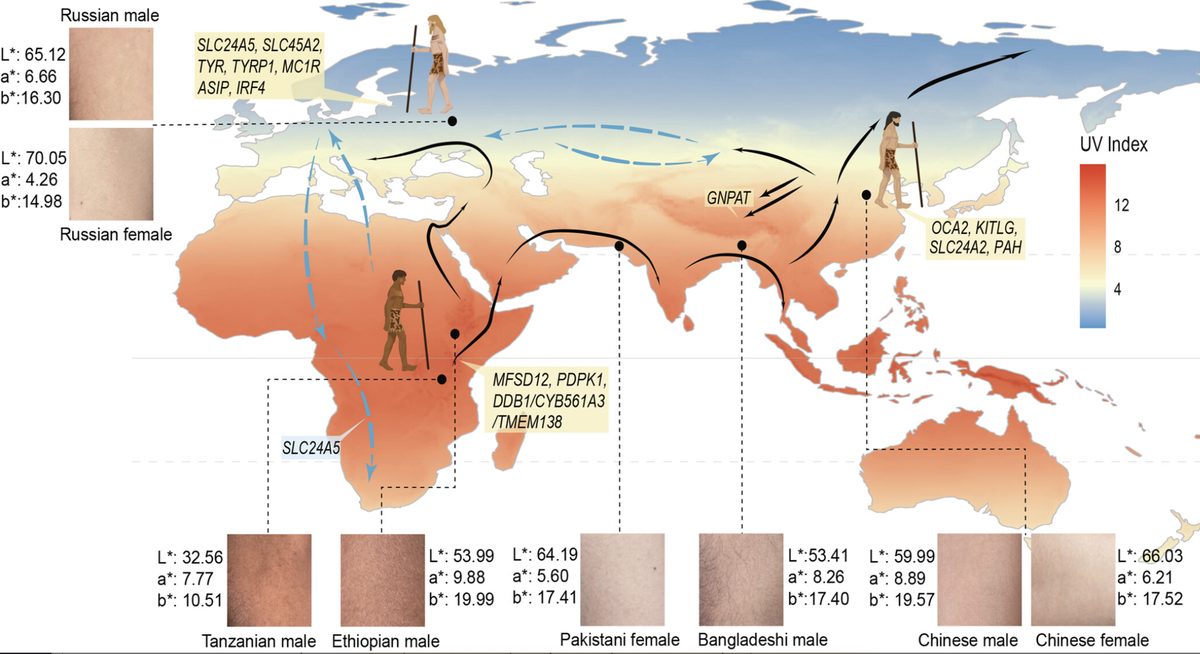
Skin pigmentation, for instance, is a commonly cited example of our species’ adaptation to sun exposure.
It is widely accepted that early humans in Africa had darker skin because it provided protection against DNA damage from strong ultraviolet radiation.
But farther from the equator, selective pressures seem to favor lighter skin.
This year, the largest ancient DNA dataset yet revealed evidence of natural selection among West Eurasians.
Nearly 500 gene variants were identified in this lineage that had changed in the last 10,000 years.
Many corresponded to known physiological traits, such as body fat, celiac disease, or schizophrenia.
But one of the strongest signals of evolution in the dataset concerned skin pigmentation.
Over the past 10,000 years, the results suggest that gene variants associated with lighter pigmentation have become more common in this human population.
“This plausibly reflects selection for increased synthesis of vitamin D in regions of low sunlight in farmers with little of it in their diets,” the authors suggest.
Even the way that you are reading this article right now might be a product of natural selection.
Myopia, or nearsightedness, has surged in the past few decades.
In 2021, researchers found evidence in the UK Biobank that the condition is associated with mutant alleles.
These alleles have increased in frequency over the past 25 years, possibly because of natural selection.
While nearsightedness might be a disadvantage for survival, some of the gene variants linked to this trait may have other advantages for reproduction.
This is called ‘antagonistic pleiotropy‘. It’s an evolutionary theory that certain genes confer beneficial effects in early life, but cause detrimental effects later on.
“We estimate that, in the UK alone, natural selection adds more than 100,000 myopia cases per generation, and argue that antagonistic pleiotropy be broadly considered in explaining the spreads of apparently disadvantageous phenotypes in humans and beyond,” the authors of the 2021 study concluded.
Evolution doesn’t always make us healthier or fitter.
Related: The ‘Shadow’ in Evolution That Explains Why Long Life Comes at a Cost
Natural selection favors genes that help us survive, but sometimes, they can drag along other traits that are not so advantageous.
As the modern world continues to shapeshift around us, so too will the evolutionary pressures shaping our species.
Human evolution is far from over.
This article was fact-checked by Rebecca Dyer and edited by Rebecca Dyer. While we pride ourselves on our process, we are only human. If you spot a mistake, please let us know.

