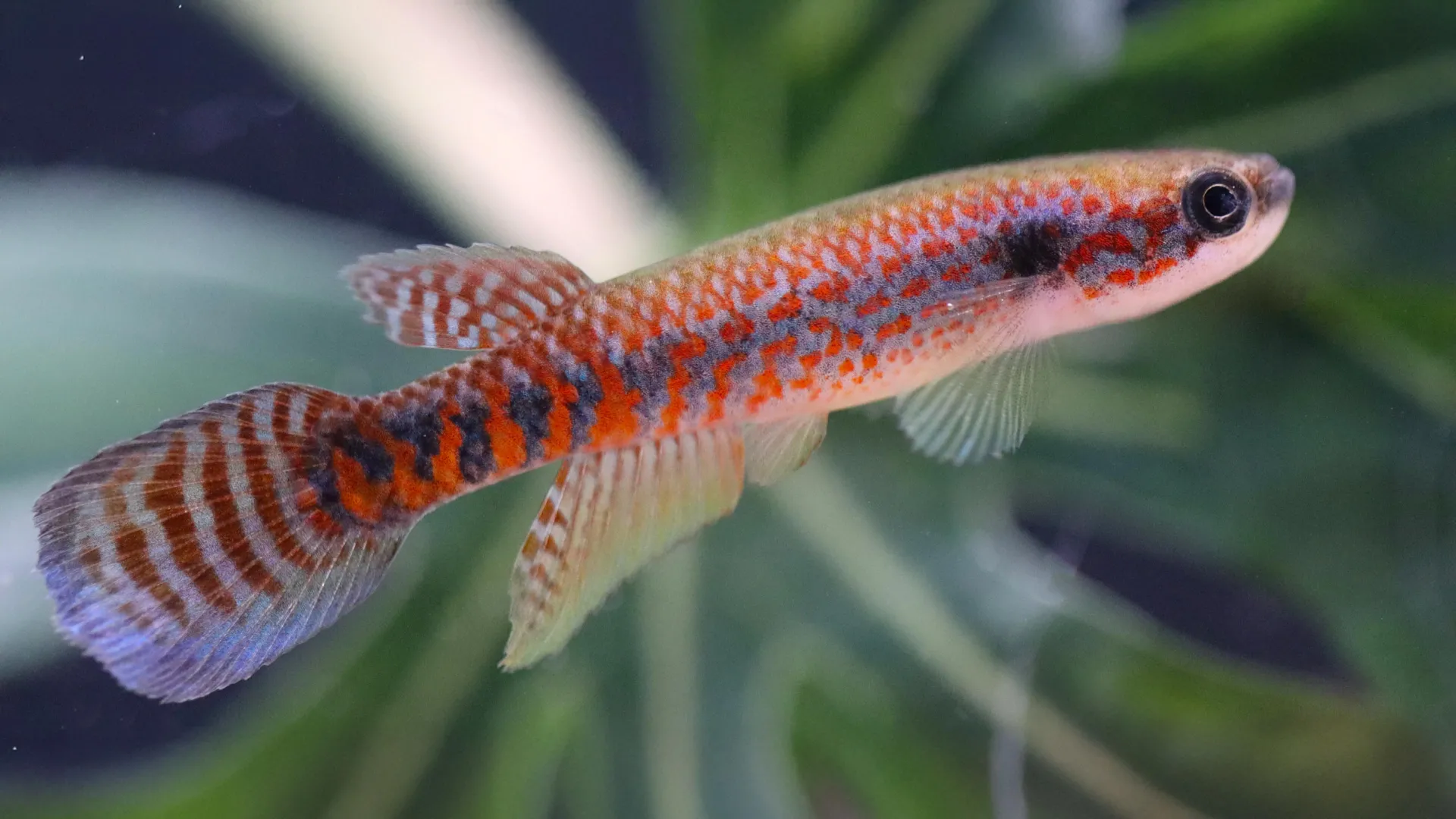
Бразилын Амазоноос шинжлэх ухаанд өмнө нь бүртгэгдээгүй загас илрүүлсэн ч амьдрах орчин нь хүний үйл ажиллагаанд өртөж байна.
Laimosemion laranja хэмээн нэрлэсэн энэ загасны биеийн стандарт урт 3 см-ээс бага. Эрэгчин нь биеийнхээ урд хэсгээр улбар толботой, сүүлний ойролцоо улбар шеврон хээтэй бөгөөд эдгээр нь цайвар саарал хажуугаас нь тод ялгардаг. Судлаачид загасыг Бразилын хойд хэсгийн Амапа мужийн өмнөд нутаг дахь Кахари голын сав газарт судалгаа хийх үеэр олжээ.
Багийн зорилго нь Бразилын өөр өөр байгалийн бүсэд тархсан Rivulidae овгийн цэнгэг усны загасны амьдралын мөчлөг, дасан зохицох стратеги хэрхэн хувьссаныг судлах байв. Шинэ загасыг бусад зүйлээс ялгахын тулд биеийн харьцаа, хайрсыг тоолж, араг ясны шинжийг харьцуулан, митохондрийн ДНХ-д нь шинжилгээ хийжээ. Генетикийн дүн шинжилгээ загасыг тусдаа зүйл болохыг баталсан.
Rivulidae овгийн зарим загасны үр хөврөл ус ширгэх үед чийгтэй шаварт хөгжлөө түр зогсоож, улирлын бороогоор усан сангууд дүүрэхэд хөгжлөө үргэлжлүүлдэг. Laimosemion төрөл нь энэ овогт жилийн амьдралын мөчлөг бие даан үүссэн таван тохиолдлын нэг бөгөөд шинэ зүйл олдсон нь тухайн бүсийн төрөл зүйлийн олон янз байдал, хувьслын талаарх мэдлэгийг нэмэгдүүлж байна. Laranja нь португалиар “улбар шар” гэсэн утгатайгаас гадна загас олдсон Ларанжал-ду-Жари суурингийн нэрийг илэрхийлжээ.
Одоогоор энэ зүйлийг Ларанжал-ду-Жаригийн ойролцоох гуравхан жижиг ойн цөөрмөөс илрүүлсэн бөгөөд мэдэгдэж буй тархац нь нийт 25 км² орчим. Бүх байршилд орчны доройтлын шинж тэмдэг ажиглагдсан бөгөөд ой тайрах, уул уурхай, хотын тэлэлт амьдрах орчинд нь дарамт учруулж байна; судлаачид зүйлийг IUCN-ийн шалгуураар устах аюулд орсон ангилалд хамаарах боломжтой гэж үзжээ. Тэд загасны амьдрах орчныг хамгаалахын тулд ойролцоох Кахари голын олборлолтын нөөц газрын хил хязгаарыг тэлэхийг санал болгосон бөгөөд судалгааг Zoosystematics and Evolution нээлттэй сэтгүүлд нийтэлжээ.
Дэлгэрэнгүйг эх сурвалжаас харах
↓Эх сурвалжийг нээх ↓
A tiny fish with brilliant orange markings has been discovered in the Brazilian Amazon, but scientists warn that the newly identified species may already be at risk of extinction. Found in a handful of forest pools threatened by human activity, the colorful fish has prompted researchers to call for urgent conservation measures.
The new species, named Laimosemion laranja, belongs to a group of small freshwater fish known as killifish. It measures less than three centimeters in standard length, but its appearance is anything but ordinary. Males have rows of bright orange spots along the front half of their bodies, followed by bold orange chevron patterns near the tail. These vivid markings stand out against their pale gray sides.
The discovery was made during fieldwork in the Rio Cajari drainage in southern Amapá, a state in northern Brazil. The research team included scientists from the Universidade Federal do Rio Grande do Norte, Instituto Peixe das Nuvens, Universidade Federal do Pará, and University of West Florida.
A Striking Discovery in the Amazon Rainforest
The researchers were exploring how different freshwater fish in the Rivulidae family have evolved their life cycles and survival strategies across Brazil’s diverse environments. During their surveys, they encountered a fish whose unusual coloration immediately stood out.
“We are developing a research project aimed at investigating the evolution of life-history strategies in freshwater fishes of the family Rivulidae across different biomes in Brazil,” said lead researcher Yuri Abrantes of the Universidade Federal do Rio Grande do Norte. “During our sampling in small rivers locally known as ‘igarapés’ in the Rio Cajari region, in Amapá State, we found this fish with a very striking coloration, which immediately caught our attention.”
Although the fish looked different from known species, its appearance alone was not enough to establish that it was new to science. The team carefully examined its body proportions, counted its scales, and studied features of its skeleton. They compared these characteristics with those of closely related species and analyzed its mitochondrial DNA to determine whether it represented a distinct species.
“It was an unexpected moment,” Abrantes recalled. “Initially, what most caught our attention was the impressive coloration of the males and females, which was unlike anything we had previously encountered in the study area. This sparked our admiration and a great deal of curiosity.”
Genetic testing ultimately confirmed that the fish was a previously unrecognized species. For the researchers, the finding was particularly meaningful because it highlighted how much remains to be discovered in parts of the Amazon that are both poorly studied and increasingly threatened.
Once the genetic analysis confirmed the fish’s distinct identity, he said, “it was something special, as we saw an opportunity to contribute to increasing our knowledge of Amazonian biodiversity and to draw attention to the conservation of areas that are still poorly explored but highly threatened.”
Why Scientists Named the New Fish Laranja
The name Laimosemion laranja reflects both the fish’s remarkable appearance and the place where it was discovered. In Portuguese, laranja means orange, referring to both the color and the fruit. The name also pays tribute to Laranjal do Jari, the municipality in Amapá where the species was found.
“We wanted to choose a name that would highlight a characteristic of the fish while also fostering a sense of connection with the people of the region where it was discovered,” Abrantes explained.
Beyond its colorful appearance, the discovery could help scientists better understand the evolution of Amazonian killifish. Some members of this group have developed an extraordinary way to survive in habitats that periodically dry out. Their embryos can stop developing and remain dormant in damp mud, resuming development when seasonal rains refill the pools.
“Laimosemion represents one of the five independent origins of the annual life cycle within the family Rivulidae,” said Abrantes. “Laimosemion laranja is particularly interesting because it expands our knowledge of the diversity and evolution of this group in the region.”
Newly Discovered Amazon Fish May Already Be Endangered
Despite the excitement surrounding the discovery, the future of Laimosemion laranja is uncertain. Scientists have found it in only three small forest pools near Laranjal do Jari, and every known location shows signs of environmental disturbance.
Deforestation, mining, and urban development are putting pressure on the surrounding habitats. One of the pools is close to water that has been discolored by sediment from mining activities. Another is located within the city itself, where plastic pollution is affecting the environment.
The species’ entire known range is estimated to cover just 25 square kilometers. Because its habitat is so restricted and faces multiple threats, the researchers believe the fish meets the criteria for classification as Endangered under guidelines established by the International Union for Conservation of Nature (IUCN).
To improve its chances of survival, the team has recommended expanding the boundaries of the nearby Rio Cajari Extractive Reserve to include the areas where the fish lives.
The discovery adds another species to the Amazon’s remarkable biological diversity while underscoring the need to protect habitats that scientists have barely begun to explore. Without stronger conservation measures, species such as Laimosemion laranja could face serious threats before researchers have the opportunity to fully understand them.
The study was published in the open access journal Zoosystematics and Evolution.

