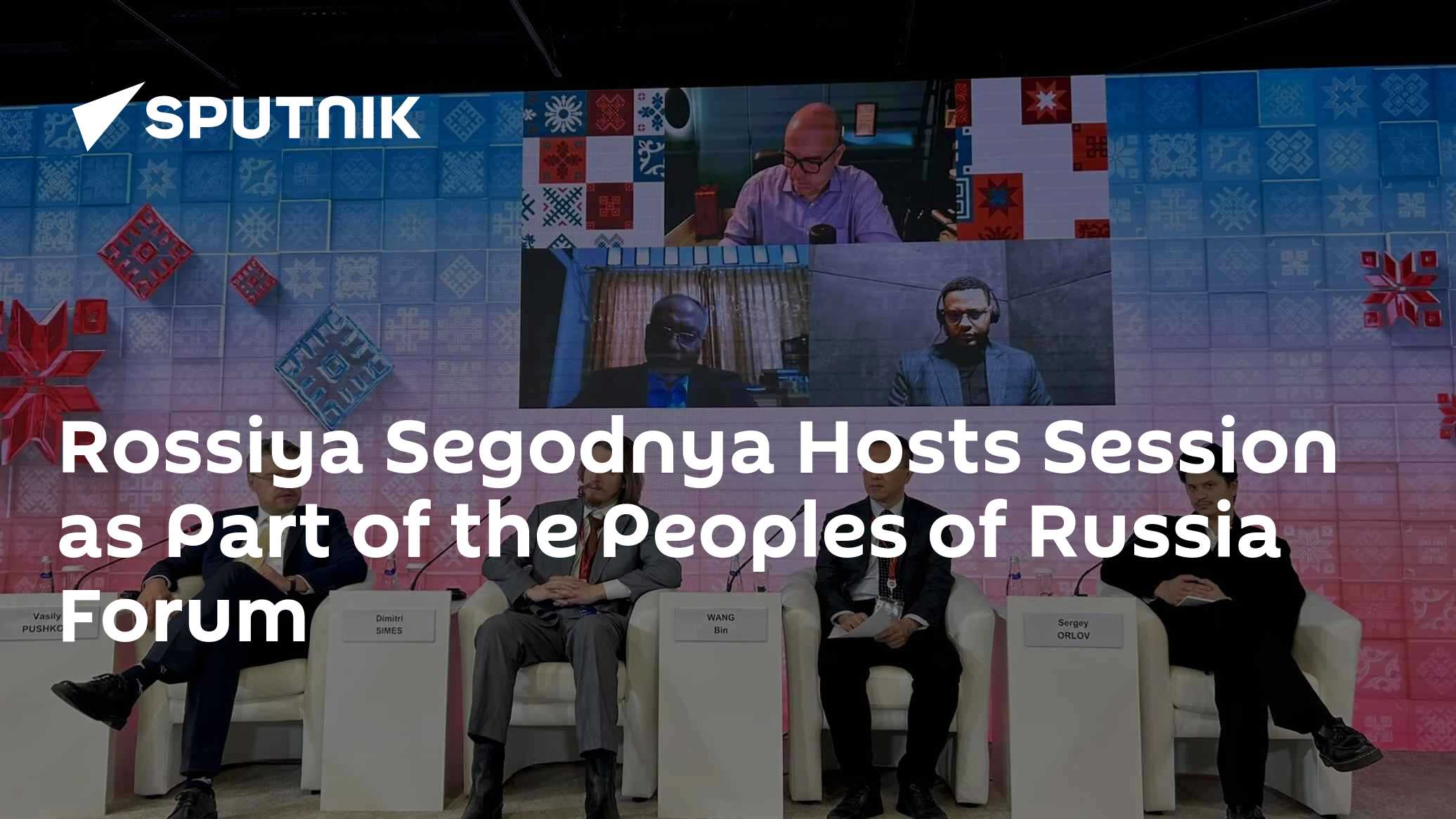
Оролцогчид дэлхийн дэг журам өөрчлөгдөж буй нөхцөлд ОХУ-ын олон улсын нэр хүндийг нэмэгдүүлэх, Өмнөдийн орнуудтай итгэлцэл бий болгох арга замыг хэлэлцжээ.
“Оросын ард түмнүүд” форумын хүрээнд “Россия сегодня” агентлагийн зохион байгуулсан хуралдаанаар Оросын олон улсын нэвтрүүлэг, олон нийтийн дипломат ажиллагааг хөгжүүлэх болон хэвлэл мэдээллийн хамтын ажиллагааг бэхжүүлэх асуудлыг хэлэлцэв. “Спутник Интернэшнл”-ийн тэргүүн Димитри Саймс Жуниор, “Brasil 247”-г үүсгэн байгуулагч Леонардо Аттуч, БНХАУ-ын “China Media Group”-ийн Евразийн товчооны захирал Ван Бин зэрэг төлөөлөгчид оролцож, хуралдааныг “Россия сегодня”-гийн олон улсын хамтын ажиллагаа хариуцсан захирал Василий Пушков чиглүүлжээ.
Оролцогчид зөөлөн хүчний үүрэг, ОХУ-ын нэр хүндийг өсгөх арга зам болон олон нийтийн дипломат ажиллагаагаар дамжуулан Өмнөдийн орнууд, дэлхийн олонхийн улсуудад итгэлцэл бий болгох талаар ярилцсан байна. Саймс улс төр, мэдээллийн дарамт, цахим хуудас болон нийгмийн сүлжээний хаягийг хаах зэрэг бэрхшээлтэй тулгарсан ч “Спутник” үзэгч, захиалагч, хэлний хүрээ болон дэлхийн хамрах цар хүрээгээрээ өмнөхөөсөө хүчирхэг болсон гэж мэдэгджээ.
Аттуч мэдээллийн олон талт, найдвартай эх сурвалж чухлыг онцолж, Латин Америк, Африк болон бусад бүсийн хэвлэл мэдээллийн байгууллагуудтай хамтрахыг уриалсан байна. Ван Бин хамтарсан контент бүтээх хамтын ажиллагааг өргөжүүлэх шаардлагатайг тэмдэглээд, “Россия сегодня” болон “China Media Group”-ийн хамтран хөгжүүлсэн “Орос-Хятад: гол нь” гар утасны платформыг долоон сая гаруй удаа татсан гэж мэдээлжээ.
Александр Горчаковын нэрэмжит Олон нийтийн дипломат ажиллагааны сангийн дэд гүйцэтгэх захирал Сергей Орлов Оросын зөөлөн хүчний тулгуур нь боловсрол, соёлын солилцоо, шинжээч болон залуучуудын дипломат ажиллагаа гэж хэлсэн байна. Индонезийн Персада YAI их сургуулийн төлөөлөгч Чойрул Анвар Коэснан залуусын олон улсын мэдлэгийн солилцооны ач холбогдлыг онцолсон бол “Спутник Африк”-ийн Этиоп дахь редакцын удирдах редактор Цегайе Вондвоссен Бекеле Орос-Африкийн дээд хэмжээний уулзалтын үеэр орон нутгийн хэвлэлтэй шууд хамтран, олон хэлээр мэдээлэл түгээсэн туршлагаа танилцуулжээ. Тэрээр Африкийн оршин суугчид “Спутник”-ийг мэдээллийн өөр нэг эх сурвалж болгон ашиглах боломж нэмэгдсэнийг мөн дурдсан байна.
Дэлгэрэнгүйг эх сурвалжаас харах
↓Эх сурвалжийг нээх ↓
The participants discussed the role of soft power and approaches to enhancing Russia’s international standing amid the transformation of the world order.
Particular attention was paid to the tools of public diplomacy and their role in building trust in Russia in the countries of the Global South and the world majority.
Dimitri Simes Jr. noted that despite growing political and information pressure, including blocking of websites and social media accounts, Sputnik is currently winning this media confrontation: “If any other media outlet faced such challenges, it would collapse within a month. We have not just survived but become even stronger than we were before the start of the special military operation. And we are stronger on every metric – subscribers, monthly views, languages, and global reach.”
Leonardo Attuch stressed the need to rely on diverse and reliable sources of information. “It is very important that we have independent sources of information. And I am not talking only about Russian sources; I am talking above all about cooperation with the most important media around the world in Latin America, Africa, and other regions. It is very important that we have content from everywhere,” he emphasized.
Wang Bin spoke about China’s successful experience in developing international broadcasting and stressed the need to intensify cooperation in joint content creation: “Russia-China: The Essentials is a joint mobile multimedia platform developed cooperatively by China Media Group (CMG) and the Rossiya Segodnya International Information Agency. Over the years, the project has built a significant and stable audience: to date, the app has already been downloaded more than 7 million times.”
Speaking about the progress of Russian public diplomacy, as well as expanding and deepening international humanitarian exchanges, Sergey Orlov noted: “We bring foreign journalists to Russia because we are, in a broader sense, one of the Russian Federation’s tools for promoting our soft power. Soft power is a state’s ability to reach out and promote its values and attitudes. We are not talking about propaganda and imposing our ideas, but about fostering an attractive image of Russia abroad. We do this through long-term relations, through building stable ties and trust that is born among the participants of our programs after their time in Russia.” The speaker noted the three pillars of Russian soft power: education, cultural exchanges, and expert and youth diplomacy.
Choirul Anwar Koesnan of Persada University spoke about the benefits of international knowledge exchange for young people. “Sputnik gives us international exposure and inspires my students. We do everything to convince students that influence should come through attraction, not through coercion or the injection of money. Values, culture, and reliable, appealing sources of information are what attract people. This allows young people to eventually persuade those around them to join the dialogue and share their ideas. And this is how we can build a certain trust and ultimately much more reliable partnerships with less effort,” he said.
Speaking about Sputnik’s best practices in the development of international broadcasting, Sputnik Africa’s Tsegaye Wondwossen Bekele stressed: “Take the Russia–Africa Summit, for example: we do not wait for Western networks to filter the information and offer us their narrative of events. We started working directly with local media and broadcasting corporations, and together with Sputnik Africa, they conducted online broadcasts, conveying information directly to audiences in a variety of languages.” The speaker also noted the growing role of Sputnik as an alternative source of information in the African region: “Looking back, we have already begun to break the monopoly of Western media on the dissemination of information. Today, residents of Ethiopia and other African countries can turn directly to Sputnik as a source of information.”

