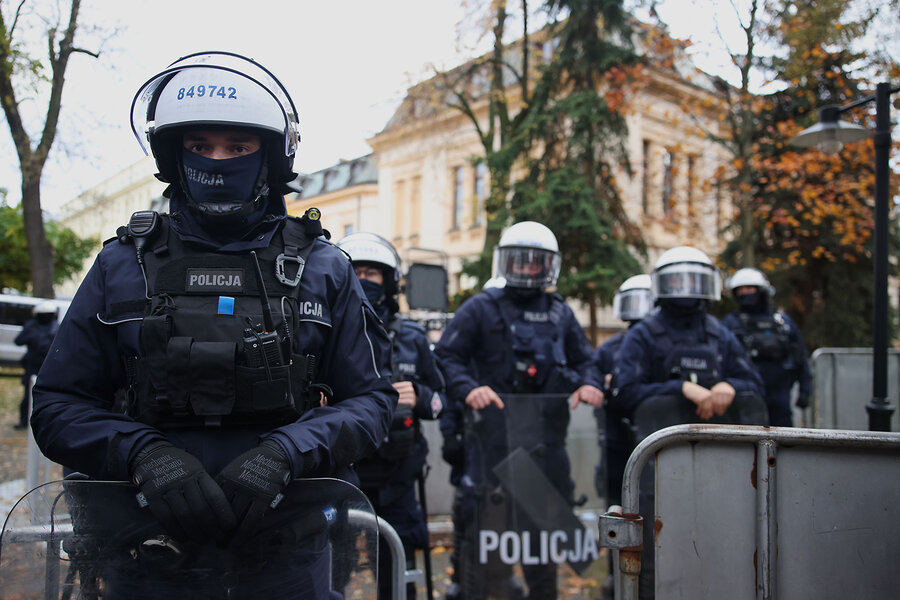
Польшийн Үндсэн хуулийн шүүхийн бүрэлдэхүүний төлөөх тэмцэл улс төрийн зөрчлийг хурцатгаж, АНУ болон бусад оронд ч тулгарч буй асуудлыг хөндлөө.
АНУ-ын завсрын сонгуулиар Ардчилсан нам ялалт байгуулснаар Трампын засаг захиргааны ардчилсан зарчим зөрчсөн, эсвэл Үндсэн хуульд нийцээгүй гэж үздэг шийдвэрүүдийг сөрөх боломжтой болж байна. Гэвч ардчиллыг сэргээх оролдлого улс төрийн өшөө авалтаас хаана зааглагдах вэ гэсэн асуулт Польшид үндсэн хуулийн хямрал үүсгэжээ. Энэ асуудал Серби, Унгар зэрэг улсад ч хамаатай болж байна.
Европын холбооны дэмжлэгтэй Польшийн эрх баригчид Үндсэн хуулийн шүүхийг өмнөх хэт барууны засгийн газар хууль бусаар өөрчилсөн гэж үздэг. 2015 онд тухайн үеийн эрх баригч Хууль ба шударга ёс нам (PiS) тогтсон журмыг зөрчин өөрийн гурван шүүгчийг томилсон бол 2023 онд эрх мэдлээ алдсаны дараа холбоотон ерөнхийлөгчөөрөө дамжуулан шинэ таван шүүгчийг албан тушаалдаа ороход саад хийжээ. Европын Холбооны Шүүх эдгээр алхмыг хууль бус гэж үзсэн ч дараагийн сонгууль ирэх онд болох тул Ерөнхий сайд Дональд Тускийн засгийн газарт шийдвэрлэх дарамт нэмэгдсэн байна.
Аравдугаар сарын 30-нд ерөнхийлөгч гадаадад байх үеэр шүүхийн тэргүүн шүүгчийг хууль зүйн маргаантай зохицуулалт ашиглан түр чөлөөлж, шинэ шүүгчдийг бүрэлдэхүүнд оруулжээ. Харин өмнөх тэргүүн шүүгч тэдний эрх мэдлийг хүлээн зөвшөөрөхгүй байгаа тул аль бүрэлдэхүүнийг хууль ёсны гэж үзэх нь тодорхойгүй байна. Эсэргүүцлийн үеэр хүмүүс хамгаалалтын хашааг цоолж, огцруулсан тэргүүн шүүгчийг шүүхэд оруулан, тэрээр үйл явдлыг “төрийн эргэлт” хэмээн нэрлэсэн удирдлагуудтай нүүр тулжээ.
Шинжээчдийн үзэж буйгаар, өмнөх засаг захиргаа хууль ёсны мэт хэлбэрээр байгууллагуудын хяналтыг тогтоосон нөхцөлд засах арга зам тодорхой бус байдаг бөгөөд зарим нь тогтсон журмаас ухрах шаардлага гарч болзошгүй гэж үзэж байна. Гэхдээ шүүхийн шинэ бүрэлдэхүүн улс төрийн бүх талын итгэлийг олж, бие даан ажиллаж чадсан тохиолдолд л хямралаас гарах боломжтой гэж тэд анхааруулжээ. Улс төрийн туйлшрал үргэлжилбэл шүүхийн байгууллагын эрх мэдэл засаг солигдох бүрд савлах эрсдэлтэй гэж шинжээчид дүгнэсэн байна.
Дэлгэрэнгүйг эх сурвалжаас харах
↓Эх сурвалжийг нээх ↓
Berlin
|
Nov. 09, 2026, 4:13 p.m. ET
|
4 min read
Before the first votes were counted in America’s midterm elections last week, Poland sent the Democrats a warning sign.
With their sweeping victory, the Democrats will soon be in a position to push back on what many liberals see as the Trump administration’s undemocratic or even unconstitutional moves. But where is the line between restoring democracy and political revenge?
That question has tipped Poland into a constitutional crisis.
Poland’s ruling party – backed by the European Union – claims that the country’s constitutional court was illegally packed by the previous far-right government. After repeated failed efforts to address the situation, allies of the government recently seized control of the court with a police escort. Now, two different sets of judges are claiming legitimacy, with protesters at one point cutting a hole through a perimeter fence so the deposed chief justice could enterthe court and confront the leaders of what he called a “coup.”
The episode holds lessons for the United States, as well as Serbia and Hungary – all of which have recently seen voters reject far-right governments accused of corruption and antidemocratic activity. Efforts claiming to restore democracy are a tricky business and, if not done carefully, risk throwing the legitimacy of embattled institutions into further doubt.
“At some point, you enter a gray zone,” says Kai-Olaf Lang of the German Institute for International and Security Affairs in Berlin. “There’s an inherent tension: Those who want to restore rule of law can encounter obstacles. What do they do?”
Beata Zawrzel/AP
Bogdan Święczkowski (center), the suspended president of the Polish Constitutional Tribunal, attends a protest in front of the constitutional court in Warsaw, Oct. 31, 2026.
In Poland’s case, that came down to the question of how to get legally appointed judges onto the constitutional court. In 2015, the far-right Law and Justice Party (known by its Polish acronym, PiS) overrode the traditional rules to put three of its own judges on the court. Since it lost power in 2023, PiS has relied on the president, an ally, to block five new judges from taking seats on the court.
The European Court of Justice found these moves illegal, but they put the prime minister, Donald Tusk, in a bind. With new elections next year, pressure to do something was growing. “It depends on whether you want to get it done or do it legally,” says Mikołaj Cześnik of the Polish National Election Study at SWPS University in Warsaw. “That’s not synonymous.”
The solution was to wait until the president was out of the country Oct. 30 and then temporarily depose the chief justice of the constitutional court through something of a legal loophole. The new judges are now impaneled, but the chief justice denies their legitimacy, meaning no one is quite sure which set of judges is the official one.
In some ways, Poland is simply the first to walk into a new legal buzz saw – one that the U.S., Serbia, and Hungary now also face. Recent far-right governments haven’t acted like antidemocratic regimes of the past, such as the Peróns in Argentina or the Cold War communists of Central Europe.
“Those earlier regimes broke openly with legality, whereas PiS and [former Hungarian Prime Minister Viktor] Orbán captured institutions through formally valid means, such as statutes, appointments, and constitutional amendments,” says Maria Victoria Inostroza, a legal scholar at the University of Bologna, in an email interview.
Aleksandra Szmigiel/Reuters
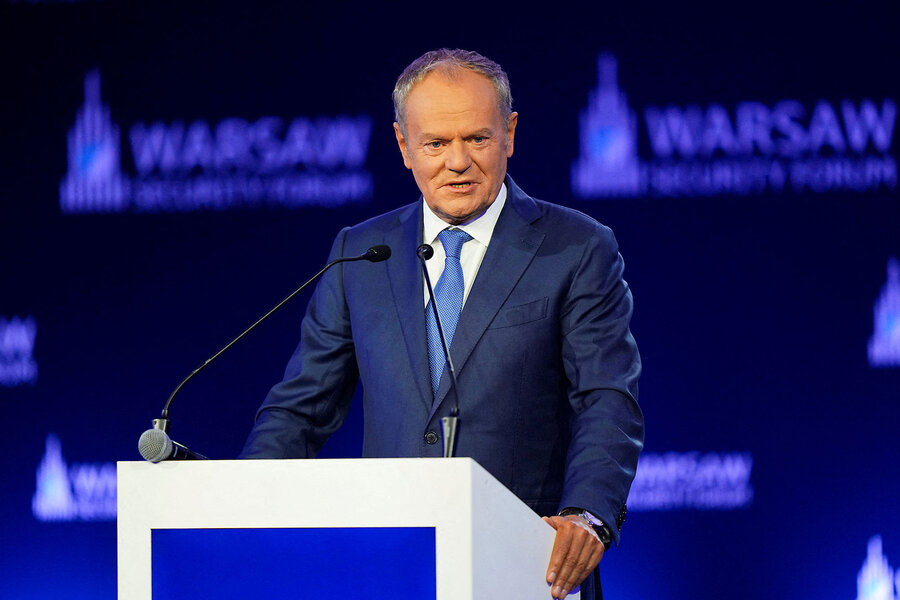
Polish Prime Minister Donald Tusk speaks during the Warsaw Security Forum in Warsaw, Oct. 12, 2026.
That means the potential remedies are less clear.
For example, the Helsinki Foundation for Human Rights – which supports judicial reform in Poland – saw recent events as an “extremely harmful” escalation of the political conflict. Ms. Inostroza is not sure there was a better option. When the actions of a previous government essentially capture an institution, “some departure from the inherited rules may be unavoidable,” she says.
She and other analysts agree, however, that success won’t come solely from brazen partisan power plays. It will come only when the institution is once again accepted across party lines.
The next few months could be crucial. The old tribunal never ruled against the PiS government, which was “very suspicious,” says Dr. Cześnik of the Polish National Election Study. But if the new one “acts independently, maybe a majority of society will be on their side and help Tusk win the election.”
Deepen your worldview
with Monitor Highlights.
Politics with respect
Get political stories with respectful analysis.
There‘s a world of new ideas in every
Books newsletter.
There‘s more to life, enrich yours with
Culture & Learning weekly.
Follow humanity‘s discoveries with
Science & Nature stories in your inbox.
Gain a spiritual perspective
from the stories in your inbox.
Want to understand the deeper impact of critical events? Learn the Monitor‘s insight.
Already a subscriber?Log in to hide ads.
Ultimately, Poland’s conundrum mirrors America’s – how to deal with a deeply polarized political environment. “As long as you have polarization, you have the risk of swings in the judiciary,” says Dr. Lang of the German Institute for International and Security Affairs. “This is a moment for consensus, but the logic of the pendulum has been reinforced.”
At some point, voters and politicians will need to insist on norms of behavior that go beyond partisan power. Laws can change the political momentum, but only a shared expectation can make rules binding, says Ms. Inostroza. “The real test is whether you are rebuilding a check that can also bind you.”

