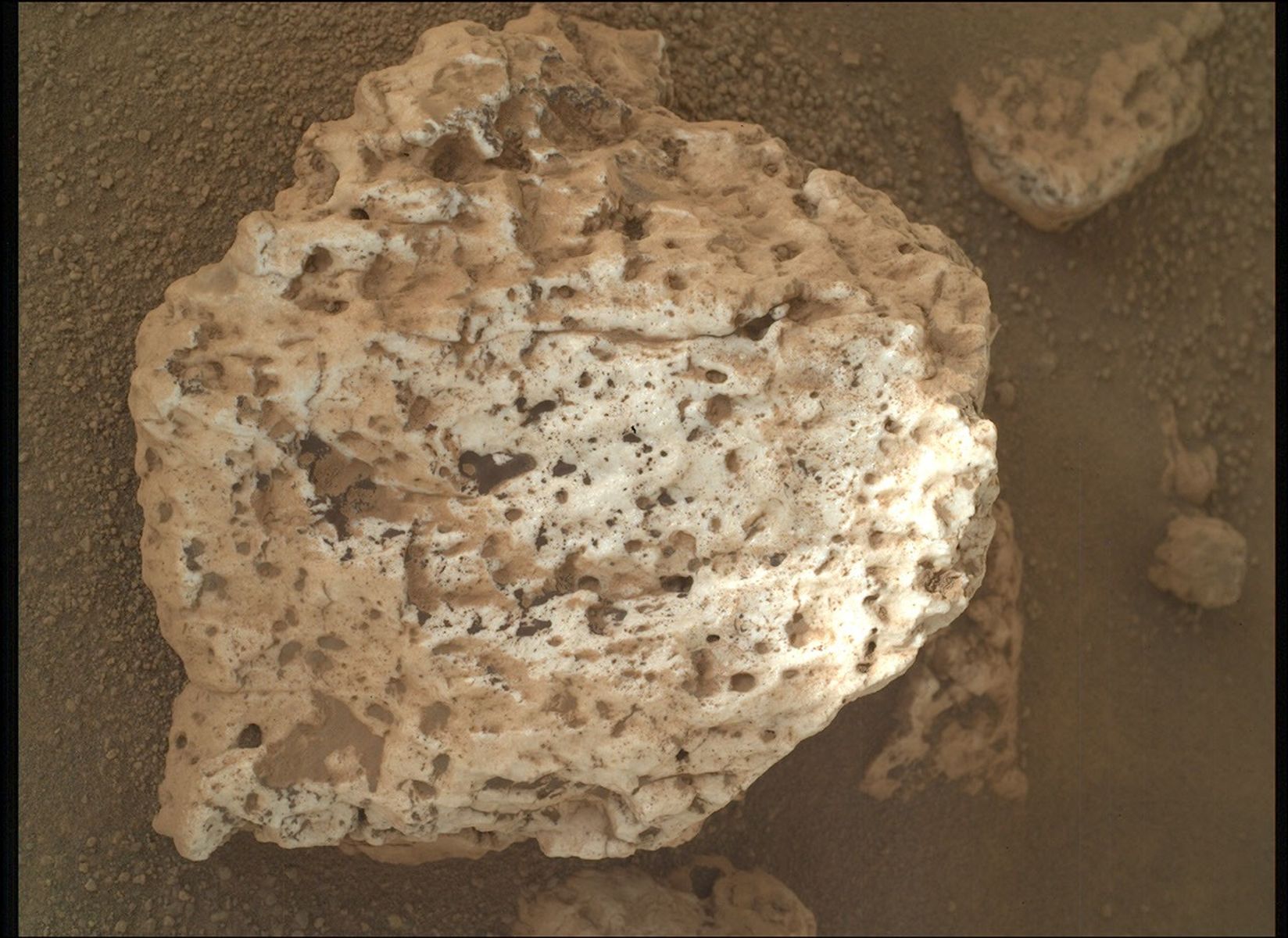
NASA-гийн Perseverance хөлөг Ангараг гарагийн хөрсөн дэх корунд эрдэсийн талстыг илрүүлсэн нь тус гарагийн геологийн өнгөрсөн үеийн талаар шинэ мэдээлэл өгч байна.
Ангараг гараг дээр судалгаа хийж буй Perseverance хөлөг нь PIXL болон SuperCam зэрэг дэвшилтэт багаж хэрэгслийн тусламжтайгаар эрдэс бодисын найрлагыг нарийвчлан судалж байна. SuperCam багаж нь лазерын тусламжтайгаар Раманы спектроскопийн судалгаа хийх явцдаа цаг хугацааны хувьд ялгаатай люминесценцийг (гэрэлтэх үзэгдэл) хэмжих боломжтой юм. Хоёр жилийн өмнө эрдэмтэд цайвар өнгийн чулуулгийг лазераар буудахад 692.7 болон 694.1 нанометрийн долгионы урттай гэрэлтэлтийн оргил цэгүүдийг илрүүлжээ.
Энэхүү гэрэлтэлт нь корунд эрдэсийн бүтцэд агуулагдах хром атомын атом хоорондын шилжилтийн үр дүнд үүсдэг байна. Хром агуулсан корунд нь эрдэнийн чулууны хувьд бадмаараг (ruby) гэж нэрлэгддэг. Энэхүү судалгааны үр дүнг Анн Оллила тэргүүтэй багийнхан Geophysical Research Letters сэтгүүлд оны эхээр нийтлүүлжээ.
Корунд нь ихэвчлэн метаморф буюу хувирмал чулуулгийн бүрэлдэхүүнд байдаг бөгөөд тектоник хавтангийн хөдөлгөөн байхгүй Ангараг гараг дээр ийм эрдэс олдох нь ер бусын үзэгдэл юм. Гэсэн хэдий ч асар том солир болон астероидын мөргөлдөөнөөс үүдэлтэй удаан хугацааны халалт нь тухайн бүс нутагт метаморф өөрчлөлтийг үүсгэсэн байх магадлалтай.
Jezero тогооны ойролцоох эртний бүс нутагт явагдаж буй энэхүү судалгаа нь гарагийн геологийн түүхийг ойлгоход чухал ач холбогдолтой юм. Хэдийгээр одоогоор цуглуулах боломжтой бадмаараг чулуу олдоогүй ч, илэрсэн корунд талстууд нь Ангараг гарагийн гадаргуу дээрх нөлөөллийн үр дагаврыг судлах шинэ боломжийг нээж байна. Эрдэмтэд цаашид ийм төрлийн люминесценцийн ажиглалтыг илүү ойр ойрхон хийж, илүү их нотолгоо хайхаар төлөвлөж байна.
Дэлгэрэнгүйг эх сурвалжаас харах
Эх сурвалжийг нээх ↓
Written by Roger C. Wiens, SuperCam Principal Investigator for NASA’s Perseverance rover at Purdue University
Nov. 4, 2026
Exploration on Mars turns up the unexpected. Perseverance is equipped with a fantastic set of instruments for studying the rock record of this ancient planet. Both PIXL and SuperCam have great capabilities for detecting all kinds of elements. SHERLOC, SuperCam, and PIXL can detect minerals using various techniques including x-ray fluorescence, Raman, and infrared spectroscopies. As a side benefit of the way SuperCam performs its Raman spectroscopy, it can also study time-resolved luminescence. Normally luminescence occurs over a broad wavelength range (most of Earth’s commercial lighting uses luminescence in some way or another). Two years ago, the SuperCam team was startled to find strong, narrow luminescence peaks at two wavelengths of 692.7 and 694.1 nanometers when they shot a light-colored rock with the laser. This luminescence comes from delayed atomic transitions in chromium atoms present in a corundum mineral structure. SuperCam can time the delay of the atomic transitions via the resulting photons, and so we could verify that this emission came from chromium in corundum. The results were published in Geophysical Research Letters by a team led by Ann Ollila earlier this year, so you can read all about it. The gemstone version of chromium-containing corundum is ruby. Prior to installing SuperCam on Perseverance, we placed a ruby in the laser beam and watched the entire room pulse a brilliant red as SuperCam’s laser beam hit the gemstone; it was extremely bright.
While we haven’t found collectable rubies on Mars yet, the little corundum crystals are helping us learn more about Mars’ past. Corundum is a metamorphic and pegmatitic mineral which we would not expect to find on Mars, a planet that lacks plate tectonics. However, large meteor and asteroid impacts can create local metamorphism due to long-term heating from the impact. Because we are in a very ancient terrain near the rim of Jezero crater, we can expect some evidence of localized metamorphism. As the first mission in such terrain, we are learning new things. Earlier in the mission we tried this technique only rarely; lately we have carried out the time-resolved luminescence observations frequently on light-toned rocks to look for more evidence of impact effects. It’s great to have this unexpected tool on board as we delve further into Mars’ deep past.

