
Австралийн хамгийн том агаарын тээвэрлэгч технологи, хиймэл оюуны хэрэглээ нэмэгдэж буйтай холбогдуулан бүтцийн өөрчлөлт хийхээр төлөвлөжээ.
Кантас компанийн удирдлага 850 орчим ажлын байр өөрчлөлтөд өртөхийг ажилтнууддаа мэдэгдсэн байна. Үйлчилгээний ажлын ихэнхийг Accenture компанийн Энэтхэг дэх багт шилжүүлэх бөгөөд зарим ажил Австралид үлдэнэ; эхний өөрчлөлтүүд 2027 оны дунд үе гэхэд хэрэгжинэ. Компани ажилтнууд болон үйлдвэрчний эвлэлүүдтэй зөвлөлдөж, боломжтой тохиолдолд ажилтнуудыг өөр албан тушаалд шилжүүлэхээ мэдэгджээ.
Гүйцэтгэх захирал Ванесса Хадсоны хэлснээр, технологи, хиймэл оюуны өөрчлөлтөд хурдтай дасан зохицох шаардлагатай аж. Кантас жил бүр технологид 514 сая фунт стерлингээс давсан хөрөнгө зарцуулдаг ч олон арван жилийн өмнөх 1,000 гаруй хуучин программ хоорондоо уялдаагүй хэвээр байгааг тэр дурджээ. Зарим байгууллагын үйлчилгээг эхний ээлжид Accenture-д шилжүүлж, цаашид автоматжуулалт болон хиймэл оюуны оролцоог нэмэгдүүлэхээр төлөвлөж байна.
Үйлдвэрчний эвлэлүүд ажлын байрыг гадаадад шилжүүлэхээр шийдсэнийг шүүмжилж, технологийн шинэчлэлийн зардлыг олон жил ажилласан хүмүүс үүрэх ёсгүй гэж мэдэгдэв. Австралийн Үйлчилгээний ажилтнуудын эвлэл мөн Кантас өмнө нь ажлын байрыг гадаадад шилжүүлэх төлөвлөгөөгүй гэж хэлж байсан хэмээн тэмдэглэжээ.
Кантасын газрын хэдэн зуун ажилтан өнгөрсөн сард цалин, хөдөлмөрийн нөхцөлийг эсэргүүцэн Сидней, Мельбурн зэрэг хотын нисэх буудлуудад ажил хаясан юм. Мөн Австралийн Үндэсний банк 2,500, Canva 1,200 гаруй ажлын байрыг хамарсан өөрчлөлт зарласан бөгөөд гурван компанийн шийдвэр нийлээд 4,550 орчим ажлын байранд нөлөөлөхөөр байна. Кантас Австрали болон бусад улсад нийт 32,000 орчим ажилтантай бөгөөд түлшний үнэ өссөнтэй холбоотойгоор тийзний үнэ, нислэгийн багтаамжаа өөрчлөх талаар анхааруулжээ.
Дэлгэрэнгүйг эх сурвалжаас харах
↓Эх сурвалжийг нээх ↓
Want to bookmark your favourite articles and stories to read or reference later? Start your Independent Membership today.
Already a member?
{
experienceElement.style.display = ‘none’;
let checks = 0;
const maxChecks = 50;
const checkDrawerVisibility = setInterval(() => {
const drawer = document.querySelector(‘.pn-drawer–login, .pn-drawer, #login-drawer, .login-drawer-container, [class*=”login-drawer”]’);
const drawerCloseBtn = document.querySelector(‘#drawer > div > button’);
const isDrawerVisible =
(drawer &&
(drawer.offsetParent !== null ||
drawer.classList.contains(‘is-open’) ||
window.getComputedStyle(drawer).display !== ‘none’)) ||
drawerCloseBtn;
checks++;
if (isDrawerVisible) {
clearInterval(checkDrawerVisibility);
const monitorClosure = setInterval(() => {
const drawerStillHere = document.querySelector(
‘.pn-drawer–login, .pn-drawer, #login-drawer, .login-drawer-container, [class*=”login-drawer”]’
);
const innerContent = document.querySelector(‘#drawer > div’);
const isVisible =
(drawerStillHere &&
(drawerStillHere.offsetParent !== null ||
drawerStillHere.classList.contains(‘is-open’) ||
window.getComputedStyle(drawerStillHere).display !== ‘none’)) ||
innerContent;
if (!isVisible) {
clearInterval(monitorClosure);
experienceElement.style.display = ‘flex’;
}
}, 500);
if (drawerCloseBtn) {
drawerCloseBtn.addEventListener(
‘click’,
() => {
setTimeout(() => {
experienceElement.style.display = ‘flex’;
}, 100);
},
{ once: true }
);
}
} else if (checks >= maxChecks) {
clearInterval(checkDrawerVisibility);
experienceElement.style.display = ‘flex’;
}
}, 200);
};
{
document.documentElement.classList.add(‘mos-bookmark-open’);
const el = document.querySelector(‘.bookmark-experience’);
if (el) el.style.display = ‘flex’;
document.cookie = ‘mos-plan-select=; Max-Age=0; path=/; expires=Thu, 01 Jan 1970 00:00:00 UTC;’;
el?.querySelector(‘.subscribe-link’)?.addEventListener(‘click’, (e) => {
e.preventDefault();
document.cookie = ‘mos-plan-select=; Max-Age=0; path=/; expires=Thu, 01 Jan 1970 00:00:00 UTC;’;
setTimeout(() => {
window.location.href = “https://www.independent.co.uk/subscribe/app?regSourceMethod=Bookmarks”;
}, 500);
}, { once: true });
el?.querySelector(‘.close-btn’)?.addEventListener(‘click’, () => {
document.documentElement.classList.remove(‘mos-bookmark-open’);
}, { once: true });
});
]]>
Australia’s largest airline, Qantas, plans to cut about 850 corporate jobs and outsource much of the work to India.
“This is hard news for some and I’m sorry for the uncertainty it brings,” chief executive Vanessa Hudson said in an email to staff on Tuesday.
The first changes are expected to take effect by mid-2027. The work is being transferred mostly to Accenture’s teams in India and some in Australia, according to reports.
cookie.trim() === ‘__DEBUG__=true’)) { console.log(‘Ad logs: “mpu1”, injectedAtParagraph: 3’); }]]>
The airline claimed that it would consult employees and unions and try to redeploy affected staffers to other positions where possible.
Ms Hudson said the airline needed to respond to rapid technological developments, especially the growing use of AI.
“The scale and speed of change in technology and AI is something none of us have seen in our lifetime,” she said.
cookie.trim() === ‘__DEBUG__=true’)) { console.log(‘Ad logs: “taboola-carousel-thumbnails”, injectedAtParagraph: 6’); }]]>
“It is changing what our customers expect from us and what you need from the tools you use every day, and leading businesses around the world, in aviation and beyond and moving quickly. Standing still isn’t an option for us.”
Qantas spent more than £514m a year on technology, she said.
“Like every airline, we run on technology built up over decades for a different era, including more than 1,000 legacy applications that were never designed to work together,” she said.
cookie.trim() === ‘__DEBUG__=true’)) { console.log(‘Ad logs: “mpu2”, injectedAtParagraph: 8’); }]]>
The airline said that it would initially transfer some corporate services to Accenture, with automation and AI expected to play a greater role in those operations over time.
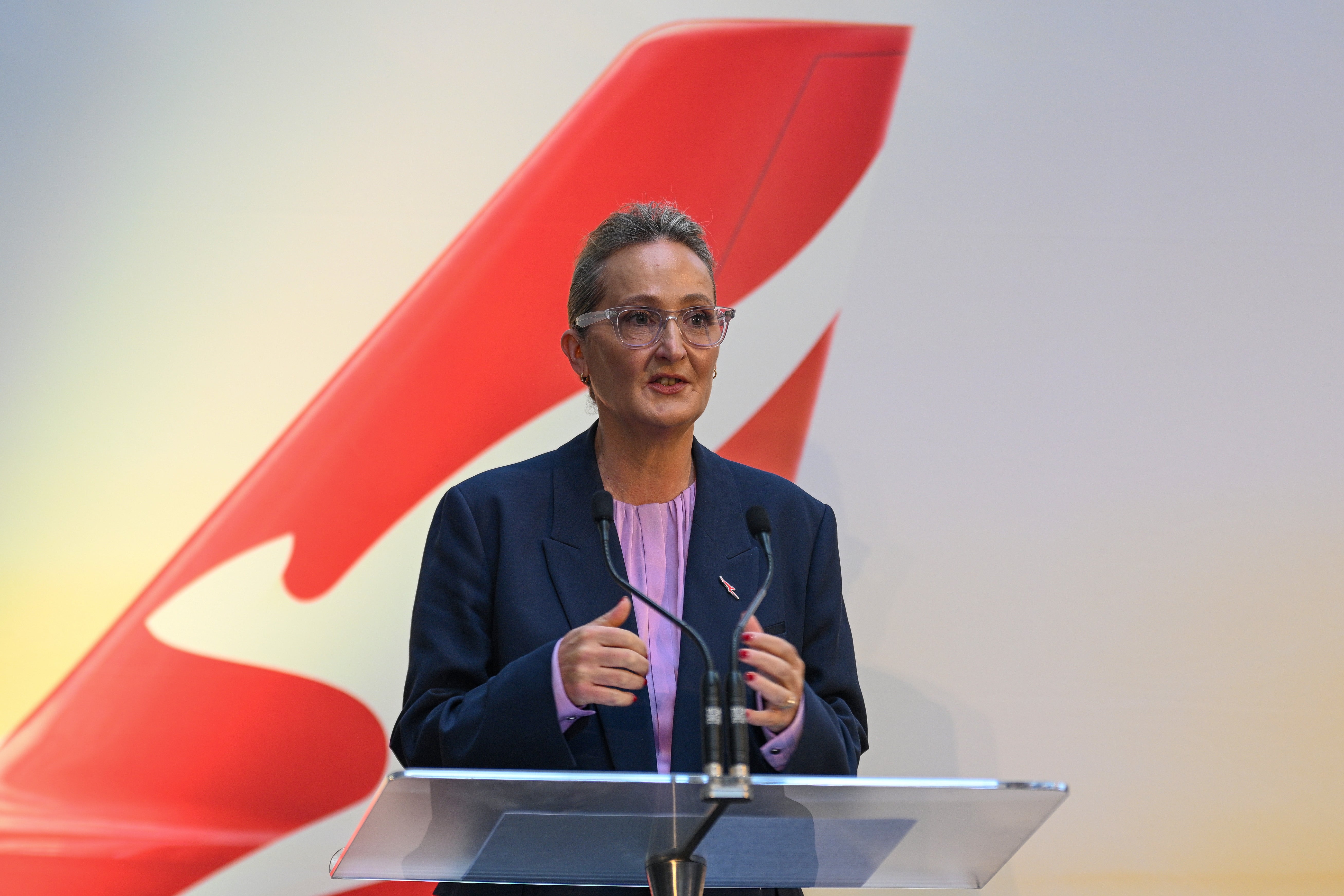
“While there are important reasons behind today’s news, I know that does not make the impact on our people any easier,” Ms Hudson said. “We expect around 850 roles to be affected over the coming years, with the first changes expected to be in place by mid-2027.”
cookie.trim() === ‘__DEBUG__=true’)) { console.log(‘Ad logs: “mpu3”, injectedAtParagraph: 10’); }]]>
The announcement drew criticism from unions, which questioned the decision to move Australian jobs overseas. The Australian Services Union said that Qantas had previously suggested no plan to offshore jobs.
“AI is having a huge impact on workers across the country, but the cost of technology change should not be borne by the workers who have kept the airline running for years,” assistant national secretary of the union, Scott Cowen, said. “Sending more jobs overseas is not in the spirit of Australia.”
The airline’s announcement followed industrial action by hundreds of Qantas ground workers who staged walkouts at major airports like Sydney, Melbourne, Adelaide, Brisbane and Perth last month.
The workers were protesting over pay and working conditions, saying their jobs had become “scraps of poorly paid, unsafe work”.
The strike involved staff responsible for aircraft servicing, maintenance and passenger support, rather than pilots or cabin crew. Most were employed under Qantas’s freight operations, so the walkouts had limited impact on passenger flights.
“We thought Qantas reached rock bottom when it illegally outsourced thousands of workers and sold customers tickets to cancelled flights,” said Transport Workers’ Union of Australian secretary Michael Kaine. “But this airline continues to find new ways to degrade the spirit of Australia beyond recognition, pushing priceless experience out of the door to pocket profits.”
The Qantas cuts comes amid a wave of job losses and corporate reorganisations in Australia.
National Australia Bank has announced plans affecting 2,500 jobs while the design company Canva has flagged changes involving more than 1,200 roles. Together, the three companies have targeted 4,550 jobs for cuts, relocation, or restructuring in recent weeks.
Qantas employs around 32,000 people in Australia and overseas. Its announcement also comes as it faces higher fuel prices due to the US-Israeli war on Iran, prompting it to warn of fare increases, and adjustments to flight capacity.
“This is a gut-wrenching blow to workers,” Australian Services Union secretary Angus McFarland said.
“They deserve investment in their skills and their futures, not an email just before Christmas that makes them worried sick about whether they will have a job in the new year.”

