Сансрын металлын олборлолт нь дэлхийн зах зээл дэх цагаан алтны бүлгийн металлын үнийг бууруулж, ногоон технологийн шилжилтийг хурдасгах боломжтойг эрдэмтэд судалжээ.
MIT-ийн судлаачид Роберт Нахтриб, Стивен Смит нар астероидоос олборлосон металлыг дэлхийн зах зээлд нийлүүлэх нь үнийн тогтолцоонд хэрхэн нөлөөлөхийг компьютерын загварчлалаар судалсан байна. Одоогийн байдлаар цагаан алт, паллади зэрэг металлын 80 гаруй хувийг Орос, Өмнөд Африкийн гүний уурхайнуудаас олборлодог нь өндөр зардалтай бөгөөд байгаль орчинд сөрөг нөлөөтэй юм. Харин металлын агууламж өндөртэй M-төрлийн астероидууд нь дэлхийн уурхайнуудаас олон дахин илүү нөөцтэй тул салбарын бүтцийг өөрчлөх боломжтой гэж үзжээ.
Калифорнид төвтэй AstroForge стартап компани нь сансрын хөлгүүдийг ашиглан астероидын гадаргууг лазераар ууршуулан, үнэт металлыг ялган авч дэлхий рүү буцаах технологийг хөгжүүлж байна. Судалгаагаар, сансрын металл зах зээлд орж ирсэн эхний үед компаниуд өндөр ашиг олох “сансрын алтны халуурал” үүсэх төлөвтэй байна. Гэвч нийлүүлэлт нэмэгдэхийн хэрээр зах зээлийн тэнцвэр алдагдаж, дэлхийн уурхайнуудын үнэ өрсөлдөх чадваргүй болж, үнэ 75 хувиас илүү буурах магадлалтай гэж судлаачид дүгнэжээ.
Энэхүү өөрчлөлт нь уламжлалт уул уурхайн салбарт хүндрэлтэй боловч дэлхий дахинд хямд түүхий эд, улмаар устөрөгчийн түлшний эс үүсгүүр зэрэг ногоон технологийн үнийг бууруулах ач холбогдолтой юм. Хэдийгээр AstroForge компани хөгжүүлэлтийн явцад зарим бүтэлгүйтэлтэй тулгарч байгаа ч сансрын олборлолтын технологи нь ирээдүйд байгаль орчинд ээлтэй, эдийн засгийн хувьд үр ашигтай салбар болох төлөвтэй байна. Ийм үйл явц нь ойрын хорин жилийн хугацаанд хэрэгжих боломжтойг судалгаа харуулж байна.
Дэлгэрэнгүйг эх сурвалжаас харах
Эх сурвалжийг нээх ↓
Science fiction authors have been dreaming of robotic spacecraft harvesting fortunes from asteroids for decades. Humanity is slowly getting closer to that reality. But if you ask asteroid mining skeptics, they will usually ask one specific question – what happens to the prices of all those rare materials once someone actually brings them back? A pair of system dynamicists from MIT directly tackled that question with a new paper titled Will AstroForge Collapse the PGM Market?
Platinum Group Metals, or PGMs, are absolutely critical to modern industry. Two of the most commonly used are platinum and palladium, which are critical components in everything from automotive catalytic converters (hence when there’s a raft of people stealing them) to hydrogen fuel cells. However, these materials are exceptionally hard to come by – on Earth at least. More than 80% of the known planetary reserves are locked in deep-shaft mines located in South Africa and Russia.
Their absurd prices (tens of millions of dollars a ton) are based at least in part on how difficult they are to extract. Even at the Russian and South African mines, they are only able to glean a few grams of material per ton of rock. In the process, they require ventilation, cooling, and heavy machinery, as well as actual laborers down deep mine shafts. That sounds exactly like the kind of industry that is ripe for disruption – at least if there is another source of the raw material.
Fraser talks about whether we will mine asteroids.
Luckily, there is. Metallic (M-type) asteroids are the leftover metallic cores of protoplanets, and carry concentrations of PGMs dozens of times higher than even the richest mines on Earth. A single kilometer-wide space rock of this type holds more PGMs than humans have extracted throughout all recorded history. No wonder these particular materials have been the focus on asteroid mining efforts for decades.
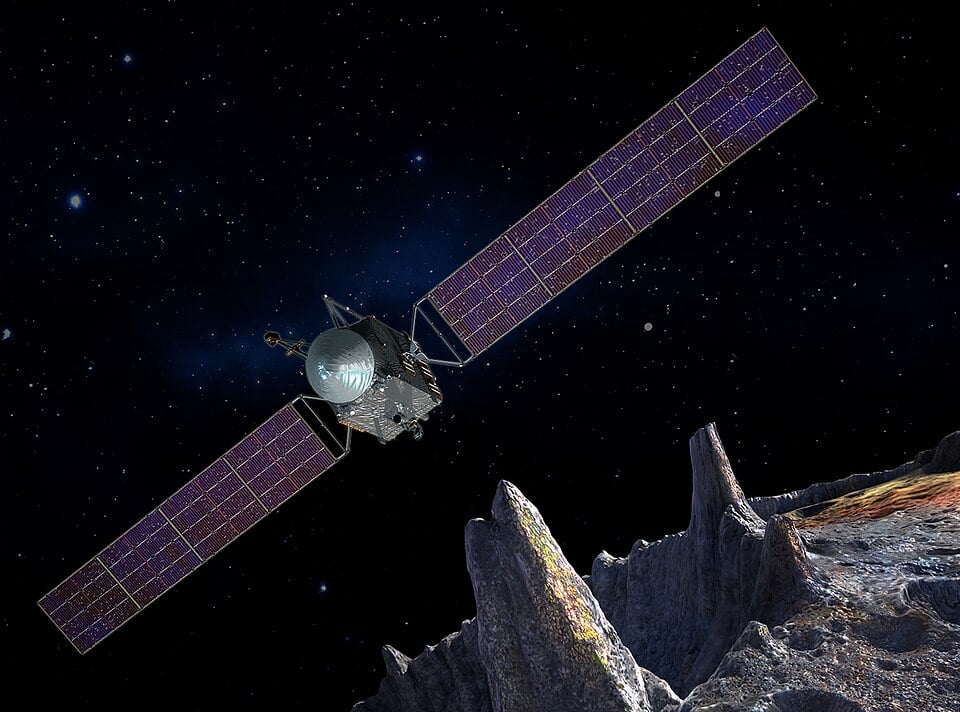
AstroForge, a start-up based in California, is one of a second-round of asteroid mining start-ups that are focusing specifically on returning PGMs to Earth’s market. Instead of multi-billion dollar asteroid mining craft, they specialize in small, agile probes that cost only a few million dollars each to launch. The value of what they return, though, is much higher.
Their architecture involves latching on to the metallic asteroid using magnets. High power lasers then vaporize the asteroid’s crust, and an onboard refinery separates the PGM gas from the less valuable nickel and iron that makes up the majority of the asteroid’s bulk. After the PGMs have been refined, they are blasted back to Earth in a heat-shielded return capsule, ready to be brought to market on Earth itself. That way, the company only ships high value material rather than processing minerals that don’t have as much value back down on Earth.
Isaac Arthur is much more bullish on our eventual ability to mine asteroids, as he discusses in this video. Credit – Isaac Arthur YouTube Channel
Understanding how this would affect the terrestrial market is the focus of the paper, and researchers Robert Nachtrieb and Steven Smith built a dynamic computer simulation tracking what they believe will happen to the PGM market over a 20 year period following the first successful return of a chunk of material from an asteroid. According to their model, there will be a dramatic, two-phase transition.
The first phase can be thought of as a “space gold rush”. The prices for PGMs have been held artificially high by lack of supply – a classic problem in traditional economics. Once the supplied amount changes – such as when new sources come online, the price begins to fall as the supply line of the classic “X” graph moves to the right. But it doesn’t happen overnight. At the start, space-based metals will be able to be sold at normal prices, allowing the asteroid mining companies to enjoy astronomical profit margins.
Those profit margins will, at least in theory, drive plenty of additional private investment, which in turn will be used to expand the production capacity of the space-based options. According to the paper, this will drive a cycle where industry profits will skyrocket to eight times what they currently are during this first phase. That’s enough to make whoever successfully send material back first fabulously wealthy.
But eventually, the second act will begin – what the authors describe as equilibrium collapse. Global supply of PGMs will far exceed original terrestrial amounts, and the market prices will start falling dramatically. High cost mines, such as those operating in North America, will be the first casualties. The Russian and South African behemoths, though, will not be far behind, as they will be unable to maintain a profit with the lower price caused by the increased supply. Over the course of fifteen years, terrestrial mining supplies will be completely replaced by space-mined ones, and market prices will drop by over 75%.
That might sound like terrible news for the terrestrial mining industry – and to put it bluntly, it is. But it’s great news for everyone else. Cheaper PGMs mean less expensive hydrogen electrolyzers, and therefore a less expensive transition to the “green economy” for the rest of the world. In addition, space-based mining does not have all the acid mine drainage, arsenic pollution, and hazardous labor in deep tunnels that are required to get PGMs out of the ground on Earth.
Which all sounds like a much better future for humanity more generally. The problem is the engineering challenges to get to that point. Astroforge has had a few high-profile failures during its development cycle so far. But that’s the case with any fast-moving “new space” company. It is undeniably getting closer to making this future world of green tech provided by space rocks a reality. And, if they do manage to do so, everyone involved should become extremely wealthy in a span of less than two decades.
Learn More:
R. T. Nachtriev & S. J. Smith – Will AstroForge Collapse the PGM Market?

