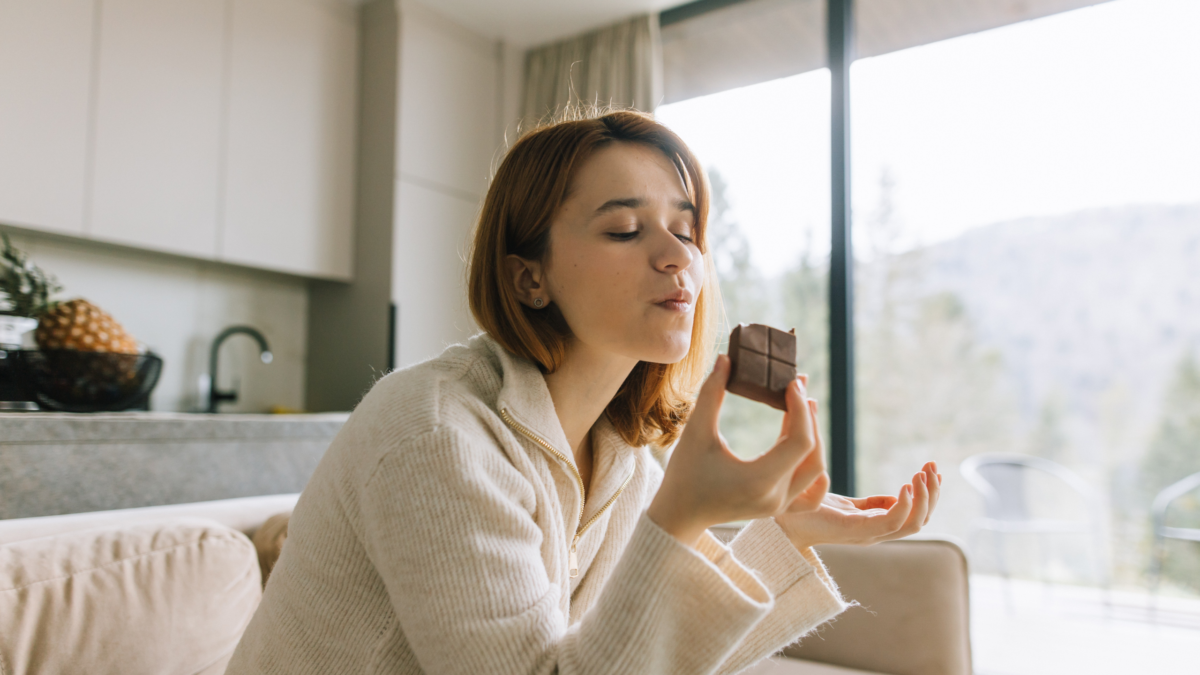
Туркийн 607 эмэгтэйг хамруулсан судалгаагаар ийм хүнсийг түлхүү хэрэглэдэг хүмүүс сарын тэмдгийн өмнөх хам шинжийн шинж тэмдгээ илүү хүнд гэж мэдээлжээ.
Судлаачид 18–30 насны эмэгтэйчүүдээс цахим асуулгаар сарын тэмдэг ирэхээс өмнөх долоо хоногт илэрсэн өвдөлт, нойр болон хоолны дуршлын өөрчлөлт зэрэг шинж тэмдгийг асуужээ. Мөн хэт боловсруулсан хүнсний хэрэглээ, Газар дундын тэнгисийн хоолны дэглэмийг хэр дагадаг, өлсөх болон идэх хүсэлд хэрхэн хариу үйлдэл үзүүлдгийг тодруулсан байна.
Нас, сарын тэмдгийн мөчлөгийн тогтмол байдал, ерөнхий хооллолт болон идэх зуршлыг тооцсон ч хэт боловсруулсан хүнсний хэрэглээ ба шинж тэмдгийн хүндрэлийн холбоо хэвээр байжээ. Гэхдээ уг хамаарал харьцангуй бага байсан бөгөөд Газар дундын тэнгисийн хоолны дэглэмийг илүү дагах нь шинж тэмдгийн хүндтэй тодорхой холбоогүй байв. Идэх хүсэлд шууд автахгүй байх, идсэн зүйлдээ өөрийгөө буруутгахгүй байх нь харьцангуй хөнгөн шинж тэмдэгтэй холбоотой байжээ.
Хэт боловсруулсан хүнсний хэрэглээний асуумж 0–11 оноотой байсан бөгөөд оноо нэгээр нэмэгдэхэд шинж тэмдгийн дундаж оноо 44–220-ын шатлалаар ойролцоогоор нэгээр өссөн байна. Судлаач Зия Эрокай Метин хооллолтоос гадна дааврын өөрчлөлт, стресс, нойр зэрэг олон хүчин зүйл сарын тэмдгийн өмнөх биеийн байдалд нөлөөлж болохыг онцолжээ. Судалгаанд хооллолт, шинж тэмдгийг нэгэн зэрэг асуусан тул хүнсний хэрэглээ ихэссэнээс шинж тэмдэг хүндэрсэн үү, эсвэл шинж тэмдэг өөрчлөгдсөнөөс хооллолт өөрчлөгдсөн үү гэдгийг тогтоох боломжгүй байв; мэдээлэл нь оролцогчдын дурсамжид тулгуурласан бөгөөд таван хүн тутмын дөрөв орчим нь их, дээд сургуулийн боловсролтой байсан нь үр дүнг нийт хүн амд хамааруулахад хязгаар болжээ. Судлаачид цаашид эмэгтэйчүүдийг хэд хэдэн мөчлөгийн турш өдөр бүр ажиглаж, хооллолт, идэх хүсэл, биеийн байдлыг бүртгэх, улмаар хоолны дэглэм өөрчлөх нь шинж тэмдгийг бууруулдаг эсэхийг турших шаардлагатай гэжээ. Судалгаа Scientific Reports сэтгүүлд нийтлэгдсэн.
Дэлгэрэнгүйг эх сурвалжаас харах
↓Эх сурвалжийг нээх ↓
A few days before your period, the chocolate in the cupboard might be harder to forget. Food cravings can be part of premenstrual syndrome, or PMS, along with bloating, fatigue, and irritability.
To understand how eating fits into that picture, researchers looked at both what women ate and how they responded when a craving struck.
In a study of 607 women in Türkiye, women who reported eating ultra-processed foods, such as sugary soft drinks and some packaged snacks, more often tended to report more severe PMS symptoms.
But it wasn’t just what they ate. Two eating habits also had stronger links to symptom severity: women who were less likely to act on an urge to eat right away; or to judge themselves for what they ate tended to report milder symptoms.
The researchers recruited women ages 18 to 30 through university networks, social media, and referrals from other participants.
In an online survey, the women rated symptoms they remembered from the week before their period, including pain and changes in sleep and appetite.
They also answered questions about how often they ate ultra-processed foods, how closely they followed a Mediterranean diet, and how they responded to hunger and cravings. The Mediterranean diet emphasizes foods such as vegetables, fruit, beans, fish, and olive oil.
Looking at all three together let the researchers check whether the link with ultra-processed foods persisted after they accounted for the women’s broader diet and eating habits, as well as factors such as age and how regular their periods were. It did.
Following a Mediterranean diet more closely had no clear association with symptom severity in that analysis.
“Our findings suggest that higher ultra-processed food consumption is associated with greater PMS symptom severity, but the association was relatively small after accounting for other relevant factors,” nutrition researcher Ziya Erokay Metin of the University of Health Sciences in Ankara, Türkiye, told ScienceAlert.
For every extra point on the ultra-processed food questionnaire, which was scored from 0 to 11, the average symptom score was about one point higher on a scale from 44 to 220. Metin said diet is one of many factors that may help explain how women feel before their period. Shifting hormones, stress, and sleep matter too.
Metin used chocolate to explain the two habits linked to milder symptoms. If you’re craving chocolate, you might pause to consider whether you’re hungry or whether chocolate just sounds comforting. The researchers call that pause non-reactance.
You might still decide to eat the chocolate. In that case, Metin said, “non-judgment would mean accepting that choice without feelings of failure or guilt”.
Metin and colleagues had already looked at how the appeal of food varies across the menstrual cycle. In anearlier studypublished in theJournal of Nutritional Science, they checked in with 150 women at three stages of their cycle. At each stage, women with PMS scored higher on a measure of how strongly they were drawn to food for the pleasure of eating it, even when they weren’t physically hungry.
In the new study, women reported their eating habits and symptoms at the same time, and changes in appetite counted toward the symptom score.
The survey couldn’t tell whether women were eating ultra-processed foods more often before their symptoms worsened or whether worsening symptoms changed what they ate.
That leaves open whether cutting back on these foods would ease PMS. The findings also relied on what participants remembered, and about four in five reported university-level education, limiting how widely the results apply.
Metin said the next step would be to follow women across several cycles and ask them to record what they eat, what they crave, and how they feel each day.
“Repeated measurements would help us determine whether changes in eating patterns tend to precede increases in PMS symptoms or whether worsening symptoms are followed by changes in food choices,” Metin explained.
A trial that randomly assigns participants to different diets could then test whether changing what they eat eases their symptoms.
The research has been published inScientific Reports.
This article was fact-checked by Fiona MacDonald and edited by Fiona MacDonald. While we pride ourselves on our process, we are only human. If you spot a mistake, please let us know.

