
Замби улсын шимпанзе нарын бүлэгт анх удаа ажиглагдсан өвс чихэх зан үйл нь нийгмийн суралцах үйл явц болон амьтдын соёлын уламжлалыг судлах сонирхолтой жишээ болж байна.
Замби дахь Chimfunshi Wildlife Orphanage асрамжийн газарт приматологич Эдвин ван Лэувэн 2010 онд Жули хэмээх эм шимпанзе өвс авч чихэндээ хийгээд явж байгааг анх ажиглажээ. Уг зан үйл нь цаг хугацааны явцад тус бүлгийн бусад гишүүдэд тархсан бөгөөд Жулиг 2013 онд нас барсны дараа ч үргэлжилсээр байсан нь энэ нь шинэ үеийнхэнд өвлөгдсөн уламжлал болсныг харуулсан байна. Судлаачид 740 цагийн дүрс бичлэгт дүн шинжилгээ хийснээр энэхүү зуршил нь зөвхөн нэг бүлэгт хязгаарлагдаж байсныг тогтоожээ.
2023 онд Суданы гэгдэх өөр нэгэн бүлгийн шимпанзе нарын дунд өвс чихэндээ хийх ижил төстэй зан үйл гэнэт гарч иржээ. Эдгээр бүлэг нь хоорондоо ямар ч шууд харилцаагүй байсан ч шинэ бүлгийн ихэнх гишүүд гурван долоо хоногийн дотор ийм үйлдэл хийж эхэлсэн байна. Удалгүй 2023 оны наймдугаар сарын 27-нд Жума хэмээх эрэгчин шимпанзе өвсийг биеийнхээ доод хэсэгт хийх өөр нэгэн хувилбарыг санаачилсан нь мөн л богино хугацаанд бүлгийн бусад гишүүдэд тархжээ.
Утрехтийн их сургууль болон Дурхамын их сургуулийн судлаачдын тэмдэглэснээр, энэ нь ямар нэгэн өвчин намдаах эсвэл загатнаа арилгах зорилгогүй, зүгээр л зугаацах үеэрээ хийдэг “утга учиргүй” үйлдэл юм. Судлаачид эдгээр бүлэгт ажилладаг асран хамгаалагчид заримдаа өөрсдөө өвс ашиглан чихээ цэвэрлэдэг байсныг анзаарсан бөгөөд шимпанзе нар хүмүүсийн энэ үйлдлийг дуурайсан байх магадлалтай гэж үзэж байна. Энэхүү судалгааны үр дүн Behaviour сэтгүүлд хэвлэгдсэн бөгөөд амьтад ч бас хүмүүсийн нэгэн адил нийгмийн дуурайлаар дамжуулан шинэ зуршил тогтоодог болохыг баталж байна.
Дэлгэрэнгүйг эх сурвалжаас харах
↓Эх сурвалжийг нээх ↓
At a sanctuary in Zambia, a female chimpanzee picked up a stiff blade of grass and pushed it into her ear. Then she left it there. She groomed, played and rested with the grass still in place, repeating the odd routine over and over.
More than a decade later, the grass turned up in a different group of chimpanzees, only now some of it was going somewhere other than their ears.
Julie’s Accessory
The setting was Chimfunshi Wildlife Orphanage, a sanctuary with well over a hundred chimpanzees living in separate social groups. In 2010, primatologist Edwin van Leeuwen noticed a female named Julie doing something unusual. She kept slipping a blade of grass into her ear. Sometimes she put one in each ear.
On later visits, he found other members of her group doing it too. His team went back through 740 hours of video recorded over a year, covering 94 chimpanzees across four groups.
Seven other chimpanzees in Julie’s group had adopted the habit, but the footage showed no sign of it in the other three groups.
Julie died in 2013. Yet some of her group mates carried on wearing grass in their ears, and in a 2014 paper published in Animal Cognition, the researchers described the behavior as a tradition that had survived its inventor.
A Second Wave
Then, in 2023, the same peculiar habit appeared in another group at Chimfunshi, sometimes called the Sudan group. These chimpanzees lived about 9 miles (14 kilometers) from Julie’s old group and had never come into direct contact with it.
Researchers from Utrecht University and Durham University watched the habit spread through the group: within roughly three weeks of the first chimp starting, most members were doing it, and five of the eight were eventually recorded with grass in their ears.
The team had a specific definition for grass-in-ear behavior. A chimpanzee had to insert grass or a stick into its ear and leave it hanging there without holding it. The animals did just that, carrying on with their day as the grass dangled from their ears.
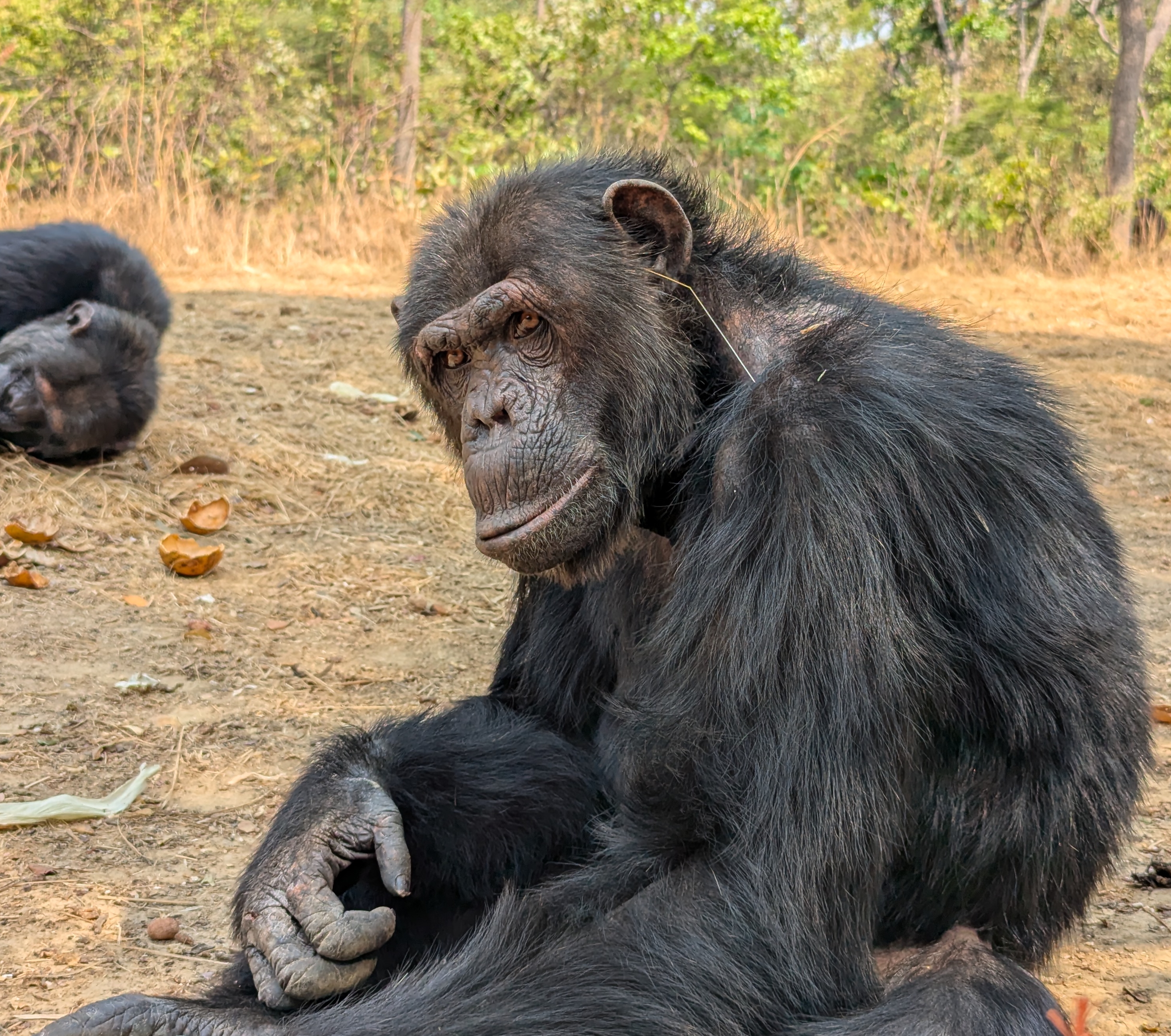
Between May 2023 and August 2024, researchers found no examples among the 148 chimpanzees living in the sanctuary’s seven other groups, apart from two males in the group where Julie’s original trend had taken hold.
The Twist
On August 27, 2023, a male named Juma tried a different placement. He put a blade of grass into his rectum and left it hanging there. No hand needed.
The variation caught on remarkably quickly, spreading to most of the group in about three weeks, with six of the eight chimpanzees eventually recorded carrying grass or sticks dangling from their rear ends.
The researchers called it grass-in-rectum behavior. Neither the ear habit nor this new variation seemed to serve any obvious practical purpose, and observers saw no indication that the animals were trying to relieve an itch or ease pain. Most episodes occurred during leisure time, when the chimpanzees gathered to groom and play.

The findings were published in the journal Behaviour. “This shows that, like humans, other animals also copy seemingly pointless behaviours from one another,” van Leeuwen said in a statement from Utrecht University.
Copying One Another
There was one connection between the two groups: both had been looked after by the same human caretakers. When asked about it, the caretakers said they sometimes cleaned their own ears with a blade of grass or a matchstick, occasionally while the chimpanzees were watching.
Van Leeuwen pointed out that such habits have so far been documented only in captive and sanctuary chimpanzees, animals that spend far less time searching for food or watching for danger than their wild relatives.
Tracking which chimpanzees picked up each habit, and when, helped the researchers work out how the behaviors spread. Their conclusion was that the animals were copying one another rather than independently coming up with the same idea. Jake Brooker of Durham University, one of the study’s co-authors, photographed the chimpanzees for the project.
The Sudan group also changed as the study went on. In December 2023, three chimpanzees from elsewhere were introduced into the group, months after both grass habits had already spread.
One of the newcomers was a chimpanzee named Aimée-Love. She had not been around when the trend began, but by April 2024, she too was wearing grass in her ear.
Enjoyed this article? Subscribe to our free newsletter for engaging stories, exclusive content, and the latest news.

