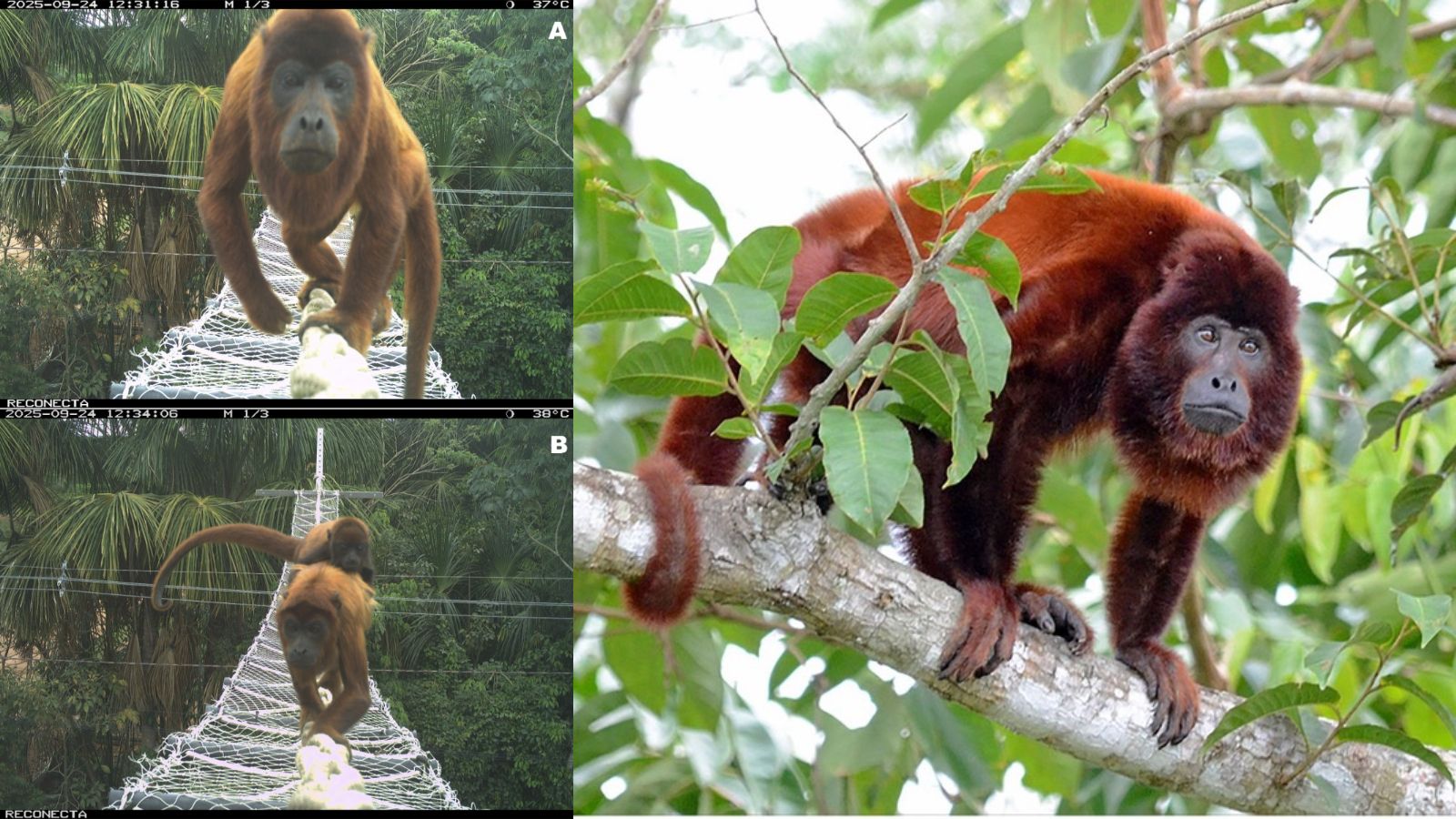
Шинэ зүйлүүдийг тодорхойлсноор улих сармагчингийн хувьслын холбоо, Амазон дахь тархалтын талаарх ойлголтыг шинэчилж байна.
Судлаачид Амазоны ширэнгэн ойгоос Alouatta iroi болон Alouatta matogrossensis хэмээх улих сармагчингийн хоёр шинэ зүйлийг тодорхойлжээ. Өтгөн сахал, улаан зүстэй эдгээр зүйл нэмэгдсэнээр шинжлэх ухаанд мэдэгдэж буй улих сармагчингийн тоо 16 болжээ. Судалгааны ахлах зохиогч, Гётеборгийн их сургууль болон Салфордын их сургуулийн биологийн олон янз байдлын судлаач Ромина Батиста Амазонд сайн мэддэг амьтдын дунд ч судлагдаагүй зүйл олон байгааг онцолсон байна.
Шинэ зүйлүүдийн нэг болох A. matogrossensis мөхлийн ирмэгт тулсан байж болзошгүй бол нөгөө зүйл нь Рио-Бранко гол дээр төлөвлөж буй далангийн улмаас аюулд өртөж байна. Аравдугаар сарын 30-нд Communications Biology сэтгүүлд нийтлэгдсэн судалгаанд Өмнөд болон Төв Америкт амьдардаг улих сармагчингийн 11 зүйлийн геномыг шинжилжээ. Үүнд өмнөх ДНХ-ийн өгөгдөл болон Бразилын амьтан судлалын цуглуулгад хадгалагдаж буй сорьцын шинэ геномын мэдээллийг нэгтгэсэн байна.
Генетикийн шинжилгээгээр улих сармагчингууд ойрын төрөл зүйлээсээ 19–13.5 сая жилийн өмнө салбарлан хувьссаныг баталжээ. Харин сүүлийн үеийн хувьслын талаарх ойлголтыг шинэчилж, өмнө нь ойр төрөл гэж үзэж байсан Тапажосын улаан гарт улих сармагчин (A. tapajozensis), Амазоны хар улих сармагчин (A. nigerrima) хоёрын холбоо тийм ойр биш гэж судлаачид дүгнэсэн байна. Мөн ангилал нь тодорхойгүй байсан Тринидадын улих сармагчин (A. insulanus)-ыг тусдаа зүйл болохыг батлах нь зүйтэй гэж үзжээ.
Амазон, Шингу, Бранко зэрэг голууд улих сармагчны бүлгүүдийг тусгаарлаж, улмаар өөр өөр шинж болон зүйл үүсэхэд нөлөөлсөн гэж судлаачид тайлбарлав. Эдгээр сармагчин жижиг усан замыг сэлж гаталж чаддаг ч том голууд бүлгүүдийн холилдохыг хязгаарладаг байна. Судалгааны хамтран зохиогч, Салфордын их сургуулийн профессор Жан Бублигийн хэлснээр ой устгал, уур амьсгалын өөрчлөлт, амьдрах орчны алдагдал Амазоны зүйлүүдийг судалж, нээж амжаагүй байхад нь аюулд оруулж байна.
Приматын тухай сорил: Хүнтэй хамгийн ойр төрөл амьтдын талаарх мэдлэгээ шалгаарай.
Дэлгэрэнгүйг эх сурвалжаас харах
↓Эх сурвалжийг нээх ↓
Scientists have identified two newfound species of howler monkey in the Amazon rainforest. The discoveries could redraw branches of these primates’ evolutionary tree, a new study shows.
The new species were named Alouatta iroi and Alouatta matogrossensis. The adorable creatures have bushy beards, winsome expressions and bright red fur. Their identification raises the number of known howler monkey species to 16, researchers said in a statement.
“Our study shows that the Amazon still holds remarkable biological secrets, even among well-known animals such as howler monkeys,” study first author Romina Batista, a biodiversity scientist at the University of Gothenburg in Sweden and the University of Salford in the U.K., said in the statement.
One of the newfound species, A. matogrossensis, is probably on the brink of extinction. The other newfound species faces threats from a planned dam on the Rio Branco River, according to the study.
In addition to identifying the new species, the study, published Oct. 30 in the journal Communications Biology, used genetic evidence to understand when howler monkeys spread out and diversified. The researchers analyzed the genomes of 11 howler monkey species living in South and Central America, combining existing DNA datasets with new genomic information from specimens in Brazilian zoological collections.
Overall, the genetic data confirmed that howler monkeys diverged from close relatives between 19 million and 13.5 million years ago. But the analysis changed the picture of more recent evolution.
For instance, the team argued that the Tapajós red-handed howler (A. tapajozensis) and the Amazonian black howler (A. nigerrima) are not as closely related as scientists previously thought. The researchers also said that the Trinidad howler (A. insulanus), whose status has been unclear, should be confirmed as a separate species.
“This discovery comes at a critical time, as increasing deforestation, climate change and habitat loss threaten many Amazonian species before they are fully understood or even discovered by science,” study co-author Jean Boubli, a professor and chair of primate ecology and evolution at the University of Salford in the U.K., said in the statement.
The scientists found that natural barriers such as the Amazon River, the Xingu River and the Branco River drove many howler monkeys to develop separately. Researchers believe that howler monkeys can swim across small waterways, but big rivers block groups from mixing, which led to different traits and species evolving over time. Natural barriers are a common reason why species emerge in the Amazon, the researchers noted in the study.
Primates Quiz: Go ape and test your knowledge on our closest relatives

