Амьтны ялгаруулдаг метаны хэмжээгээр хий гаргалтыг шууд тогтоох боломжгүй тул одоогоор хамгийн их хий гаргадаг зүйлийг баттай нэрлэх аргагүй байна.
Хий гаргалтыг судалдаг flatology нь амьтдын хооллолт, хоол боловсруулалтыг ойлгоход тусалдаг ч нэг амьтан хэдэн удаа хий гаргадгийг хэмжихэд хүндрэлтэй. Судлаачид метаны ялгарлыг харьцуулан баримжаалдаг боловч амьтны үүсгэсэн метаны ихэнх нь гэдэсний хийгээр бус, цусаар уушгинд хүрч амьсгалаар гадагшилдаг.
Мал, ялангуяа үхэр жилд нийт 117 тераграмм метан ялгаруулдаг гэж тооцоолжээ. Гэвч үхэр, хонь, ямаа зэрэг хивэгч амьтдын метаны дийлэнх нь хий гаргалтаар бус, хэхрэлтээр гадагшилдаг: ургамлыг гүзээндээ исгэх явцад үүссэн хий хоол боловсруулах замын урд хэсгээс гардаг байна. Метаныг амьтдыг амьсгалын камерт байрлуулах, амьсгалыг нь тусгай цэгт цуглуулах зэрэг аргаар хэмждэг.
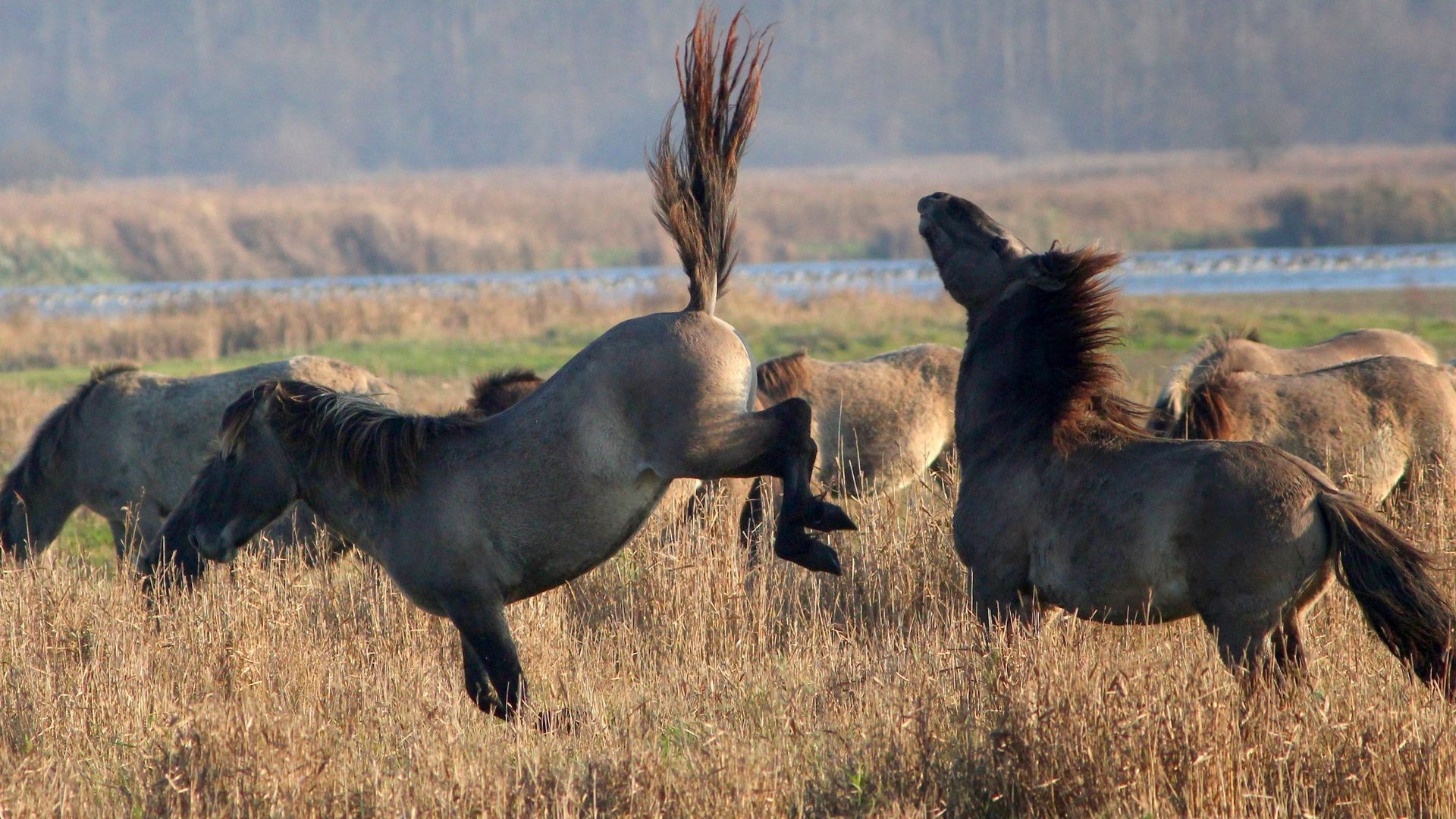
Харин ургамлын эдийг бүдүүн гэдсэндээ боловсруулдаг морь зэрэг амьтад метаныг хий гаргалтаар илүү их ялгаруулж болзошгүй. 2019 оны тайланд морийг арын гэдсэндээ исгэлт явуулдаг амьтдаас хамгийн их метан ялгаруулдаг гэж тооцсон бөгөөд нэг морь жилд ойролцоогоор 18 кг метан ялгаруулдаг гэжээ. Гэвч хэмжилт хийгдээгүй хирс зэрэг олон амьтан бий; биеийн жинд нь харьцуулбал нутриа морьноос илүү метан ялгаруулж болохыг судлаачид тэмдэглэжээ.
Дэлхийн хэмжээнд ойролцоогоор 27 квадриллион термит жилд 10 тераграмм метан ялгаруулдаг ч хөрсөн дэх метан хэрэглэгч бактериудын ихэнхийг нь задалдаг. Малын хэхрэлтээр ялгарах метан уур амьсгалын өөрчлөлтөд хувь нэмэр оруулдаг бол термитийн ялгаруулалт нь байгалийн метаны эргэлтийн хэсэг бөгөөд агаар мандлын метаны өсөлтийг хүн төрөлхтний үйл ажиллагаа үүсгэж байна. Иймээс амьтдын хий гаргалтын нэгдсэн эрэмбэ одоогоор таамаг төдий хэвээр байна.
Дэлгэрэнгүйг эх сурвалжаас харах
↓Эх сурвалжийг нээх ↓
Flatology, the study of flatulence, sounds more like a joke than a serious scientific discipline. But studying farts actually helps biologists understand an animal’s diet and digestion.
We know that a host of creatures — from whales, to snakes, to sloths — pass gas. But do we know which animal is the top tooter? Experts told Live Science the answer is blowing in the wind.
“Getting quantitative measurements for farts per animal is pretty difficult,” Nick Caruso, a data scientist and co-author of ‘”Does It Fart?: The Definitive Field Guide to Animal Flatulence” (Quercus Publishing, 2017), told Live Science in an email.
What we can do is hypothesize using the data we do have. Expelled gas is made partially of methane, so comparing methane emissions produced by different species may provide a clue. However, this method does have limitations, experts pointed out.
Fart league
Researchers measure the methane animals produce by placing them inside respiration chambers, then inserting a capsule into the stomach that releases a tracer gas while strapping them with a harness that samples their breath. Alternatively, they capture their breath at stations where they feed or are milked.
Research points to livestock, especially cows, as major methane emitters. A recent report puts their total methane emissions at 117 teragrams per year. (One teragram is equal to 1 billion kilograms, or 2.2 billion pounds.) A buildup of cow-generated methane gas even caused a dairy shed in Germany to explode. However, contrary to what many people believe, the “overwhelming majority” of methane emissions from livestock is released through burping, not flatulence, Ermias Kebreab, a professor of animal science at the University of California, Davis, told Live Science in an email.
The reason comes down to where in the gut the gas is made. Herbivores can’t break down plant material on their own; they rely on microbes in their guts to ferment it, and that fermentation releases gases such as methane and carbon dioxide, Dr. Marcus Clauss, head of research and co-director of the Clinic for Zoo Animals, Exotic Pets and Wildlife at the University of Zurich, told Live Science in an email. Some of this gas is absorbed into the bloodstream and exhaled. The rest tends to leave by the nearest exit — animals that ferment their food toward the front of the digestive tract mostly burp it out, while those that ferment it toward the back mostly pass it as wind, Clauss explained.
Cows and other ruminants (such as buffalo, sheep, goats and camels) ferment their food in a chamber called the rumen, located near the front of the digestive system, so most of the methane they produce is through belching, Matthew Hayek, an associate professor of environmental studies at New York University, told Live Science in an email.
So if it’s not cows, which animal is the top farter based on their methane emissions? The best candidates are hindgut fermenters — herbivores that digest plant matter in the large intestine (the hindgut). Meat eaters, by contrast, typically produce far less methane than herbivores do, Clauss said.
One possible contender are termites, which break down wood and grass in their hindguts. Their global population is estimated to be around 27 quadrillion (that’s 15 zeros) individuals, and they collectively emit 10 teragrams of methane per year.
But, per individual, the title might go to horses. According to a 2019 report from the Intergovernmental Panel on Climate Change, horses have the highest methane emissions among hindgut fermenters — around 40 pounds (18 kg) of methane per horse each year.
However, Clauss is skeptical. “The ranking of horse as highest is only because it has been measured,” he told Live Science in an email. “But there are so many hindgut fermenters not measured, like rhino … Who knows?”
If we consider methane emissions per unit of bodyweight, the nutria (Myocastor coypus) — an herbivorous, semiaquatic rodent — would have higher methane emissions than the horse, Clauss said.
Clauss also questioned the accuracy of using methane emissions data as an indicator of flatulence. “There is some methane in flatulence, but most likely the majority of methane produced by an animal is exhaled, i.e. it goes via blood to the lungs,” he said.
So until scientists figure out how to measure animal farts, any ranking remains speculative. For now, scientists have developed ways to track intestinal gas in people, including swallowable electronic capsules that measure gases inside the gut and clip-on underwear sensors that detect hydrogen in farts.
Does animal flatulence contribute to climate change?
Methane is a particularly potent greenhouse gas when released into the atmosphere, and the quantities that large herds of cows and other ruminants emit through burping are enough to contribute to climate change. Indeed, scientists are experimenting with ways to reduce methane emissions from cattle — for example, by adding seaweed to their diet.
But animal flatulence is not a major contributor to global methane increases, Hayek said.
Even methane emissions from termite flatulence, while large, do not have an impact, Stefan Arndt, a professor of physiological and ecosystem ecology at the University of Melbourne in Australia, told Live Science in an email. “A large proportion of that methane is then consumed by methanotrophic bacteria in the soil,” he said. These bacteria use methane as an energy source, thereby reducing the net methane emissions from termites substantially.
“Their emissions are part of the natural cycle of methane that has always been there for millennia,” Arndt added. “The increasing methane concentrations in the atmosphere that are leading to climate change are caused by humans.”

