
Кармелл “Sobra-Sobra” дуугаараа 211 оноо авч, шүүгчид болон олон нийтийн санал хураалтад тэргүүлэв.
Филиппиний дуучин Кармелл Колладо Бангкокт болсон Eurovision Asia-гийн анхны финалд 10 өрсөлдөгчөө ардаа орхин түрүүллээ. Тэрээр шүүгчдээс 93, олон нийтийн санал хураалтаас 118 оноо авч, нийт 211 оноо цуглуулсан байна. Тайландын MANG x DAOU “Aroma” дуугаараа хоёрдугаар байр, Вьетнамын Ток Тьен “Em Tiên” дуугаараа гуравдугаар байрт шалгарчээ.
Кармелл “Sobra-Sobra”-г Филиппин эмэгтэйчүүдэд зориулж, тэдний бие даасан, хүчирхэг байдлыг тэмдэглэсэн бүтээл хэмээн тайлбарласан байна. Pop болон Rap-ийг кубинг хулсан аман хуур, кулינטанг гонг зэрэг уламжлалт хөгжмийн зэмсэгтэй хослуулсан дууг тагалог болон англи хэлээр дуулжээ.
Тэмцээнд Азийн 11 улсын уран бүтээлч оролцсон нь Eurovision-ий 70 жилийн түүхэн дэх анхны Азийн өргөжилт боллоо. Санал хураалтад 183 улс, нутаг дэвсгэрийн үзэгчид оролцож, 11 улсын шүүгчдийн дүн болон олон нийтийн санал нийлсэн бөгөөд үзэгчдийн санал нийт дүнгийн талыг бүрдүүлжээ.
Кармелл ирэх жил Болгарын Бургас хотод болох Европын Eurovision-д зочин уран бүтээлчээр оролцох эрхтэй болжээ. Азийн тэмцээний ялагч цом хүртэх ч мөнгөн шагнал олгодоггүй.
Дэлгэрэнгүй эх сурвалжийг харах
Эх сурвалжийг нээх ↓
Want to bookmark your favourite articles and stories to read or reference later? Start your Independent Membership today.
Already a member?
{
experienceElement.style.display = ‘none’;
let checks = 0;
const maxChecks = 50;
const checkDrawerVisibility = setInterval(() => {
const drawer = document.querySelector(‘.pn-drawer–login, .pn-drawer, #login-drawer, .login-drawer-container, [class*=”login-drawer”]’);
const drawerCloseBtn = document.querySelector(‘#drawer > div > button’);
const isDrawerVisible =
(drawer &&
(drawer.offsetParent !== null ||
drawer.classList.contains(‘is-open’) ||
window.getComputedStyle(drawer).display !== ‘none’)) ||
drawerCloseBtn;
checks++;
if (isDrawerVisible) {
clearInterval(checkDrawerVisibility);
const monitorClosure = setInterval(() => {
const drawerStillHere = document.querySelector(
‘.pn-drawer–login, .pn-drawer, #login-drawer, .login-drawer-container, [class*=”login-drawer”]’
);
const innerContent = document.querySelector(‘#drawer > div’);
const isVisible =
(drawerStillHere &&
(drawerStillHere.offsetParent !== null ||
drawerStillHere.classList.contains(‘is-open’) ||
window.getComputedStyle(drawerStillHere).display !== ‘none’)) ||
innerContent;
if (!isVisible) {
clearInterval(monitorClosure);
experienceElement.style.display = ‘flex’;
}
}, 500);
if (drawerCloseBtn) {
drawerCloseBtn.addEventListener(
‘click’,
() => {
setTimeout(() => {
experienceElement.style.display = ‘flex’;
}, 100);
},
{ once: true }
);
}
} else if (checks >= maxChecks) {
clearInterval(checkDrawerVisibility);
experienceElement.style.display = ‘flex’;
}
}, 200);
};
{
document.documentElement.classList.add(‘mos-bookmark-open’);
const el = document.querySelector(‘.bookmark-experience’);
if (el) el.style.display = ‘flex’;
document.cookie = ‘mos-plan-select=; Max-Age=0; path=/; expires=Thu, 01 Jan 1970 00:00:00 UTC;’;
el?.querySelector(‘.subscribe-link’)?.addEventListener(‘click’, (e) => {
e.preventDefault();
document.cookie = ‘mos-plan-select=; Max-Age=0; path=/; expires=Thu, 01 Jan 1970 00:00:00 UTC;’;
setTimeout(() => {
window.location.href = “https://www.independent.co.uk/subscribe/app?regSourceMethod=Bookmarks”;
}, 500);
}, { once: true });
el?.querySelector(‘.close-btn’)?.addEventListener(‘click’, () => {
document.documentElement.classList.remove(‘mos-bookmark-open’);
}, { once: true });
});
]]>
The Philippines has won the first Eurovision Song Contest Asia, with 19-year-old singer Carmelle claiming the inaugural title in Bangkok.
Carmelle, whose full name is Carmelle Collado, beat 10 other contestants at the final on Saturday with an exuberant performance of her dance-pop anthem Sobra-Sobra, securing 211 points from national juries and viewers around the world. She received 93 points from the juries and 118 from the public vote, topping both.
Thailand’s duo MANG x DAOU finished second with Aroma, while Vietnam’s Tóc Tiên came third with Em Tiên, according to the European Broadcasting Union (EBU), which organises the Eurovision Song Contest.
cookie.trim() === ‘__DEBUG__=true’)) { console.log(‘Ad logs: “mpu1”, injectedAtParagraph: 3’); }]]>
Carmelle said the song was a tribute to Filipino women and a celebration of female empowerment. “I made history, since this was the first time,” she told the Associated Press after her victory. “It’s such a big responsibility for me, because this one is a global stage, so thank you everybody, who voted for me.”
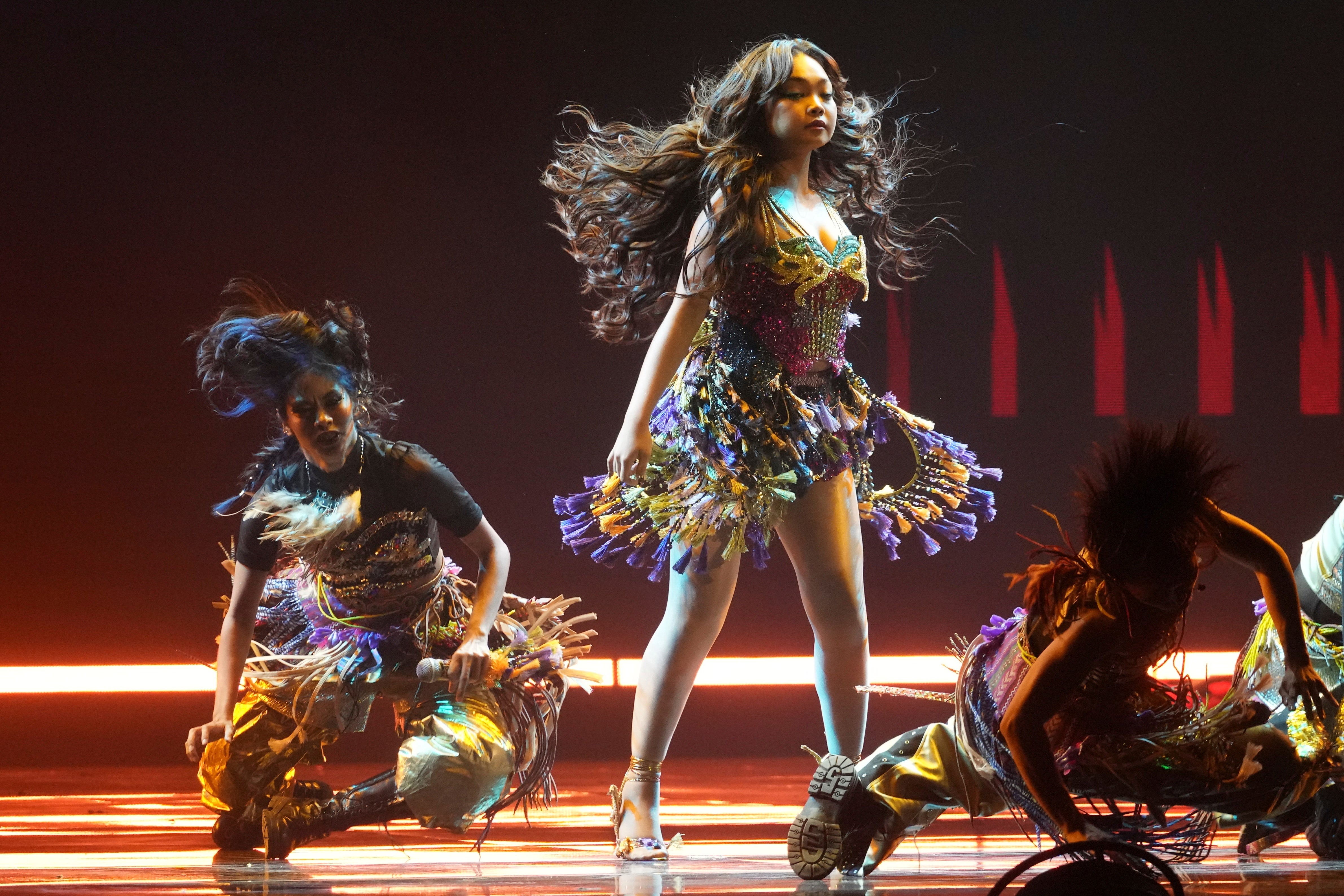
The winning track combines pop and rap with traditional Filipino instruments, including the kubing, a bamboo jaw harp, and the kulintang, a set of small gongs. Sung in Tagalog and English, it was written by Filipino songwriters Nica del Rosario and Mat Olavides, whose previous credits include songs for some of the country’s biggest pop acts.
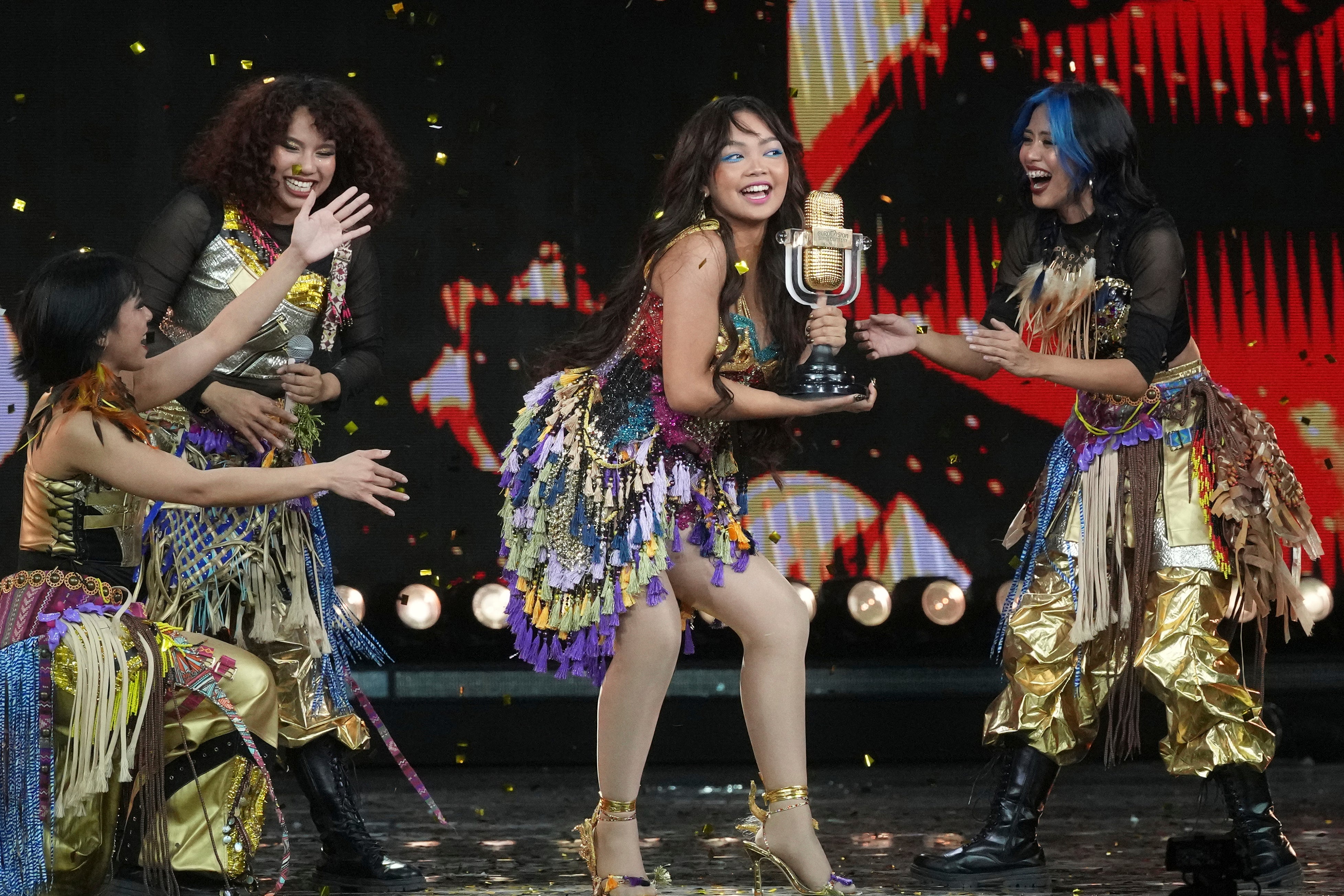
Carmelle described its message as being about “how unapologetic, independent and strong Filipinas are”. “It describes me – not just me, but of course all the Filipinas,” she said to The Guardian.
cookie.trim() === ‘__DEBUG__=true’)) { console.log(‘Ad logs: “taboola-carousel-thumbnails”, injectedAtParagraph: 6’); }]]>
The 19-year-old, who grew up beside railway tracks in the Bicol region of south-eastern Luzon, had already built a following through televised talent competitions. She was the first runner-up on The Voice Kids in the Philippines, went on to win Tawag ng Tanghalan and also appeared on the reality television programme Pinoy Big Brother.
Her entry was selected through the inaugural Philippine Selection Night, in which Sobra-Sobra won a national selection contest featuring 10 songs.

Enjoy unlimited access to 100 million ad-free songs and podcasts with Amazon Music
Sign up now for a 30-day free trial. Terms apply.
ADVERTISEMENT. If you sign up to this service we will earn commission. This revenue helps to fund journalism across The Independent.
The Bangkok final brought together performers from 11 countries – Bangladesh, Bhutan, Cambodia, Laos, Malaysia, Mongolia, Nepal, the Philippines, South Korea, Thailand, and Vietnam – in the first Asian expansion of the competition in its 70-year history.
cookie.trim() === ‘__DEBUG__=true’)) { console.log(‘Ad logs: “mpu2”, injectedAtParagraph: 9’); }]]>
Viewers from 183 countries and territories took part in the vote, which combined the scores of 11 national juries with a public ballot accounting for half the result. A separate Rest of the World vote carried the same weight as the vote from one participating country.
cookie.trim() === ‘__DEBUG__=true’)) { console.log(‘Ad logs: “mpu3”, injectedAtParagraph: 10’); }]]>
Malaysia’s Aina Abdul finished fourth with the ballad Bluest Sky, while Laos’s Thinla came fifth with Bae. The remaining contestants were Bhutan’s Nyendra, South Korea’s Junhee, Mongolia’s Beck, Nepal’s Pratik Himal Rai and Cambodia’s Monetrey, with Bangladesh represented by the beatboxing group Beatmosphere.
The show leaned into its Bangkok setting, with contestants arriving at the venue in tuk-tuks, the three-wheeled motorised taxis familiar to visitors to Thailand, while waving their national flags. The opening performance combined traditional elements of Thai culture with contemporary entertainment, including Muay Thai fighters and drag performers.
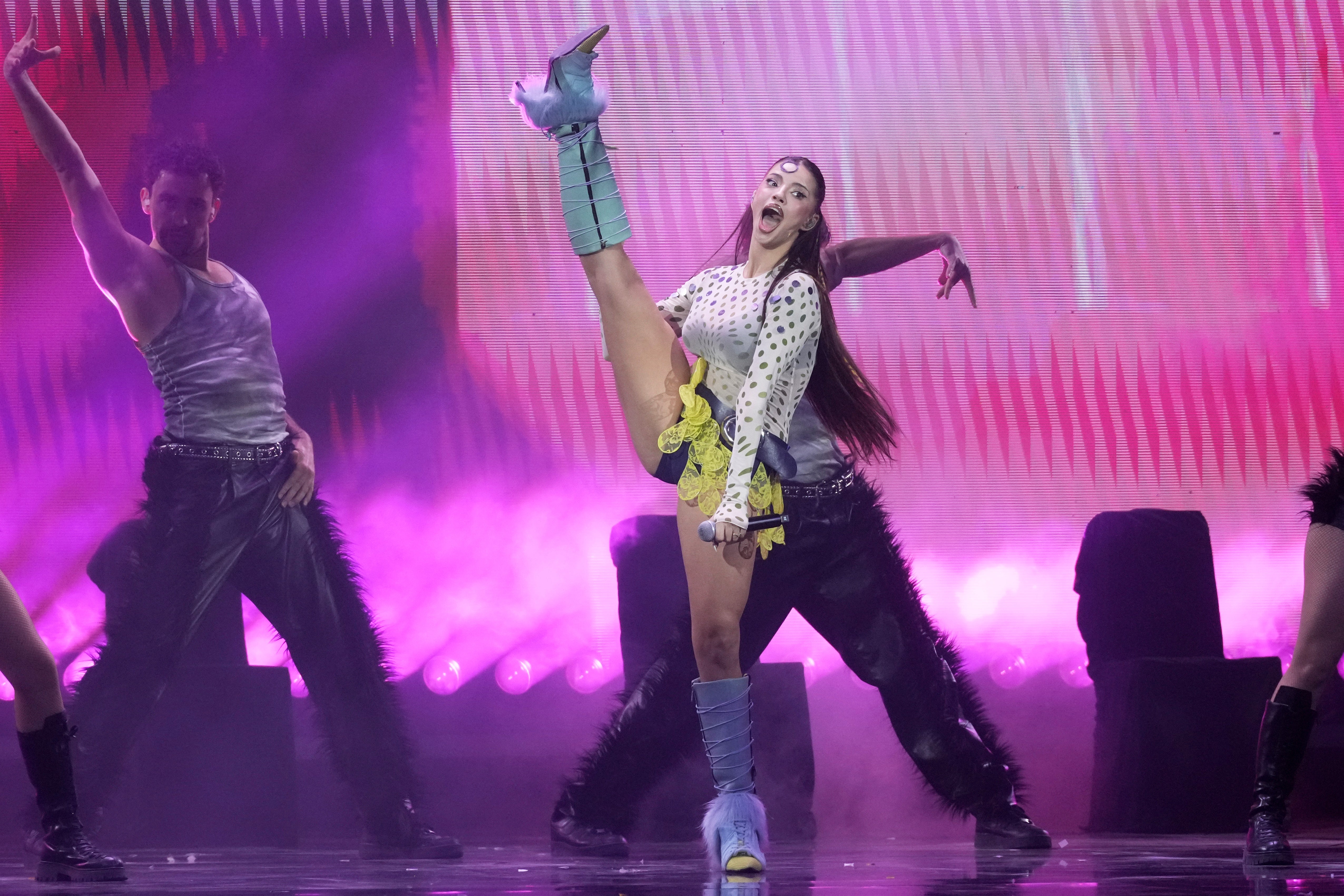
Bulgarian singer Dara, who won the European Eurovision Song Contest earlier this year with Bangaranga, appeared as a guest and presented Carmelle with the trophy.
Thai singer Jeff Satur also performed during the broadcast.
The competition’s inaugural line-up, however, was notable for some of the countries it did not include. China, India, Japan, Indonesia, and Pakistan were all absent, leaving several of Asia’s largest music markets outside a contest intended to showcase the region’s musical diversity.
Executive producer Assaf Blecher told the New York Times that discussions with Chinese, Japanese, and Indian broadcasters had not been completed in time for the inaugural edition, but added that they “are knocking on our door”.
India’s absence is particularly noticeable given the global popularity of Bollywood music and the country’s huge regional music scene.

China, meanwhile, has had a rocky relationship with the European contest. In 2018, the European Broadcasting Union (EBU) terminated its broadcasting deal with Chinese streaming platform Mango TV after it cut Ireland’s performance, which featured two male dancers portraying a romantic relationship, removed Albania’s entry over the singer’s visible tattoos, and blurred rainbow flags held by audience members.
The EBU said the censorship went against its “values of universality and inclusivity and our proud tradition of celebrating diversity through music”.
Unlike the European contest, where the winning country traditionally hosts the following year’s competition, Eurovision Asia will choose its next host through a bidding process. Organisers have said this is to ensure that the country selected has the venues and infrastructure needed to stage the event, rather than making hosting rights an automatic reward for winning.
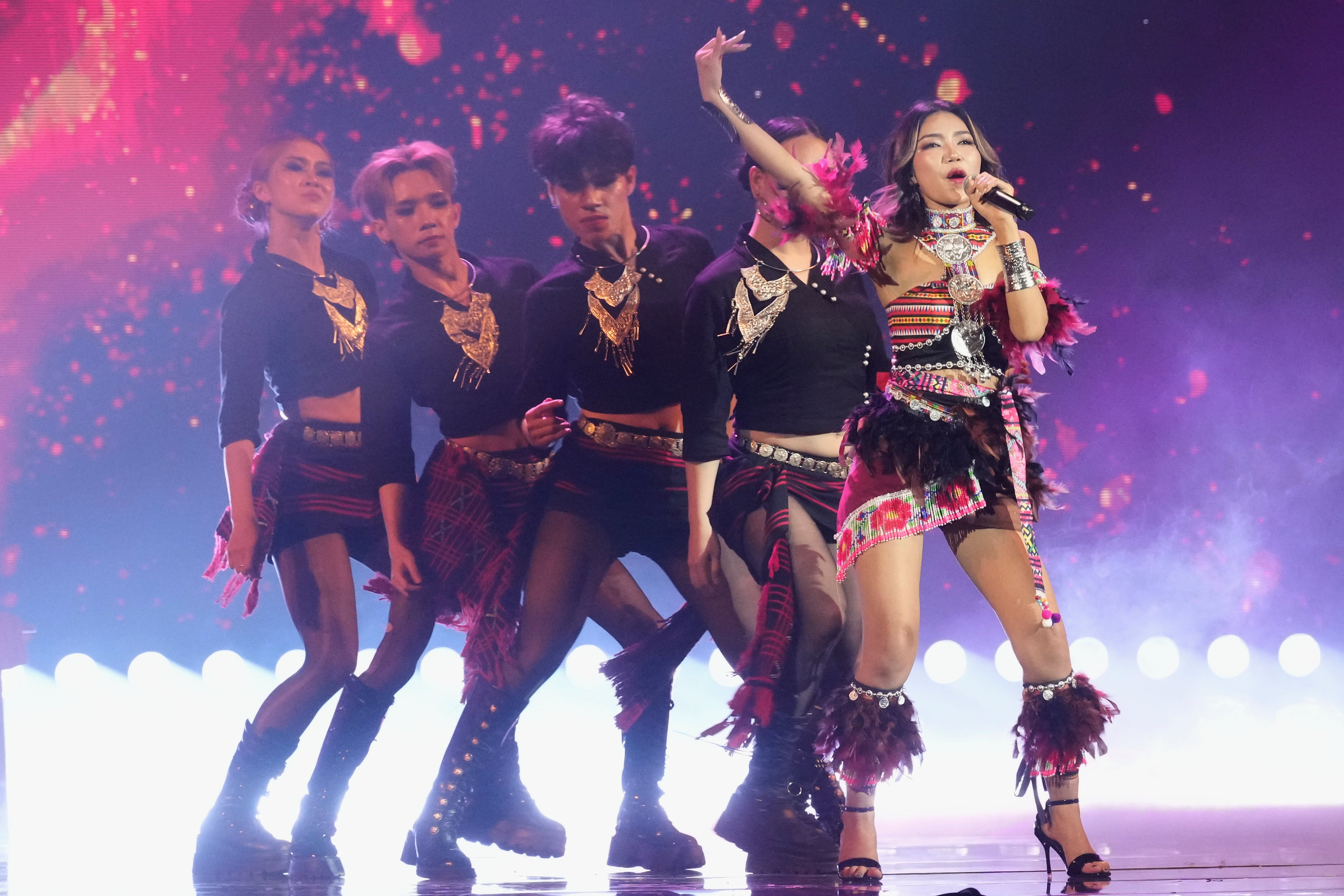
Carmelle will, however, get an opportunity to perform at the European Eurovision in Burgas, Bulgaria next year. The winner of the Asian competition receives a trophy and a guest performance at the European show, but no prize money.
The European competition, which began in 1956, has had its share of political disputes, most recently over Israel’s participation amid the war in Gaza. Five countries – Spain, the Netherlands, Ireland, Iceland and Slovenia – boycotted this year’s European edition over the issue.

