
Мариб хотын ойролцоох Аль-Мил хуаранд 1,500 орчим хүүхэд майхан, түр байгууламжид хичээллэж байгаа ч анги танхимын хүрэлцээгүй байдал боловсрол эзэмшихэд нь саад болж байна.
Аль-Ракл сургууль долоон жилийн өмнө зэвсэгт мөргөлдөөний улмаас Марибын Нихмтай хиллэдэг дүүргээс нүүж, дүрвэгсдийн хуаранд үйл ажиллагаагаа үргэлжлүүлжээ. Хандивын хөрөнгөөр майхан, чиргүүлэн байгууламж барьсан ч хойд болон баруун Мариб, мөн хөрш Аль-Жауф мужийн дүрвэгсдийн хүүхдүүдийн хэрэгцээг хангаж чадахгүй байна. Зарим ангид 110-129 сурагч ногдож, ширээ сандал хүрэлцэхгүйгээс хүүхдүүд шалан дээр сууж хичээллэх тохиолдол бий.
Сурагчид анги дүүргэлтээс гадна сурах бичгийн хомсдол, сургуульдаа хүрэх хол зам, шинжлэх ухааны зарим хичээлийн мэргэшсэн багш дутагдаж байгааг гол бэрхшээл гэж нэрлэжээ. Багш нарын урамшуулал бага, тогтмол бус бөгөөд гэрээ нь зөвхөн хичээлийн хугацааг хамардаг тул зарим нь өөр ажил хайж, мэргэжлээ орхиход хүрч байна. Майхан, түр байрны ангиуд агааржуулалт муутай, зуны халуун болон өвлийн хүйтнээс хангалттай хамгаалдаггүй аж.
Дайны улмаас гэр бүл, орон гэрээ алдсан хүүхдүүдэд сэтгэлзүйн дэмжлэг, тоглох аюулгүй орчин ч дутагдаж байна. Аль-Мил хуаранд амьдардаг Мариам болон түүний эгч нар анги хэт дүүрсэнээс хичээлээ ойлгож, дагаж чадахгүй болж сургуулиа орхисон бөгөөд тэдний гэр бүл сургуулиас ердөө 20 метрийн зайд амьдардаг. Сургуулийн удирдлагад хандсан ч анги танхимын асуудлыг шийдвэрлэх хүсэлтэд холбогдох байгууллагууд хариу өгөөгүй гэж эцэг нь ярьжээ. Хуаранд сургууль огт байдаггүй газар олон бөгөөд боловсролын салбарын ажилтнууд, байгууллагуудын оролцоо хангалтгүй байгааг мэдээлсэн байна.
Дэлгэрэнгүйг эх сурвалжаас харах
↓Эх сурвалжийг нээх ↓
Want to bookmark your favourite articles and stories to read or reference later? Start your Independent Membership today.
Already a member?
This article first appeared on our partner site, Independent Arabia
It is another school day at Al-Mil camp, north of the city of Marib in central Yemen. On the road outside, a school bus carries uniformed pupils towards the city centre. Their families have the financial means to afford private school fees, having given up hope of securing an adequate education within the camps.
On the way here, our vehicle was stopped at a security checkpoint where a soldier inspected travel permits. This routine has become part and parcel of the daily work of journalists and humanitarian teams operating in the area.
A few yards beyond the checkpoint, two secondary-school girls stopped us and asked for a lift to their school, wearing hats to shield themselves from the scorching sun.
When we returned at midday, we engaged them in discussion about the hurdles they were facing in their educational journeys. Their foremost grievance was the sheer overcrowding of classrooms, closely followed by an inadequate supply of textbooks, the exhausting journeys required to commute between home and school, and a deficiency of qualified teachers across specific specialist science subjects.
A displaced school
In Al-Mil camp, it is not only the teachers and students that are displaced but the school itself. Al-Raql School, formerly located in a district of Marib bordering Nihm, east of Sana’a, was forced to relocate seven years ago amid successive waves of conflict.
To ensure children did not lose access to education while the Ministry of Education delayed formal recognition of new camp facilities, teaching staff resumed lessons under the school’s original name. The arrangement was intended as a stopgap until families could return home.
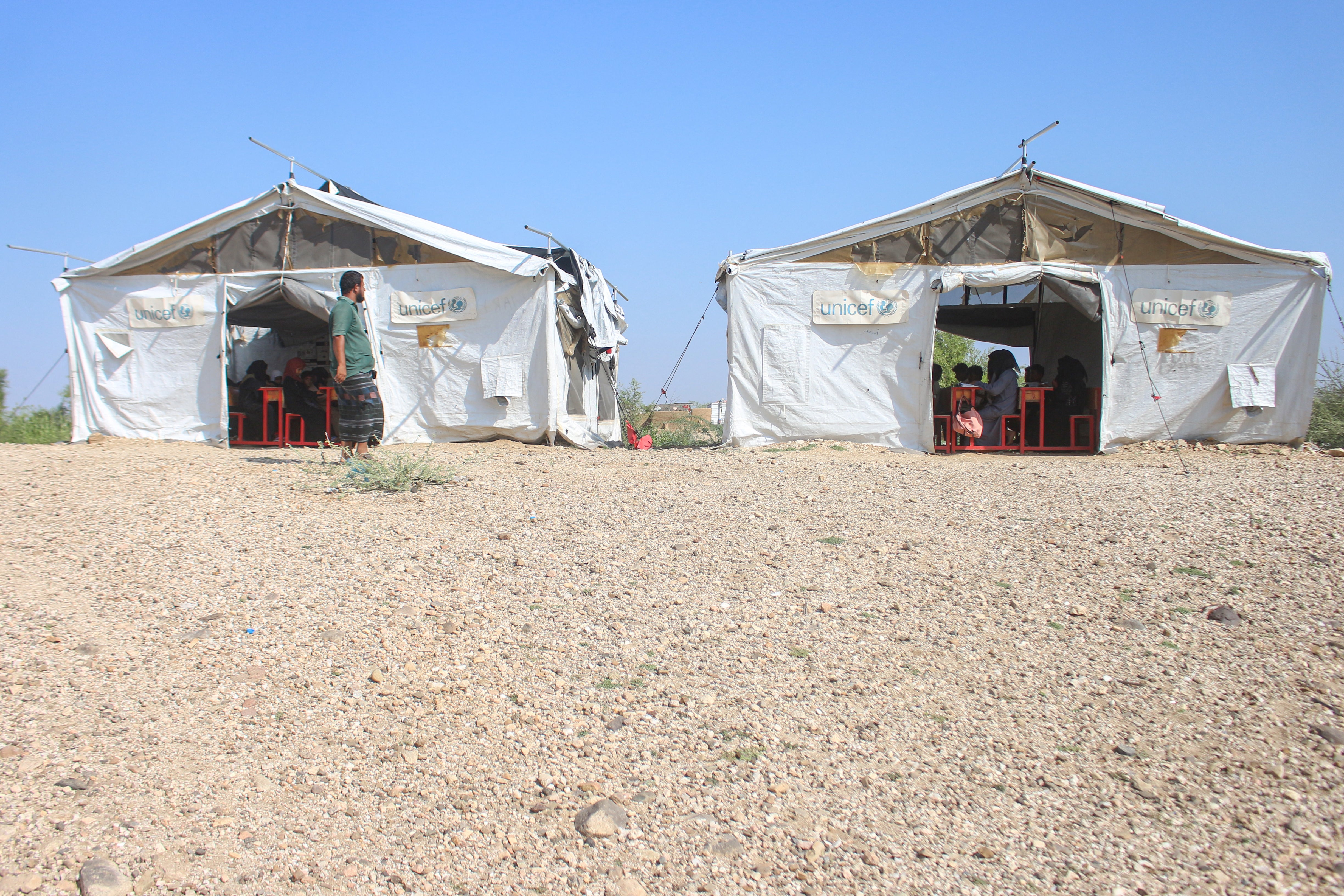
Today, Al-Raql serves around 1,500 displaced boys and girls from northern and western Marib, including Madghal, Majzar and Sirwah, as well as neighbouring Al-Jawf governorate. Set up using tents and caravans funded by donations, the school now struggles to cope with overcrowding.
During the morning assembly, Ali Yahya, an Arabic teacher displaced from Amran governorate, organises the pupils into lines in the schoolyard before they head to their classrooms.
“I lost my home, my family, my job and my salary in Amran,” he tells Independent Arabia. “Today, teachers here have to rely on meagre, irregular incentive payments that are not enough to meet even their most basic needs amid harsh living conditions.”
Yahya points out that contracts teachers sign with donor organisations or local education offices run only for the duration of term-time rather than the full calendar year. Once the academic year concludes, teachers have to start looking for alternative work. This problem is driving teachers out of the profession entirely.
A crumbling system
Beyond material shortages, staff report an acute absence of pastoral care and psychological support for children carrying severe wartime trauma.
“Some have lost their fathers, others have lost brothers in the war, while others have lost their homes and toys,” Yahya explains. “These children attend schools that lack basic recreational facilities, safe spaces or playgrounds that might help ease the effects of trauma and war.
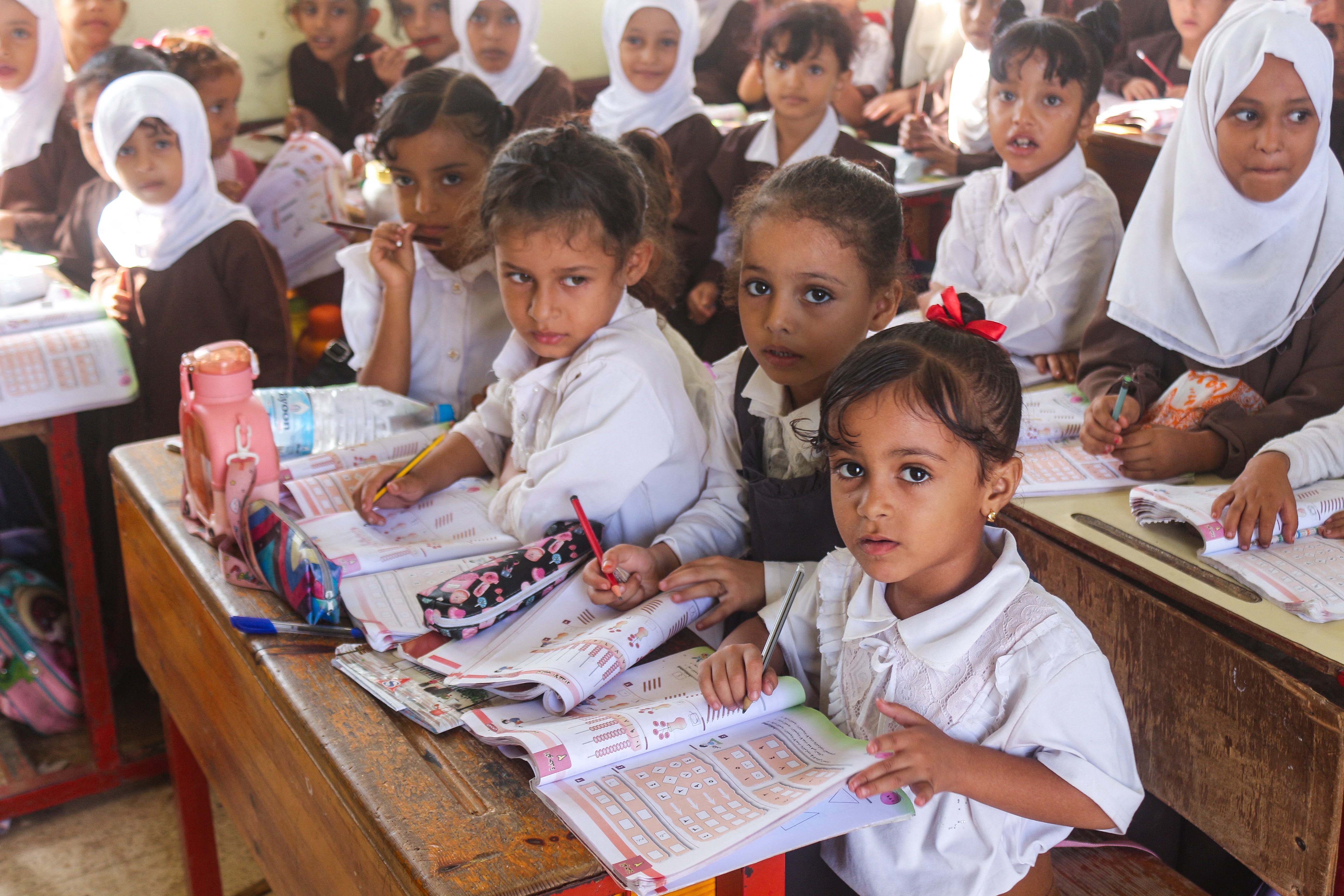
“We face a severe shortage of textbooks, while benches can no longer accommodate the growing numbers of pupils, leaving many of them sitting directly on the floor for the entire school day.”
After Independent Arabia visited several schools across the camp, it was clear that these conditions were widespread. Pupils, teachers and parents complain about overcrowding and continually appeal to the relevant authorities to provide suitable classrooms.
Most camps lack schools altogether. Where schools do exist, they often consist of tents that cannot accommodate the large numbers of displaced children or meet their growing need for textbooks.
There is also a shortage of teaching staff and a limited supply of educational materials, and the authorities have been unable to provide alternatives or find solutions to the many obstacles undermining the education system. This is compounded by the lack of intervention from organisations and stakeholders within the education sector.
Over 100 pupils per room
Inside an overcrowded classroom, maths teacher Abdullah Al-Jolbi points to the physical limits of the space.
“We are dealing with overcrowding that far exceeds the classrooms’ capacity. Each class has between 110 and 129 pupils, as is the case in the second year class of our secondary school.”
He points to the stark contrast in pupils’ everyday environments: “Before being displaced, a pupil would live in their own home, and some lived in two or three-storey houses. They studied in well-equipped classrooms of no more than 20 pupils. Today, they find themselves living in a cramped tent or caravan, crammed into a single classroom with more than 100 others.”
Pupils forced out of education
Faced with these conditions, hundreds of displaced families have withdrawn their children from education. Maryam Ezz al-Din, a young girl who fled Nihm with her family before settling in Al-Mil camp, has not attended any classes this year, despite living just 20 metres from the school tent.
“My sisters and I left school because there were too many pupils in the camp,” Maryam says. “We cannot follow or take in the lessons being taught in class because of the overcrowding.”
She hopes to return, but only if adequate classroom space becomes available.
Maryam’s father adds: “I have three daughters who have stopped attending school because of overcrowding.
“I went to the deputy headteacher to look for solutions to the overcrowding problem, and he told me he had made several attempts to secure classrooms for the pupils, but the relevant authorities had not responded.”
Classrooms, often made out of tents and huts, also lack adequate ventilation and protection from harsh weather conditions.
In these inadequate conditions, teachers struggle to provide a suitable learning environment, while pupils find it difficult to concentrate in classrooms that become stiflingly hot in summer and bitingly cold in winter.
These challenges have led to large numbers of children dropping out of school in critical years of their education, with girls disproportionately affected.
Translated by Dalia Mohamed; Reviewed by Tooba Khokhar and Celine Assaf

