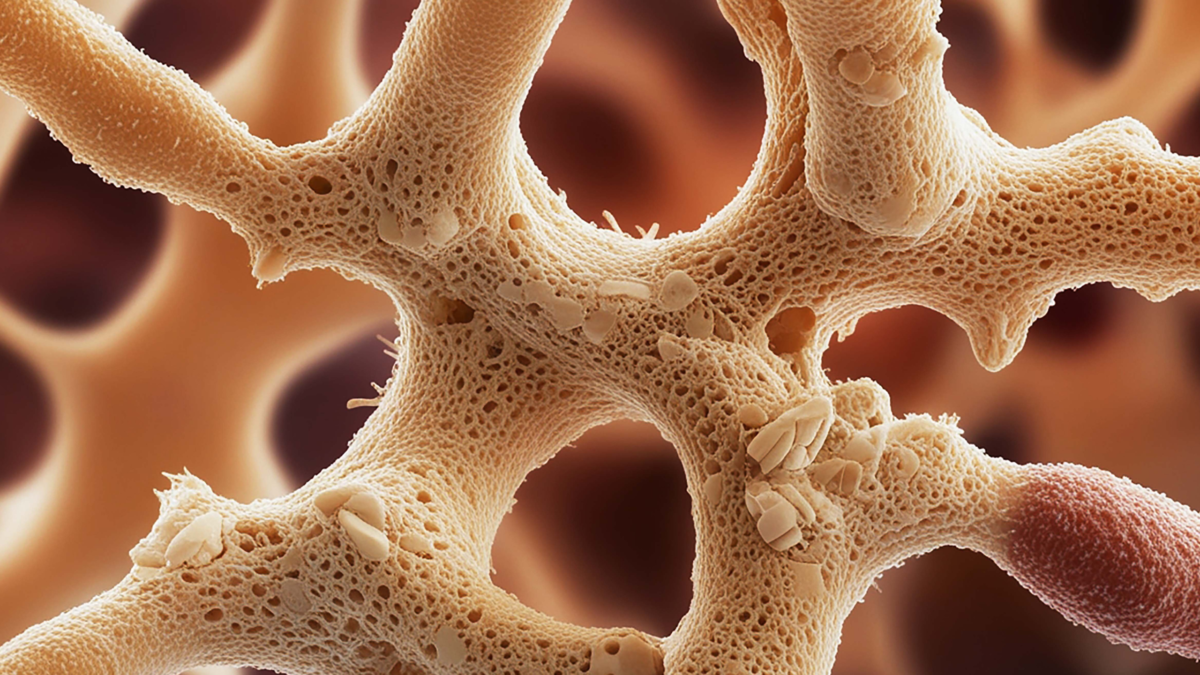
PearlBone Putty 1600 нь ясны хугарлын завсрыг нөхөж, байгалийн ясны эсийн ургалтыг дэмжих зориулалттай.
АНУ-ын Хүнс, эмийн захиргаа (FDA) PearlBone Putty 1600-д 510(k)-ийн зөвшөөрөл олгосноор уг материалыг ясны хугарлыг нөхөхөд ашиглан зах зээлд гаргах боломж бүрджээ. Энэ нь хясааны сувдан дотор давхарга буюу nacre-ээс гарган авсан яс орлуулах анхны материал юм.
PearlBone-ийн баг сувдан бүрхүүл дэх кальцийн карбонатыг хүний ясны эрдэс бүтэцтэй төстэй кальцийн фосфат болгон 24 цагийн дотор хувиргах химийн аргыг боловсруулжээ. Баруун Австралийн эргээс олддог Pinctada maxima хясааны бүрхүүлийг нунтаглан, кальцийн фосфатын давс болон устай хольдог байна. Түүхий эдийг байгалийн сувд үржүүлгийн салбарын хаягдал бүтээгдэхүүнээс авдаг.
2024 онд Materials & Design сэтгүүлд нийтэлсэн судалгаанд багийнхан өөрөө бэхждэг энэхүү нийлмэл материалын био задрал түргэсэх, ясны ургалтыг өдөөх шинжийг дурджээ. Лабораторийн нөхцөлд материал механик бат бөх чанараа хадгалж, эсийн наалдац, үржлийг дэмжин яс үүсэх үйл явцыг тэтгэж байсныг судлаачид мэдээлсэн.
PearlBone-ийг гэмтэл, мэс заслын дараах ясны согогийг нөхөхөд ашиглаж болох ч ясны нийт тогтвортой байдлыг дангаар хангах зориулалтгүй; эдгэрэх явцад зайг нөхөж, шаардлагатай тохиолдолд хавтан, шураг зэрэгтэй хамт хэрэглэнэ. Өвчтөний өөрийн ясны эдийг авах арга нь тохироо сайн боловч өвдөлт, мэс заслын хугацааг нэмэгдүүлж болзошгүй, харин бусад хиймэл орлуулалтын материалын бат бөх чанар болон шимэгдэлтийн хурд хязгаарлагдмал байж болно. PearlBone-ийг эмнэлзүйн хэрэглээнд шууд нэвтрүүлэхгүй бөгөөд Marine Biomedical компани АНУ дахь түншүүдтэйгээ үйлдвэрлэл, борлуулалтын асуудлыг шийдвэрлэх шаардлагатай.
Дэлгэрэнгүйг эх сурвалжаас харах
↓Эх сурвалжийг нээх ↓
When it comes to helping the human body repair bones, there are several options available to doctors – but they each come with drawbacks as well as advantages.
Now there’s a new treatment on the table, in the US at least. PearlBone Putty 1600, made from sustainably sourced pearl shells, was just given 510(k) clearance by the country’s Food and Drug Administration (FDA).
That means PearlBone can now be marketed and sold in the US as a substance used for repairing bone fractures.
It’s the first replacement bone graft material to be made from nacre (or mother-of-pearl), the shiny layer inside oyster shells, but it does something smart to that raw material to make it suitable for setting bones in place – and it’s been many years in the making.
The research team behind PearlBone developed a chemical reaction that turns the calcium carbonate of nacre into the calcium phosphate of human bone, ready for grafting, in the span of 24 hours.
“We developed and patented a technology that converts nacre, the mineralized structure of pearl shell, into a bone mineral matrix composite,” says regenerative biologist Minghao Zheng from the University of Western Australia, one of the team behind PearlBone.
“Essentially, we found a way to accelerate a biomineralization process that took millions of years in nature, into a process that could be completed in a day.”
The PearlBone researchers have previously published some of their work in the Materials & Design journal. In that study, they outline how their nacre-based calcium orthophosphate composite (NCOC) was produced.
Using shells from the Pinctada maxima pearl oyster, found off the coast of Western Australia, the process requires grinding the shells into a powder and mixing the powder with a calcium phosphate salt and water.
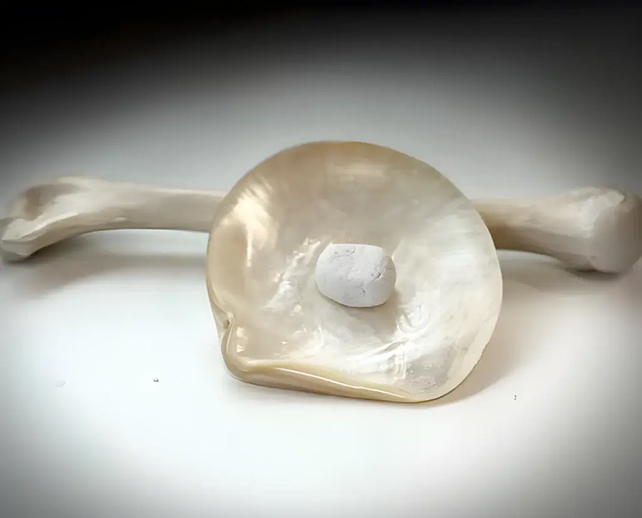
“Overall, our data showed that NCOC produced through self-setting reactions, presents advantages such as accelerated biodegradation and osteostimulative properties, making it a promising bone substitute for effective bone regeneration,” write the researchers in their published paper.
The operation is sustainable too, because it uses existing by-products of the pearl farming industry that would otherwise be discarded – it’s basically recycling oyster shells.
Ultimately, PearlBone could be used for almost any bone that’s been damaged by injury or surgery. However, as the FDA requirements clarify that the grafts can’t be “intrinsic to the stability” of the bone overall.
In other words, it’s used to fill gaps while a bone heals, potentially alongside other fittings like plates or screws.
One of the cleverest aspects of the material is the way it encourages natural bone cells to fill the gaps, supporting bone regrowth through a carefully calibrated structure, and then eventually being replaced by normal bone.
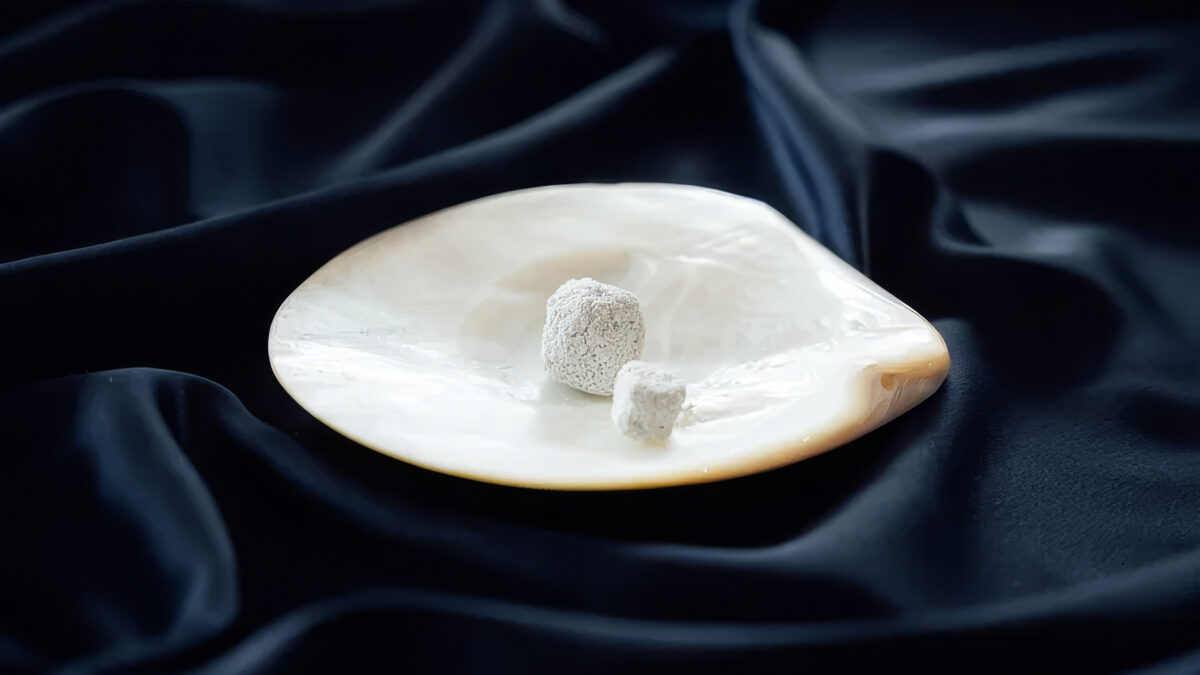
“NCOC is a complex composition of biocompatible and biodegradable calcium salts and can maintain its mechanical strength, promote cell attachment, proliferation, and osteogenesis in vitro,” write the researchers.
Now it’s another step towards being put to use in hospitals and clinics, PearlBone promises to be a valuable alternative to current approaches to bone grafts. The best existing option is to take bone from elsewhere in a patient’s body, which guarantees a good match but can cause pain and extended surgery times.
Other artificial bone substitutes are also available, but don’t always take as well, and can be limited in terms of strength and absorption rates.
The PearlBone Putty 1600 isn’t going to be available for bone grafts right away. The biotech company responsible for PearlBone, Marine Biomedical, still needs to work with partners in the US to get it manufactured and sold to clinical and commercial partners.
And if you’re interested in the financials as well as the science, there’s a lot of potential here: The US is the biggest market in the world for orthopaedic products, with an estimated value of $1.1 billion a year.
“[The FDA approval] reflects years of scientific research and extraordinary dedication,” says Rolee Kumar, CEO at Marine Biomedical.
This article was fact-checked by Fiona MacDonald and edited by Fiona MacDonald. While we pride ourselves on our process, we are only human. If you spot a mistake, please let us know.

