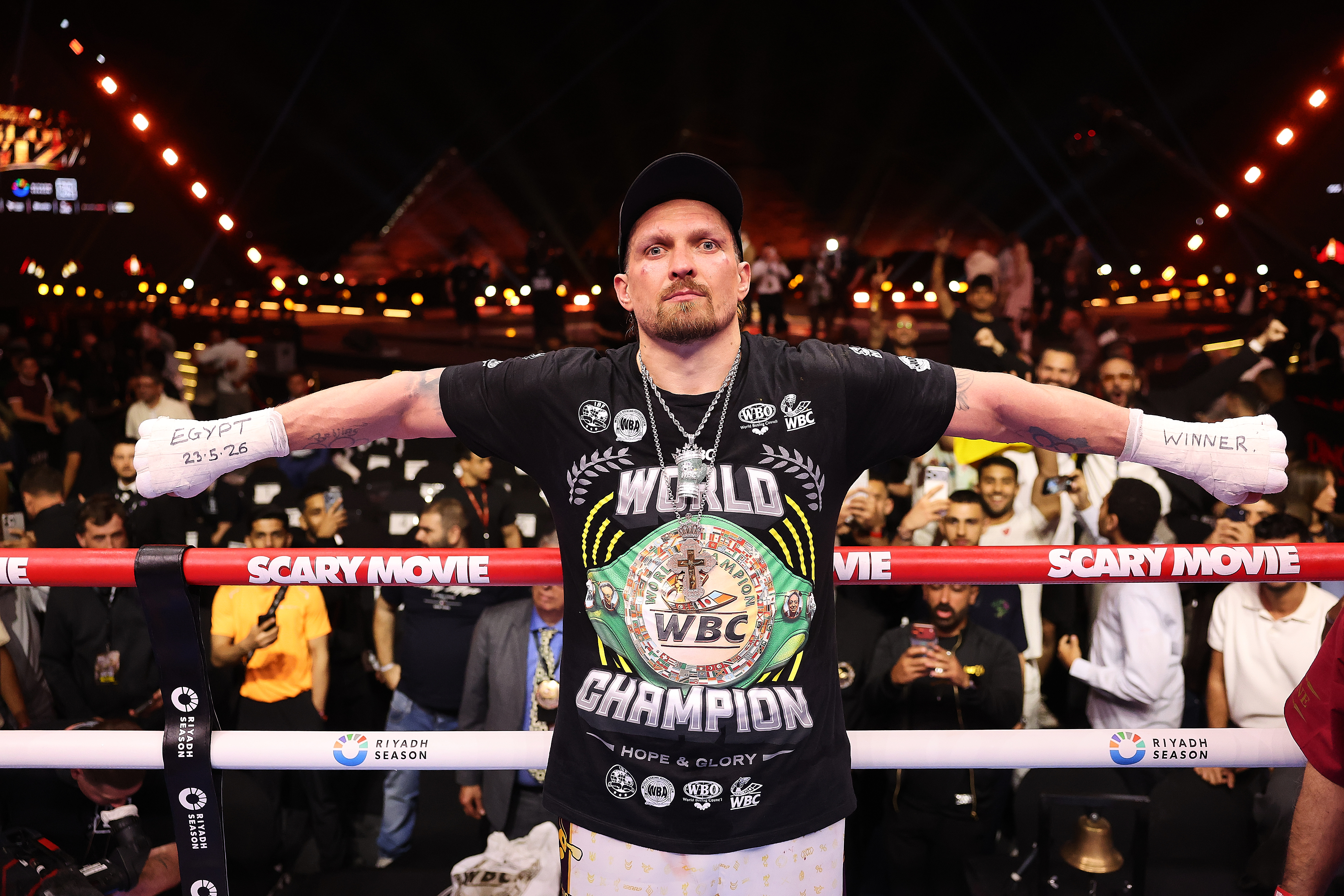
Хүнд жингийн аварга асан Александр Усик хүнд жингийн бүх бүсээсээ татгалзаж, крузервейт жинд эргэн ирж аварга Дэвид Бенавидезтэй тулалдах хүсэлтэй байгаагаа илэрхийллээ.
Украины боксчин Александр Усик хүнд жинд бүх томоохон өрсөлдөгчөө ялсны дараа карьераа өөр шатанд гаргахаар шийджээ. Тэрээр аравдугаар сарын 31-нд Саудын Арабын Эр-Рияд хотоос DAZN сувгаар дамжуулан хийсэн мэдэгдэлдээ хүнд жинд хийх зүйл үлдээгүй гэж үзэн, крузервейт жин рүү буцаж байгаагаа албан ёсоор зарлав. Усик одоогоор 96-97 кг жинтэй байгаа бөгөөд крузервейт жингийн дээд хязгаар болох 200 фунт буюу 90.7 кг-д хүрэхээр бэлтгэж байна.
Усикийн хувьд энэ нь өндөр эрсдэлтэй, өндөр шагналтай тулааныг эрэлхийлсэн алхам юм. Тэрээр өмнө нь тавдугаар сард Рико Верхоевентэй тулалдахдаа 233 фунт жинтэй байсан бол одоо илүү хөнгөн, хурдтай байхыг зорьж байна. Түүний өрсөлдөгч, WBA болон WBO-ийн крузервейт жингийн аварга Дэвид Бенавидез нь 32 ялалттай, үүний 26-г нь нокаутаар шийдвэрлэсэн, 29 настай хүчирхэг боксчин юм.
Боксын мэргэжилтнүүд болон тамирчид Усикийн энэхүү шийдвэрийг Рой Жонс Жр., Крис Бёрд нарын түүхэн дэх жин хасч тулалдсан туршлагатай харьцуулан анхааруулж байна. Ялангуяа 40 насны босгон дээр жин хасч, хүнд жинд дассан бие бялдраа өөрчлөх нь эрсдэлтэй гэдгийг мэргэжилтнүүд онцоллоо. Гэсэн хэдий ч Стив Каннингем болон Дэйв Колдвелл нарын зүгээс Усикийн баг бүрэлдэхүүн мэргэжлийн түвшинд бэлтгэлээ хангах чадвартай гэдгийг тэмдэглэжээ.
Усикийн хувьд хүнд жинд үргэлжлүүлэн тулалдах нь түүний түүхэн амжилтад нэмэр болохооргүй байгаа тул крузервейт жинд эргэн ирж, “Мангас” хочит Бенавидезтэй тулалдах нь түүний өв уламжлалыг улам баталгаажуулна гэж үзэж байна. Хэрэв энэ тулаан бодит ажил хэрэг болбол Усик боксын түүхэн дэх хамгийн том эрсдэл гаргагчдын нэг болох нь дамжиггүй.
Дэлгэрэнгүй эх сурвалжийг харах
Эх сурвалжийг нээх ↓
Perhaps what made Oleksandr Usyk’s decision to box Rico Verhoeven, a kickboxer, such a strange one was the fact it was totally at odds with the heavyweight champion’s philosophy to that point. Quite the deviation, to say the least, the fight would represent the outlier in a career otherwise defined by serious, defining engagements. It was, for Usyk, a sudden left turn; the first time the Ukrainian had opted for a low-risk, low-reward assignment, aware that victory would garner no praise.
Still, some said he deserved it, a fight like that. They said that having beaten every legitimate heavyweight there was to beat, Usyk had earned the right to mess around with an imposter for one night. Some even called it a “bit of fun,” as though Usyk was at last free from a tumultuous marriage and now in need of something frivolous, no strings attached.
This sense of Usyk winding down then began to gather pace when the idea of him fighting Deontay Wilder, the faded former WBC heavyweight champion, was later floated, both by Wilder and Usyk, for Usyk’s final fight. That, too, would have been a fling of the low-risk, low-reward variety, yet it had value, they said, purely on the basis that Wilder, now 41, was the single heavyweight of Usyk’s era he had not already tamed.
While that is true, most fans felt Usyk (25-0, 16 KOs) would be better off retiring before he turned 40 in January 2027. Besides, this past June he vacated each of his heavyweight titles, which possibly indicated he was of the same mind, or at least leaning in that direction. After all, Usyk is many things, but a fool he is not. He would have accepted that his bit of fun with Verhoeven in May so nearly backfired and that, had he not stopped the Dutchman in Round 11, much of his stellar work as both a cruiserweight and heavyweight would have been spoiled. Which is to say, if boxing a kickboxer in Egypt achieved anything, it served to highlight the danger of agreeing to low-risk, low-reward assignments when one is accustomed to the opposite.
Maybe conscious of this, Usyk recently concocted another plan. This one required no heavyweight titles, nor did it require him to look down the back of the sofa or rummage through pockets of winter coats for viable opponents. Instead, Usyk was going to try on his old cruiserweight suit for size. See if it still fits.
“I cleaned heavyweight [out] and am back at my weight [cruiserweight],” Usyk announced on Oct. 31 during a DAZN broadcast from Riyadh, Saudi Arabia. He then, without prompting, proceeded to lift his t-shirt to expose his abdominal muscles while revealing he was currently walking around at 96 or 97 kilograms (211.5 to 213.5 pounds). That would mean Usyk is significantly lighter than when he boxed Verhoeven in May — a fight for which he tipped the scales at 233 pounds — and well on track to hitting the cruiserweight limit of 200 pounds. Should he manage that, a fight against David Benavidez, the current WBA and WBO cruiserweight champion, becomes more than just a fantasy matchup full of hypotheticals.
“If I have [an] opportunity at cruiserweight, I am back,” said Usyk in Riyadh. “It is a big fight because Benavidez is a big champion. Me, a little bit too.”
Translation: With Usyk now feeling lithe, inspired and imaginative again, his brief stint as an altruistic, semi-retired charity worker appears to be over. Now, to finish the way he started, he seemingly wants to revive the approach that got him here — that of high-risk, high-reward.
The risk is axiomatic in this case.
Firstly, David Benavidez is known as “Monster” for a reason, and has to date won 32 professional fights, 26 of them by knockout. He is also, at age 29, a decade Usyk’s junior. Then, of course, you factor in the reality of Usyk shedding so much weight in his 40th year and both this specific fight and every potential fight at cruiserweight becomes one fraught with danger. After all, it is seldom plain sailing for the boxer who goes up in weight only to then later come back down to pick up where they left off. Rarely in that scenario do we ever say, “Good move. That worked.”
For proof, look at what happened to Roy Jones Jr. in 2003. On top of the world at the time, Jones decided that year to ambitiously move from light heavyweight to heavyweight and back again within the space of just eight months, not knowing the move would both define his career and effectively end it.
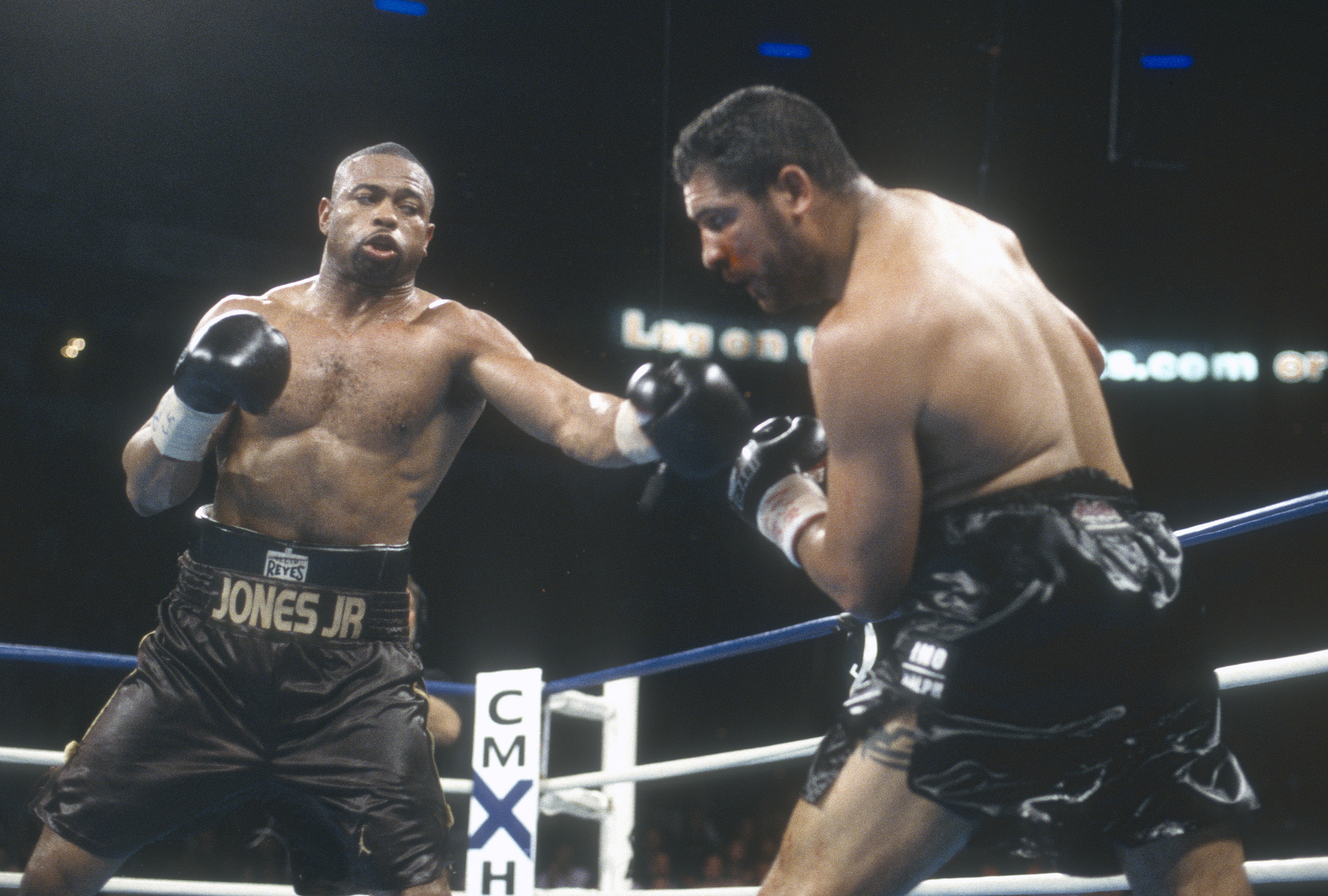
Prior to the move Jones had won world titles as a middleweight, super middleweight and light heavyweight, and would venture to heavyweight for one night only against John Ruiz, an American of Puerto Rican heritage deemed one of the weaker world champions circa 2003. In doing so, Jones went from weighing 175 pounds in his last light heavyweight title defense — against Clinton Woods in September 2002 — to weighing 193 pounds (seven pounds beneath the cruiserweight limit) against Ruiz the following March. Crucially, too, Jones, with the help of strength and conditioning coach Mackie Shilstone, was able to pack on the weight, mostly in the form of muscle, and still retain much of the speed and agility for which he was famous. He then used his souped-up gifts to bamboozle Ruiz, all 226 pounds of him, and snatch his WBA heavyweight belt in the process.
Afterward, Jones was glorified like never before, and rightly so. In dethroning Ruiz, he had become the first man to win world titles at both middleweight and heavyweight since Bob Fitzsimmons in 1897, which only solidified his greatness. Better yet, by now dipping his toe in heavyweight waters, Jones had plentiful options; lucrative ones to boot. There were, for instance, negotiations for him to fight Evander Holyfield, then 40, at Madison Square Garden in October 2003, which collapsed at the last minute. There was also talk of Jones fighting Corrie Sanders, who had recently upset Wladimir Klitschko, as well as rumors of superfights against the two big dogs in the division around that time: Mike Tyson and Lennox Lewis.
Yet, as it turned out, Jones selected a different path. Rather than remain at heavyweight, where the prospect of large paydays had to be weighed against an increased threat, Jones returned to light heavyweight, a division with which he was more familiar and in which he felt more comfortable.
By November, just eight months after schooling Ruiz at 193 pounds, Jones was not only in a ring with Antonio Tarver, the rival who had baited him home, but he was in his old clothes again, thrilled to discover they still fit. In fact, it was only when the 35-year-old shapeshifter tried to then move in them that they started to tug in all the wrong places and cruelly remind him of how his body had changed that year. Yes, he may have looked the part, and he may have escaped with a majority decision, but this was not the “Superman” Roy Jones we had seen at heavyweight, much less the one who had previously dominated at light heavyweight.
“It’s one of the worst times I ever had [cutting weight],” Jones later acknowledged. “You sacrifice so much, you want to kill somebody. I had to run more, diet more. You’re hungry and thirsty half the time.
“In the seventh round,” he said, “I told myself, ‘This ain’t working.’ And in the eighth round, I was so tired, I told myself, ‘This dude could stop me. If he ever could stop me, it would be now.'”
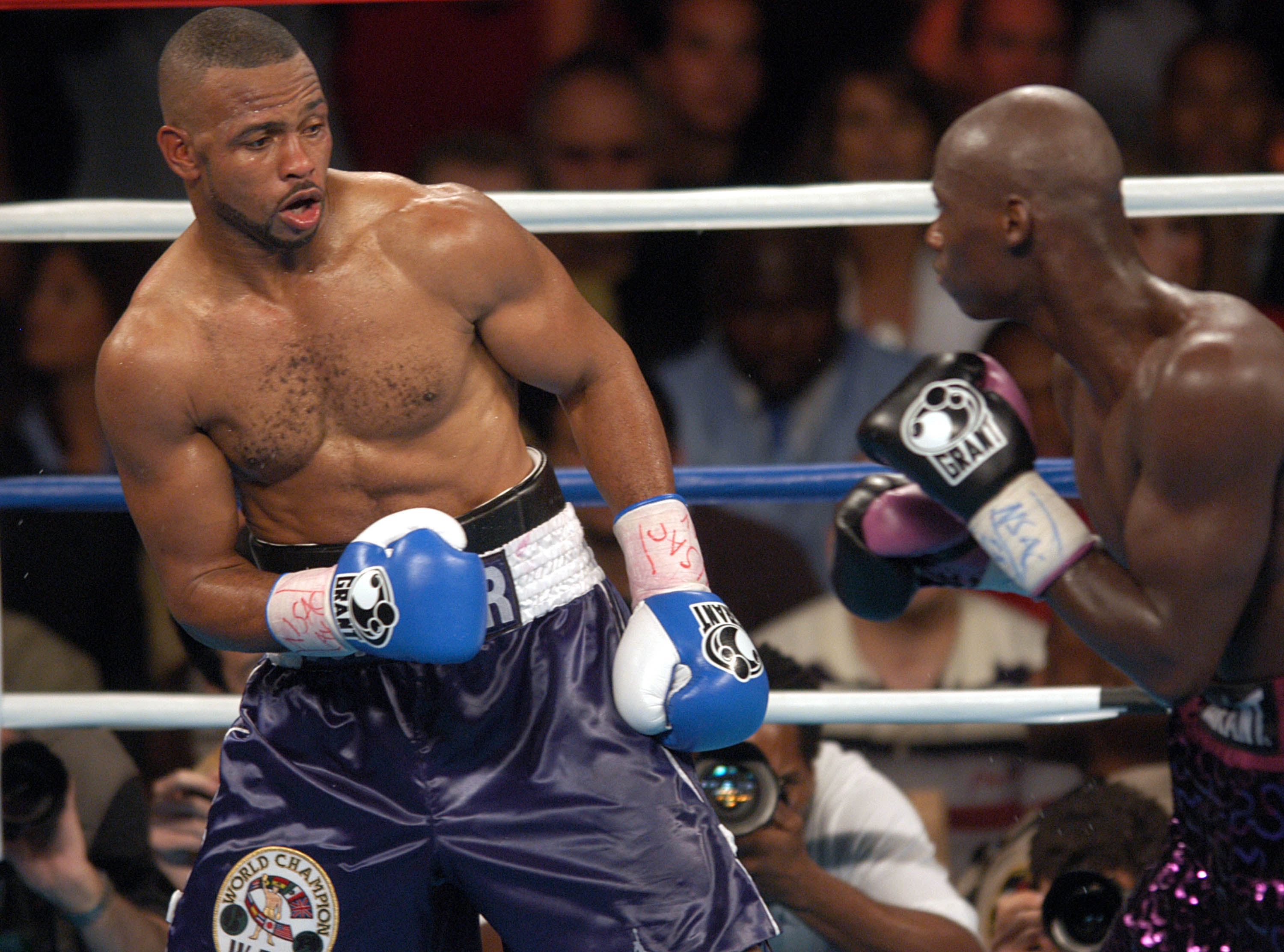
Instead of doing it then, the image of Antonio Tarver stopping Roy Jones would not be developed until the following May, when Tarver connected with an almighty left hand in Round 2 of their rematch to cut a diminished Jones down to size. After that, there was no building him back up.
Memorably, before touching gloves that night, Tarver had asked Jones during the referee’s pre-fight instructions: “Got any excuses tonight, Roy?” At the time Jones said nothing.
“If I did it all again, I would have probably stopped and taken two years off after I won the heavyweight title,” Jones admitted to me in 2018. “That would have given me enough time for my body to lose the weight the right way. My body needed that time to recover and I didn’t give it time to recover. It needed that break.”
Chris Byrd, another former world heavyweight champion from America, can attest to that feeling of sudden depletion. In 2008, Byrd volunteered to make the precarious trip down from heavyweight (where he weighed 212 pounds for his last fight) to light heavyweight (175 pounds), at which point his well-earned reputation for durability betrayed him when he needed it most. Rather shockingly, Byrd’s extreme weight loss appeared to come at the expense of his capacity to take punches.
“Losing the weight was a challenge for me and I became obsessed with it,” said Byrd, whose ninth-round stoppage defeat at the hands of Shaun George soon curtailed his light heavyweight experiment. “The lowest I got down to was 168 [pounds]. I was thinking, ‘Man, I’m going to fight at super middleweight or middleweight after this. I can do that no problem.’ I was having crazy thoughts. You get on this series of highs — workout highs — and there was no bringing me down until fight night.
“But it was a major detriment to me. It killed me. I didn’t even warm up before I fought. I was a dead man. I had no energy whatsoever. When I got in the ring everybody was surprised that the Las Vegas commission actually passed me. I think they passed me only because they knew me. They knew I was a good guy, I looked okay, and I was reliable.
“They got it wrong, though. Look at me. I was a skeleton. I shouldn’t have fought. It was a bad move. Every punch shook me up.”
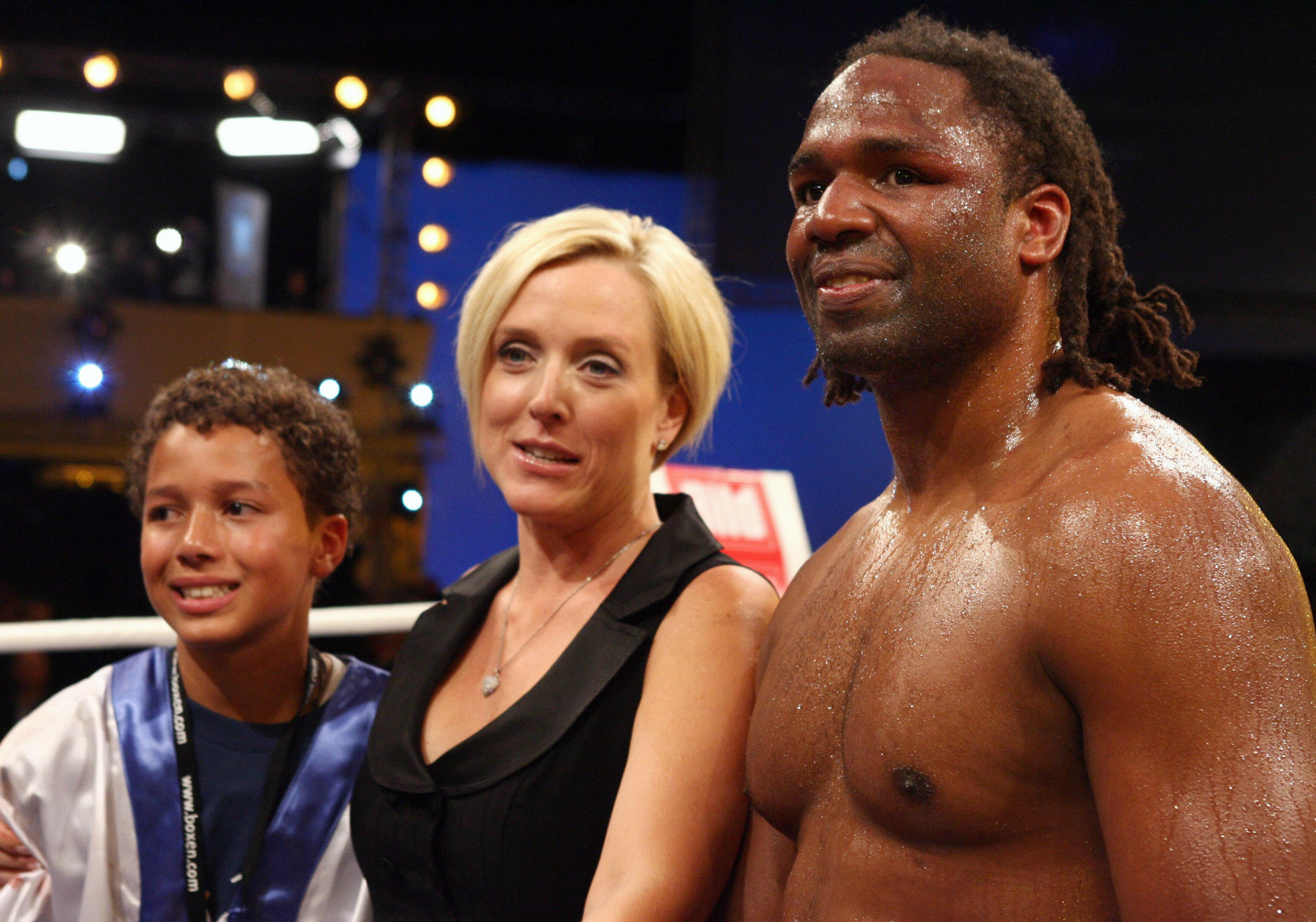
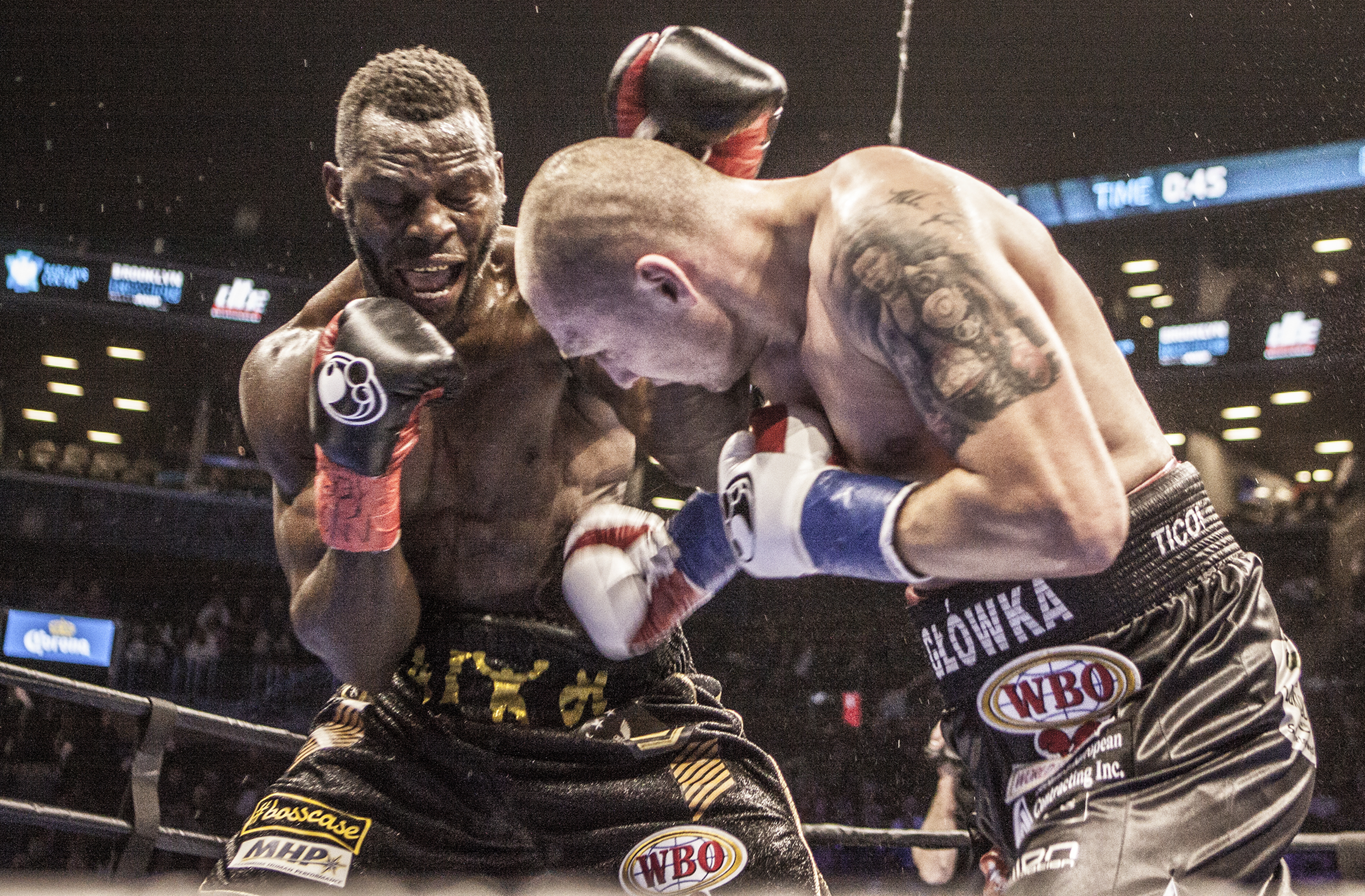
Meanwhile, the issue for Steve Cunningham, a two-time IBF cruiserweight champion who spent four years as a heavyweight only to return to his natural habitat in 2016, had nothing to do with losing either weight or his punch resistance. Instead, what “USS” Cunningham had to overcome when returning to base for a WBO title fight against Krzysztof Glowacki was something else entirely.
“I was fighting heavyweights at 203 or 204 [pounds], so the weight wasn’t a problem at all,” he said. “The only issue was adjusting back to that speed in combat. Suddenly you’re back to thinking, ‘OK these dudes are fast again, just like me.’ They can get into those little spots where heavyweights won’t even think about getting. It’s more competitive at cruiserweight for me, mentally and physically, than it is at heavyweight.”
Cunningham expects Usyk to stumble upon the same realization when he returns to cruiserweight in 2027. He also expects the Ukrainian to be prepared for it in ways he perhaps wasn’t.
“I think that will play a part and could be an issue for a round or two,” said Cunningham. “To be honest, the really smart thing for Team Usyk to do would be to have Usyk spar super middleweights and light heavyweights at the beginning of camp. That will help the eyes get adjusted to the speed.
“I had a light heavyweight in camp and some regular cruiserweights for that cruiserweight title fight with Glowacki. But you know within yourself that you just have to speed everything up and be that bit faster. You can’t rely on a speed advantage the way you do when you are in with heavyweights.”
Such is Usyk’s quality and attention to detail, Cunningham finds he is able to disregard most of the concerns he would have for anyone else attempting to drop from heavyweight to cruiserweight. Besides, it is reasonable to suppose the same reference points and cautionary tales Cunningham himself used before going back down will be used by Usyk, too.
“The difference between this situation and the Roy Jones one is the timing,” he said. “Roy did it too fast. He should have waited. Hopefully, with Usyk, they won’t rush it and they will get the timing right. We want both fighters [Usyk and Benavidez] to be at their best. We don’t want any excuses. If the fight has to happen next July, I’m willing to wait for it.
“Usyk being a top guy, with all that money behind him, I’m sure they will do it the right way. They can get all the proper nutritionists and get the timing of the fight just right, so it isn’t an issue. I really don’t see it being a problem for him. Usyk’s team is an all-star team. They know exactly what they are doing.”
The last time we saw Oleksandr Usyk compete as a cruiserweight, he left Tony Bellew, the former WBC champion, prostrate on the bottom rope in Round 8 of a 2018 fight in Manchester, England. In Bellew’s corner that night was Dave Coldwell, his coach, whose apprehension going into the contest had as much to do with the fact his man had just spent two years at heavyweight as any brilliance on the part of Usyk.
“When Usyk called Bellew out and Bellew asked me what I thought, the first thing I said to him was, ‘You should fight him at heavyweight,'” Coldwell recalled. “The reason I said that was because Bellew had spent a couple of years at heavyweight, he walked around as a heavyweight, and he had two fights against [heavyweight] David Haye, as well as a fight that was called off. I said to him, ‘Look, my worry is that you go back down to cruiserweight and you won’t have the same engine and you’re not going to hold a shot as well.’ My concerns for Bellew back then are the same concerns I have now for Usyk.
“To be fair, Bellew doing it [returning to cruiserweight] was easier than what Usyk will be doing. Usyk has built up pure muscle, whereas Bellew was never a muscular guy. Bellew wasn’t fat at heavyweight, but if it’s not pure muscle weight you’re putting on, it’s a bit easier to shift. Losing muscle is never a good thing for the body. As we age you want to keep as much muscle as you can, because that is literally the system that keeps you strong and alive. It keeps you sturdy. It keeps you balanced. When you go against nature and take away muscle, it’s not good.”
Like Roy Jones before him, Bellew only dabbled as a heavyweight, weighing 214 pounds for his first fight with Haye and then 210 pounds for the rematch. Despite his success there, he didn’t stick around for long and he visited only because it presented a unique and lucrative opportunity for him.
Usyk, on the other hand, found a home at heavyweight.
“Roy Jones was only there for a minimal amount of time, whereas Usyk has been fighting, living and walking around as a heavyweight since 2019,” stressed Coldwell. “If you look at his weights, they have been pretty consistent. In fact, for his last fight [against Verhoeven in May], he was at his heaviest. You can see by looking at his body shape that the weight he has put on is mostly muscle. He hasn’t just eaten more and put on fat. Because it’s muscle, and his body has now adapted to this weight, I think stripping muscle is a dangerous thing to do. It would be a dangerous thing to do if he was young, but the fact he is 40 years old and doing it is crazy. Yes, he will get on the scales and look fantastic, I’m sure, but he’s putting himself at a huge disadvantage here.
“Having watched loads of Usyk over the years, I know he hasn’t been able to do the same things at heavyweight he once did at cruiserweight. That’s because of his extra size and the fact he has had to adapt his style to fight bigger men. To assume that just because he becomes lighter now — by going to cruiserweight — he will fight the same as he did in 2018 is wrong. He was younger back then.
“Also, there has been a lot of wear and tear put on his body by these heavyweights. For seven years he has been competing with and sparring naturally bigger men and these naturally bigger men have been whacking him around his arms and shoulders round after round. You can’t underestimate the toll that takes on a person’s body. It’s much greater than it would be if he was a natural heavyweight whose body was accustomed to that kind of damage.”
Mindful of both the importance of timing and the overall stakes, Usyk’s decision to revisit cruiserweight, where he could end up fighting David Benavidez, won’t be one he has taken lightly. Moreover, could it not be argued that the risk involved — which will in turn enhance the reward — might be the very thing that returns to Usyk the sharpness and motivation he lacked against Verhoeven in May?
Yes, he will get on the scales and look fantastic, I’m sure, but he’s putting himself at a huge disadvantage here.Dave Coldwell on Oleksandr Usyk dropping back down to cruiserweight
“I think it’s great for both,” said Cunningham. “David Benavidez is someone who likes to challenge himself — I love that about him — and Usyk is the guy. Usyk is actually my No. 1 pound-for-pound fighter. Him coming down and challenging Benavidez and trying to make history, more history, only cements his legacy in my eyes. What does he have left to do at heavyweight? Fighting Wilder makes no sense. I get that he wants to beat all the top heavyweights of that era, but Deontay has nothing to offer except a puncher’s chance.
“The only thing he [Usyk] has left to do at heavyweight is lose. That’s it. And we don’t want him to do that.”
Coldwell agreed: “I know people were saying he could fight [Moses] Itauma, who was unbeaten back then, or [Agit] Kabayel, but I looked at what Usyk had achieved — Olympic gold, undisputed cruiserweight [champion], undisputed heavyweight [champion], beaten everybody in his era — and couldn’t see how he could add to his legacy at heavyweight. So, why carry on boxing? If he beats a Kabayel or a [Joseph] Parker, does it add to his legacy? In five years’ time will people be saying, ‘Remember when Usyk beat Kabayel?’ No, they won’t. They’ll talk about what he did to [Tyson] Fury and what he did to AJ [Anthony Joshua]. When he picked Verhoeven, I thought he had just been offered a s***load of money and was cashing out. But obviously he wants to carry on fighting. He’s looked at cruiserweight and thought, ‘You know what? That will add to my legacy.‘ Also, I don’t think it will take away from his legacy if anything went wrong because it’s such a crazy thing to do.
“It just shows the mentality of the man. It’s unbelievable. He’s not choosing to go down to cruiserweight to fight someone hand-picked. He’s on about taking on a f***ing monster [Benavidez] who is all wrong for an old man — high energy, nonstop punching, rapid hand speed, someone who goes in there with one ambition and that is to overwhelm you and knock you out. He’s literally going in there with someone who has the worst style possible for a boxer of 40 coming back down after seven years as a heavyweight and whose reflexes are slowing and who has now become used to heavyweight speed. I’m not saying he can’t do it, because the man’s a genius, but what I will say is this: If he does it, I would put him right up there as one the greatest of all time.”
If at heavyweight the only thing Oleksandr Usyk has left to do is lose, at cruiserweight the only thing he has to lose is 12 pounds, according to his own calculations. Rest assured, his legacy, as both an all-time great and one of boxing’s great risk-takers, is secure, regardless of what happens next.

