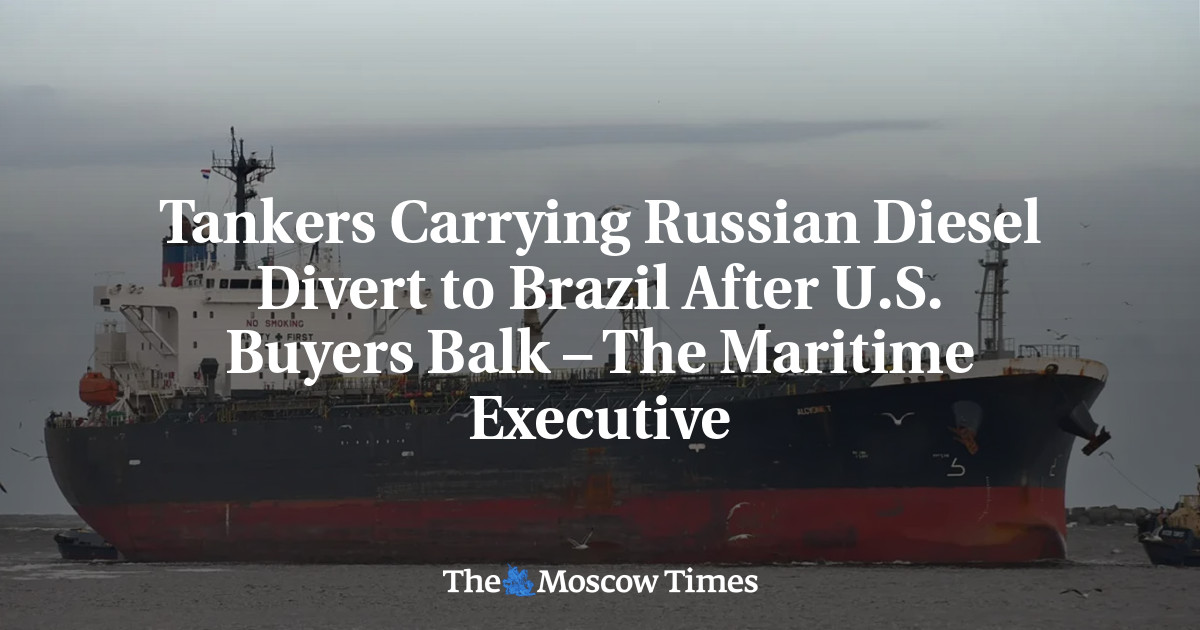
АНУ-ын импортлогчид хориг арга хэмжээтэй холбоотой эрсдэлээс болж ОХУ-ын түлш худалдан авахаас татгалзсанаар хөлөг онгоцууд чиглэлээ өөрчилсөн байна.
АНУ-ын ерөнхийлөгч Дональд Трамп болон ОХУ-ын ерөнхийлөгч Владимир Путин нарын хооронд аравдугаар сарын 9-нд байгуулсан дизель түлш нийлүүлэх хэлэлцээрийн дараа олон улсын тээвэрлэлтийн салбарт маргаан үүсээд байна. АНУ-ын засаг захиргаа хориг арга хэмжээг түр зогсоох шийдвэр гаргасан хэдий ч Америкийн түлш импортлогчид нэр хүндийн эрсдэл болон албаны хүмүүсийн анхааруулгын улмаас тус улсаас түлш худалдан авахаас татгалзжээ. Үүний улмаас ОХУ-ын дизель түлш тээвэрлэж байсан хөлөг онгоцууд чиглэлээ өөрчлөн Бразилыг зорьсон байна.
“The Maritime Executive” мэдээллийн эх сурвалжийн мэдээлснээр, Сьерра-Леон улсын далбаатай “Leruo” танкер Бразилын Итакоатиара боомтод ирж, улмаар Амазоны голыг өгсөн Манаус хот руу хөдөлжээ. Мөн ОХУ-ын далбаатай “Primorye” танкер араас нь ирсэн бол “Beast” хөлөг онгоц Өмнөд Америкийн эрэг орчимд “Бразилын захиалга хүлээж байна” гэсэн төлөвтэй хөвж байна. Хөлөг онгоц тус бүр 40,000 тонн дизель түлш тээвэрлэж байгаа аж.
Бразилын түлш импортлогчдын холбооны ерөнхийлөгч Сержио Араужогийн мэдээлснээр, тус улсын зах зээлд нийт 1.1 сая баррель бүхий дөрвөн ачааг санал болгосон байна. Хэрэв эдгээр ачааг бүгдийг нь худалдан авбал энэ нь Бразилын аравдугаар сард ОХУ-аас импортолсон хэмжээнээс хоёр дахин их үзүүлэлт болох юм. Гэвч арилжаачид эдгээр түлшний үнэ АНУ-д үйлдвэрлэсэн түлштэй харьцуулахад тийм ч ашигтай биш гэдгийг онцолжээ.
Тус улс дизель түлшний хэрэгцээнийхээ гуравны нэгийг импортоор хангадаг бөгөөд жилийн эцэст хөдөө аж ахуй болон тээврийн салбарын эрэлт нэмэгддэг. Үүнээс гадна ОХУ-ын “Talisman” танкер Газар дундын тэнгист, Мальтын далбаатай “Agioi Fanendes” хөлөг онгоц Атлантын далайд тус тус байрлалаа өөрчлөн хүлээлтийн горимд шилжсэн байна.
Дэлгэрэнгүйг эх сурвалжаас харах
↓Эх сурвалжийг нээх ↓
Three tankers loaded with Russian diesel have arrived in or rerouted toward Brazil after U.S. buyers and officials declined the shipments over sanctions risks, the shipping industry outlet The Maritime Executive reported Thursday.
The diversions follow controversy over an Oct. 9 Russian diesel supply deal between U.S. President Donald Trump and Russian President Vladimir Putin. While the vessels were headed towards the U.S., American fuel importers balked at purchasing the cargoes due to reputational risks and warnings from officials despite the Trump administration’s sanctions waiver.
According to the Maritime Executive, the Sierra Leone-flagged tanker Leruo reached the Itacoatiara anchorage in Brazil earlier this week before continuing up the Amazon River toward Manaus. The Russian-flagged Primorye also reportedly arrived at the Itacoatiara anchorage closely behind the Leruo.
The Sierra Leone-flagged Beast was said to be sailing off the South American coast with its tracking signal listed as “Brazil For Orders.” Each vessel is reportedly carrying around 40,000 metric tons of diesel.
Brazilian importers were offered at least four cargoes of a combined 1.1 million barrels of Russian diesel this month, Sérgio Araújo, president of the fuel importers’ association Abicom, told Bloomberg last week.
If Brazil were to buy all four cargoes, the volume would be nearly twice what it imported from Russia in October. Traders said at the time that prices were not as attractive as those of U.S.-made fuel.
Brazil relies on imports for about a third of its diesel needs. Demand typically peaks toward the end of the year as farmers use more fuel to run machinery and truckers haul fertilizer.
The Maritime Executive reported that other tankers initially tracked by the environmental group Greenpeace as potentially heading toward the U.S. have also changed course. The Russian-flagged Talisman was recently spotted in the Mediterranean off Egypt, while the Malta-flagged and Greek-owned Agioi Fanendes has remained idling several hundred miles out in the Atlantic for more than a week, with its status set to “For Orders.”
A Message from The Moscow Times:
Dear readers,
We are facing unprecedented challenges. Russia’s Prosecutor General’s Office has designated The Moscow Times as an “undesirable” organization, criminalizing our work and putting our staff at risk of prosecution. This follows our earlier unjust labeling as a “foreign agent.”
These actions are direct attempts to silence independent journalism in Russia. The authorities claim our work “discredits the decisions of the Russian leadership.” We see things differently: we strive to provide accurate, unbiased reporting on Russia.
We, the journalists of The Moscow Times, refuse to be silenced. But to continue our work, we need your help.
Your support, no matter how small, makes a world of difference. If you can, please support us monthly starting from just $2. It’s quick to set up, and every contribution makes a significant impact.
By supporting The Moscow Times, you’re defending open, independent journalism in the face of repression. Thank you for standing with us.
Continue
Not ready to support today?
Remind me later.
×
Remind me next month
Thank you! Your reminder is set.
We will send you one reminder email a month from now. For details on the personal data we collect and how it is used, please see our Privacy Policy.

