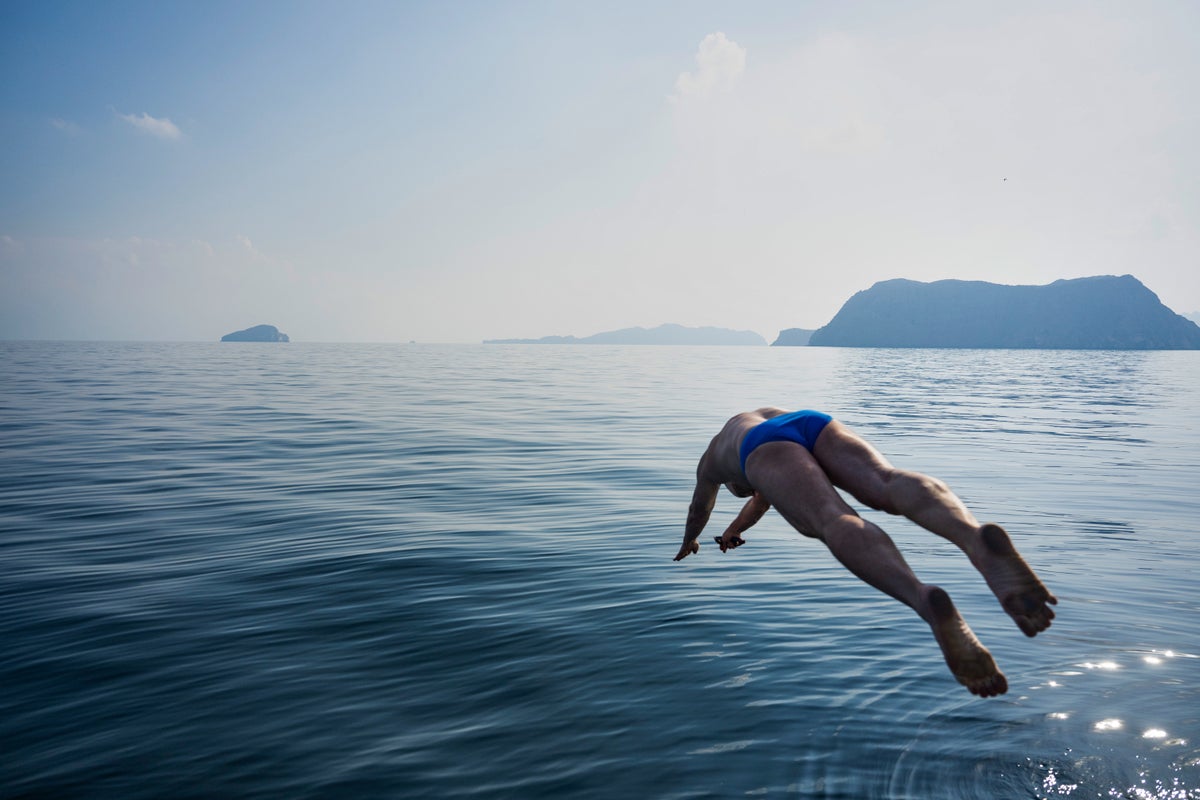
НҮБ-ын Далайн элч Льюис Пью Ормузын хоолойд гурван өдрийн турш нийт 15 км сэлж, бүс нутгийн дайны байгаль орчинд үзүүлэх аюулыг анхаарууллаа.
56 настай Британи тамирчин даваа гарагт усанд орсноосоо хэдхэн минутын дараа хүчтэй хоёр дэлбэрэлт сонсож, дөрвөн километр орчим зайд газрын тос тээвэрлэгч хөлөг оногдсоныг харжээ. Тэрээр мөн сөнөөгч онгоцууд ирж байгааг хараад тухайн газраас нэн даруй гарах шаардлагатайг ойлгосон байна. Пью Мусандамын хойгоос эхэлж, Ормузын хошууг тойрон сэлжээ.
Тэрээр аюулгүй байдлын үүднээс сэлэлтээ гурван өдөрт хуваан, нийт зургаан цаг хагасын турш усанд байсан бөгөөд хоёр дахь өдрийн буцах замдаа хийн тээвэрлэгч хөлөг оногдсоныг харсан байна. Сүүлийн долоо хоногуудад Иран Ормузын хоолойгоор зөвшөөрөлгүй маршрутаар явсан гэж үзсэн хөлгүүдэд халдаж, стратегийн чухал усан замд хяналтаа тогтоохыг зорьж буй. Мөн Тегераны тавьсан далайн минад хэд хэдэн танкер өртөж, зарим нь дэлбэрч шатсан бөгөөд дайны өмнө дэлхийн газрын тосны худалдааны тавны нэг орчим нь энэ хоолойгоор дамждаг байжээ.
Хоёрдугаар сараас хойш гэмтсэн олон арван танкераас алдагдсан газрын тос бүс нутгийн амьтан, эрэг орчмын газар, шүрэн хад, мангрын ойд удаан хугацааны хохирол учруулж болзошгүйг Пью анхаарууллаа. Тэрээр завийг нь дагасан олон далайн гахай, яст мэлхий, загасыг харсан бөгөөд газрын тос, химийн бохирдлыг цэвэрлэхэд хүндрэлтэй, нөлөө нь үе дамжин үргэлжилж болзошгүй гэжээ. Пью дайныг зогсоож, хоолойг нээж, бохирдлыг цэвэрлэх шаардлагатай хэмээн уриалсан байна.
Дэлгэрэнгүйг эх сурвалжаас харах
↓Эх сурвалжийг нээх ↓
Want to bookmark your favourite articles and stories to read or reference later? Start your Independent Membership today.
Already a member?
British endurance athlete Lewis Pugh has completed a three-day swim through the Strait of Hormuz while tankers came under attack nearby.
The 56-year-old, who is a United Nations Patron of the Oceans, took on the waterway to highlight how the war with Iran threatens the area’s habitat and wildlife.
He covered about 15km (9.3 miles) in total, starting from the Musandam peninsula, on the southern tip of the strait, and ending by rounding the Cape of Hormuz.
Pugh wore only swimming trunks, goggles and a cap bearing the UN logo.
He is believed to be the first person to undertake a long-distance swim there since the war started.
He said that minutes after he entered the water on Monday, he heard two loud explosions that rocked the sea.
“I looked up and I could see that an oil tanker about 4km away had been hit,” he said after he returned to London. “The explosion was so loud, two booms, and then fighter jets coming in. And at that moment I realised we have to get out of here right now.”
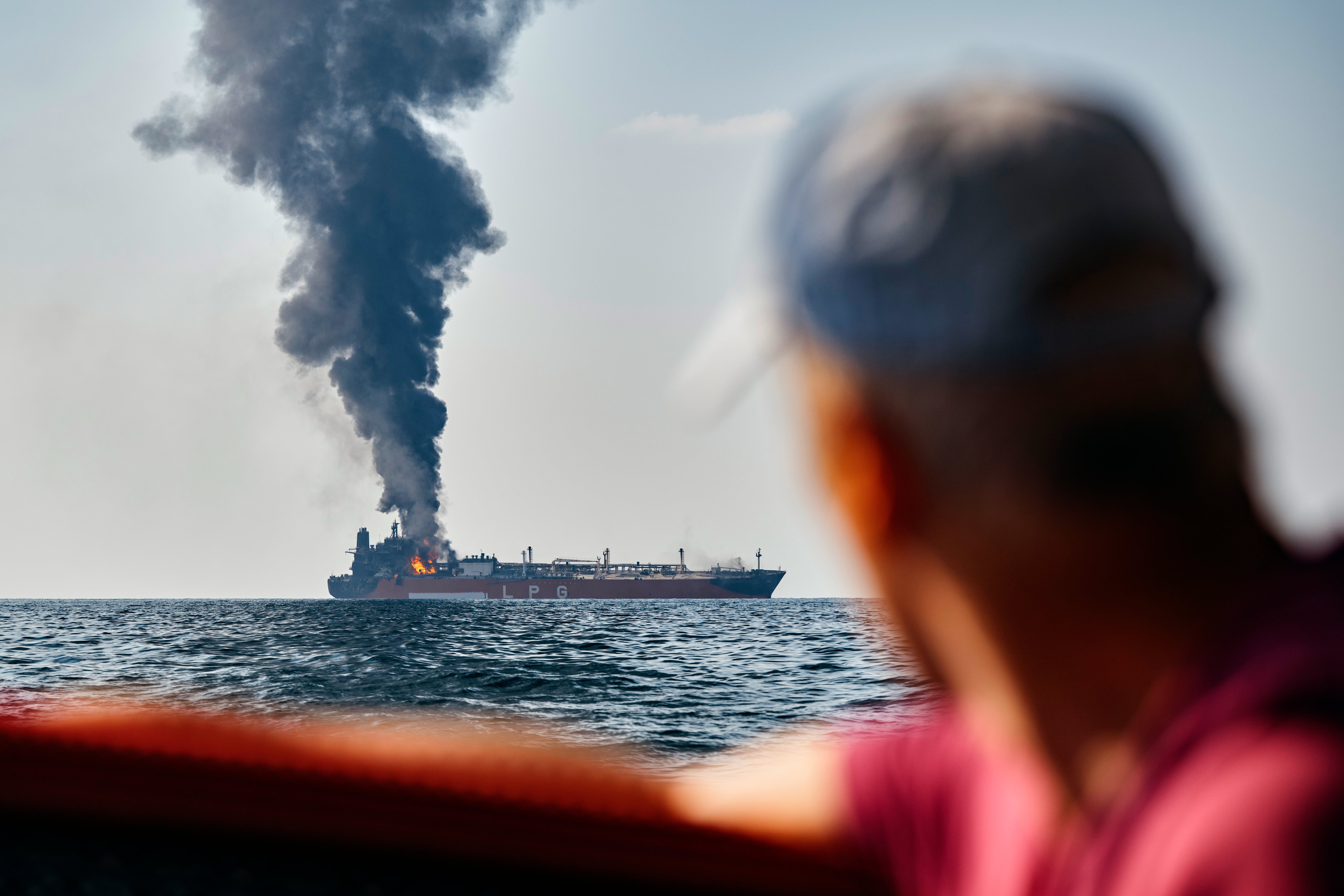
Pugh managed to finish his feat after more stops and starts, including passing another vessel that sent fireballs into the sky after it was attacked.
“Most people, when they think about the Strait of Hormuz, they think of a shipping lane,” he said. “But it is also one of the most beautiful places I have ever been … it’s one of the treasure troves of the natural world.”
“With all these ships being sunk, this area is under severe threat,” he added. “It’s going to take years, decades for this area to recover.”
Iran has in recent weeks increased attacks on vessels that it claimed had travelled along unauthorised routes in the strait as it seeks to impose its control on the crucial waterway, which a fifth of all oil traded passed through before the US and Israel launched the war on 28 February.
Several tankers have also struck sea mines laid by Tehran, in some cases exploding and bursting into flames, among them one that was carrying over 2 million barrels of oil last month.
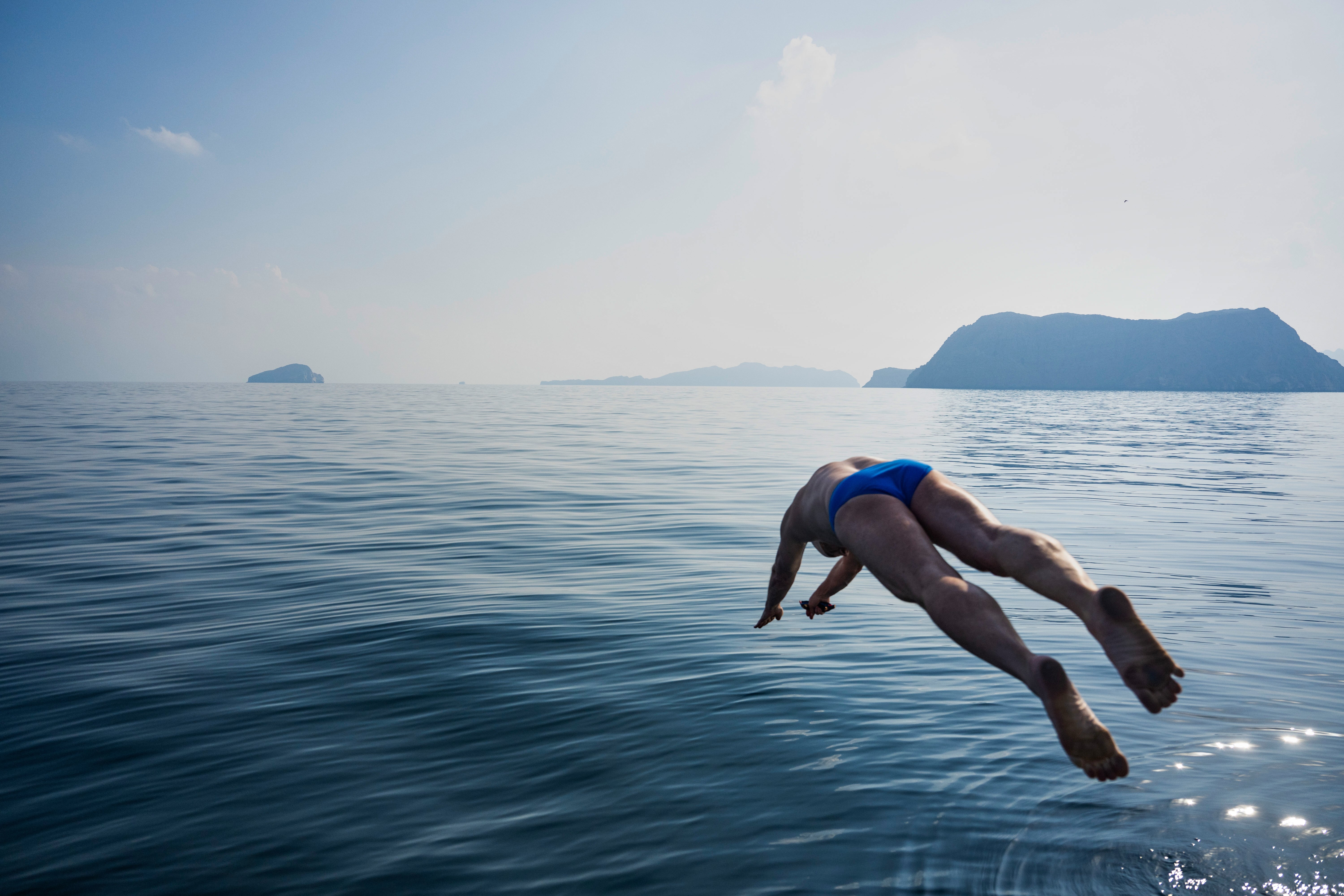
Pugh warned of how oil leaking from the dozens of tankers damaged since February could create lasting problems for the region’s animals, as well as its coastlines, coral reefs and mangrove forests.
He described seeing large numbers of dolphins following his boat as he sailed in, as well as turtles and ospreys. He also marvelled at the hundreds of turtles he saw during a swim along the Omani coast before the war.
“When oil gets in there, when chemical pollution gets in there, it becomes very, very difficult to clean up that type of mess,” he said. “It lasts for generations.”
Pugh has had plenty of experience facing extreme temperatures and predators, including great white sharks. But swimming in a conflict zone presented entirely new dangers.
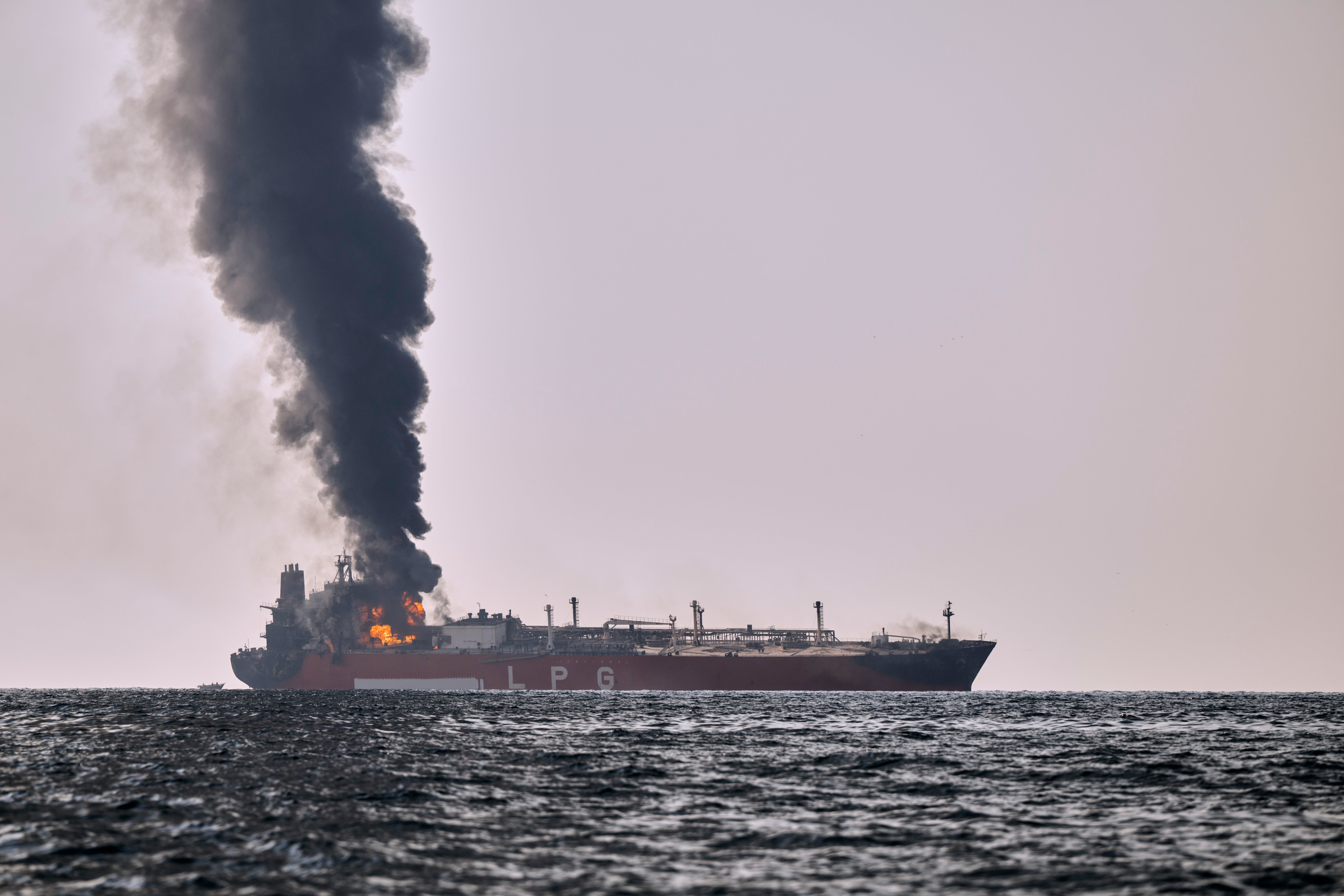
To stay safe, the challenge was done in sections over three days, with a total of about six-and-a-half hours of swimming. The athlete recalled seeing a gas carrier being struck as he returned to the harbour on the second day.
“I’ll never ever forget going past that gas carrier, the smell of the chemicals and then the flames, they were literally like fireballs going up into the sky. Around the ship, the water was on fire,” Pugh said.
“And to think of the impact which a casualty like this has on nature, it was very, very acute.”
Pugh has spent much of the past 40 years swimming in places from Antarctica to the Red Sea and the English Channel to urge more action be taken to protect marine environments from climate change, pollution and loss of biodiversity.
He was the first athlete to swim across the geographic North Pole and complete a long-distance swim in every one of the world’s oceans. In 2023, he swam all 315 miles (507km) of the Hudson River to highlight the importance of clean rivers.
His foundation says the challenges have helped secure official agreements to protect more than 3.5 million square kilometres (about 1.35 million square miles) of vulnerable ocean.
Some have described Pugh’s blend of epic swimming and political outreach as “Speedo diplomacy”.
“Sport opens doors, it creates dialogue, it enables people to start thinking about these important issues,” Pugh said.
“My message is very simple,” he added. “We’ve got to stop the war. We’ve got to open the strait, and we’ve got to clean up the pollution.”

