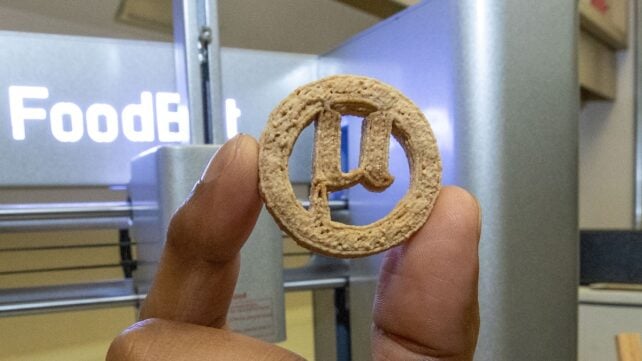
Southern Illinois University Carbondale-ийн судлаачид хуванцар болон хөдөө аж ахуйн хаягдлыг ашиглан ваниль үнэртэй, уургаар баялаг хүнс гарган авах шинэ технологийн туршилтыг танилцуулав.
Ангараг гараг руу хийх гурван жилийн аялалд зориулан бүтээсэн энэхүү “µBites” нэртэй жигнэмэг нь сансрын хөлөг дээрх нөөц бололцоог ашиглан хүнс үйлдвэрлэх зорилготой юм. Судлаачид полиэтилен терефталат (PET) хуванцар болон эрдэнэ шишийн иш зэрэг органик материалыг исэлдүүлэгч гидротермаль задралын аргаар задалж, бичил биетэн боловсруулахад тохиромжтой шингэн гарган авчээ. Генетикийн хувьд өөрчилсөн мөөгөнцөр нь энэхүү түүхий эдийг ашиглан тэжээллэг бодис, ванилийн үнэр оруулагч ваниллин болон А аминдэмийн урьдал болох бета-каротиныг үйлдвэрлэдэг байна.
Эцсийн бүтээгдэхүүнийг 3D хэвлэгч ашиглан давхарлан хэвлэж, богино долгионы зууханд жигнэдэг бөгөөд үүнд ямар нэгэн бичил хуванцар агуулагдаагүй болохыг төслийн удирдагч Лахиру Жаякоди онцолсон юм. 2026 оны наймдугаар сарын 24-нд Америкийн химийн нийгэмлэгийн хурал дээр танилцуулсан энэхүү технологи нь сансрын уудам төдийгүй Дэлхий дээрх алслагдсан бүс нутгуудад хүнсний хангамжийн шийдэл болох ирээдүйтэй.
Гэсэн хэдий ч уг жигнэмэг нь одоогоор туршилтын шатандаа байгаа бөгөөд хүний хэрэглээнд нэвтрэхээс өмнө аюулгүй байдлын нарийн шинжилгээ, зохицуулалтын зөвшөөрөл шаардлагатай байна. Шинжээчид энэхүү технологийн эдийн засгийн үр ашиг, үйлдвэрлэлийн цар хүрээ, бүтцийн чанар зэрэг асуудалд болгоомжтой хандаж байгаа юм. Судлаачид ирэх хоёроос гурван жилийн хугацаанд хоол боловсруулах тогтолцооны дуурайлган шинжилгээ болон бусад шаардлагатай судалгаануудыг үргэлжлүүлэн хийхээр төлөвлөж байна.
Дэлгэрэнгүйг эх сурвалжаас харах
↓Эх сурвалжийг нээх ↓
A discarded plastic bottle may seem an unlikely starting point for a vanilla-scented cookie. Yet researchers at Southern Illinois University Carbondale have developed a process that converts plastic and agricultural waste into ingredients for protein-rich, 3D-printed snacks.
Called µBites, pronounced microbites, the experimental cookies were originally developed to address one of the most difficult challenges of deep-space exploration: feeding astronauts when fresh supplies are unavailable. The technology could eventually find applications in equally isolated environments on Earth.
At the American Chemical Society’s fall meeting in Chicago on August 24, 2026, researchers presented their experimental results, demonstrating how microorganisms can manufacture nutrients, flavorings and pigments from discarded materials. However, the latest prototype still requires further safety assessments before human consumption can be authorized.
Turning Plastic Waste Into Food Ingredients
The project begins with polyethylene terephthalate (PET), the material commonly used to manufacture water bottles, soft drink containers and food packaging. Despite its durability, PET contains carbon that microorganisms can potentially use once its chemical structure has been broken down.
In an American Chemical Society announcement, associate professor Lahiru Jayakody explained the fundamental reasoning behind the experiment: “Because plastic is carbon and food is carbon.” The challenge lies in converting that carbon into compounds that microorganisms can use to manufacture food ingredients.
To make the carbon accessible, the researchers employ a technique called oxidative hydrothermal dissolution, developed by Southern Illinois University geology professor Ken Anderson. The process uses heated, pressurized water and oxygen to break resistant materials into smaller, water-soluble compounds. Discarded corn stalks and leaves are also processed, supplying additional organic material for the microorganisms.
The resulting liquid is transferred into a bioreactor, where genetically engineered yeast acts as a miniature biological factory capable of generating nutrients. Rather than incorporating fragments of plastic into the finished cookie, the method is designed to transform plastic-derived chemicals into entirely different substances.
Speaking to NPR, Jayakody addressed concerns about consuming plastic directly: “There is no micro- or nanoplastic embedded into this cookie. So you are not eating plastic.” Establishing the safety of the finished product, however, remains a separate requirement.
Scientists Found a Way to Give the Cookies a Vanilla Aroma
Producing nutrients from waste is only part of the challenge. Making the resulting food appealing enough for people to consume requires another set of biological processes. Graduate researcher Sandhya Jayasekara developed yeast strains capable of producing compounds that improve the nutritional and sensory properties of the experimental food.
One modified strain of baker’s yeast manufactures vanillin, the molecule responsible for vanilla’s characteristic aroma and flavor, using ferulic acid obtained from plant material. Another yeast strain converts ethylene glycol derived from PET into beta-carotene, the orange pigment found naturally in carrots and a precursor of vitamin A.
The researchers combine these microbial ingredients with conventional starch, fiber and sweeteners before transferring the mixture into a 3D food printer. The machine deposits the mixture in layers, after which microwave heating gives the cookie its final consistency. The team ultimately wants microorganisms to manufacture those additional ingredients as well, reducing the system’s dependence on externally supplied food materials.
A Food Production System Designed for a Three-Year Mars Mission
The project dates back to 2021, when the research team received $25,000 through NASA’s Deep Space Food Challenge. Its original design was intended to feed four astronauts during a three-year mission to Mars, where producing food from materials already aboard a spacecraft could help address the competing demands of storage capacity, waste management and limited resources.
In a 2024 article published in Trends in Biotechnology, the researchers described their approach to converting waste plastic and biomass into food through microbial biotechnology. Beyond space exploration, the team envisions portable food production systems that could operate aboard submarines, in polar research stations or in communities temporarily cut off from conventional food supplies.
An earlier sensory evaluation reported by Southern Illinois University found that the experimental cookies received an overall acceptability score of 6.5 out of 9, with aroma receiving the highest average rating of 7.33. The university described this evaluation as a taste test, although the 2026 research announcement states that approval for taste testing is still pending. Whether the two evaluations involved identical formulations remains unclear.
Why the Cookies Are Not Ready for Supermarket Shelves
Despite the successful laboratory demonstration, the technology remains far from commercial production. Processing plastic requires energy, specialized equipment and careful control over the chemical composition of the starting materials. The researchers must also establish that the finished product meets food safety requirements and that its nutrients can be effectively absorbed by the human body.
Jayakody explained the next stage of the research: “We are conducting simulated digestive studies and other necessary analyses in preparation for human trials.” These investigations are necessary before the experimental food can undergo formal evaluation involving human participants.
Independent scientists have also raised questions about the economic viability of the technology. Pamela Silver, a synthetic biologist at Harvard Medical School who was not involved in the research, identified production costs, scalability and texture as significant obstacles. In November 2026, food industry publication Fi Global Insights reported additional concerns about whether the process could compete economically and environmentally with conventional recycling.
During an October interview with Fact Crescendo, Jayakody explained that laboratory assessments had examined potential pathogens, toxicity and digestion, although additional research and regulatory procedures remain necessary. According to his estimate, completing the research and securing the necessary food safety approval could take another two to three years.
Enjoyed this article? Subscribe to our free newsletter for engaging stories, exclusive content, and the latest news.

