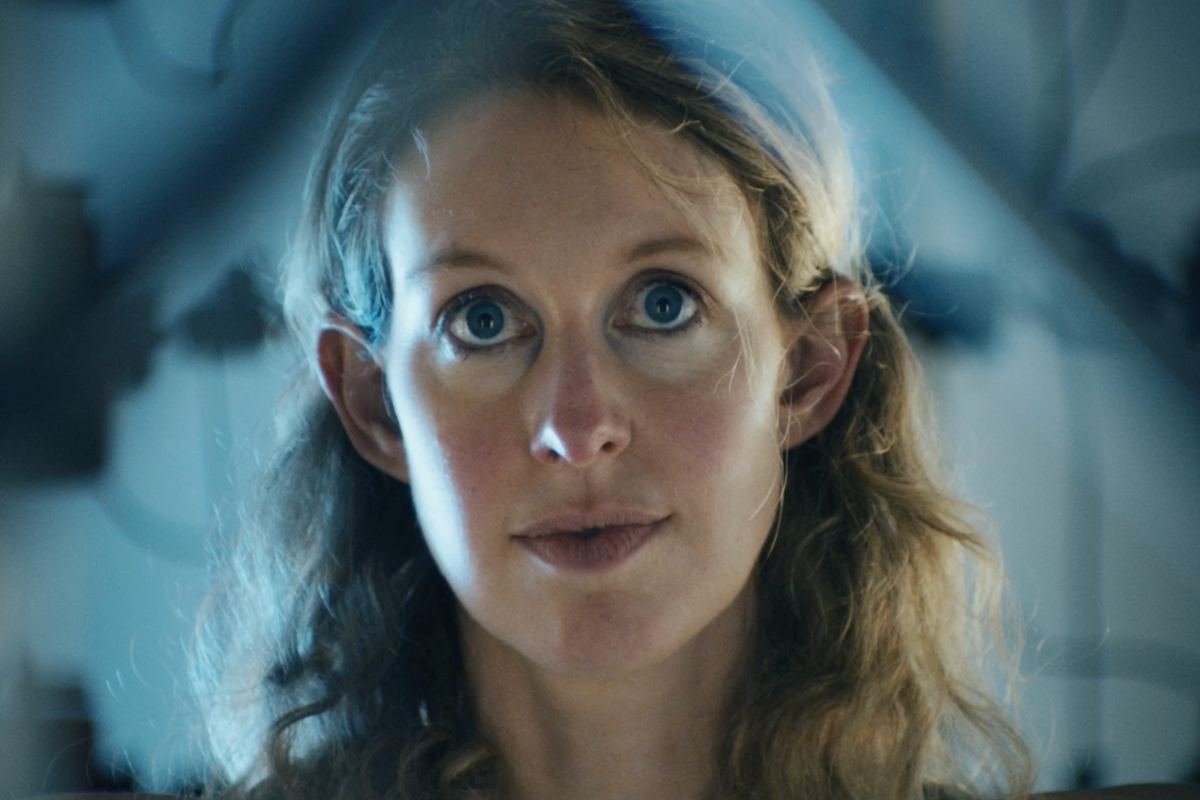
Нэйтан Филдер, Лэнс Оппенхайм нарын бүтээл Элизабет Холмсын амьдралыг өгүүлэхээр эхэлсэн ч Билли Эванс илүү сонирхолтой дүр болж хувирчээ.
Гурван цагийн баримтат кинонд Филдер, Оппенхайм нар залилангийн хэргээр ял шийтгүүлсэн Theranos компанийг үүсгэн байгуулагч Холмс болон түүний хамтрагч Эвансыг шоронд хоригдохоос нь өмнөх сүүлийн 34 хоногт дагана. Хосын гэр бүлийн амьдралд нэвтрэх эрх авсан найруулагчид үзэгчдэд “жинхэнэ Лиз”-ийг харуулахыг зорьж буйгаа хэлдэг ч тэдний зорилго кинонд бүрэн тодорхой болдоггүй.
Кино бодит ба зохиомол мэт харагдах дүрслэлийг эвлүүлэг, дуу, сэргээн тоглолтоор давхарлан бүтээжээ. Филдерийн The Rehearsal цувралд бодит байдлыг дуурайлган бүтээсэн орчин, амьдралын боломжит хувилбаруудын зааг бүдгэрдэг бол Оппенхайм камерын өмнө гаралгүй, ханасан өнгө болон зүүд мэт дуу дүрслэлээрээ нууцлаг уур амьсгал бүрдүүлдэг.
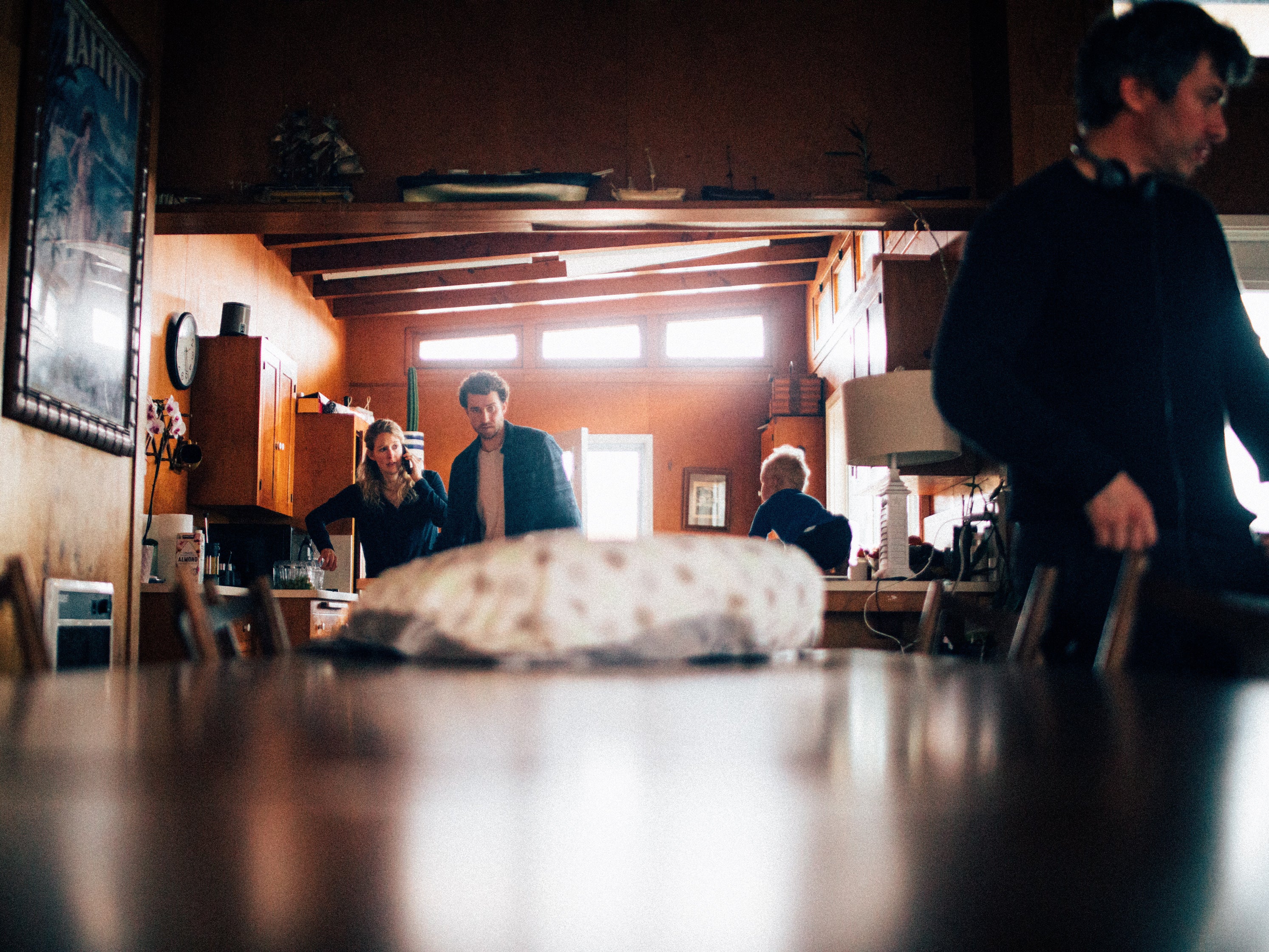
Эхний хэсэгт Холмс, Эванс, Филдер нар Сан-Диего дахь хосын түрээсийн далайн эргийн байшинд зураг авалтад оролцоно. Харин Холмс 11 жилийн хорих ялаа эдэлж эхэлсний дараа найруулагчид сэргээн тоглолт, түүний дотор сэргээн тоглолт доторх сэргээн тоглолтоор үйл явдлыг үргэлжлүүлдэг.
Холмс эзгүй болсон хэсгүүдэд Эвансын зан байдал илүү тод харагдаж, киноны гол анхаарлыг өөртөө татна. Найруулагчдын анх сонирхсон гол дүр нь Холмс байсан ч эцэст нь Эванс илүү анхаарал татахуйц сэдэв болж буйг нийтлэл онцолжээ.
Дэлгэрэнгүй эх сурвалжийг харах
Эх сурвалжийг нээх ↓
Want to bookmark your favourite articles and stories to read or reference later? Start your Independent Membership today.
Already a member?
In their self-aware documentary You Can See Everything, filmmakers Nathan Fielder and Lance Oppenheim attempt to paint a portrait of convicted fraudster Elizabeth Holmes. The documentary initially follows the former founder and her partner, Billy Evans, in the last 34 days before Holmes’s incarceration for defrauding investors in her failed blood testing company Theranos.
Fielder and Oppenheim have been granted seemingly unfettered access to the couple’s home life. The pair claim that they are doing this because they want people to see the “real Liz”. What the filmmakers hope to get out of it, other than unprecedented access to a figure that has seized the cultural imagination, is less clear.
I have watched You Can See Everything three times, and found it every bit as genius as everybody says. The three-hour documentary is unique in its creation of layers of hyper-reality through its cinematography, editing, sound and use of reenactments.
While it feels groundbreaking, the documentary does reflect a logical combination and evolution of the styles of directors Fielder and Oppenheim.
One in front and one behind
Fielder’s previous project The Rehearsal (2022-) will prepare any viewer for the twists and turns of You Can See Everything – and perhaps even help predict some of them.
In The Rehearsal, Fielder builds elaborate simulations of “real” places in order to rehearse difficult conversations or play out potential life choices. As the stories progress, the lines between what’s real and what’s fabricated blur.
The Rehearsal began with Fielder off camera as more of a behind-the-scenes orchestrator. But as the series progress, he became a more active participant in these “rehearsals”. For instance, in one episode he helps a woman rehearse what raising a child with someone would be like. After her initial co-parenting partner drops out, Fielder steps in and quickly becomes the centre of the experiment, allowing his obsessions and anxieties to dominate the rehearsal.
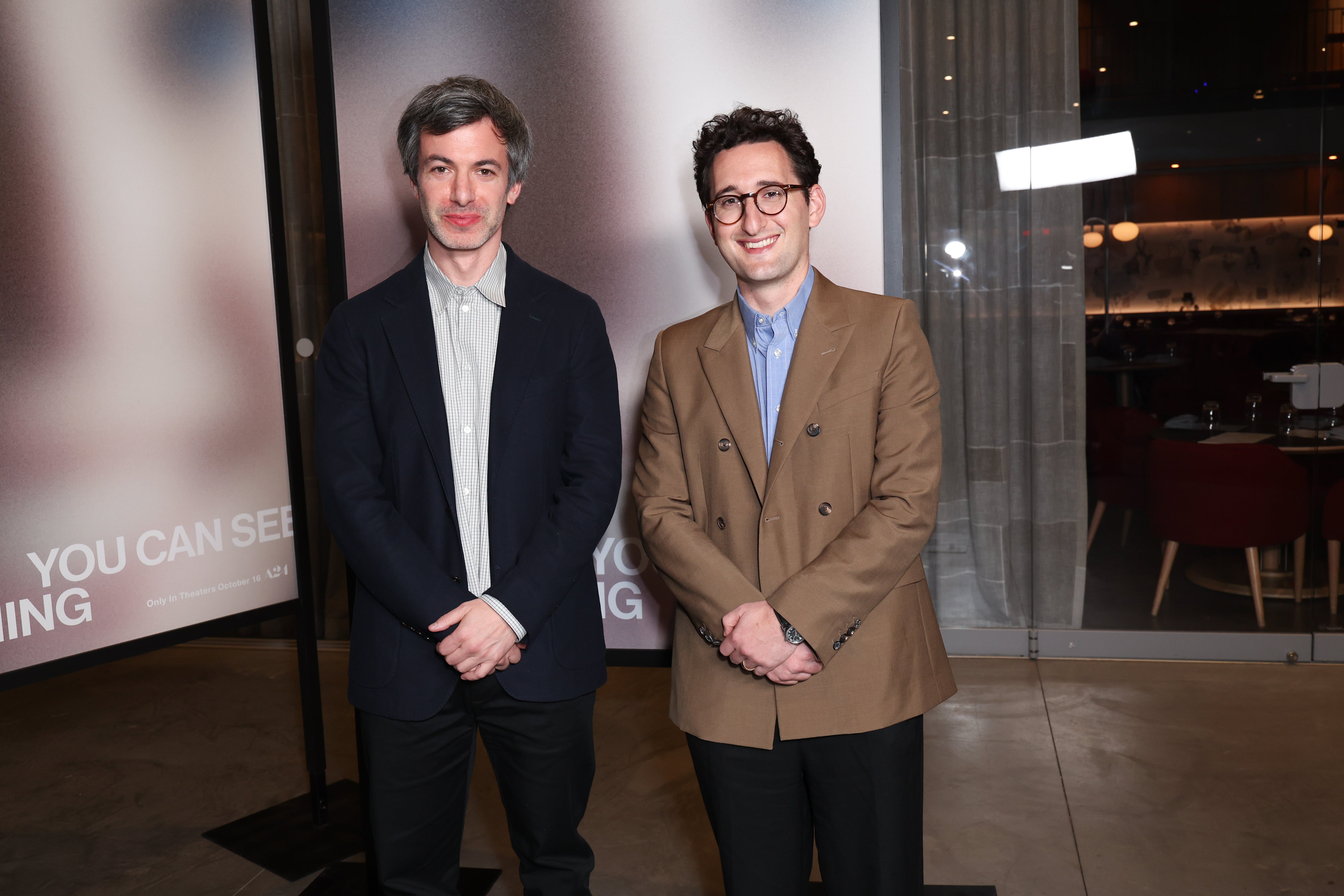
The hyper-reality in You Can See Everything operates according to similar principles. As in The Rehearsal, when Fielder steps out from behind the camera, viewers start to question everything – including Fielder himself.

Watch Apple TV free for 7 day
New subscribers only. £9.99/mo. after free trial.
Plan auto-renews until cancelled.
ADVERTISEMENT. If you sign up to this service we will earn commission. This revenue helps to fund journalism across The Independent.
In contrast, Oppenheim is never in front of the camera (except for one particularly pertinent reenactment of how the project began in the second half of the film). Unlike Fielder, he never appears in his feature documentaries. Oppenheim’s directorial style is remarkable, conjuring up haunting, peculiar portrayals of people and places through saturated colours, fantastical cinematography and dreamy soundscapes.
Oppenheim’s way of telling stories with a dreamlike quality, without explaining why his subjects behave the way they do, lends itself particularly well to painting this purposefully incomplete picture of Holmes and Evans. Through his lens, the couple are imperfect beneficiaries – or victims, as they might like to add – of America’s obsession with investment in newness and in charismatic (particularly white, middle and upper class) individuals.
Sarah Lahm is a Lecturer in Media, Communication, and Cultural Studies, University of Leeds.
This article is republished from The Conversation under a Creative Commons license. Read the original article.
In the first half, this idea is captured through tight scenes of Holmes, Evans and Fielder within the confined spaces of the couple’s rented beach cottage in San Diego. Such shots, paired with a restrained use of music, establish an atmosphere that always feels hesitant and obscure.
This might be unprecedented access, but no matter how strongly Holmes insists that Fielder and Oppenheim can see everything, you feel that they – and you – really can’t.
How do you show what you can’t see?
In the second half of the film, Holmes has started her 11-year prison sentence and the storytelling becomes less straightforward.
How do you film a documentary when one of your main subjects is essentially inaccessible? Oppenheim and Fielder creatively rise to the task by layering realities onto each other through the inclusion of varying modes of storytelling, like reenactments and even reenactments within reenactments.
This layered reality can have a disorienting and almost psychedelic quality at times – even on the seemingly straight shots. One of the most striking examples is a scene of Evans working on his laptop in the kitchen. A reptile (a blue Argentine tegu) moves slowly across the table. On the other side of the room is a screen playing a life-size AI-generated video of Holmes, talking to nobody in particular.
This trippy scene is as bizarrely haunting and unnerving as some of the intense confrontations with Billy in this final section. Wide eyed and unapologetic, Billy’s small acts of seemingly controlling behaviour (like taking over the whisking of eggs in the first half) are writ larger in Holmes’s absence and tinged by his enthusiasm for conservative politics and figures like Charlie Kirk.
In these scenes, it becomes clear that while Holmes might have been the draw for the directors as the perfect documentary subject, Evans turns out to be an even better one.
You Can See Everything is breathtaking cinema. While it’s not a major departure from the pair’s previous work, what’s so special about this film is the qualities they have honed. Oppenheim’s ability to make factual narratives look more fictional than many fictions and Nathan Fielder’s aptitude for slowly building layer upon layer of hyper-reality, that leaves you questioning everything you see.

